



Why Won’t My AC Cool Below 75 Degrees?
Estimated reading time: 6 minutes
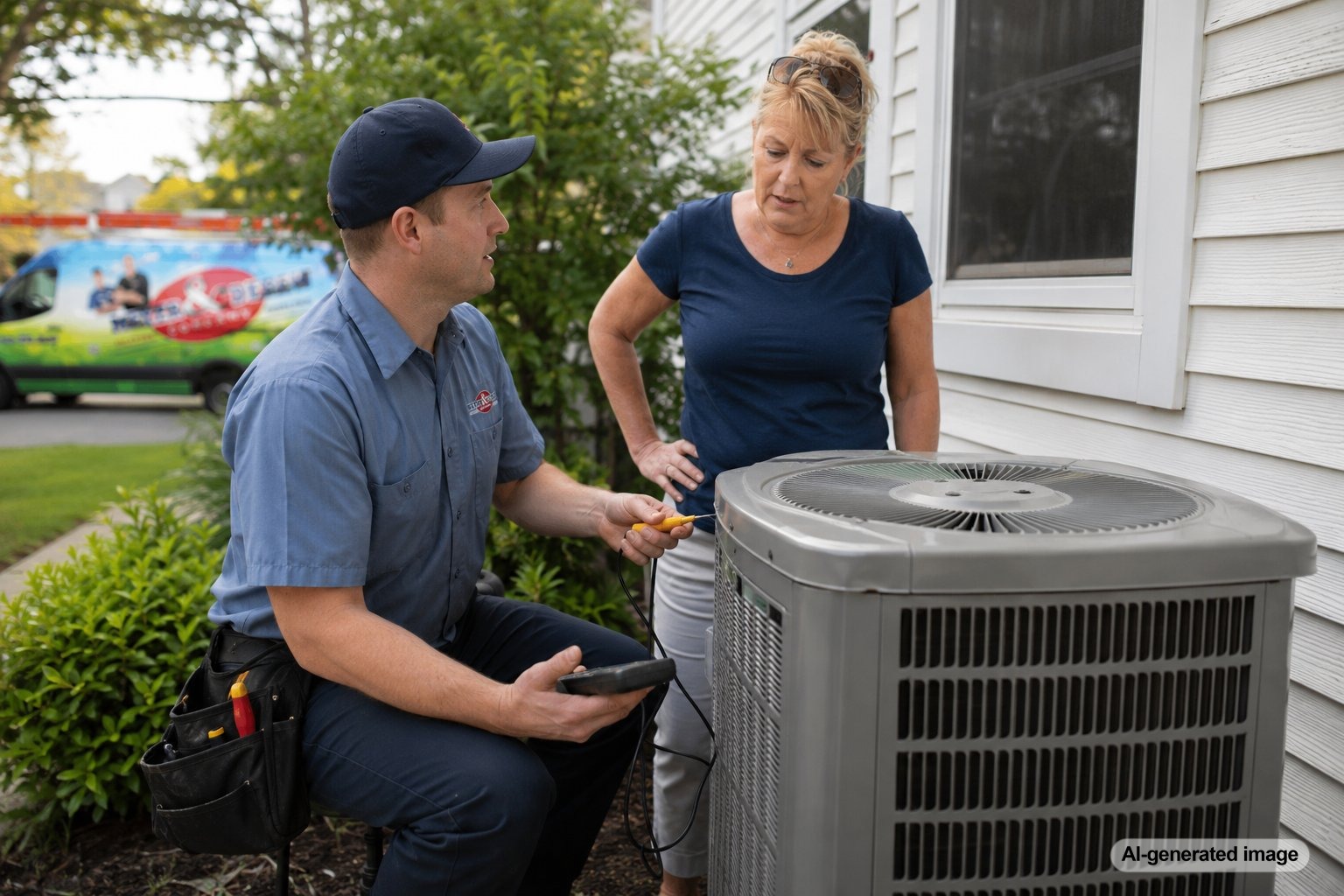
If your AC will not cool below 75 degrees, the system may be running, but it is not removing enough heat or humidity from your home. In many New Jersey homes, this shows up during long hot stretches when the air conditioner runs for hours, the thermostat barely moves, and certain rooms still feel warm or sticky.
The cause is not always one dramatic breakdown. It could be restricted airflow, a dirty coil, low refrigerant, duct leakage, thermostat issues, an aging system, or a system that is simply being pushed beyond its current condition. Meyer & Depew provides AC service and maintenance for homeowners throughout Central and Northern New Jersey when cooling problems continue after the basic checks.
An AC that will not cool below 75 degrees is often struggling because it cannot move enough air, absorb enough heat indoors, release enough heat outdoors, or keep up with the home’s cooling load.
- A clogged air filter or blocked vents can reduce airflow.
- A dirty outdoor coil can make it harder for the system to reject heat.
- Low refrigerant, coil issues, or electrical problems require professional evaluation.
- High humidity can make 75 degrees feel much warmer than the thermostat suggests.
- If the system runs constantly and still cannot reach the setting, service is a smart next step.
Why 75 Degrees Becomes A Sticking Point
When an air conditioner is working properly, it should gradually pull indoor temperature and humidity down toward the thermostat setting. If the temperature stops around 75 degrees, the system may be reaching the limit of what it can do under current conditions.
That does not always mean the AC is undersized. A system that cooled well in past summers can start to struggle after airflow restrictions, coil buildup, refrigerant loss, duct problems, thermostat changes, or normal wear. The issue can also feel worse during New Jersey heat waves because the equipment has less recovery time between hot afternoons and humid nights.
Common Reasons Your AC Will Not Cool Below 75
Several cooling problems can create the same symptom at the thermostat. A qualified technician can test the system, but these are some of the most common reasons homeowners see the indoor temperature stall.
Restricted Airflow
Your AC needs steady airflow across the indoor coil to remove heat from the house. A clogged filter, closed supply vents, blocked return grilles, dirty blower components, or crushed ductwork can all reduce airflow. When airflow drops, the system may run longer while delivering less cooling.
Dirty Outdoor Unit
The outdoor unit releases heat pulled from inside the home. If leaves, grass clippings, cottonwood, dirt, or shrubs block airflow around the cabinet, the system can have a harder time rejecting heat. Homeowners can clear obvious debris around the unit, but internal cleaning and performance testing should be handled by a professional.
Low Refrigerant Or Refrigerant Circuit Problems
Refrigerant is not something an air conditioner normally uses up. If levels are low, there may be a leak or another issue that needs proper tools and training to evaluate. Do not try to add refrigerant yourself. Refrigerant systems are sealed, regulated, and require professional service.
High Indoor Humidity
Humidity changes how comfort feels. A home at 75 degrees with high humidity can feel warmer than a home at the same temperature with better moisture control. Oversized systems, short cycling, poor airflow, leaky ducts, ventilation issues, or long periods of humid weather can all contribute to sticky indoor air.
Aging Or Overworked Equipment
An older AC may still turn on, but that does not mean it is operating at its original capacity. Wear on motors, coils, electrical components, and controls can reduce performance. If the system needs frequent repairs, runs constantly, or leaves parts of the home uncomfortable, it may be time to compare repair and replacement options through AC installation and replacement guidance.
Safe Checks Before You Call
- Confirm the thermostat is set to cooling mode and the temperature setting is below the current room temperature.
- Replace or inspect the air filter if it looks dirty or has not been changed recently.
- Make sure supply vents and return grilles are open and not blocked by furniture, rugs, curtains, or storage.
- Look for obvious debris around the outdoor unit and keep the area around it clear.
- Check the breaker once, if it is safe to do so. If it trips again, do not keep resetting it.
These checks can sometimes solve simple airflow or control issues. If the AC still will not cool below 75 degrees, the next step is not guesswork. The system may need temperature readings, airflow measurements, refrigerant diagnostics, coil inspection, electrical testing, or duct evaluation.
Why This Happens More During New Jersey Heat And Humidity
Central and Northern New Jersey summers can put air conditioning systems under real pressure. High outdoor temperatures make it harder for the outdoor unit to release heat, while humidity adds another load inside the house. Older homes, additions, finished attics, sunrooms, and rooms over garages can also warm up faster than the main living area.
In some homes, the thermostat may be located in a hallway or shaded area that does not reflect how the warmest rooms feel. That can make bedrooms, upstairs spaces, or west-facing rooms feel uncomfortable even when the thermostat reads 75. Zoning, duct corrections, insulation improvements, maintenance, or equipment upgrades may be part of the long-term solution depending on the home.
When To Schedule Professional AC Service
Schedule service if your AC runs constantly, blows weak or warm air, makes unusual sounds, freezes up, trips the breaker, leaks water, or cannot cool below 75 degrees after basic homeowner checks. You should also call if the problem appears suddenly after the system had been cooling normally.
A technician can look beyond the thermostat and evaluate the full cooling process: airflow, refrigerant performance, coil condition, electrical operation, condensate drainage, thermostat accuracy, and duct performance. That matters because the right fix depends on the actual cause. Adding refrigerant to a dirty-coil problem, replacing a thermostat for a duct problem, or overlooking airflow restrictions can leave the home uncomfortable.
FAQ: AC Stuck At 75 Degrees
Is it normal for an AC to struggle to reach 72 on very hot days?
It can happen during extreme heat, especially in homes with high sun exposure, poor insulation, duct issues, or older equipment. However, if the system often cannot cool below 75 degrees, it is worth having it checked.
Can a dirty air filter really stop my AC from cooling?
Yes. A dirty filter can restrict airflow enough to reduce cooling performance, increase run time, and contribute to coil problems. Filter replacement is one of the safest and most useful homeowner checks.
Should I set the thermostat much lower to make the house cool faster?
For most standard systems, setting the thermostat much lower does not make the AC cool faster. It usually just tells the system to run longer. If it cannot reach the setting, there is likely another issue to address.
Does an AC stuck at 75 always mean I need a new system?
No. Some causes are service-related, such as airflow restrictions, dirty coils, or control issues. Replacement may be worth discussing if the system is older, inefficient, unreliable, or no longer able to meet the home’s comfort needs.
An AC that will not cool below 75 degrees is telling you something. Start with safe checks like the filter, vents, thermostat, and outdoor clearance. If the issue continues, professional service can identify whether the problem is maintenance, repair, duct performance, humidity control, or aging equipment.
Need help with your heating, cooling, or HVAC system?
Meyer & Depew serves homeowners and businesses throughout Central and Northern New Jersey.
Get a quote or call 908.272.2100.