

What is a Commercial HVAC Maintenance Plan?
Estimated reading time: 6 minutes
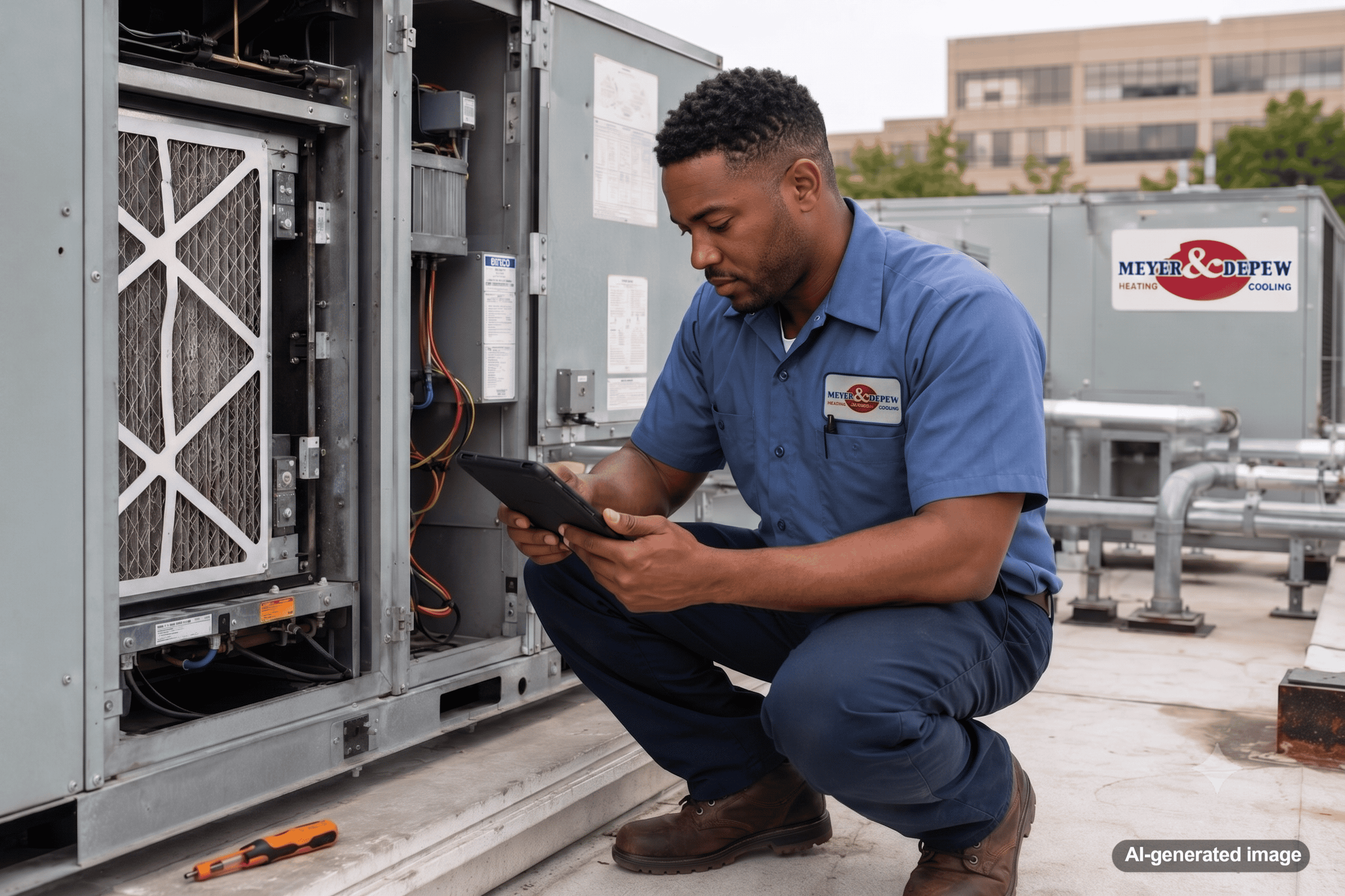
A commercial HVAC maintenance plan is a scheduled service agreement that helps keep heating, cooling, ventilation, and related comfort equipment inspected, cleaned, tested, and documented throughout the year. For businesses and property managers in Central and Northern New Jersey, it is a practical way to reduce avoidable disruptions, support occupant comfort, and make better decisions about repair, replacement, and long-term budgeting.
Unlike a one-time repair visit, a maintenance plan is built around routine care. It gives your building a planned approach to HVAC service instead of waiting until a rooftop unit, boiler, air handler, or ventilation system is already causing complaints. Meyer & Depew offers commercial HVAC maintenance plans for businesses and organizations that want a more organized way to manage their equipment.
Quick answer:
A commercial HVAC maintenance plan typically includes scheduled inspections, filter service, cleaning, safety checks, operating tests, documentation, and recommendations from a qualified technician. The goal is not to guarantee that equipment will never fail, but to help identify developing issues earlier, keep systems operating more consistently, and give building decision-makers better information.
What does a commercial HVAC maintenance plan usually include?
The exact scope depends on the building, equipment type, system age, operating hours, and service agreement. A small office with split systems does not have the same needs as a retail property with multiple rooftop units or a facility with more complex ventilation demands. A good plan should be matched to the property rather than treated as a generic checklist.
Common maintenance tasks may include inspecting belts, motors, electrical components, coils, drains, economizers, controls, thermostats, filters, dampers, condensate systems, and general equipment operation. For heating equipment, a technician may also evaluate ignition, combustion-related components, safeties, venting conditions, and overall system performance where applicable. Any work involving gas, electrical, refrigerant, or internal equipment components should be handled by qualified professionals.
Why commercial HVAC maintenance matters
Commercial HVAC systems often run longer hours than residential equipment. They may serve occupied offices, medical spaces, retail areas, restaurants, houses of worship, nonprofit buildings, or multi-tenant properties where comfort complaints can quickly become operational problems. Even a small performance issue can affect employees, customers, tenants, inventory, or scheduled activities.
Routine maintenance may help reduce the risk of preventable breakdowns by catching warning signs before they become larger problems. A worn belt, restricted filter, dirty coil, clogged drain, weak capacitor, failing contactor, or airflow issue may not stop the system right away, but it can strain equipment and affect comfort over time. Maintenance gives technicians a chance to find those conditions during a planned visit rather than during a no-cooling or no-heat call.
How maintenance plans help with budgeting and planning
One of the biggest advantages of a commercial HVAC maintenance plan is the information it gives the person responsible for the building. Instead of reacting to every service issue as a surprise, property managers and business owners can receive technician feedback about equipment condition, repair needs, recurring issues, and possible replacement timing.
That documentation can be especially useful for older equipment, multiple-unit properties, and buildings where HVAC costs need to be planned in advance. If a rooftop unit is aging, short cycling, using outdated parts, or requiring repeated service, a maintenance history can help support a smarter repair-versus-replacement conversation. It can also help prioritize which units need attention first across a larger property.
Commercial HVAC maintenance is not one-size-fits-all
A strong maintenance plan should account for how the building is actually used. A professional office with predictable hours may need a different service rhythm than a restaurant, fitness space, data-heavy office, school, nonprofit facility, or retail location with high door traffic. Occupancy patterns, ventilation needs, humidity concerns, filtration requirements, and equipment access all matter.
In New Jersey, seasonal swings can add another layer. Cooling equipment may be pushed hard during humid summer weather, while heating systems need to be ready before cold snaps arrive. Planned visits before peak heating and cooling seasons can help prepare equipment for heavier demand, although maintenance cannot prevent every future issue.
What building owners and managers can safely check
There are some simple observations that building staff can make between professional visits. These checks should stay limited to safe, visible items and should never involve opening sealed equipment, bypassing safeties, handling refrigerant, adjusting gas components, or working inside electrical panels.
Safe checks before you call:
- Make sure thermostats are set correctly for occupied and unoccupied hours.
- Look for blocked supply or return vents in offices, storage rooms, and tenant spaces.
- Note unusual noises, odors, comfort complaints, or rooms that are consistently too hot or too cold.
- Check whether filters appear visibly restricted only if they are safely accessible.
- Keep rooftop, mechanical room, and outdoor equipment areas clear of obvious debris where safe and permitted.
If there is a burning smell, smoke, sparks, gas odor, carbon monoxide concern, flooding around equipment, or any unsafe condition, prioritize safety and contact the appropriate emergency service, utility, or qualified professional right away.
When should a business consider a maintenance plan?
A commercial HVAC maintenance plan is worth considering when comfort matters to daily operations, when equipment downtime would be disruptive, or when there are multiple systems to manage. It can also be valuable when a building has older equipment, rooftop units, recurring comfort complaints, humidity issues, or limited internal maintenance staff.
Businesses planning renovations, tenant changes, occupancy changes, or equipment upgrades may also benefit from a maintenance relationship. A technician who understands the building over time can provide context that is hard to get from a single emergency visit. For properties with rooftop systems, Meyer & Depew can also help evaluate when rooftop unit replacement may be a better long-term option than repeated repairs.
FAQ about commercial HVAC maintenance plans
Is a maintenance plan the same as a warranty?
No. A maintenance plan is a service agreement for routine care and professional evaluation. A warranty is a separate coverage term from a manufacturer or installer. Maintenance may support proper equipment care, but it is not the same thing as warranty coverage.
How often should commercial HVAC equipment be maintained?
Many commercial systems benefit from planned service before the main heating and cooling seasons, but the right schedule depends on equipment type, usage, building needs, and operating conditions. Some properties may need more frequent visits, especially if systems run long hours or serve sensitive spaces.
Can maintenance prevent every breakdown?
No. Maintenance can reduce the risk of some avoidable problems and may help identify issues earlier, but no service plan can guarantee that equipment will never fail. Components can still wear out, controls can fail, and unexpected conditions can occur.
Does a commercial HVAC plan include emergency service?
That depends on the service agreement. Some plans may include priority scheduling or defined service benefits, while others focus mainly on planned maintenance visits. It is important to review what is included before choosing a plan.
Who should manage HVAC maintenance for a commercial property?
Commercial HVAC maintenance should be handled by qualified technicians who understand the equipment, safety requirements, and operating demands of the building. Internal staff can report comfort issues and perform safe visual checks, but technical service should be left to trained professionals.
Bottom line:
A commercial HVAC maintenance plan gives businesses a more organized way to care for essential comfort equipment. It helps shift HVAC management from reactive repairs toward planned inspections, better documentation, and clearer decisions about service, repair, and replacement.
Need commercial HVAC support in New Jersey?
Meyer & Depew works with businesses, organizations, and commercial properties throughout Central and Northern New Jersey.
Learn more about commercial HVAC maintenance plans.