


What Are the Signs Your Air Ducts Need Attention?
Estimated reading time: 8 minutes
Your air ducts are easy to ignore because most of the system is hidden behind walls, ceilings, basements, attics, and utility spaces. But when ductwork starts affecting comfort, airflow, dust levels, or indoor air quality, your home usually gives you clues. The signs are not always dramatic. Sometimes they show up as one room that never feels right, vents that barely move air, or a thin layer of dust that seems to return soon after cleaning.
For homeowners in Central and Northern New Jersey, duct issues can be especially noticeable during humid summers, cold winter stretches, and heavy seasonal HVAC use. If you are already concerned about comfort or air quality, Meyer & Depew’s Air Quality & Comfort services can help you think through the bigger picture, not just the visible symptom.
Your air ducts may need attention if you notice weak airflow, uneven temperatures, musty or stale odors, excessive dust, noisy ductwork, worsening allergy-like irritation, or higher utility use without an obvious reason. Some issues are simple, such as a dirty air filter or blocked vent. Others may point to leaks, loose connections, damaged duct sections, poor insulation, or airflow design problems that should be evaluated by a qualified HVAC professional.
Weak airflow from one or more vents
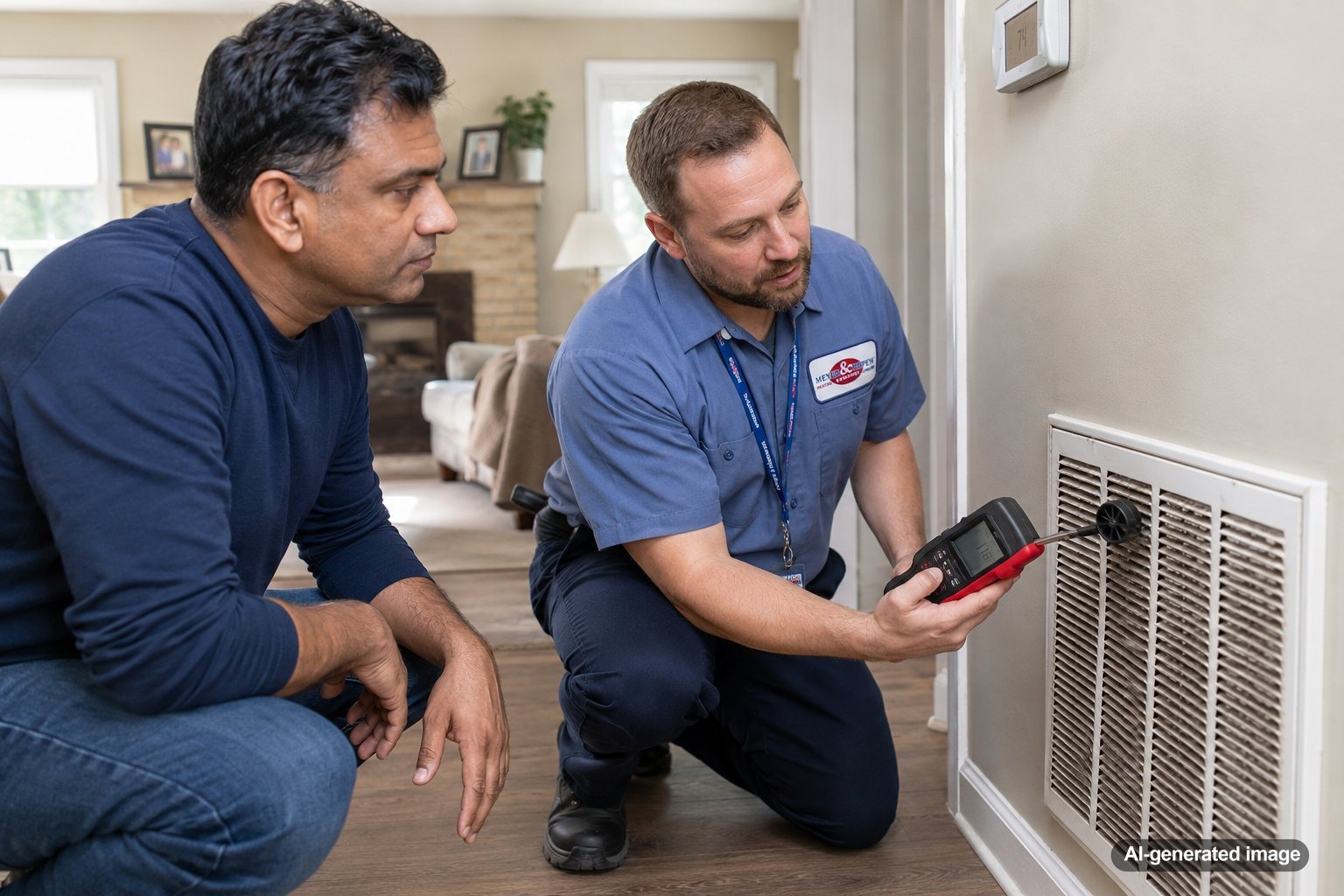
If one room gets strong airflow while another barely feels air coming from the vent, the duct system may be part of the problem. Weak airflow can happen when a duct run is disconnected, crushed, restricted, leaking, or poorly balanced. It can also be related to a clogged filter, blocked return, blower issue, or equipment problem, so it is important not to assume the ductwork is the only cause.
A helpful first step is to check the obvious items you can safely inspect. Make sure supply and return vents are open and not covered by rugs, curtains, furniture, storage boxes, or renovation materials. Replace or inspect the air filter if it is dirty. If airflow stays weak after those simple checks, professional service can help determine whether the issue is in the ductwork, the HVAC equipment, or the overall airflow setup.
Uneven heating or cooling throughout the home
Uneven rooms are one of the most common signs that air distribution deserves attention. A second-floor bedroom may feel hot in summer, a finished basement may feel too cool, or a home office may never match the rest of the house. In New Jersey homes with additions, older duct layouts, attic ductwork, or remodeled spaces, these comfort differences can become more obvious over time.
Duct problems are not the only possible cause. Sun exposure, insulation, window quality, equipment size, thermostat location, and room usage all matter. Still, duct leaks, undersized runs, long duct paths, or poor return airflow can keep conditioned air from reaching the rooms that need it. If the same rooms are uncomfortable season after season, it is worth having the system evaluated instead of constantly adjusting the thermostat.
Dust that keeps coming back quickly
Every home has dust, but unusually heavy dust can be a sign that your HVAC system is pulling in particles from places it should not. Leaky return ducts, gaps near connections, dirty equipment compartments, or ducts running through dusty attics, basements, crawl spaces, or wall cavities can contribute to dust moving through the system.
If you notice dust collecting around supply registers, dark streaks near vents, or dust returning shortly after cleaning, start with the air filter. Use the filter type recommended for your system and replace it on a regular schedule. If the filter is not the issue, the duct system may need inspection for leakage, loose sections, or conditions that affect air quality. For broader concerns, air filtration, ventilation, and purification options may also be part of the conversation.
Musty, stale, or unusual odors from the vents
Odors coming from vents should not be ignored. A stale or musty smell may be related to moisture, dirty components, poor ventilation, condensate issues, or biological growth in areas of the system. Odors can also come from nearby spaces if duct leaks are pulling air from a basement, crawl space, attic, or utility area.
Some smells require faster action. If you smell gas, smoke, electrical burning, or anything that suggests an immediate safety risk, prioritize safety and contact the appropriate emergency service, utility, or qualified professional. Do not open sealed equipment, inspect combustion parts, or attempt electrical repairs yourself. For non-emergency odors that persist, a trained HVAC technician can inspect the system safely and identify whether the issue is duct-related, equipment-related, or ventilation-related.
Noisy ducts, rattling, popping, or whistling
Ductwork does not have to be silent, but new or persistent sounds can be a clue. Rattling may point to loose metal, unsupported duct sections, or vibration. Whistling may suggest restricted airflow, closed vents, duct gaps, or pressure problems. Popping sounds can happen when metal ducts expand and contract, but frequent or loud noise may indicate the system needs adjustment.
Noise is especially worth investigating if it appears after a system replacement, renovation, air filter change, or furniture rearrangement that blocked a return or supply vent. Airflow depends on a balanced path through the home. When the system cannot move air properly, comfort, noise, efficiency, and equipment strain can all be affected.
Indoor air feels stuffy even when the HVAC system is running
If your home feels stale, humid, dusty, or heavy even while heating or cooling is operating, the issue may involve airflow and ventilation. Ducts help move conditioned air, but the system also needs adequate return air and a reasonable air exchange strategy. Closed interior doors, blocked returns, leaky ducts, and poor ventilation can all contribute to rooms that feel stuffy.
Humidity can make this more noticeable during New Jersey summers. Air that is technically cool may still feel uncomfortable if humidity, airflow, or ventilation is not being managed well. In some homes, the solution may involve duct repairs or balancing. In others, the right answer may include equipment maintenance, ventilation improvements, humidity control, or air quality upgrades.
Higher energy use without a clear explanation
A duct system that leaks conditioned air into an attic, basement, crawl space, or wall cavity can make heating and cooling equipment work harder. That does not mean ducts are always the reason for a higher utility bill, but duct issues are one possible factor when comfort drops and run times increase.
Other causes can include weather changes, thermostat settings, dirty filters, aging equipment, refrigerant or combustion concerns, poor insulation, or changes in how the home is used. A professional HVAC evaluation can look at the full system instead of guessing. The goal is to identify where the comfort loss is happening and what action is most practical.
Safe checks before scheduling service
Before assuming the ductwork needs repair, there are a few simple checks most homeowners can make safely. These steps will not solve every issue, but they can rule out common airflow restrictions.
- Check the thermostat settings and make sure the system is set to the correct mode.
- Inspect or replace the air filter if it is dirty or overdue.
- Make sure supply vents and return grilles are open, visible, and not blocked.
- Look for obvious debris around outdoor equipment if the issue is related to cooling performance.
- Check whether a breaker has tripped once, if it is safe to do so. If it trips again, stop and call a professional.
If the problem continues after those checks, it is time to look deeper. Ductwork is connected to air pressure, equipment performance, indoor air quality, and comfort. Guessing at the cause can lead to the wrong repair, especially when symptoms overlap.
When duct concerns should be handled by a professional
Call for professional HVAC service when airflow is consistently weak, rooms remain uneven, odors persist, ducts are visibly damaged, dust problems are worsening, or the system is running longer than usual without keeping up. Ductwork in attics, crawl spaces, wall cavities, and mechanical areas can involve sharp metal, insulation, electrical components, moisture, and access hazards, so repairs are best handled by trained technicians.
Professional evaluation may include checking duct connections, visible leakage, return airflow, static pressure, filter condition, equipment operation, insulation, dampers, and whether the duct layout is appropriate for the home. If routine maintenance has been overlooked, a service visit can also help determine whether the issue is really in the ducts or elsewhere in the HVAC system. Meyer & Depew’s AC Service and Maintenance team can help evaluate airflow and comfort concerns during the cooling season.
FAQ: Air duct warning signs
How often should air ducts be inspected?
There is no single schedule that fits every home, but ductwork should be checked when you notice comfort changes, weak airflow, visible damage, unusual odors, or dust concerns. It can also be useful to have accessible ductwork reviewed during HVAC maintenance, especially in older homes or homes with attic or crawl space duct runs.
Does dust always mean my ducts need cleaning?
No. Dust can come from many sources, including normal household activity, poor filtration, gaps around returns, renovation work, pets, textiles, and outdoor air. Duct cleaning may be appropriate in some situations, but the first step is usually to identify why dust is moving through the home.
Can leaky ducts affect indoor air quality?
They can. Leaky return ducts may pull air from dusty, humid, or unfinished spaces, while leaky supply ducts can reduce delivered airflow. Indoor air quality is also affected by filtration, humidity, ventilation, housekeeping, building conditions, and equipment maintenance.
Should I tape duct leaks myself?
Do not rely on basic household tape for duct repairs. It often fails in HVAC conditions and may not address the underlying problem. If you can see a loose or damaged duct section, avoid disturbing it and schedule professional service.
Can duct problems damage my HVAC system?
Poor airflow can contribute to comfort problems and may place added strain on HVAC equipment. A qualified technician can evaluate whether airflow, duct design, filter restriction, or equipment operation is affecting performance.
If your home has weak airflow, uneven rooms, persistent odors, unusual dust, noisy ducts, or comfort problems that keep returning, your ductwork may need attention. The best next step is a whole-system evaluation that looks at the ducts, equipment, filtration, ventilation, and airflow together.
Need help with your heating, cooling, or HVAC system?
Meyer & Depew serves homeowners and businesses throughout Central and Northern New Jersey.
Get a quote or call 908.272.2100.