

Why Your Office Feels Too Hot Even With the AC Running
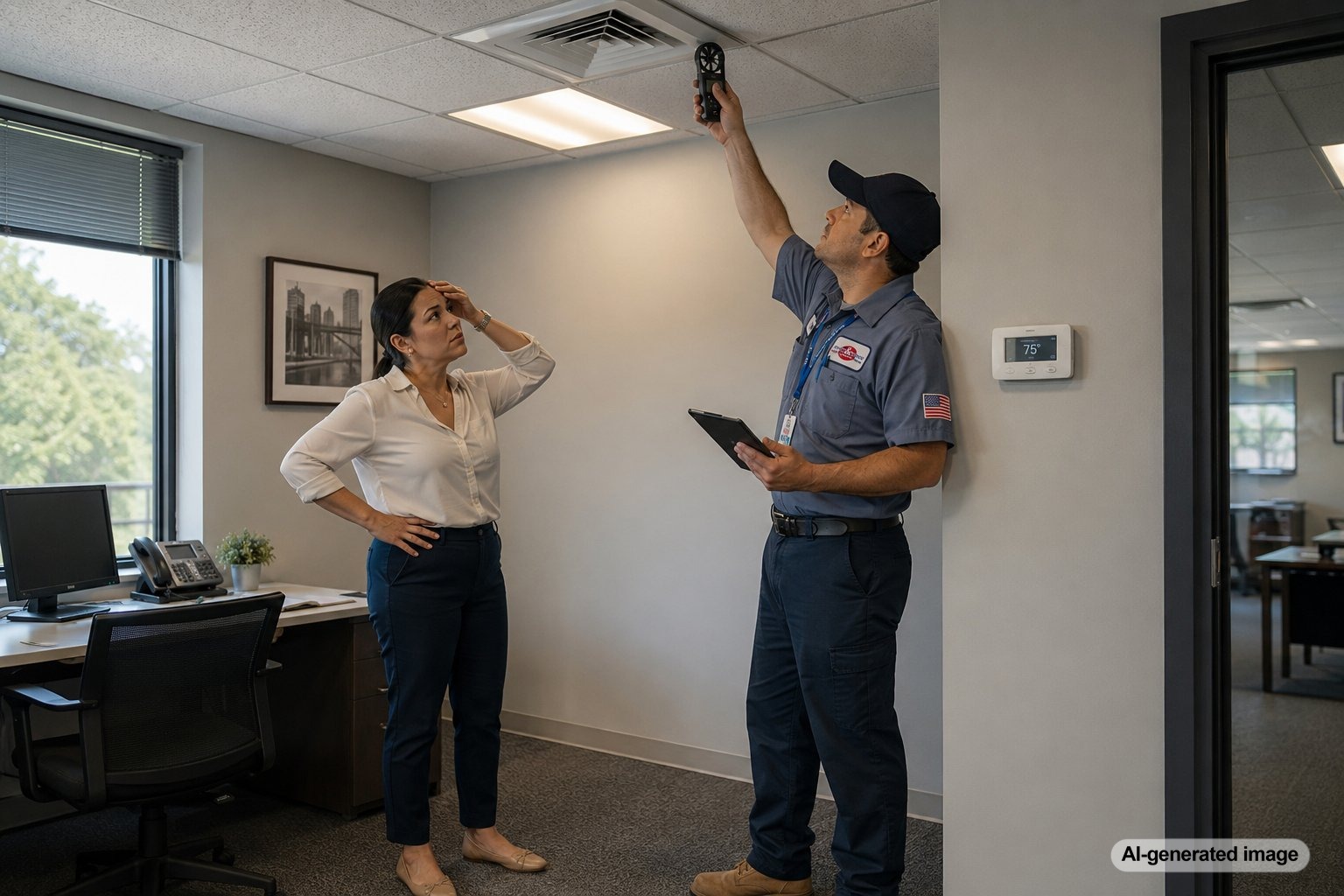
An office can feel uncomfortably warm even while the AC is running because cooling is not only about whether the equipment turns on. Airflow, humidity, thermostat placement, building layout, occupancy, duct condition, maintenance history, and equipment capacity all affect how comfortable the space feels during a workday.
For businesses in Central and Northern New Jersey, this problem often becomes more noticeable during humid summer weather, busy office hours, or after changes to how a building is used. A system may be operating, but still not delivering the right amount of cool, dry air to the areas where people actually work. If your office has persistent hot spots, weak airflow, or rooms that never seem to catch up, it may be time to have a qualified commercial HVAC technician evaluate the system. Meyer & Depew provides commercial HVAC services for offices, retail spaces, organizations, and other commercial properties throughout the region.
Your office may feel too hot with the AC running because the system is struggling with airflow restrictions, high humidity, poor zoning, thermostat problems, heat gain from people or equipment, deferred maintenance, or equipment that is not well matched to the building’s current needs.
The AC May Be Running, But Airflow May Be Weak
One of the most common reasons an office feels hot is poor airflow. The system may be cooling air, but that air may not be reaching the occupied areas effectively. Blocked supply vents, closed dampers, dirty filters, clogged coils, duct leakage, failing blower components, or poorly balanced ductwork can all reduce the amount of conditioned air moving through the space.
In an office, airflow problems are not always obvious. One conference room may feel fine while an open work area feels warm. A reception area may get direct airflow while private offices near windows stay uncomfortable. Employees may describe the AC as running constantly, but what they are really noticing is that cool air is not being delivered evenly.
Humidity Can Make The Office Feel Warmer Than The Thermostat Shows
New Jersey humidity can make a space feel hot even when the thermostat reading appears reasonable. Air conditioning removes heat and moisture, but if the system is short cycling, oversized, poorly maintained, or not running long enough to dehumidify, the office can feel sticky and uncomfortable.
This is especially common in commercial spaces with frequent door traffic, large windows, older ductwork, or changing occupancy patterns. A thermostat may show 72 degrees, but if humidity is high, employees may still feel warm. A qualified technician can look at temperature, humidity, run time, airflow, and equipment performance together instead of judging comfort by the thermostat alone.
The Thermostat May Not Reflect The Areas Where People Work
Thermostat location matters. If the thermostat is installed near a supply vent, in a shaded hallway, close to a return, or in an area with different conditions than the main workspace, it may tell the system to stop cooling before the rest of the office is comfortable.
Office layouts change over time. Cubicles are reconfigured, glass partitions are added, equipment is moved, and rooms that were lightly used may become high-occupancy areas. When the building use changes but the controls stay the same, comfort complaints can follow. Depending on the building, improved controls, zoning adjustments, or a more detailed evaluation of the HVAC design may help identify the best path forward.
Office Equipment And Occupancy Add More Heat Than Many People Expect
People, computers, printers, servers, lighting, kitchen equipment, and sun-facing windows all add heat to a commercial space. A system that handled the office comfortably years ago may struggle after staffing increases, technology upgrades, space renovations, or expanded business hours.
Heat gain can also vary throughout the day. A south-facing office may become uncomfortable in the afternoon, while an interior area feels fine. A packed conference room can warm up quickly during a meeting. A small IT closet can affect nearby spaces if heat is not being managed properly. These patterns can point to ventilation, zoning, airflow, or capacity concerns that need a professional look.
Deferred Maintenance Can Make Cooling Less Effective
Commercial HVAC systems work hard, especially during long cooling seasons. Without routine maintenance, small performance issues can gradually reduce comfort. Dirty coils, restricted filters, loose electrical components, worn belts, clogged drains, sensor problems, and refrigerant-related issues can all affect how well the system cools. Refrigerant checks and sealed system work should always be handled by qualified professionals.
A maintenance visit is not just about whether the system turns on. It can help identify airflow concerns, unusual operating conditions, worn components, and efficiency issues before they become more disruptive. For businesses that want a more consistent approach, a commercial HVAC maintenance plan can help keep routine service on schedule.
The System May Not Be Right For The Building Anymore
Sometimes the issue is not one simple repair. The equipment may be aging, undersized for the current load, poorly matched to the building, or no longer efficient enough to maintain comfort during peak weather. In other cases, the building may need improved zoning, better controls, rooftop unit evaluation, VRF system consideration, ventilation review, or ductwork adjustments.
No contractor should diagnose that from a quick glance. A responsible evaluation looks at how the building is used, where comfort complaints happen, how long the system runs, what the maintenance history shows, and whether repairs are still a practical investment. For some properties, repair and maintenance may be enough. For others, replacement or a system redesign may be the more reliable long-term option.
- Confirm the thermostat is set to cooling and the programmed schedule matches current office hours.
- Make sure supply and return vents are open and not blocked by furniture, boxes, or partitions.
- Check whether filters are visibly dirty or overdue for replacement, if your team is responsible for that task.
- Look for obvious debris around outdoor equipment, only if it is safe and accessible.
- Note when and where the office feels hottest so a technician can identify patterns.
When To Call A Commercial HVAC Professional
If the office stays hot despite normal thermostat settings, if airflow is weak, if the system runs constantly, or if comfort varies sharply from one area to another, it is worth scheduling professional service. The same is true if you notice unusual noises, water around equipment, burning smells, repeated breaker trips, or any condition that seems unsafe.
For electrical burning smells, smoke, sparks, or other urgent safety concerns, prioritize safety and contact the appropriate emergency service or utility as needed. Do not open sealed equipment, bypass safety controls, adjust electrical parts, or attempt refrigerant work. Commercial HVAC systems involve components that should be handled by trained technicians.
FAQ
Why does my office feel hot if the thermostat says it is cool?
The thermostat only measures conditions where it is located. Other parts of the office may have poor airflow, more sunlight, higher occupancy, more equipment heat, or higher humidity.
Can dirty filters make an office feel too warm?
Yes. Restricted filters can reduce airflow and make it harder for the system to move conditioned air through the building. Filters are only one possible cause, but they are a common place to start.
Is humidity a commercial HVAC problem?
It can be. High humidity may be related to system run time, ventilation, equipment sizing, maintenance issues, or building conditions. A technician can evaluate both temperature and moisture control.
Should we repair or replace the office AC system?
That depends on the system’s age, condition, repair history, performance, comfort complaints, and whether the equipment still matches the building’s needs. A professional evaluation can help compare practical options.
If your office feels too hot even with the AC running, the issue is often deeper than the thermostat setting. Airflow, humidity, zoning, maintenance, building load, and equipment condition all need to be considered together.
Need commercial HVAC support in New Jersey?
Meyer & Depew works with businesses, organizations, and commercial properties throughout Central and Northern New Jersey.
Learn more about commercial HVAC maintenance plans.