

Can Better HVAC Maintenance Improve Workplace Comfort?
Yes, better HVAC maintenance can improve workplace comfort by helping commercial heating and cooling equipment deliver steadier temperatures, better airflow, cleaner operation, and fewer surprise interruptions. In offices, retail spaces, nonprofits, medical offices, and other commercial buildings across Central and Northern New Jersey, comfort is not just about whether the system turns on. It is about whether employees, customers, tenants, and visitors can move through the day without hot rooms, cold corners, stuffy air, or distracting equipment problems.
Routine commercial HVAC care gives your system a better chance to operate as designed. It also gives your facilities team or property decision-maker more insight into small issues before they affect productivity, customer experience, or building operations. For many businesses, a structured commercial HVAC maintenance plan is one of the most practical ways to keep workplace comfort from becoming a recurring complaint.
Better HVAC maintenance can support workplace comfort by improving airflow, reducing uneven temperatures, helping equipment run more reliably, and identifying issues that may affect indoor air quality. It cannot guarantee perfect comfort in every room, but it often reduces the common problems that make a building feel too hot, too cold, drafty, humid, or stale.
Why workplace comfort depends on more than the thermostat
When people complain that a workplace is uncomfortable, the thermostat is usually the first thing everyone checks. It matters, but it is only one part of the comfort picture. A commercial HVAC system also depends on clean filters, properly operating fans, clear airflow paths, working dampers, sound controls, safe electrical operation, refrigerant performance, drainage, ventilation, and the condition of the equipment itself.
In a commercial building, small changes can create noticeable comfort problems. A conference room may become crowded and warm during meetings. A reception area with frequent door traffic may struggle on cold mornings. Interior offices may feel stuffy while perimeter offices near windows feel chilly. Maintenance helps identify whether those complaints are caused by airflow restrictions, control issues, deferred service, equipment age, building layout, occupancy changes, or a combination of factors.
How maintenance can improve temperature consistency
Uneven temperatures are one of the most common workplace comfort complaints. One department is wearing sweaters while another is asking for more cooling. In many buildings, this is not simply a thermostat setting problem. Restricted filters, dirty coils, worn belts, failing sensors, blocked returns, poorly balanced airflow, or equipment that is short cycling can all make temperatures harder to control.
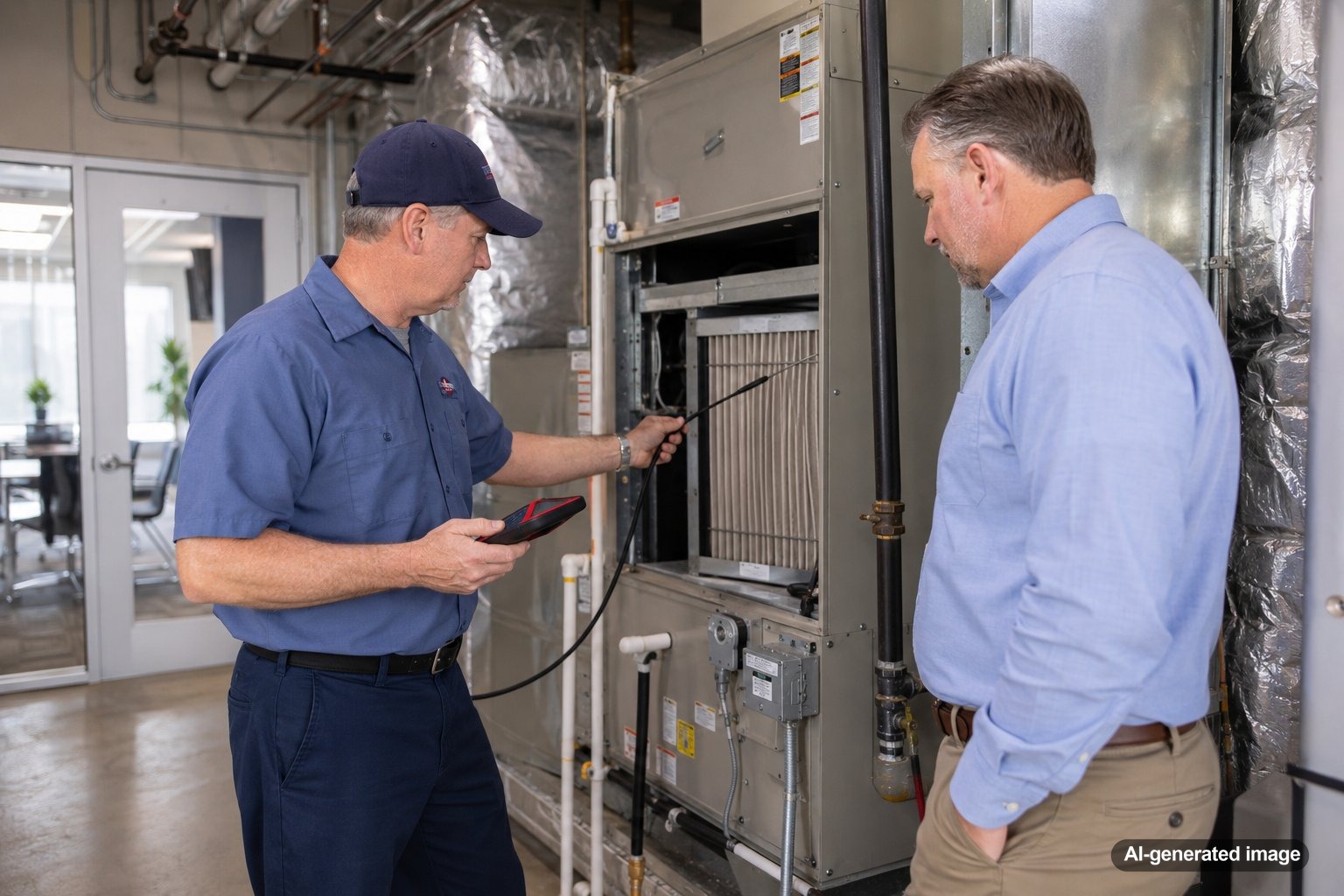
During routine commercial HVAC maintenance, a qualified technician can evaluate the equipment and look for conditions that may interfere with steady operation. Cleaning, inspection, calibration, and performance checks may help the system respond more predictably instead of overshooting, lagging behind, or running in short bursts. For buildings with multiple zones, rooftop units, or more complex systems, routine maintenance is especially important because one neglected component can affect comfort across a larger area.
Airflow has a direct effect on employee and customer comfort
Airflow is easy to overlook until it becomes a problem. A room with weak airflow may feel warm in the summer, chilly in the winter, or stale year-round. A space with too much airflow may feel drafty, noisy, or distracting. In workplaces, those differences can affect how employees focus, how customers feel, and how long visitors want to stay.
Maintenance can help uncover airflow problems tied to clogged filters, blocked returns, dirty blower components, damaged belts, loose panels, duct restrictions, or equipment wear. In some cases, building use has changed since the HVAC system was designed. A storage area becomes an office. A quiet office becomes a busy treatment room. A retail floor adds new equipment or lighting. Maintenance visits create opportunities to spot these changes and discuss whether the HVAC setup still matches the way the building is actually being used.
Indoor air quality and comfort are closely connected
Workplace comfort is not only temperature. Air that feels stale, humid, dry, dusty, or heavy can make a building uncomfortable even when the thermostat reads correctly. Commercial buildings may also deal with higher occupancy, frequent door openings, cleaning products, outdoor air quality changes, and ventilation demands that vary throughout the day.
HVAC maintenance supports indoor comfort by keeping key system components cleaner and more functional. Filter replacement, coil inspections, drain checks, ventilation review, and system performance observations can all play a role. If a building has ongoing concerns related to humidity, odors, airborne particles, or ventilation, Meyer & Depew can also help commercial property owners explore options such as commercial air purification systems when appropriate.
Better maintenance can reduce disruptive breakdowns
Comfort complaints often become urgent when the system fails during a busy workday. A summer cooling problem in a packed office or a heating issue during a New Jersey cold snap can quickly affect productivity, tenant satisfaction, and customer experience. Maintenance cannot prevent every breakdown, but it can reduce the risk of certain preventable problems going unnoticed.
Loose electrical connections, dirty coils, worn belts, clogged drains, weak airflow, failing motors, and unusual operating patterns may be found during routine service before they cause a larger disruption. For business owners and facility managers, that advance warning can make planning easier. Repairs can often be scheduled with less disruption than an emergency no-cooling or no-heat call during peak operating hours.
- Make sure thermostats are set correctly and have not been changed by mistake.
- Confirm that supply and return vents are open and not blocked by furniture, displays, boxes, or equipment.
- Check whether filters are visibly dirty if they are safely accessible.
- Look for obvious debris around outdoor or rooftop equipment from a safe location only.
- Note which rooms are uncomfortable, what time of day the issue happens, and whether it changes with occupancy.
What businesses should look for between maintenance visits
Facility managers, office managers, and building owners do not need to diagnose HVAC failures. Still, they can pay attention to patterns that help a technician evaluate the issue more efficiently. Repeated hot and cold complaints, rising humidity, musty odors, unusual noises, water near equipment, frequent thermostat adjustments, or rooms that never seem to settle may all be useful clues.
It also helps to track whether comfort issues happen during certain conditions. Does the office get uncomfortable after lunch when occupancy rises? Does one side of the building overheat on sunny afternoons? Does the system struggle after a weekend setback? Does a retail entrance lose comfort when doors open frequently? These details can point to airflow, controls, ventilation, load, or equipment performance issues that deserve professional attention.
When maintenance leads to bigger comfort conversations
Sometimes maintenance improves comfort by restoring normal operation. Other times, it reveals that the equipment or layout may no longer be the right fit. Aging rooftop units, changing occupancy, renovated spaces, added technology loads, or repeated comfort complaints may require a broader look at the building’s HVAC strategy.
For some commercial properties, the next step may be repair. For others, it may involve updated controls, zoning improvements, ventilation changes, air purification options, or replacement planning. Meyer & Depew supports commercial HVAC services for businesses and organizations throughout Central and Northern New Jersey, helping decision-makers understand practical options without pushing one-size-fits-all answers.
FAQ: HVAC maintenance and workplace comfort
How often should a commercial HVAC system be maintained?
Many commercial systems benefit from maintenance at least twice a year, often before the main cooling and heating seasons. Some buildings need more frequent attention depending on equipment type, operating hours, occupancy, filters, and system demands.
Can maintenance fix every hot or cold spot?
No. Maintenance can often improve comfort when problems are tied to dirty components, restricted airflow, worn parts, or control issues. Persistent hot or cold spots may also involve duct design, zoning, insulation, building layout, sun exposure, or equipment sizing.
Does HVAC maintenance help with workplace air quality?
It may help by keeping filters, coils, drains, and ventilation-related components in better condition. If a building has ongoing IAQ concerns, a qualified HVAC professional can evaluate whether additional air quality or ventilation solutions should be considered.
Is a commercial HVAC maintenance plan worth it?
For many businesses, a plan helps keep service organized, reduces the chance of missed maintenance, and gives decision-makers a clearer picture of system condition over time. It can be especially useful for buildings where comfort issues affect employees, customers, tenants, or daily operations.
Better HVAC maintenance can make a workplace feel more consistent, more comfortable, and easier to manage. It is not a cure-all, but it is one of the most practical steps a New Jersey business can take to reduce comfort complaints and keep equipment operating more reliably.
Need commercial HVAC support in New Jersey?
Meyer & Depew works with businesses, organizations, and commercial properties throughout Central and Northern New Jersey.
Learn more about commercial HVAC maintenance plans.