



How Often Should You Change Your HVAC Filter in Summer?
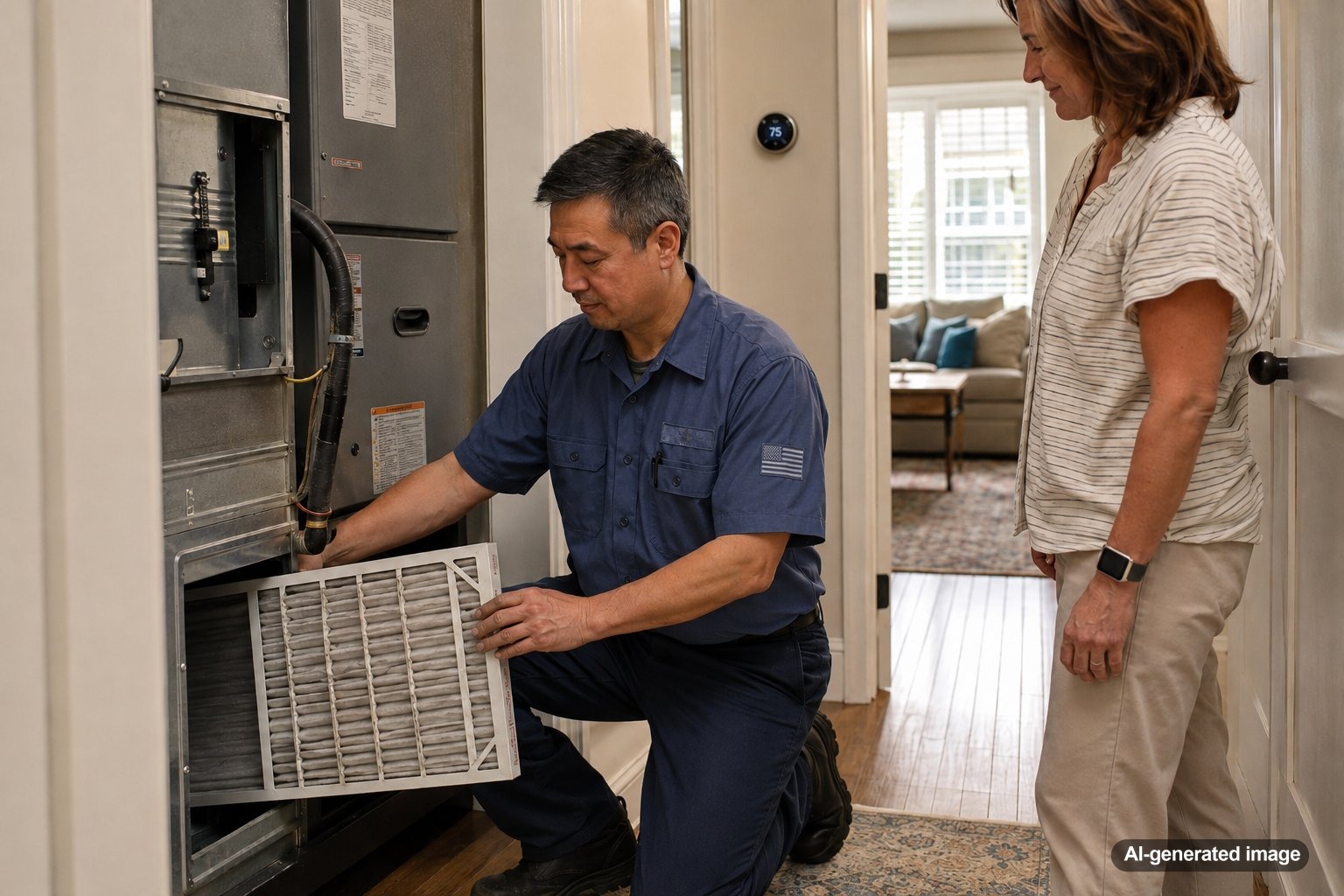
Most homeowners should check their HVAC filter every month during summer and replace it about every 30 to 90 days, depending on the home, filter type, system use, pets, allergies, and indoor dust. In Central and Northern New Jersey, summer heat and humidity can make an AC system run for long stretches, which means the filter has more opportunities to collect dust, pollen, pet hair, and other airborne debris.
A clean filter is one of the simplest ways to support airflow and reduce unnecessary strain on your cooling system. It is also one of the easiest maintenance items to overlook. If your AC is running daily, your filter schedule should be based on real conditions in your home, not just the date printed on the filter package. For broader seasonal care, Meyer & Depew’s AC service and maintenance can help keep the rest of the system checked as well.
In summer, inspect your HVAC filter once a month. Replace standard 1-inch filters about every 30 to 60 days during heavy AC use. Thicker high-efficiency filters may last longer, but they still need to be checked regularly. Replace the filter sooner if it looks dirty, airflow feels weak, your home has pets, someone has allergies, or your AC is running more than usual.
Why Summer Can Make Filters Get Dirty Faster
Summer puts different demands on your HVAC system than mild spring or fall weather. When temperatures climb, your AC may run for hours at a time to keep up. Every cooling cycle pulls air through the return side of the system, and that air passes through the filter before moving across the equipment and back into your rooms.
More runtime usually means more air movement, and more air movement means the filter can load up faster. In New Jersey homes, summer can also bring pollen, outdoor dust, lawn debris, construction dust, and humidity-related comfort issues. If doors open often, windows are cracked during cooler evenings, or kids and pets move in and out all day, the filter may collect debris more quickly than expected.
A Practical Summer Filter Replacement Schedule
There is no single replacement schedule that fits every home, but these guidelines work well for many households:
- Every 30 days: Homes with standard 1-inch filters, pets, heavy AC use, allergy concerns, nearby construction, or higher indoor dust.
- Every 45 to 60 days: Homes with moderate AC use, no pets, and a filter that still looks reasonably clean after monthly checks.
- Every 60 to 90 days: Homes using certain thicker filters designed for longer service, as long as the filter is not visibly dirty and airflow remains strong.
- Sooner than scheduled: Any time the filter looks clogged, gray, matted with debris, or visibly restrictive.
The filter itself matters, too. A thin fiberglass filter usually has a different lifespan than a pleated filter. A thicker media filter in a properly designed system may last longer, but that does not mean it should be ignored all summer. Monthly inspection is still a smart habit.
Signs Your HVAC Filter Needs To Be Changed Sooner
A dirty filter can make the system work harder to move air. While it is not the only possible cause of cooling problems, it is one of the first safe checks a homeowner can make before requesting service.
- Airflow from supply vents feels weaker than normal.
- Some rooms feel warmer or more humid than others.
- The AC seems to run longer than usual to reach the thermostat setting.
- Dust collects quickly on furniture, vents, or return grilles.
- The filter looks dark, coated, bent, or packed with pet hair.
- The system starts and stops frequently, which may have several causes and should be evaluated if it continues.
If replacing the filter does not improve airflow or comfort, the issue may be elsewhere in the system, such as the blower, ductwork, refrigerant circuit, outdoor coil, thermostat, or overall equipment condition. A qualified technician can evaluate those components safely.
How Pets, Allergies, And Indoor Activity Change The Schedule
Two homes with the same AC system may need very different filter schedules. A quiet household with no pets may get more life from a filter than a busy home with dogs, cats, frequent guests, or active kids. Pet hair and dander can collect quickly on a filter, especially when the system runs heavily during hot weather.
Allergy concerns can also affect the decision. During high pollen periods, replacing the filter more often may help reduce the amount of captured debris sitting in the system. Filters are not a cure for indoor air quality issues, but choosing the right filter and replacing it on schedule can support cleaner airflow. For homes dealing with recurring dust, humidity, stale air, or comfort concerns, Meyer & Depew’s air quality and comfort options may be worth discussing.
Choosing The Right Filter Matters
It can be tempting to buy the most restrictive filter on the shelf, but higher filtration is not always better for every HVAC system. Some filters capture more particles but can also restrict airflow if the system is not designed for them. Restricted airflow can contribute to poor comfort and may increase strain on the equipment.
The best filter choice depends on your system, duct design, indoor air quality needs, and manufacturer guidance. Use the correct filter size, install it in the proper direction, and avoid stacking multiple filters together. If you are unsure what filter type your system should use, ask during your next maintenance visit.
- Check the filter once a month during summer.
- Confirm the filter is the correct size and fits securely.
- Make sure the airflow arrow points in the proper direction.
- Keep supply and return vents open and clear of furniture, rugs, and curtains.
- Look for obvious debris around the outdoor unit, but do not open equipment panels.
- If the breaker has tripped, reset it only once if it is safe to do so. If it trips again, schedule professional service.
When A Filter Change Is Not Enough
A clogged filter can contribute to cooling problems, but it is not always the full explanation. If your AC is blowing warm air, making unusual noises, freezing up, leaking water, producing electrical odors, or failing to keep your home comfortable after the filter has been replaced, it is time to schedule professional service.
Do not open sealed equipment, add refrigerant, bypass safety controls, or attempt electrical or refrigerant repairs yourself. These parts of the system require proper training, tools, and safety procedures. If you smell smoke, notice sparks, suspect an electrical issue, or have a carbon monoxide concern related to any fuel-burning equipment, prioritize safety and contact the appropriate emergency service, utility, or qualified professional.
FAQ: Summer HVAC Filter Changes
Should I change my HVAC filter every month in summer?
You should check it every month. Many homes with standard 1-inch filters, pets, allergies, or heavy AC use will need replacement every 30 days during summer. Other homes may be able to go longer if the filter remains clean and airflow is strong.
Can a dirty filter make my AC stop cooling?
A dirty filter can restrict airflow and may contribute to weak cooling, longer run times, uneven rooms, or icing. It is not the only possible cause, so ongoing cooling trouble should be inspected by a qualified technician.
Is a higher-rated filter always better?
Not always. A filter that is too restrictive for your system can reduce airflow. The right choice balances filtration needs with the airflow requirements of your specific HVAC equipment.
What if my filter gets dirty again very quickly?
Fast buildup may point to heavy dust, pets, duct leakage, renovation debris, an undersized return, or other airflow issues. If it keeps happening, professional maintenance can help identify what is contributing to the problem.
For most New Jersey homes, the best summer habit is simple: check the HVAC filter every month and replace it whenever it looks dirty, especially during heavy AC use. A clean filter supports airflow, comfort, and routine system care, but it should be part of a larger maintenance plan rather than the only thing you rely on.
Want to make HVAC maintenance easier to stay on top of?
A service plan can help keep routine heating and cooling maintenance on your calendar before small issues become bigger headaches.
You can also request a service appointment.