



When Does HVAC Zoning Make Sense for a New Jersey Home?
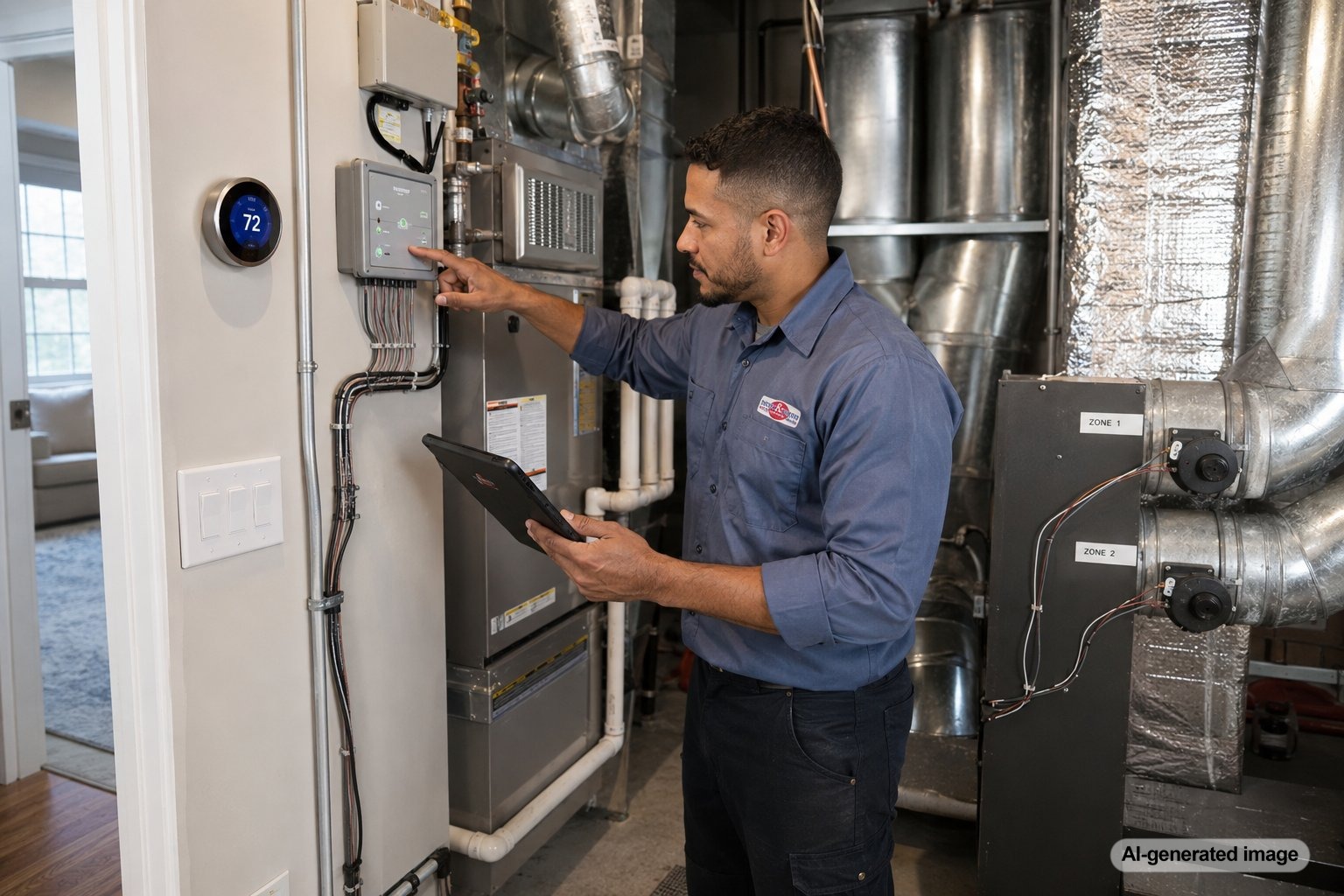
HVAC zoning can make sense for a New Jersey home when different areas of the house never seem comfortable at the same time. If the upstairs bedrooms are too warm, the finished basement feels cold, or a sunny family room fights the thermostat all afternoon, zoning may help divide the home into separate comfort areas instead of treating every room as one big space.
For many homeowners in Central and Northern New Jersey, zoning is worth discussing when ordinary fixes have not solved uneven heating or cooling. A properly designed zoning system can help direct conditioned air where it is needed, but it has to be matched to the home’s ductwork, equipment, layout, and comfort goals.
HVAC zoning usually makes the most sense when a home has clear temperature differences between floors, additions, finished basements, large windows, rooms that are rarely used, or family members with different comfort preferences. It is less likely to help if the real issue is an undersized system, leaky ducts, poor insulation, blocked vents, or a neglected air filter.
What HVAC zoning does
In a typical single-zone forced-air system, one thermostat controls heating and cooling for the entire home. That can work well in a compact, evenly insulated house, but many New Jersey homes are not that simple. Older construction, renovations, second floors, sunrooms, and basement spaces can all behave differently throughout the day.
A zoning system uses multiple thermostats and controlled dampers to manage separate areas, or zones, within the home. Instead of one thermostat trying to represent the whole house, each zone can call for heating or cooling based on its own temperature. This can improve comfort when the system and ductwork are appropriate for zoning.
When zoning often makes sense
One of the strongest signs is a repeatable comfort pattern. For example, if the second floor is warm every summer night while the first floor feels comfortable, zoning may be worth evaluating. The same is true if a finished basement needs less cooling but more heat than the main living area.
Zoning may also be useful in homes with additions, bonus rooms, home offices, large open living spaces, or rooms with heavy afternoon sun. These areas often have different heating and cooling loads than the original part of the house, especially in New Jersey homes that have been expanded over time.
Homes with changing schedules can also benefit. A household may want bedrooms cooler at night, a home office comfortable during the day, and little conditioning in guest rooms that are rarely used. Zoning can support more targeted comfort than one central thermostat, especially when paired with the right thermostat controls.
When zoning may not be the right first fix
Zoning is not a cure-all. If the HVAC system is already struggling to heat or cool the house, adding zones will not automatically solve the underlying issue. A qualified technician should first look at airflow, duct design, equipment capacity, insulation, return air, filter condition, and overall system performance.
For example, rooms may feel uneven because the ductwork is poorly balanced, a return is undersized, vents are blocked by furniture, or the air filter is restricting airflow. In those cases, maintenance or duct adjustments may be a better first step than adding a zoning system. If routine care is overdue, reviewing service plan options can also help keep heating and cooling maintenance on a more consistent schedule.
Common New Jersey home scenarios where zoning helps
- Two-story homes: Warm air rises, so upstairs rooms often need different cooling attention than first-floor rooms.
- Finished basements: Basement spaces may stay cooler in summer but need more support during colder months.
- Additions and renovated spaces: Newer rooms may not match the airflow or insulation of the original home.
- Rooms with large windows: Sun exposure can create hot spots that one central thermostat may not read accurately.
- Different comfort preferences: Zoning can help when bedrooms, living spaces, and work areas need different settings.
What to check before asking about zoning
- Make sure supply and return vents are open and not blocked.
- Inspect or replace the air filter if it is dirty.
- Confirm the thermostat is set correctly and not affected by direct sun, lamps, or drafts.
- Look for obvious airflow restrictions around indoor vents and the outdoor unit.
- Note which rooms are uncomfortable, what time of day it happens, and whether the issue is heating, cooling, or both.
These simple observations can help a technician understand whether the issue looks like a zoning opportunity, an airflow problem, a maintenance concern, or an equipment sizing issue. Avoid opening sealed equipment, adjusting electrical components, or modifying dampers or controls on your own.
How zoning compares with ductless options
Sometimes the best solution is a zoning system connected to the existing ducted HVAC equipment. In other homes, especially those with additions, garages converted to living space, or rooms that are hard to reach with existing ductwork, ductless mini split systems may be a practical alternative.
The right choice depends on the home’s layout, the condition of the ductwork, available space, electrical needs, comfort goals, and budget priorities. A professional evaluation can help determine whether zoning, ductless equipment, duct improvements, thermostat upgrades, or system replacement should be considered.
When to call a professional
Call an HVAC professional when temperature differences are consistent, comfort complaints are affecting daily life, or you are planning a renovation that will change how the home is heated and cooled. It is especially important to get a professional opinion before adding zoning to an older system, because airflow and static pressure need to be evaluated carefully.
A qualified technician can review the equipment, inspect ductwork, look at thermostat locations, and explain whether zoning is a reasonable fit. The goal is not just to add more controls. The goal is to design a system that moves air properly and supports the way the home is actually used.
FAQ: HVAC zoning for New Jersey homes
Can HVAC zoning lower energy use?
It may help reduce wasted heating or cooling in certain situations, especially when rarely used areas do not need the same conditioning as occupied spaces. Actual results depend on the system, home layout, thermostat settings, insulation, and daily habits.
Can zoning fix one room that is always uncomfortable?
Sometimes, but not always. One problem room may be caused by duct design, poor insulation, sun exposure, a blocked vent, or an addition that was never properly integrated into the original HVAC system.
Do all homes need HVAC zoning?
No. Many homes are comfortable with one properly located thermostat and a well-designed system. Zoning is most useful when different parts of the home have different comfort needs.
Can zoning be added to an existing HVAC system?
In many cases, it can be considered, but the existing ductwork and equipment must be evaluated first. Not every system is a good candidate without additional changes.
HVAC zoning makes the most sense when the home has real, repeatable comfort differences from one area to another and the existing equipment and ductwork can support separate zones. It should be designed carefully, not treated as a quick add-on.
Thinking about replacing or upgrading your HVAC system?
Meyer & Depew can help you understand your options for comfort, efficiency, and long-term reliability in your New Jersey home or business.
Questions? Contact Meyer & Depew or call 908.272.2100.