



Why Exercise Rooms Get Hot Faster Than Other Rooms
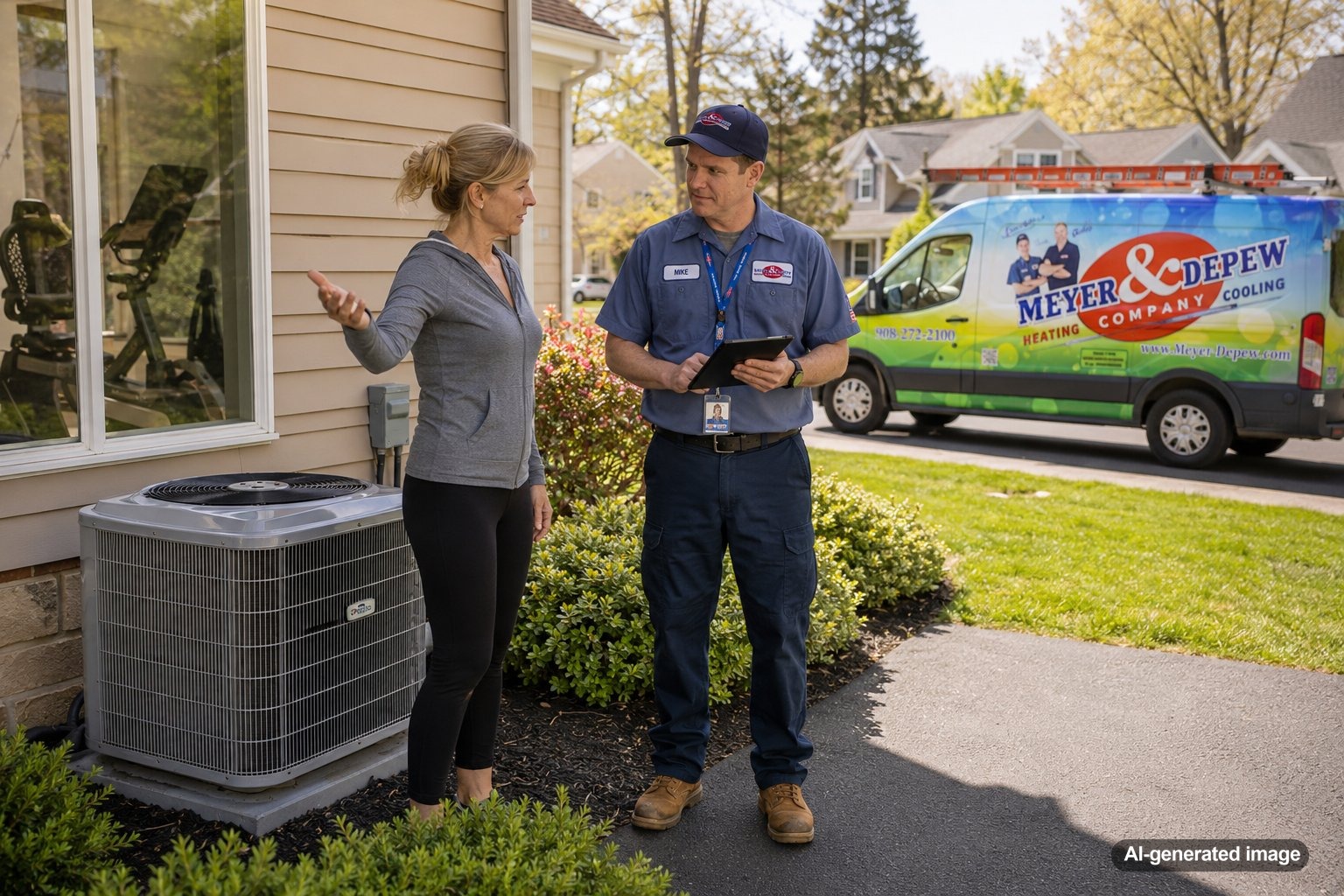
Exercise rooms get hot faster than other rooms because they combine body heat, movement, humidity, equipment heat, and often limited airflow in one enclosed space. Even when the rest of the house feels comfortable, a home gym, basement workout area, converted bedroom, or bonus room can feel stuffy within minutes.
In Central and Northern New Jersey homes, this can be especially noticeable during humid weather, when the AC is already working hard to cool and dehumidify the house. The issue is not always that your air conditioner is failing. In many cases, the room simply has a different comfort load than the rest of the home. Meyer & Depew helps homeowners evaluate these uneven comfort issues through AC service and maintenance, airflow checks, and practical comfort solutions.
Exercise rooms heat up quickly because workouts add heat and moisture to the air, while many home gyms have fewer vents, closed doors, poor return airflow, direct sun, or equipment that gives off heat. Better airflow, humidity control, zoning, ductless cooling, and regular HVAC maintenance may help keep the room more comfortable.
Why Exercise Rooms Feel Warmer So Quickly
A regular bedroom, office, or living room usually has a predictable cooling load. People sit, sleep, read, work, or watch TV. An exercise room is different because the activity level changes the room almost immediately. As you work out, your body releases heat and moisture. The harder the workout, the faster that heat builds up.
That heat has to go somewhere. If the room is small, enclosed, or not getting enough conditioned air, the temperature can rise faster than the HVAC system can respond. The thermostat may be located in a hallway or main living area, so it may not sense what is happening in the workout room. The AC may shut off because the main part of the house is satisfied while the exercise room still feels hot.
Body Heat And Humidity Change The Room Load
One person exercising can add a noticeable amount of heat to a small room. Two people working out together can make the space feel uncomfortable even faster. This is not just about temperature. Sweat adds moisture to the air, and humid air feels heavier, warmer, and harder to cool.
Humidity is a major comfort factor in New Jersey homes. During muggy summer weather, an exercise room can feel uncomfortable even when the thermostat setting looks reasonable. If the AC is not running long enough to remove moisture, or if airflow to the room is weak, the space may feel sticky and overheated before the rest of the house shows any problem.
Closed Doors Can Limit Air Circulation
Many people close the door while using a treadmill, bike, weights, or online workout program. That may help with noise and privacy, but it can also trap heat. If the room has a supply vent but poor return airflow, the conditioned air has a harder time moving through the space.
For an HVAC system to work well, air needs a path in and a path out. A closed room with no return vent, a blocked return, or a tight door undercut can become pressurized. When that happens, cooled air may not enter the room as effectively, and warm air may linger.
- Make sure supply and return vents are open and not blocked by mats, storage bins, furniture, or equipment.
- Check the air filter and replace it if it is dirty or overdue.
- Look for obvious airflow restrictions, such as a closed door with no return path.
- Confirm the thermostat settings and fan setting are appropriate for the time of day.
- Schedule professional service if the room stays uncomfortable or airflow feels weak.
Workout Equipment Can Add Heat Too
Some exercise equipment gives off heat during use. Treadmills, stationary bikes, dehumidifiers, TVs, speakers, fans, and chargers can all add a small amount of heat. By themselves, these items may not seem like much, but in a closed room with active exercise, the effect can be noticeable.
Finished basements and garage conversions can have their own comfort challenges as well. A basement gym may feel cool at first but turn damp during longer workouts. A room over a garage may heat up quickly because of insulation, sun exposure, or ductwork limitations. A converted attic or bonus room can be even more difficult because hot air naturally rises and roof heat can affect the space.
Sun Exposure And Room Location Matter
An exercise room with large windows, west-facing glass, or limited shading can heat up before a workout even begins. Afternoon sun can warm floors, walls, and equipment, creating a higher starting temperature. Once you begin exercising, the room has less margin before it feels uncomfortable.
Location inside the home matters too. Rooms at the end of long duct runs often receive weaker airflow than rooms closer to the HVAC equipment. If the exercise room was originally designed as a spare bedroom, storage room, or office, the ductwork may not have been planned around high-activity use.
The Thermostat May Not Know The Room Is Hot
Most homes have one central thermostat that measures temperature in one location. If that thermostat is in a hallway, living room, or first-floor area, it may not reflect conditions in a second-floor workout room or finished basement gym. The system responds to the thermostat, not to every room equally.
This is one reason homeowners often notice uneven temperatures after changing how they use a room. A room that felt fine as a guest bedroom may feel uncomfortable as a home gym because the heat load is completely different. In some homes, zoning systems or separate room-by-room solutions can help address that difference more effectively than constantly lowering the main thermostat.
Practical Ways To Improve Exercise Room Comfort
Start with simple airflow and maintenance basics. Keep vents open, move equipment away from registers, replace dirty filters, and avoid blocking returns. If it is safe and practical, leaving the door slightly open during a workout may help air move more freely.
Ceiling fans or portable fans can help air movement, but they do not actually remove heat or humidity from the home. They can make the room feel better during a workout, especially when the AC is already removing moisture, but they are not a substitute for proper cooling or ventilation.
If the room stays hot despite basic checks, the issue may involve duct design, return airflow, insulation, thermostat location, system capacity, or humidity control. A qualified technician can evaluate whether the room is under-supplied, whether the system needs maintenance, or whether a dedicated comfort solution would make sense. For some exercise rooms, ductless mini split systems can be a practical option because they provide targeted heating and cooling without relying on the main duct system.
When To Call A Professional
Call an HVAC professional if the exercise room is consistently uncomfortable, airflow from the vent feels weak, the AC runs constantly, humidity remains high, or other rooms are also uneven. You should also schedule service if you notice unusual noises, short cycling, water around equipment, burning smells, or a sudden change in performance.
Do not open sealed HVAC equipment, adjust electrical components, handle refrigerant, or attempt repairs that involve high voltage or system controls. Those issues should be handled by a qualified technician. A professional evaluation can help separate a normal room-load issue from an airflow, maintenance, equipment, or design problem.
FAQ: Exercise Rooms And HVAC Comfort
Why does my home gym get hot even when the AC is on?
Your AC may be cooling the main living area while the exercise room has a higher heat and humidity load. If the thermostat is not near the workout space, the system may not run long enough to satisfy that room.
Will lowering the thermostat fix a hot exercise room?
Lowering the thermostat may help temporarily, but it can make other rooms too cold and may not solve poor airflow, humidity, ductwork, or room-location issues. It is better to understand why that specific room is overheating.
Can a fan cool an exercise room?
A fan can improve air movement and make you feel cooler, but it does not remove heat or humidity from the room. If the room is consistently hot and sticky, airflow, AC performance, or humidity control may need attention.
Is a ductless mini split good for a home gym?
A ductless mini split may be a good fit for some home gyms, especially finished basements, bonus rooms, garage conversions, and spaces that are difficult to cool through the main duct system. A professional can evaluate whether it is appropriate for your home.
Should an exercise room have its own thermostat?
Some homes benefit from zoning or a dedicated comfort solution when one room has a very different use pattern than the rest of the house. The right answer depends on the room, ductwork, insulation, HVAC equipment, and comfort goals.
An exercise room gets hot faster because it is doing more work than most rooms. People, movement, moisture, equipment, closed doors, weak airflow, and sun exposure can all add up. If simple checks do not improve comfort, an HVAC evaluation can help identify the right next step.
Need help with your heating, cooling, or HVAC system?
Meyer & Depew serves homeowners and businesses throughout Central and Northern New Jersey.
Get a quote or call 908.272.2100.