



How to Cool a Home Gym Without Overworking Your AC
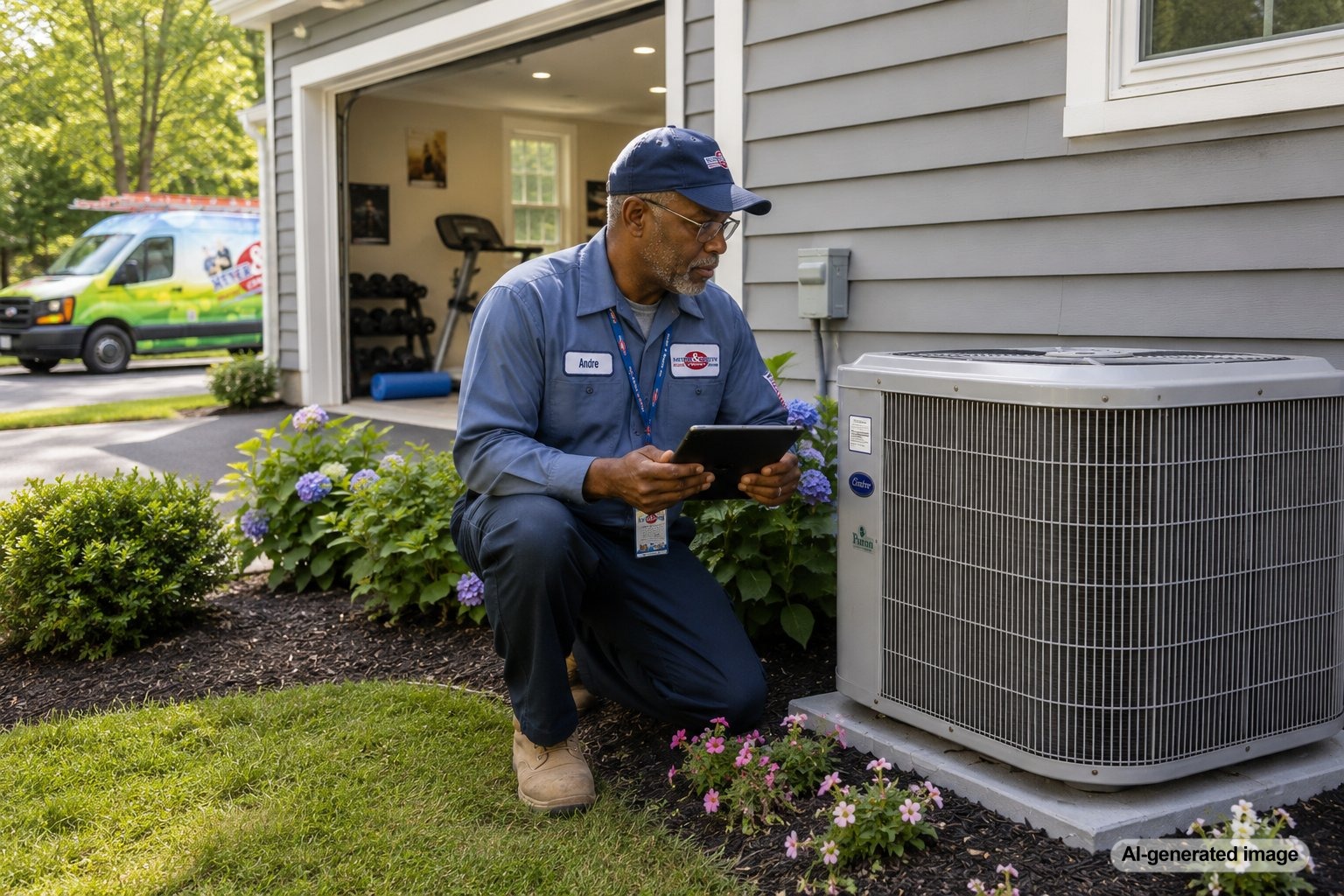
A home gym can heat up fast, even when the rest of the house feels comfortable. Exercise adds body heat, equipment can trap warmth, and rooms with limited airflow often make your AC work harder than it should. The best way to cool a home gym without overworking your AC is to manage airflow, reduce heat buildup, control humidity, and keep your cooling system well maintained.
For homeowners in Central and Northern New Jersey, this matters even more during humid summer weather. A workout room that feels stuffy may not always mean your AC is too small. It could point to airflow restrictions, poor room layout, blocked vents, a dirty filter, or a space that needs a smarter comfort strategy. If your cooling system has not been serviced recently, professional AC service and maintenance can also help identify issues before they put extra strain on the equipment.
To cool a home gym without overworking your AC, improve air movement, keep vents and returns clear, work out during cooler parts of the day when possible, use fans strategically, manage humidity, and avoid setting the thermostat dramatically lower. If the room stays hot despite safe basic checks, an HVAC professional can evaluate airflow, ductwork, zoning, ductless options, or system performance.
Why Home Gyms Get Hot So Quickly
A home gym is different from a bedroom, office, or family room because the heat load changes as soon as you start exercising. Treadmills, stationary bikes, strength equipment, mirrors, rubber flooring, and electronics can all contribute to a room that holds heat longer. If the space is in a finished basement, garage conversion, spare bedroom, attic area, or sun-exposed room, the temperature can climb even faster.
Humidity is another major factor. New Jersey summers often feel heavy, and indoor humidity can make a 72-degree room feel warmer than it actually is. When moisture levels are high, sweat does not evaporate as easily, so the room feels sticky and uncomfortable even when the AC is running. That can tempt homeowners to lower the thermostat again and again, which may increase system strain without solving the real comfort issue.
Move Air Before You Lower the Thermostat
One of the simplest ways to make a home gym feel cooler is to improve air movement. A ceiling fan, portable fan, or wall-mounted fan can help move cooled air across the room and make the space feel more comfortable during a workout. The goal is not to replace the AC, but to help the cooling already being delivered feel more effective.
Fan placement matters. A fan blowing across the workout area can help with comfort, while a fan pointed directly at a blocked corner may do very little. If the room has a supply vent, avoid placing large equipment, storage racks, benches, or mats over it. If the room has a return vent, keep it clear as well, because your AC needs good return airflow to cycle air properly through the system.
Do Not Shock the System With a Big Thermostat Drop
Turning the thermostat down several degrees right before a workout may seem logical, but it can keep the AC running longer without cooling the gym as quickly as expected. Central AC systems are designed to cool the whole conditioned space, not instantly chill one high-heat room on demand. A large thermostat drop can also make other rooms too cold while the gym still feels warm.
A more practical approach is to make small thermostat adjustments in advance, close blinds or shades in sun-exposed rooms, and use fans to improve comfort during the workout. A smart thermostat or zoning strategy may also help in some homes, especially when the gym is used regularly and comfort needs vary from room to room. Meyer & Depew offers options for thermostats and zoning systems that can help homeowners manage comfort more thoughtfully.
Reduce Heat Gain in the Room
Keeping a home gym cooler often starts before the workout begins. If the room gets direct sun, close curtains, blinds, or shades during the hottest part of the day. If you use a TV, sound system, dehumidifier, or other electronics, turn off what you do not need once you are done. Small heat sources add up in a room where body heat is already increasing.
Workout timing can help, too. Morning or evening workouts may be easier on your cooling system than exercising during the hottest part of the afternoon. This is especially true during heat waves, when your AC may already be working hard to maintain comfort throughout the home.
Watch Humidity, Not Just Temperature
A home gym can feel uncomfortable because of moisture, not just heat. If the air feels damp, smells musty, or the room never feels fresh, humidity and ventilation may need attention. High humidity can make workouts feel warmer and can also affect odors, comfort, and indoor air quality.
Basic steps like using a bathroom exhaust fan nearby when appropriate, keeping doors open between workouts, and allowing air to circulate can help. In some homes, a broader indoor comfort solution may be worth considering. Meyer & Depew can help homeowners explore air quality and comfort options when humidity, stale air, or uneven comfort becomes a recurring concern.
- Check that supply and return vents in or near the gym are open and not blocked.
- Inspect or replace the air filter if it is dirty.
- Make sure the thermostat is set correctly and not being affected by direct sunlight or nearby heat sources.
- Look for obvious debris around the outdoor AC unit.
- If the system stops running, check whether the breaker has tripped once, if it is safe to do so.
When a Home Gym May Need a Different Cooling Strategy
Some home gyms are simply difficult for a central AC system to serve evenly. Finished basements, converted garages, bonus rooms, additions, and rooms far from the main air handler can all have airflow challenges. In other cases, the ductwork may not be delivering enough conditioned air to that room, or the return path may be limited.
If the gym is used often, a ductless mini split may be worth discussing. Ductless systems can provide room-by-room heating and cooling without relying on existing ductwork, which can be helpful for spaces that never feel quite right. They are not the answer for every home, but they can be a strong option for additions, converted spaces, or rooms with persistent comfort issues.
Do Not Ignore Signs of AC Strain
If your AC runs constantly, short cycles, blows weak air, makes unusual noises, or cannot keep up in several rooms, the issue may be bigger than the home gym. A dirty coil, low airflow, duct leakage, aging equipment, incorrect system sizing, or refrigerant-related problems can all affect cooling performance. Homeowners should not open sealed equipment, add refrigerant, bypass safety switches, or attempt electrical repairs.
A qualified technician can evaluate the system safely and determine whether maintenance, repair, airflow improvements, or replacement options should be considered. Routine maintenance may help reduce the risk of avoidable strain, but it cannot guarantee that a system will never break down or that every comfort issue will disappear.
FAQ
Should I close vents in other rooms to push more air into my home gym?
Usually, no. Closing vents can increase pressure in the duct system and may reduce overall performance. It is better to keep vents open and ask a professional about airflow, balancing, zoning, or ductless options if one room is consistently uncomfortable.
Can a fan really help if the AC is already running?
Yes, a fan can make the room feel cooler by moving air across your body during a workout. It does not lower the actual room temperature, but it can improve comfort and reduce the urge to set the thermostat too low.
Why does my home gym feel humid even with the AC on?
The AC may not be running long enough to remove moisture, airflow may be limited, or the home may have a broader humidity issue. A professional can evaluate whether maintenance, thermostat settings, ventilation, or indoor air quality equipment should be considered.
Is a ductless mini split good for a home gym?
It can be, especially if the gym is in an addition, converted garage, finished basement, or room that does not cool well through the main duct system. A professional load and comfort evaluation can help determine whether ductless cooling makes sense.
You do not have to freeze the whole house to make a home gym more comfortable. Better airflow, humidity control, smart thermostat habits, and regular AC care can help the room feel cooler while reducing unnecessary strain on your system.
Need help with your heating, cooling, or HVAC system?
Meyer & Depew serves homeowners and businesses throughout Central and Northern New Jersey.
Get a quote or call 908.272.2100.