

How Dog Hair and Cat Hair Affect Summer HVAC Performance
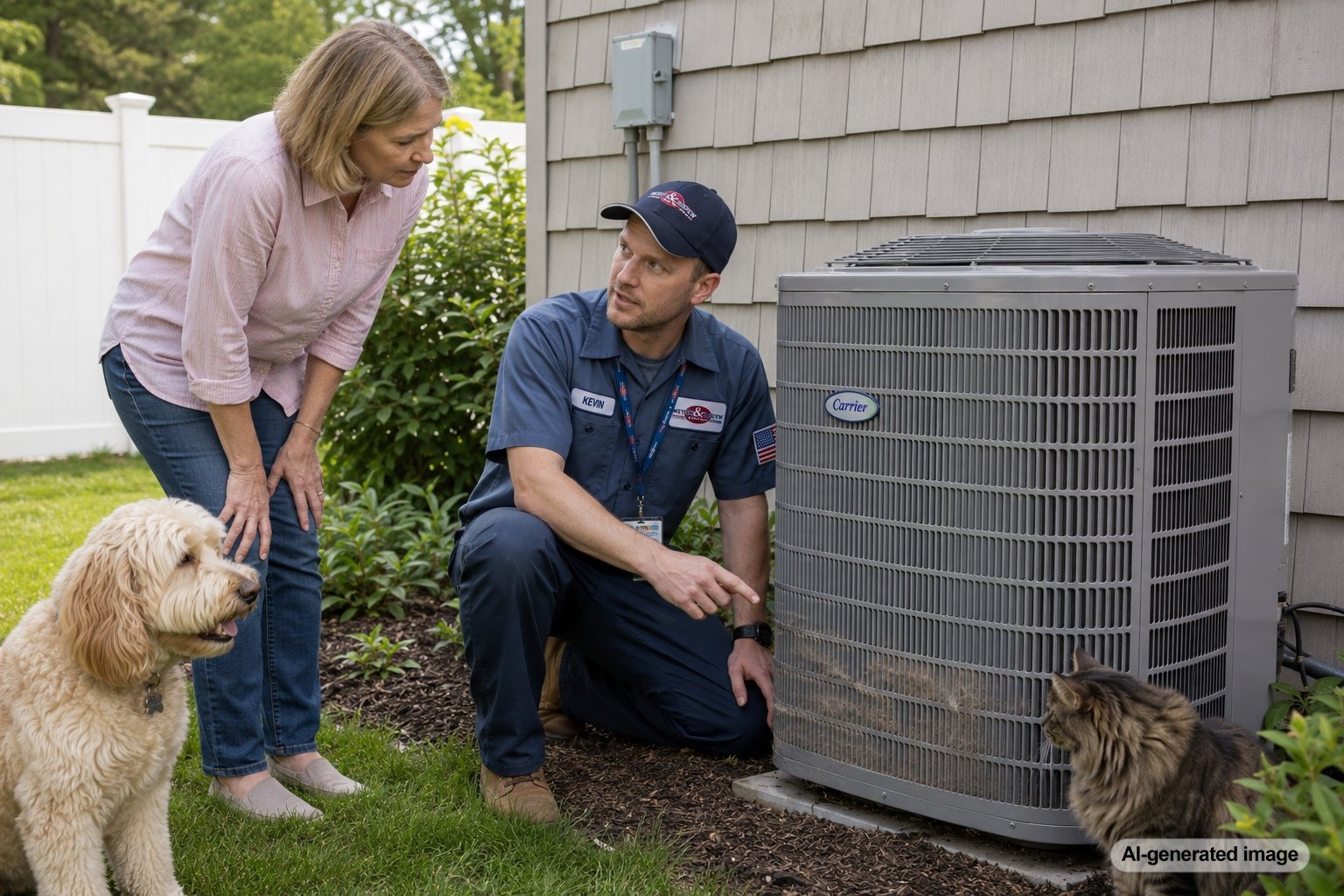
Dog hair and cat hair can seem like a housekeeping issue, but during a New Jersey summer, it can become an HVAC issue too. When your AC is already working hard against heat and humidity, pet hair can add another layer of strain by clogging filters, restricting airflow, coating return grilles, and carrying dander through the home.
For pet owners in Central and Northern New Jersey, the goal is not to keep a spotless home every minute. It is to reduce the buildup that makes cooling equipment work harder than it should. A few practical habits, paired with regular AC service and maintenance, can help protect airflow, comfort, and indoor air quality during the hottest months.
Dog hair and cat hair can affect summer HVAC performance by loading up the air filter faster, reducing airflow, spreading dander, collecting near return vents, and making the AC run longer to cool the home. Homes with multiple pets, heavy shedders, or long-haired breeds often need more frequent filter checks and more consistent HVAC maintenance.
Why Pet Hair Matters More In Summer
Summer cooling puts steady demand on an AC system. On hot, humid days, your system may run for longer cycles to remove heat and moisture from the home. If pet hair and dander are restricting airflow at the same time, the system has to work through a smaller path to move conditioned air.
That restriction can show up in several ways. Rooms may feel warmer than the thermostat setting. The system may run longer than usual. Air from the vents may feel weaker. In some cases, a clogged filter can contribute to icing on the indoor coil or other performance problems that require professional evaluation.
Pet hair is also rarely alone. It often travels with dust, skin flakes, pollen, and other particles that settle on filters, floors, furniture, return grilles, and duct openings. That mixture can make the home feel stuffier, especially for people who are sensitive to airborne particles.
How Dog Hair And Cat Hair Affect HVAC Airflow
Your HVAC system depends on a clear path for air to move through the return ducts, filter, blower, coil, supply ducts, and vents. Pet hair can interfere with that path before it ever reaches the equipment.
Hair tends to gather around return vents because those grilles pull air from the home back toward the system. If a dog bed, cat tree, litter area, sofa, or favorite sleeping spot is near a return, that grille can collect hair quickly. Once the grille is coated, less air can move through it.
The filter is the next major point of restriction. A clean filter protects equipment and helps capture particles, but a filter packed with pet hair can reduce airflow. In summer, reduced airflow can make the AC less effective and may put added stress on the blower and cooling components.
Pet Hair Can Make Filters Load Up Faster
Many homeowners are used to changing filters on a basic schedule, but pets can change that schedule. A home with one short-haired cat may not need the same filter routine as a home with two large dogs, a long-haired cat, and kids running in and out all summer.
Filter life depends on several factors, including the number of pets, how much they shed, how often the system runs, the type of filter, the home’s dust levels, and whether windows are opened during pollen-heavy weather. During cooling season, it is smart to inspect the filter more often rather than assume it is fine.
- Check the air filter and replace it if it looks clogged, matted, or gray with dust and hair.
- Make sure supply and return vents are open and not blocked by furniture, pet beds, curtains, or storage.
- Vacuum return grilles and the floor area around them.
- Look for obvious debris around the outdoor AC unit, including leaves, grass clippings, and pet hair carried outdoors.
- Schedule professional service if weak airflow, poor cooling, unusual cycling, or icing continues.
Indoor Air Quality Can Be Affected Too
Pet hair itself is visible, but pet dander is often the bigger indoor comfort concern. Dander is made up of tiny particles that can move through the air and settle throughout the home. When the HVAC system runs, those particles may be pulled toward returns and recirculated if filtration, cleaning habits, or airflow are not keeping up.
This does not mean an HVAC system can remove every pet-related particle from a home. It can, however, be part of a better comfort strategy. Proper filter selection, routine maintenance, balanced airflow, and the right indoor air quality options may help reduce the amount of airborne material circulating through the living space.
If your home feels dusty soon after cleaning, has lingering pet odors, or leaves family members feeling stuffy during AC season, it may be worth looking at both HVAC maintenance and air quality and comfort options. The best approach depends on the home, the pets, the duct system, and the existing HVAC equipment.
Why The Right Filter Matters
It can be tempting to choose the thickest or highest-rated filter available, especially in a home with pets. That is not always the best move. A filter must capture particles while still allowing enough airflow for the system it serves. A filter that is too restrictive for the equipment or duct design can create its own performance problems.
A qualified technician can help you understand what filter type is appropriate for your system. In many homes, the better solution is not simply a more restrictive filter, but a consistent filter replacement routine and a broader look at airflow, returns, ducts, and indoor air quality needs.
Pet owners should also pay attention to filter fit. A filter that is the wrong size, bent, loose, or poorly seated may allow air to bypass the filter. When that happens, hair and dust can move deeper into the system instead of being captured where they belong.
Overlooked Pet Hair Trouble Spots
Some of the most common pet-related HVAC issues start in ordinary places. A return grille near a favorite dog bed can gather hair faster than the rest of the house. A cat that sleeps near a vent can leave fur around the supply opening. A laundry room with pet bedding can become a source of lint, fur, and dust that travels back toward the system.
Finished basements, older homes, and homes with uneven airflow can also be more sensitive to restriction. If one part of the house already struggles to cool evenly, a clogged filter or blocked return may make the imbalance more noticeable during a heat wave.
Commercial and small business spaces with pets, such as grooming salons, veterinary offices, or pet-friendly retail areas, may face heavier airborne hair and dander loads than a typical home. Those spaces often need a more deliberate maintenance plan because occupancy, cleaning routines, and equipment runtime can vary widely.
What Pet Owners Can Do During Cooling Season
Small habits can make a meaningful difference. Vacuuming around returns, brushing pets regularly, washing pet bedding, and keeping litter or grooming areas away from major returns can reduce the amount of hair pulled toward the HVAC system.
It also helps to walk through the home while the AC is running. Feel whether airflow from vents seems normal. Look at return grilles for visible hair buildup. Listen for unusual system behavior, such as short cycling or longer-than-normal run times. None of these checks require opening equipment or handling electrical components.
For many pet owners, the most practical step is to pair more frequent filter checks with a routine maintenance plan. Meyer & Depew’s service plans can help keep recurring HVAC maintenance from becoming something you only remember after comfort problems appear.
When To Call A Professional
Pet hair may be part of the problem, but it is not always the whole problem. If your AC is blowing weak air, struggling to keep up, freezing, making unusual noises, producing musty odors, or running constantly, a clogged filter may be only one clue.
A technician can evaluate airflow, filter condition, blower performance, coil condition, refrigerant-related concerns, thermostat operation, duct issues, and overall system performance. Homeowners should not open sealed HVAC components, handle refrigerant, bypass safety controls, or attempt electrical or mechanical repairs.
Professional maintenance is especially useful before or during peak summer demand because small restrictions can become more noticeable when the system is under stress. For pet owners, that maintenance can also help identify whether hair and dander are contributing to comfort or air quality concerns.
FAQ: Pet Hair And Summer HVAC Performance
How often should pet owners check HVAC filters in summer?
Many pet owners benefit from checking filters monthly during cooling season. Some homes may need changes more often, while others may not. The best guide is the actual filter condition and the needs of the HVAC system.
Can pet hair damage my AC system?
Pet hair can contribute to restricted airflow and dirty components if it is allowed to build up. It does not automatically mean the system is damaged, but ongoing restriction can add strain and should be addressed.
Is a higher-rated filter always better for homes with pets?
No. A filter must match the system’s airflow needs. A highly restrictive filter may not be appropriate for every HVAC setup. Ask a qualified technician what filter type is suitable for your equipment.
Can duct cleaning solve pet hair problems?
Duct cleaning may be useful in certain situations, but it is not a substitute for filter changes, return grille cleaning, airflow evaluation, and regular HVAC maintenance. The right solution depends on what is actually causing the buildup or comfort issue.
Should I schedule AC service if I have pets?
Yes, routine AC maintenance is a smart step for many pet owners, especially before or during summer. A technician can check airflow, filter fit, coil condition, and overall performance while looking for signs of restriction.
Dog hair and cat hair can make summer HVAC performance worse by clogging filters faster, restricting airflow, and adding more particles to the air your system moves every day. Staying ahead of filter changes, return grille cleaning, and professional maintenance can help your AC operate more reliably through New Jersey’s cooling season.
Need help with your heating, cooling, or HVAC system?
Meyer & Depew serves homeowners and businesses throughout Central and Northern New Jersey.
Get a quote or call 908.272.2100.