



How Often Should You Change Your AC Filter During Hot Weather?
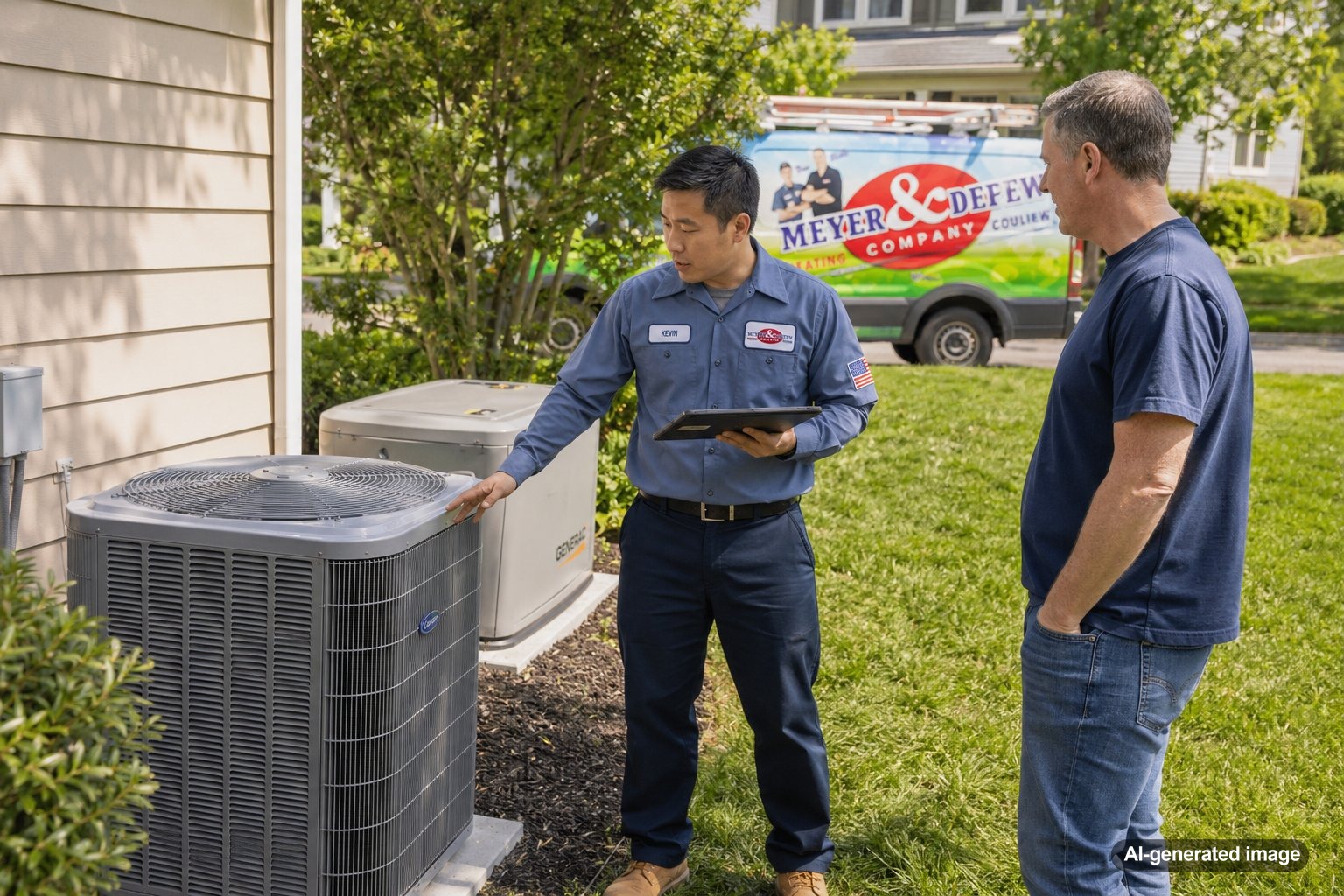
During hot weather, you should check your AC filter about once a month and replace it whenever it looks dirty, clogged, or gray with dust. In many New Jersey homes, that means replacing the filter every 30 to 60 days during heavy summer use, though homes with pets, allergies, renovations, or high system runtime may need more frequent changes.
That simple filter check can make a noticeable difference in airflow, comfort, and system strain. A clean filter helps your cooling system move air more freely, while a clogged one can make rooms feel warmer, cause longer run times, and contribute to avoidable service issues. If your system is already struggling during humid Central and Northern New Jersey weather, Meyer & Depew’s AC service and maintenance team can help evaluate airflow, equipment condition, and maintenance needs.
Check your AC filter every month during hot weather. Replace standard 1-inch filters about every 30 to 60 days when the AC is running daily, and sooner if the filter looks dirty. Thicker media filters may last longer, but the right schedule depends on your system, home, indoor air quality needs, and manufacturer guidance.
Why AC Filters Need More Attention In Hot Weather
Your air conditioner moves a large volume of air through the home during a heat wave. Every cooling cycle pulls air through the return side of the system, across the filter, and through the indoor equipment. When temperatures stay high and the AC runs for hours at a time, the filter collects dust, pet hair, lint, pollen, and other particles faster than it might during mild spring or fall weather.
New Jersey summers can also bring humidity, pollen, and long stretches of heavy cooling demand. If your home has older ductwork, busy family traffic, open windows between cooling cycles, or pets that shed, the filter may load up quickly. A filter that looked fine in May may be too restricted by July.
How Often Should You Replace Different AC Filters?
There is no single schedule that fits every home, but these general guidelines are a useful starting point during hot weather:
- Basic 1-inch fiberglass filters: often need replacement about every 30 days during heavy AC use.
- 1-inch pleated filters: commonly need replacement every 30 to 60 days in summer, depending on dust, pets, and runtime.
- Thicker 4-inch or 5-inch media filters: may last several months, but they should still be checked regularly and replaced according to the system and filter instructions.
- Homes with pets, allergies, or high dust: may need filter changes more often than the label suggests.
- Vacation homes or lightly used spaces: may be able to go longer, but the filter should still be inspected before and during cooling season.
The best rule is simple: do not rely only on the calendar. Look at the filter. If it is visibly dirty, clogged, dark, bent, damp, or covered with debris, replace it.
Signs Your AC Filter May Be Too Dirty
A dirty filter can create symptoms that feel like a bigger AC problem. It can reduce airflow, make the system work harder, and keep cool air from reaching rooms the way it should. While a filter will not explain every cooling issue, it is one of the safest and easiest things a homeowner can check first.
- Weak airflow from supply vents
- Rooms that feel warmer than normal
- The AC running longer than usual
- More dust around the home
- A filter that looks gray, fuzzy, or packed with debris
- Unusual system strain during hot afternoons
If changing the filter does not improve comfort, the issue could involve duct restrictions, refrigerant concerns, a dirty coil, thermostat settings, equipment age, or another condition that should be evaluated by a qualified technician.
Do Higher-Rated Filters Always Work Better?
Not always. Some homeowners assume the highest-rated filter is automatically the best choice, but a very restrictive filter can reduce airflow if the HVAC system is not designed for it. Better filtration can be helpful for indoor air quality, but it should match the equipment, ductwork, and blower capacity.
If you are trying to improve dust control, allergies, or overall indoor comfort, filter selection is only one part of the picture. Airflow, humidity, ventilation, and filtration all work together. Meyer & Depew can help homeowners think through air quality and comfort options that fit the home rather than guessing at the filter aisle.
Safe Checks Before Calling For AC Service
- Check the thermostat settings and make sure the system is set to cooling.
- Inspect the AC filter and replace it if it looks dirty or restricted.
- Make sure supply and return vents are open and not blocked by furniture, rugs, or storage.
- Look for obvious debris around the outdoor unit, such as leaves or grass clippings.
- Check whether the breaker has tripped once, if it is safe to do so.
Do not open sealed equipment panels, handle electrical components, add refrigerant, bypass switches, or try to diagnose internal AC parts yourself. If the system keeps struggling after the basic checks, it is time to schedule service.
When A Dirty Filter Becomes A Bigger Problem
A neglected filter can contribute to poor airflow through the indoor coil. In some cases, restricted airflow may be connected to coil freezing, short cycling, comfort complaints, or extra wear on system components. It can also make it harder for your AC to keep up during the hottest part of the day.
Routine maintenance can reduce the risk of these problems, but it cannot prevent every breakdown. A seasonal tune-up gives a technician a chance to check airflow, electrical components, condensate drainage, refrigerant-related performance indicators, and overall system operation. Homeowners who want a more consistent maintenance schedule can also review Meyer & Depew’s service plans.
FAQ: AC Filter Changes During Hot Weather
Should I change my AC filter every month in summer?
You should at least check it every month. Many homes need a new filter every 30 to 60 days during heavy summer use, and some need one more often.
Can a dirty filter make my AC stop cooling?
A dirty filter can restrict airflow and may contribute to weak cooling, long run times, or system strain. It is not the only possible cause, but it is a smart first thing to check.
Is it better to buy the strongest filter available?
Not necessarily. A filter that is too restrictive for your system can reduce airflow. Choose a filter that fits your equipment requirements and comfort goals.
What if my filter gets dirty very quickly?
Fast filter buildup may be related to pets, dust, renovations, return duct leakage, high system runtime, or indoor air quality conditions. If it keeps happening, a technician can help look for underlying causes.
During hot weather, check your AC filter monthly and replace it whenever it looks dirty. In many New Jersey homes, that means every 30 to 60 days during peak cooling season, with more frequent changes for pets, dust, allergies, or heavy AC use.
Want to make HVAC maintenance easier to stay on top of?
A service plan can help keep routine heating and cooling maintenance on your calendar before small issues become bigger headaches.
You can also request a service appointment.