



How to Set Your Thermostat When You Work From Home
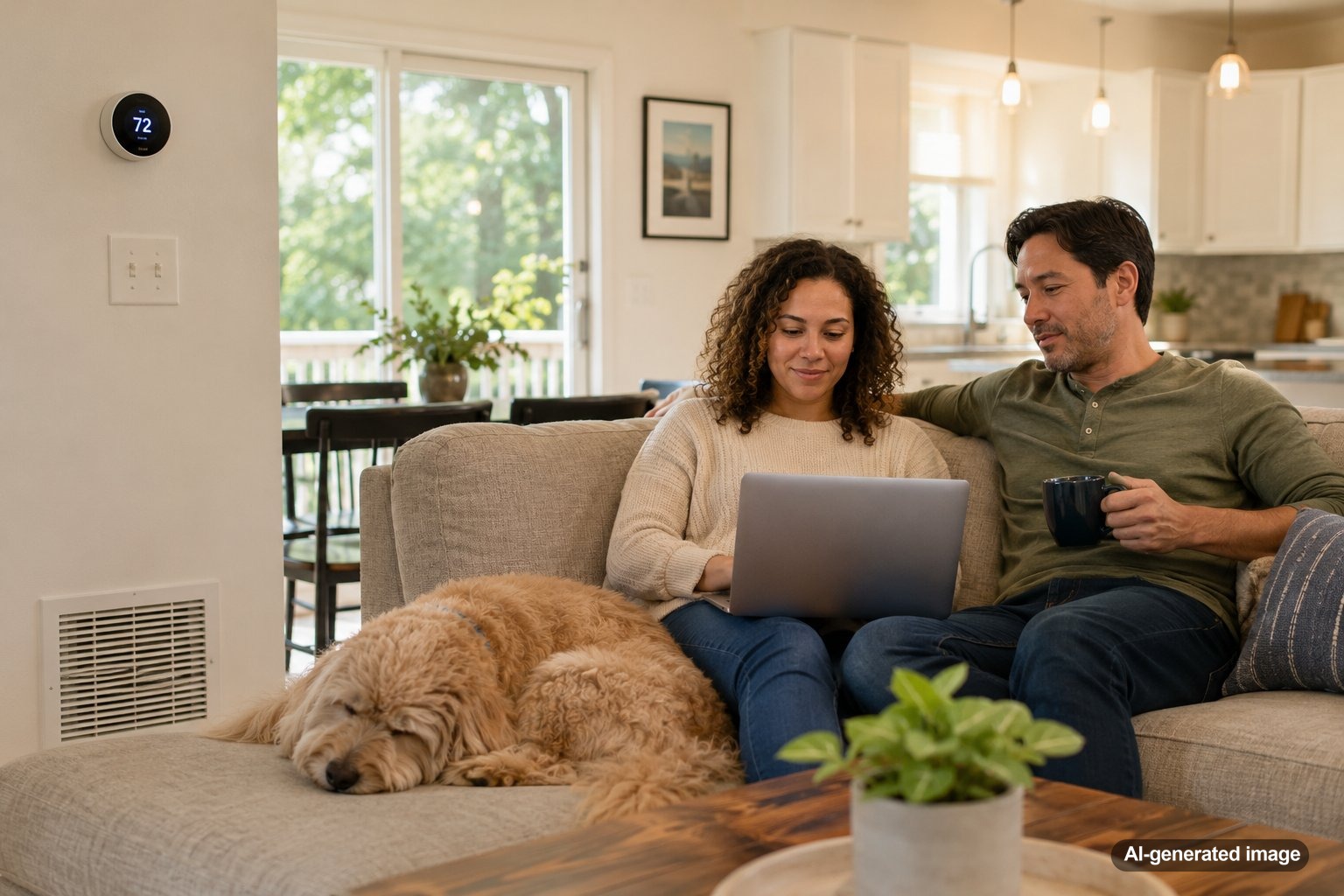
When your home becomes your office, your thermostat has a bigger job than it used to. Instead of keeping the house comfortable mainly in the morning and evening, it may need to support steady comfort through video calls, focused work, lunch breaks, and changing sunlight throughout the day.
For many Central and Northern New Jersey homeowners, the best work-from-home thermostat setting is not one single number. It is a practical schedule that balances comfort, airflow, humidity, room usage, and the way your heating and cooling system actually performs. If your current thermostat makes the house feel uneven or hard to manage, Meyer & Depew can help with thermostat options that fit how you use your home.
Set your thermostat for the rooms you actually use during the day, avoid extreme temperature swings, and use a schedule that eases the system into occupied hours instead of forcing a large temperature change all at once.
Start With A Realistic Daytime Comfort Range
If you work from home, your daytime setting should be comfortable enough for several hours of sitting, typing, calls, and concentration. Many people feel cooler while seated for long periods than they do while moving around the house, so a setting that felt fine on a weekend may not feel comfortable during a full workday.
During cooling season, a slightly higher setting may work well if air circulation and humidity are controlled. During heating season, a moderate setting may feel better than pushing the temperature high and then lowering it repeatedly. The right number depends on your home, insulation, window exposure, personal comfort, and whether your workspace gets direct sun or sits over a cold garage or basement.
Use A Schedule Instead Of Constant Manual Changes
Frequent thermostat changes can make comfort less predictable. If you lower the AC every time the room feels warm, then raise it again after a meeting, your system may cycle more often than necessary. A better approach is to create a weekday schedule that reflects your routine.
For example, you might set the system to reach your preferred comfort level before your workday begins, hold a steady setting during core work hours, then shift slightly after work when you move to other parts of the house. A smart thermostat can make this easier because it can support schedules, occupancy patterns, and more consistent comfort without constant adjustments.
Think About The Room You Work In, Not Just The Hallway Thermostat
The thermostat only senses temperature where it is installed. If your home office is upstairs, in an addition, near large windows, or in a finished basement, the temperature at your desk may be very different from the temperature near the thermostat. That can lead to a familiar problem: the thermostat says the house is comfortable, but your workspace does not feel that way.
Before assuming the thermostat is wrong, look at the room itself. Are supply vents open? Is furniture blocking return airflow? Does afternoon sun heat the space? Is the door closed for long stretches? These small details can affect comfort, especially during New Jersey’s humid summers and cold winter mornings.
Avoid Big Temperature Setbacks During The Workday
Setbacks can help when the house is empty, but they may not be as useful when someone is home all day. If the thermostat drifts too far from your preferred setting, the HVAC system has to work harder to recover while you are trying to work. That recovery period can create temperature swings, longer run times, and rooms that still feel uncomfortable.
A modest adjustment is usually more practical than a dramatic one. If you take a lunch break or step out briefly, a small temperature change may be enough. Save larger setbacks for longer periods when the home is truly unoccupied or overnight, depending on your comfort needs.
Pay Attention To Humidity, Airflow, And Short Cycling
Temperature is only part of comfort. In cooling season, humidity can make a room feel warmer even when the thermostat setting looks reasonable. In heating season, dry air and poor airflow can make a room feel chilly or uncomfortable. If you keep lowering or raising the thermostat but the room still feels wrong, the issue may involve airflow, humidity, system sizing, or equipment performance rather than the setting alone.
Short cycling can also make working from home uncomfortable. If the system turns on and off frequently, rooms may never feel evenly conditioned. That pattern can be caused by several issues, including restricted airflow, thermostat placement, equipment concerns, or zoning problems. A qualified technician can evaluate the system and help determine what is happening.
- Confirm the thermostat is set to the correct mode, such as heat, cool, or auto.
- Inspect or replace the air filter if it is dirty.
- Make sure supply and return vents are open and not blocked by furniture.
- Look for obvious debris around the outdoor unit.
- Check whether the breaker has tripped once, if it is safe to do so.
When Zoning Or Ductless Comfort May Make Sense
If one room is now used as a full-time office, the old whole-house comfort strategy may not fit anymore. A room that used to be a guest room or occasional den may now need steady comfort five days a week. In some homes, thermostat adjustments alone cannot solve that difference.
Zoning systems can help manage different parts of a home more independently when the existing system is compatible. Ductless mini split systems may also be worth discussing for certain additions, finished basements, or rooms that are consistently too hot or too cold. These options are not right for every home, but they can be useful when one workspace has very different comfort needs from the rest of the house.
When To Call A Professional
It is time to schedule service if your thermostat settings have not changed but comfort has gotten worse, the system runs constantly, rooms feel uneven, airflow is weak, or the equipment cycles on and off more than usual. A professional can check the thermostat, airflow, filter condition, refrigerant-related performance, electrical components, ductwork concerns, and other factors that homeowners should not attempt to repair themselves.
You should also call for help if the thermostat is blank, unresponsive, inaccurate, or unable to maintain a set temperature. Thermostat issues can be simple, but they can also point to wiring, control, or equipment problems that need qualified attention.
FAQ: Thermostat Settings When You Work From Home
Should I keep the same thermostat setting all day while working from home?
Often, yes. A steady setting during your main work hours can feel more comfortable than frequent changes. Small adjustments are fine, but large swings may make the system work harder to catch up.
Is a smart thermostat worth it if I work from home?
A smart thermostat can be useful if you want better scheduling, easier adjustments, and more control over daily routines. It is especially helpful when your schedule changes from day to day.
Why is my home office hotter or colder than the rest of the house?
Common reasons include sun exposure, closed doors, blocked vents, poor return airflow, duct layout, insulation differences, or the room’s location in the home. A technician can help determine whether the issue is airflow, controls, equipment performance, or room design.
Can thermostat placement affect comfort?
Yes. If the thermostat is near sunlight, drafts, appliances, or a hallway that does not represent the rooms you use most, it may not reflect your actual comfort needs.
The best thermostat setting for working from home is steady, realistic, and based on how your home is actually used during the day. If one room has become your everyday office, comfort may depend on airflow, humidity, zoning, thermostat features, and system condition as much as the number on the screen.
Need help with your heating, cooling, or HVAC system?
Meyer & Depew serves homeowners and businesses throughout Central and Northern New Jersey.
Get a quote or call 908.272.2100.