



How to Keep Kids’ Bedrooms Comfortable During Heat Waves
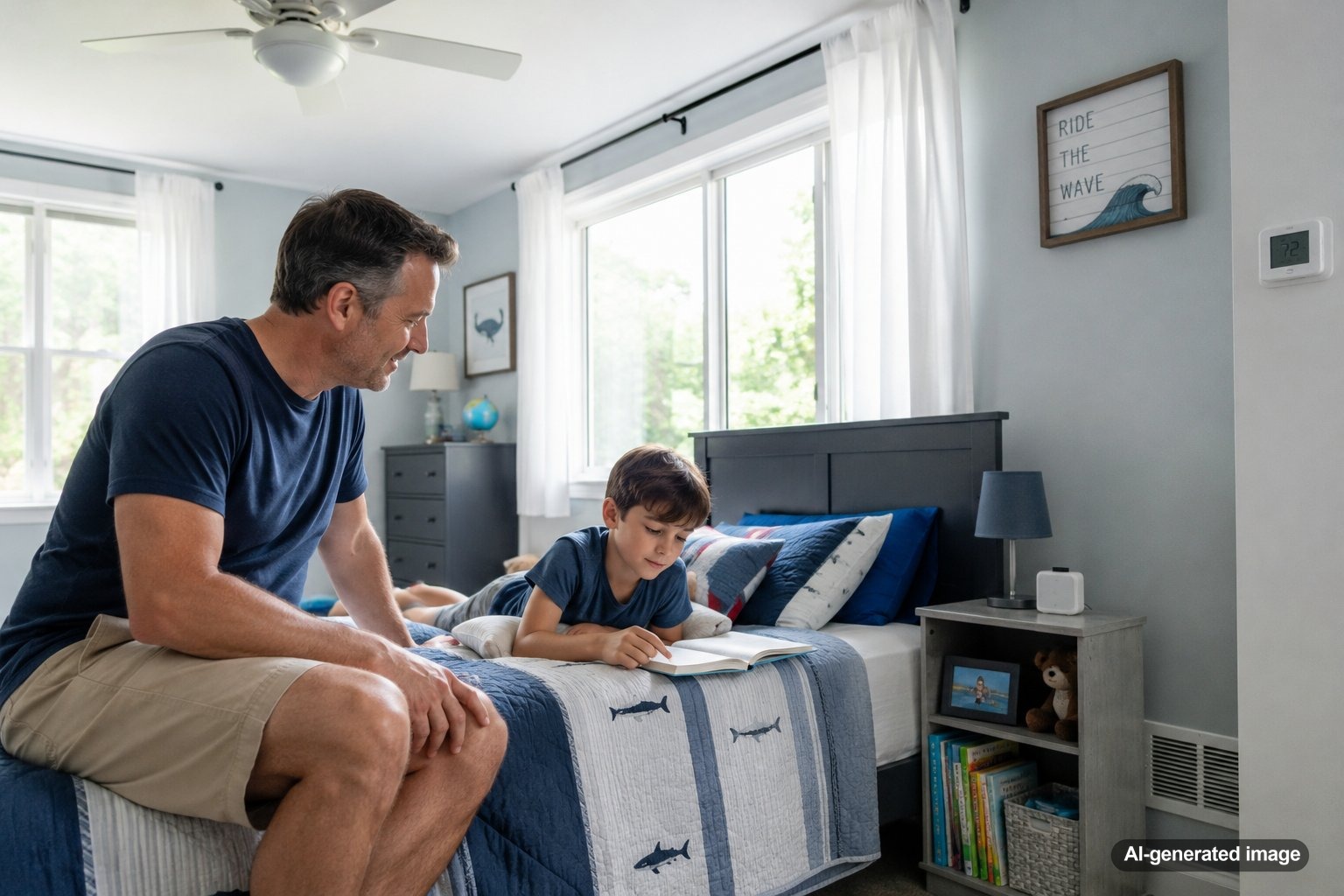
Keeping kids’ bedrooms comfortable during heat waves starts with controlling heat gain, improving airflow, managing humidity, and making sure the AC system is not being asked to overcome avoidable problems. In Central and Northern New Jersey, upstairs bedrooms, sun-facing rooms, older ductwork, and humid summer nights can all make a child’s room feel warmer than the thermostat setting suggests.
A few safe home adjustments may help, but repeated hot bedrooms can also point to an airflow, equipment, duct, thermostat, or zoning issue. If your AC runs constantly and certain bedrooms still feel stuffy, Meyer & Depew can help evaluate whether AC service and maintenance or a room-by-room comfort solution is the right next step.
To keep kids’ bedrooms more comfortable during heat waves, close blinds during the day, keep supply and return vents open, replace dirty filters, limit electronics and lamps that add heat, use ceiling fans safely, and avoid extreme thermostat setbacks. If one room stays hot while the rest of the house cools normally, the issue may involve airflow balance, duct leakage, insulation, zoning, or AC performance.
Why kids’ bedrooms can get hotter during a heat wave
Bedrooms are often smaller, more closed-off spaces, which means they can heat up quickly and recover slowly. A room over a garage, under an attic, or facing west can absorb heat for hours after the sun goes down. During a heat wave, that stored heat can make bedtime uncomfortable even if the main living area feels fine.
Humidity adds another layer. When indoor air feels damp, sweat evaporates less easily, so a room can feel warmer than the thermostat reading. This is one reason AC performance, airflow, and moisture control all matter for children’s bedrooms during long stretches of hot New Jersey weather.
Start with safe, simple comfort checks
Before assuming the AC system has a major problem, look for simple issues that commonly affect bedroom comfort. These checks do not require opening equipment or making mechanical adjustments.
- Make sure supply vents are open and not blocked by beds, dressers, curtains, toys, or rugs.
- Confirm that return vents are not covered or restricted.
- Inspect or replace the air filter if it is dirty.
- Close blinds or curtains during the hottest part of the day, especially on sun-facing windows.
- Keep bedroom doors slightly open when practical so air can circulate more freely.
- Check that the thermostat is set to cooling mode and that the fan setting is appropriate for your home.
If the breaker has tripped, you may reset it once if it is safe to do so. If it trips again, do not keep resetting it. That can point to an electrical or equipment problem that should be checked by a qualified professional.
Use fans the right way
A ceiling fan or portable fan can help a child feel cooler by moving air across the skin, but fans do not lower the actual room temperature. They are most useful when someone is in the room, and they should be placed safely away from cribs, cords, bedding, and walkways.
For ceiling fans, make sure the direction is appropriate for summer use so air moves downward and creates a cooling breeze. If a fan is wobbling, noisy, or within reach of a bunk bed, address the safety concern before relying on it for nighttime comfort.
Be careful with big thermostat setbacks
During a heat wave, turning the thermostat way up while the family is out can make bedrooms harder to cool later. The AC may spend the evening trying to pull heat out of walls, furniture, flooring, and attic-adjacent spaces. That long recovery period can overlap with bedtime, when kids need the room to be comfortable.
A moderate setback is often easier on comfort than a dramatic swing. Smart thermostats can help families manage schedules more consistently, especially when paired with good airflow and a properly maintained cooling system. If thermostat control has been frustrating, it may be worth reviewing options such as all thermostats or more advanced comfort controls.
Reduce heat inside the bedroom
Small heat sources can matter in a child’s bedroom during a heat wave. Lamps, gaming systems, chargers, TVs, computers, and other electronics all add heat. They may not seem like much on a normal day, but in a room already struggling to cool, they can make the space feel noticeably warmer.
Try reducing unnecessary electronics before bedtime, switching to cooler-running light sources, and keeping laundry piles or soft clutter away from vents. In upstairs rooms, even a small improvement in airflow can help the AC do its job more evenly.
Watch for signs of a bigger cooling problem
If one bedroom is uncomfortable but the rest of the home is normal, the cause may be local to that room. Possible factors include a closed damper, undersized duct run, duct leakage, poor insulation, attic heat transfer, or a room that gets more sun than the rest of the house. If multiple rooms are warm, the AC may be struggling more broadly.
Warning signs include weak airflow from vents, AC running nonstop, short cycling, warm air from registers, unusual noises, water around the indoor unit, or comfort that has clearly changed from previous summers. These symptoms do not identify one guaranteed cause, but they do mean the system should be evaluated rather than ignored.
When zoning or ductless cooling may make sense
Some homes have rooms that are difficult to cool evenly with one thermostat. This is common in older homes, additions, finished attics, bonus rooms, and upstairs bedrooms. In those situations, better maintenance may help, but the layout of the home may still make room-by-room comfort challenging.
Zoning systems can help divide a home into separate comfort areas when the existing duct system and equipment are compatible. Ductless mini split systems may also be an option for hard-to-condition rooms, additions, or spaces that never seem to match the rest of the house. A professional evaluation can help determine whether the problem is maintenance, airflow, insulation, equipment capacity, or the way the home is divided into comfort zones.
When to call an HVAC professional
Call for service if the AC cannot keep up during normal operation, if a child’s bedroom remains hot night after night, or if you notice weak airflow, frequent cycling, burning smells, water around equipment, repeated breaker trips, or warm air from the vents. Do not open sealed HVAC equipment, handle refrigerant, bypass safety switches, or attempt electrical repairs yourself.
For families, bedroom comfort is more than a convenience. Sleep can suffer when rooms stay hot and sticky, and small children may not explain discomfort clearly. A qualified technician can check airflow, refrigerant-related performance indicators, electrical components, coils, drains, controls, duct conditions, and other factors that are not safe or practical for homeowners to diagnose on their own.
FAQ
Should I close vents in unused rooms to push more cool air into kids’ bedrooms?
Usually, no. Closing too many vents can increase pressure in the duct system and may create airflow problems. It is better to keep vents open and have uneven comfort evaluated if certain rooms are consistently too hot.
Is it better to leave bedroom doors open or closed during a heat wave?
Open doors often help air circulate, especially if the room does not have a dedicated return. A closed bedroom door can trap heat and restrict airflow, making the room feel stuffier overnight.
Can a dirty filter make upstairs bedrooms hotter?
Yes, a clogged filter can reduce airflow throughout the home. Rooms far from the air handler or rooms on upper floors may feel the effect more because they already tend to be harder to cool.
What if only one child’s room is uncomfortable?
That often points to a room-specific issue such as sun exposure, duct design, blocked vents, attic heat, insulation, or airflow balance. If simple checks do not help, professional service can narrow down the cause.
During a heat wave, kids’ bedrooms stay more comfortable when the home has steady cooling, clear airflow, controlled heat gain, and an AC system that is operating properly. If safe home checks do not solve the problem, schedule service before the next stretch of extreme heat makes the room harder to manage.
Need help with your heating, cooling, or HVAC system?
Meyer & Depew serves homeowners and businesses throughout Central and Northern New Jersey.
Get a quote or call 908.272.2100.