



Why Duct Noise Can Signal an Airflow Problem
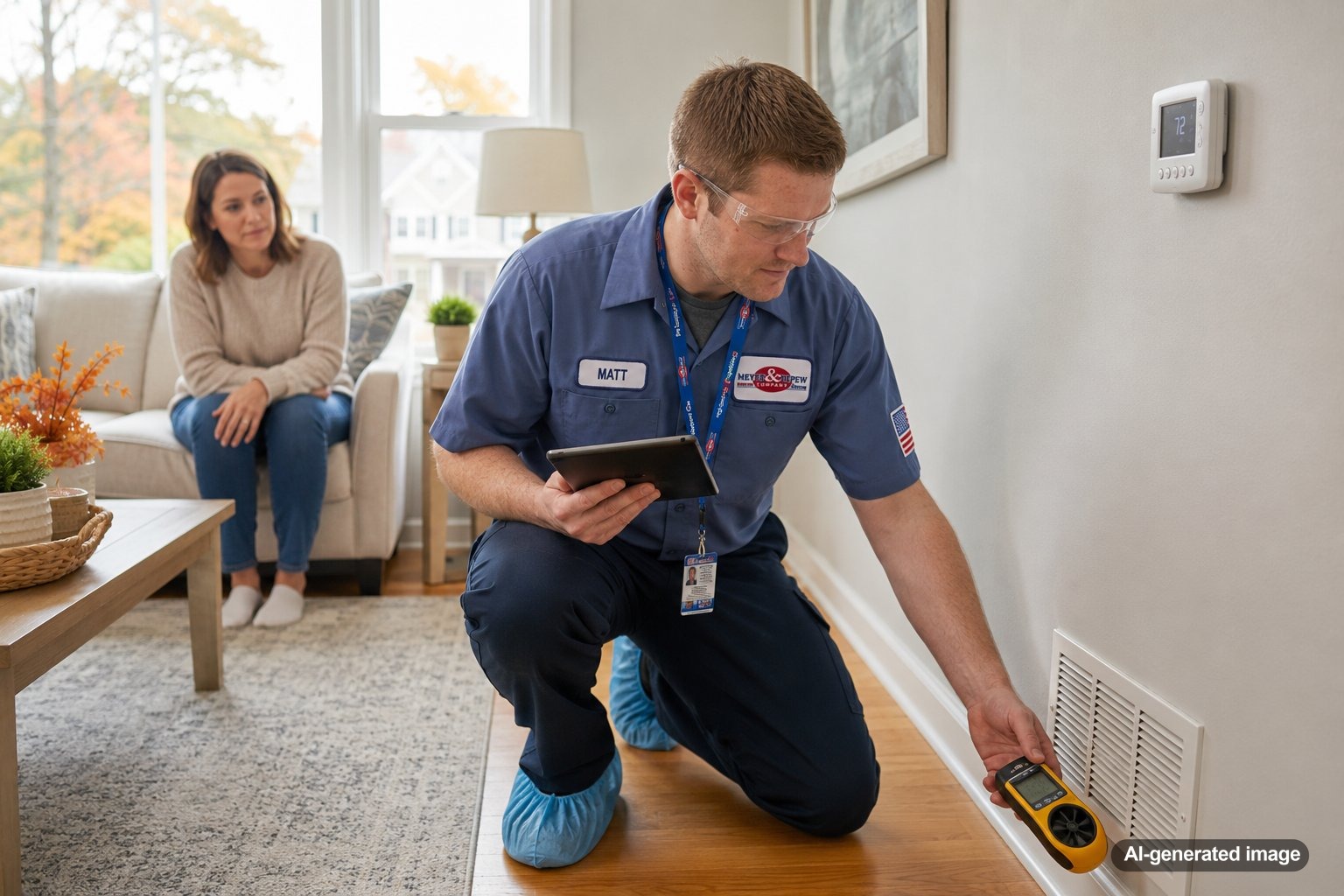
Duct noise is easy to dismiss as a normal part of heating and cooling, especially in older New Jersey homes where sheet metal, framing, and temperature swings all play a role. But banging, popping, whistling, rattling, or unusually loud airflow can also be a clue that your HVAC system is struggling to move air the way it should.
When ducts get noisy, the sound is often connected to pressure. Air may be pushing through a restriction, returns may not be pulling enough air back to the equipment, or the system may be moving more air than the ductwork was designed to handle. If the noise is new, getting louder, or paired with weak comfort, it is worth having the system checked by a qualified technician. Meyer & Depew provides AC service and maintenance for homeowners throughout Central and Northern New Jersey.
Duct noise can signal an airflow problem when air is being restricted, forced through undersized ductwork, pulled through blocked returns, or pushed by equipment that is not operating in balance with the duct system.
Why duct noise and airflow are connected
Your HVAC system depends on a steady loop of air. Conditioned air leaves the equipment through supply ducts, moves into the rooms, and returns through return ducts so it can be heated or cooled again. When that loop is smooth, the system usually sounds steady and predictable.
When the loop is disrupted, pressure can build in places it should not. That pressure may make metal ducts flex, vents whistle, dampers rattle, or airflow sound louder than usual. The noise itself does not identify the exact cause, but it can point to a system that needs airflow evaluation.
Common duct noises and what they may suggest
Different sounds can come from different conditions. None of these are a guaranteed diagnosis, but they can help you describe the issue clearly when scheduling service.
- Popping or booming: Sheet metal ducts may expand and contract as pressure changes. This can happen when ducts are undersized, blocked, or exposed to rapid temperature changes.
- Whistling: Air may be squeezing through a small gap, a closed vent, a dirty filter, a restrictive grille, or a duct connection that is not sealed well.
- Rattling: Loose duct sections, dampers, grilles, or nearby framing may vibrate when the blower runs.
- Roaring or rushing air: Air may be moving too quickly through the ducts or registers, sometimes because the duct system is too small for the equipment or certain vents are closed.
- Uneven room noise: One loud room and several quiet rooms may suggest a balancing issue, duct layout problem, or restriction in part of the system.
Airflow restrictions are a common starting point
One of the simplest airflow problems is a restriction. A clogged filter, blocked return, closed supply vent, dirty indoor coil, or crushed flexible duct can reduce the amount of air moving through the system. The blower may keep trying to move air, but the path is no longer clear.
That can make the system louder and less comfortable. You may notice longer run times, uneven rooms, warmer air from certain vents, or an AC system that seems to work harder during humid New Jersey summer weather. If the restriction continues, it can place extra stress on HVAC components.
Duct sizing and static pressure can create hidden problems
Sometimes the issue is not a single blocked vent or dirty filter. The duct system itself may not be matched well to the equipment. This is more common in homes that have had additions, attic renovations, finished basements, equipment replacements, or partial duct changes over the years.
Static pressure is the resistance the blower works against as it moves air through the system. When static pressure is too high, ducts can get noisy, comfort can become uneven, and equipment may operate less efficiently than expected. A technician can measure this pressure and evaluate whether the duct system, filter setup, blower speed, and equipment are working together properly.
What you can safely check before calling
- Inspect the air filter and replace it if it is dirty or overdue.
- Make sure supply vents and return grilles are open and not blocked by furniture, rugs, curtains, or storage.
- Listen for where the sound is loudest, such as near the air handler, a return grille, one branch duct, or a specific room.
- Check whether the noise happens only during cooling, only during heating, or every time the blower starts.
- Look for obvious loose registers or vent covers that may be vibrating.
Avoid opening sealed equipment, adjusting electrical components, changing blower settings, or modifying ductwork yourself. Those steps should be handled by a qualified HVAC professional.
When duct noise deserves professional attention
Schedule service if the noise is new, getting worse, or happening along with weak airflow, hot and cold spots, short cycling, musty odors, high humidity, or repeated filter problems. Those symptoms can point to an airflow issue that affects comfort and equipment performance.
It is also smart to call if duct noise appeared after a new HVAC installation, renovation, filter upgrade, zoning change, or duct modification. Even good equipment can perform poorly if airflow is not set up correctly. For broader comfort concerns, Meyer & Depew also helps homeowners evaluate zoning systems and other comfort options when room-by-room airflow is part of the problem.
Why ignoring duct noise can cost you comfort
Duct noise may seem minor, but it can be an early warning that the system is fighting resistance. Over time, airflow problems may contribute to uneven temperatures, humidity complaints, dust movement, longer run times, and unnecessary wear on the blower motor or other components.
The right fix depends on the cause. Sometimes it is as simple as a filter, grille, or loose register. Other times, the solution may involve duct sealing, duct balancing, return air improvements, blower adjustment, or a deeper look at equipment sizing. A careful diagnosis is better than guessing.
FAQ: Duct noise and HVAC airflow
Is duct popping always a serious problem?
Not always. Some expansion and contraction can happen as ducts heat and cool. However, loud popping, new booming sounds, or noise paired with poor airflow may indicate pressure problems that should be evaluated.
Can a dirty air filter make ducts noisy?
Yes. A dirty or overly restrictive filter can reduce airflow and increase system pressure. Replacing the filter is a safe first step, but continued noise should be checked by a professional.
Should I close vents in unused rooms to reduce noise?
Usually, no. Closing vents can increase pressure in the duct system and may make airflow noise worse. It can also affect comfort and equipment operation.
Can noisy ducts mean my HVAC system is too large?
It is possible. Oversized equipment or a blower moving too much air for the duct system can create rushing air, pressure issues, and uneven comfort. A technician can evaluate the system instead of relying on sound alone.
Can maintenance help prevent duct noise?
Routine maintenance may help identify airflow restrictions, dirty components, filter issues, and performance concerns before they become more noticeable. A service plan can help keep maintenance on schedule.
Noisy ducts are not always an emergency, but they should not be ignored when the sound changes, gets louder, or comes with comfort problems. Duct noise can be one of the first clues that your HVAC system has an airflow issue.
Need help with your heating, cooling, or HVAC system?
Meyer & Depew serves homeowners and businesses throughout Central and Northern New Jersey.
Get a quote or call 908.272.2100.