

Why Your AC Runs Longer on Humid Days Than Dry Days
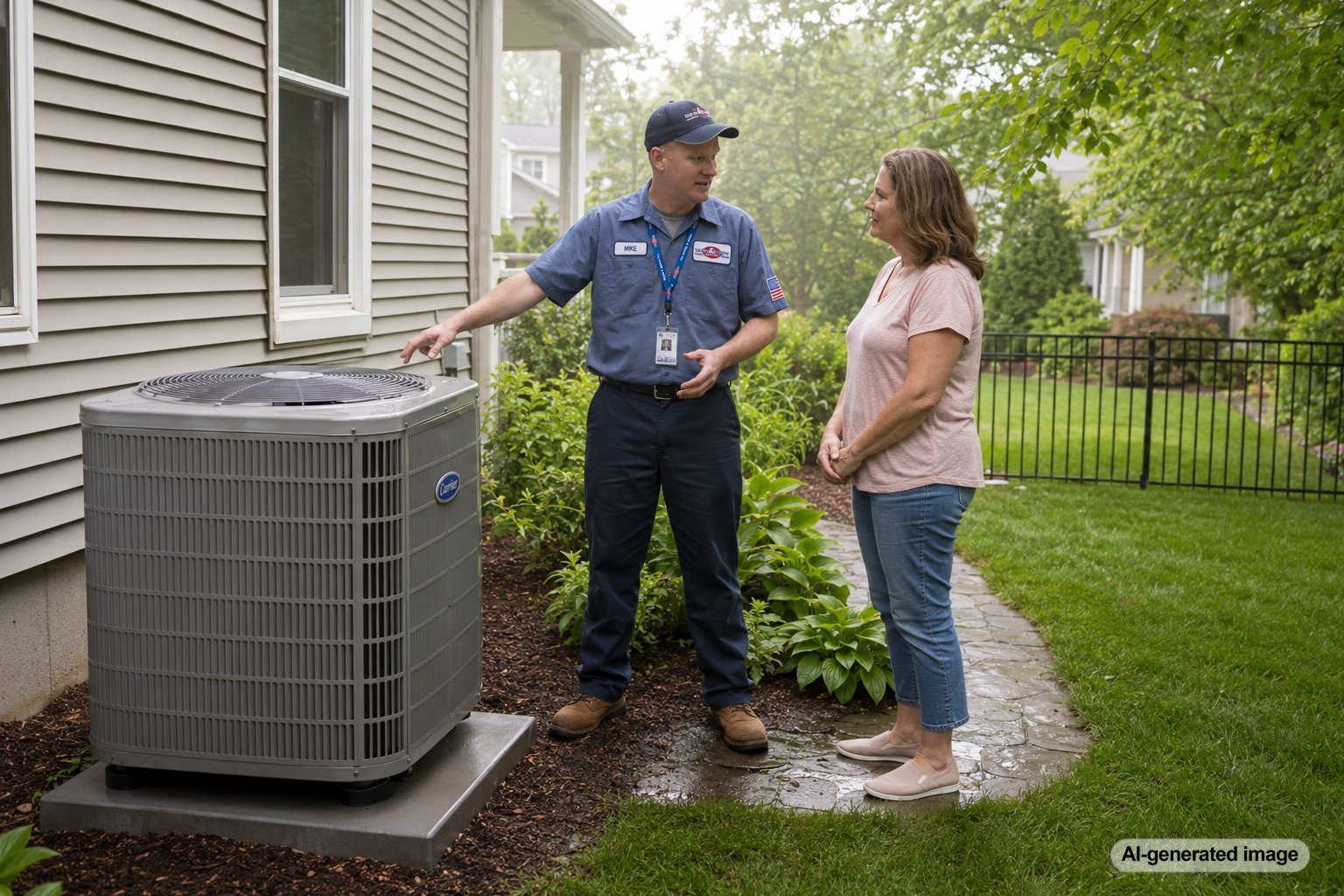
Your AC often runs longer on humid days because it is doing two jobs at once: lowering the temperature and removing moisture from the air. On a dry day, your home may feel comfortable once the thermostat reaches the set temperature. On a humid New Jersey day, the air can still feel heavy, sticky, and warmer than the number on the thermostat suggests.
That longer run time is not always a sign that something is wrong. In many homes, especially during muggy stretches in Central and Northern New Jersey, longer cooling cycles are part of how the system removes humidity. The concern is when the AC runs nearly nonstop, struggles to reach the thermostat setting, leaves rooms clammy, or causes unusually uneven comfort. If that sounds familiar, professional AC service and maintenance can help identify whether the issue is normal humidity load, restricted airflow, equipment sizing, or a developing repair problem.
AC systems run longer on humid days because moisture holds heat, slows the cooling process, and makes your home feel warmer even when the thermostat reading looks reasonable. A properly operating AC removes some humidity as warm indoor air passes over the cold evaporator coil, but high outdoor humidity, poor airflow, dirty filters, aging equipment, leaky ducts, or an oversized system can make comfort harder to achieve.
Humidity Makes Your AC Work On Moisture, Not Just Temperature
Air conditioning is often described as cooling the air, but comfort is also tied closely to humidity. When indoor air is humid, your body has a harder time cooling itself because sweat does not evaporate as easily. That is why 74 degrees can feel comfortable on a dry day and uncomfortable on a damp day.
Your AC removes moisture when warm indoor air moves across the cold indoor coil. Moisture condenses on the coil, drains away, and leaves the air cooler and drier. This process takes time. During a humid spell, the system may need longer cycles to remove enough moisture for the home to feel comfortable, especially if doors are opened often, the home has air leaks, or the house has a lot of heat and moisture coming from cooking, showers, laundry, or a damp basement.
Why Dry Days Feel Easier On The Same Thermostat Setting
On a dry day, your AC can focus mostly on sensible cooling, which is the process of reducing the air temperature you see on the thermostat. When indoor humidity is lower, the house may feel comfortable faster because there is less moisture for the system to remove.
On humid days, the AC must also deal with latent heat, which is the heat contained in moisture. Homeowners do not see latent heat on the thermostat, but they feel it. This is one reason a system may seem to be running longer even though the thermostat is not moving quickly. The system is still doing work, but much of that work is tied to dehumidification rather than a fast temperature drop.
Longer Run Times Can Be Normal During New Jersey Humidity
New Jersey summers often bring warm, damp air, especially before storms, during heat waves, and after rainy stretches. In those conditions, longer AC cycles can actually be helpful. Short, frequent cycles may cool the thermostat area quickly but shut off before enough moisture is removed, leaving the home cool but clammy.
A steady cooling cycle gives the system more time to pull moisture from the air. The goal is not for the AC to blast on and off constantly. A system that runs longer, reaches the set temperature, keeps humidity reasonable, and maintains even comfort may be operating as expected during muggy weather.
When Long Run Times Point To A Possible Problem
Longer operation becomes more concerning when the system cannot keep up, runs continuously for hours without reaching the set point, or produces weak airflow. If the air from the vents is not very cool, the filter is clogged, the outdoor unit is blocked by debris, or certain rooms never cool down, humidity may be exposing an issue that was less noticeable on dry days.
Common contributors include a dirty air filter, blocked supply or return vents, a dirty indoor or outdoor coil, low airflow, duct leakage, thermostat placement issues, aging equipment, or a system that is not sized properly for the home. An oversized AC can also cause comfort problems because it may satisfy the thermostat too quickly and shut off before it removes enough humidity. In that case, the house may feel damp even if the temperature looks acceptable.
What You Can Safely Check Before Calling
- Check the thermostat setting and make sure it is set to cooling mode.
- Inspect the air filter and replace it if it is dirty or overdue.
- Make sure supply and return vents are open and not blocked by furniture, rugs, or curtains.
- Look for obvious leaves, grass, or debris around the outdoor unit.
- Check whether the breaker has tripped once, if it is safe to do so.
- Notice whether the system reaches the set temperature eventually or runs constantly without getting there.
These checks can help rule out simple airflow restrictions, but they should not involve opening sealed equipment, handling refrigerant, adjusting electrical parts, or trying to diagnose internal components. If the problem continues after basic checks, a qualified technician can evaluate the system safely.
How Maintenance Helps With Humid-Day Performance
Routine maintenance can help your AC move air properly, transfer heat efficiently, and drain condensation the way it should. During a maintenance visit, a technician can inspect components that directly affect humid-day performance, including coils, blower operation, condensate drainage, refrigerant-related performance indicators, electrical components, and overall system operation.
A service plan can also make seasonal care easier to keep on schedule before peak cooling weather arrives. Meyer & Depew offers service plans for homeowners who want routine HVAC maintenance handled more consistently throughout the year.
Humidity Problems Are Sometimes About More Than The AC
If your home feels sticky even when the AC is working, the issue may involve the whole comfort system, not just the cooling equipment. Air leaks, poor ventilation, damp basements, undersized returns, duct problems, or indoor air quality needs can all affect humidity levels.
For some homes, comfort improvements may involve air balancing, duct evaluation, thermostat adjustments, zoning, ventilation, or humidity control options. If humidity is a recurring concern, Meyer & Depew can help evaluate broader air quality and comfort factors rather than treating the thermostat number as the only measurement that matters.
Frequently Asked Questions
Is it bad if my AC runs longer on humid days?
Not necessarily. Longer cycles can be normal when the system is removing moisture from the air. It becomes more concerning if the AC runs continuously, cannot reach the set temperature, or leaves the home clammy.
Why does my house feel warm even when the thermostat says it is cool?
High humidity can make the air feel warmer than the thermostat reading. The thermostat measures temperature, but your body also responds to moisture in the air.
Can lowering the thermostat remove humidity faster?
Sometimes it may make the system run longer, but lowering the temperature too much is not always the best answer. If humidity remains high, the system may need maintenance, airflow correction, or a broader comfort evaluation.
Should my AC turn on and off frequently on humid days?
Frequent short cycling is usually not ideal for humidity control. The system needs enough run time for moisture to condense on the indoor coil and drain away.
When should I schedule AC service?
Schedule service if the AC runs constantly, produces weak airflow, does not cool evenly, makes unusual sounds, leaks water, or cannot keep your home comfortable during humid weather.
Humid days make your AC work harder because comfort depends on both temperature and moisture removal. Longer run times can be normal, but nonstop operation, weak cooling, clammy rooms, or uneven comfort are signs that your system should be checked.
Need help with your heating, cooling, or HVAC system?
Meyer & Depew serves homeowners and businesses throughout Central and Northern New Jersey.
Get a quote or call 908.272.2100.