



Why Basement Ductwork Can Sweat in Humid Weather
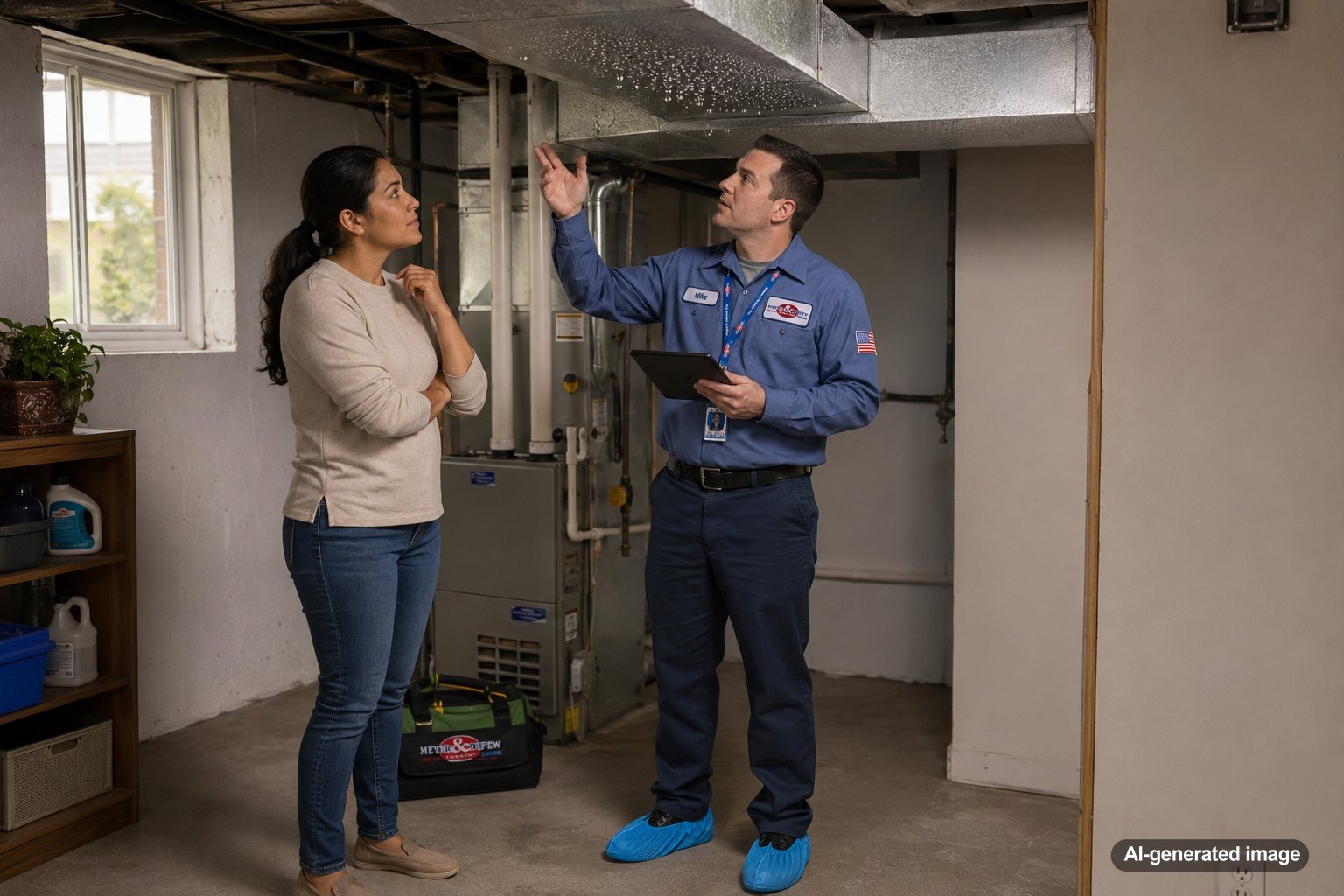
Basement ductwork can sweat in humid weather because warm, moisture-heavy air is touching cold metal duct surfaces. When your AC is running, the supply ducts may become cool enough for water vapor in the basement air to condense on the outside of the ductwork, much like moisture forming on a cold glass in summer.
In Central and Northern New Jersey, this can be especially noticeable during sticky summer stretches, after heavy rain, or in older homes where basements run damp. A little moisture on a very humid day may not mean the ductwork is failing, but recurring condensation deserves attention because it can point to humidity, insulation, airflow, or comfort issues that should be corrected before they lead to stains, odors, or damaged materials near the ducts. If the issue continues, Meyer & Depew can evaluate your AC service and maintenance needs and help identify the source.
Basement ductwork sweats when the duct surface temperature drops below the dew point of the surrounding air. The most common reasons include high basement humidity, missing or damaged duct insulation, air leaks, poor airflow, and AC systems that run long enough to chill the ducts while the basement air remains damp.
What Is Actually Happening When Ductwork Sweats?
Duct sweating is condensation, not water leaking from inside the duct in most cases. Your AC removes heat and some moisture from indoor air as it cools the home. At the same time, the cold supply air moving through the ductwork can lower the temperature of the duct surface. If humid basement air comes in contact with that cold surface, moisture in the air can turn into liquid water.
The key factor is the dew point. When a surface is cold enough compared with the moisture level in the air, condensation forms. A basement can have a higher dew point than the finished living space because of concrete walls, foundation moisture, poor ventilation, open windows, laundry activity, or air leaks from outside. That means ductwork in a basement may sweat even when rooms upstairs feel reasonably comfortable.
Common Reasons Basement Ductwork Sweats In Humid Weather
Several conditions can make duct condensation worse. One of the most common is high basement humidity. If the basement air feels damp, smells musty, or has visible condensation on pipes or windows, the ducts may simply be the coldest surface where moisture shows up first.
Insulation is another important factor. Bare metal ducts in an unconditioned or damp basement are more likely to sweat than properly insulated ducts. Even if ducts were insulated at one time, gaps, crushed sections, loose seams, missing vapor barriers, or insulation that has pulled away can expose cold metal to humid air.
Air leakage can also contribute. Small gaps around duct joints may allow cold supply air to escape, chilling nearby metal and surrounding materials. Return-side leaks can pull basement air into the HVAC system, which may affect comfort, humidity control, and overall system performance. These are not always easy to see without a professional inspection.
Restricted airflow is another overlooked cause. A dirty air filter, blocked return, closed supply vents, or other airflow problems can make the system run differently than intended. In some situations, reduced airflow can make parts of the cooling system colder than normal, increasing the chance of condensation. Homeowners can safely check filters and visible vent obstructions, but deeper airflow issues should be evaluated by a qualified technician.
Why New Jersey Basements Are Prone To This Problem
New Jersey homes often deal with humid summers, heavy rain, and basements that are partly or fully below grade. Concrete and masonry can hold moisture, and older homes may have ductwork routed through unfinished spaces where temperature and humidity are less controlled than the main living area.
Finished basements can still have the same issue. Drop ceilings may hide sweating ducts until a ceiling tile stains, paint bubbles, or a musty odor develops. In utility rooms, duct condensation may drip onto stored items, insulation, or nearby equipment. If the moisture appears repeatedly, it is worth looking beyond the visible water and asking why the duct surface and basement air are creating that condition.
Safe Checks Homeowners Can Make
- Check whether the air filter is dirty and replace it if needed.
- Make sure supply and return vents are open and not blocked by furniture, boxes, rugs, or storage items.
- Look for obvious gaps, missing insulation, or torn duct wrap on visible duct sections without pulling anything apart.
- Use a basic humidity monitor to see whether basement humidity stays high during warm weather.
- Keep basement windows closed when the AC is running, especially during humid weather.
- Look for other moisture clues, such as damp walls, floor seepage, musty odors, or condensation on cold water pipes.
These checks can help you describe the problem more clearly, but they are not a substitute for proper diagnosis. Do not open sealed HVAC equipment, adjust refrigerant, bypass controls, modify electrical components, or attempt major duct repairs without qualified help.
How Duct Insulation And Air Sealing Can Help
When ductwork passes through damp or unconditioned spaces, insulation can help separate cold duct surfaces from humid air. The insulation also needs the right exterior barrier so moisture does not simply move into the insulation and create a hidden damp area. Loose, wet, or incomplete insulation may need to be corrected rather than patched casually.
Duct sealing can also matter. Leaky supply ducts can waste cooled air and create cold spots on duct surfaces. Leaky return ducts can draw humid basement air into the system. A professional can inspect duct joints, check for visible leakage, evaluate airflow, and determine whether duct improvements, maintenance, or humidity control should be part of the solution.
When Humidity Control Becomes Part Of The Answer
If the basement humidity is consistently high, duct insulation alone may not solve the full problem. The home may need better moisture control, improved ventilation strategy, drainage attention, or HVAC-related humidity solutions. Depending on the home, options may include maintenance, duct improvements, thermostat settings, whole-home comfort accessories, or other approaches that support better indoor conditions.
For homeowners who regularly battle damp indoor air, the Air Quality & Comfort options from Meyer & Depew can be part of a broader conversation about humidity, ventilation, filtration, and comfort. The right answer depends on the home, the basement, the duct layout, and how the cooling system is operating.
When To Call A Professional
Call for professional HVAC service if duct sweating happens often, if water is dripping enough to wet nearby surfaces, if insulation is soaked, if you notice musty odors, or if the AC is not cooling evenly. You should also schedule service if the system is short cycling, airflow feels weak, rooms are uneven, or condensation appears along with ice, unusual noises, or rising indoor humidity.
A qualified technician can evaluate the cooling system, airflow, duct condition, insulation, and humidity clues together. That matters because the visible symptom may be on the ductwork, while the cause may involve airflow restriction, equipment operation, duct leakage, basement moisture, or a combination of issues.
FAQ: Basement Ductwork Sweating
Is sweating ductwork always an emergency?
Not always. Light condensation during very humid weather may happen, especially in a damp basement. However, recurring moisture, dripping water, stained materials, or musty smells should be checked because ongoing moisture can create additional problems.
Can I just wrap the ducts myself?
Visible gaps in duct insulation may look simple, but insulation needs to be installed and sealed correctly to avoid trapping moisture. It is safer to have a professional evaluate the ductwork if condensation is recurring or if insulation is already wet or damaged.
Does sweating ductwork mean my AC is too big?
Not necessarily. Oversizing can contribute to humidity and comfort issues in some homes, but duct condensation can also be caused by basement humidity, missing insulation, duct leakage, poor airflow, or other conditions. A technician can evaluate the full system before drawing conclusions.
Will a dehumidifier fix sweating ducts?
A dehumidifier may help reduce basement moisture in some situations, but it may not address duct leaks, missing insulation, airflow restrictions, or AC performance issues. The best solution depends on what is causing the duct surface to stay cold while the surrounding air remains humid.
Basement ductwork usually sweats because cold duct surfaces are meeting humid basement air. The long-term fix is to identify why the basement is damp, why the duct surface is exposed or unusually cold, and whether the HVAC system is moving and conditioning air properly.
Need help with your heating, cooling, or HVAC system?
Meyer & Depew serves homeowners and businesses throughout Central and Northern New Jersey.
Get a quote or call 908.272.2100.