



Why Metal Ducts Expand and Contract in Summer
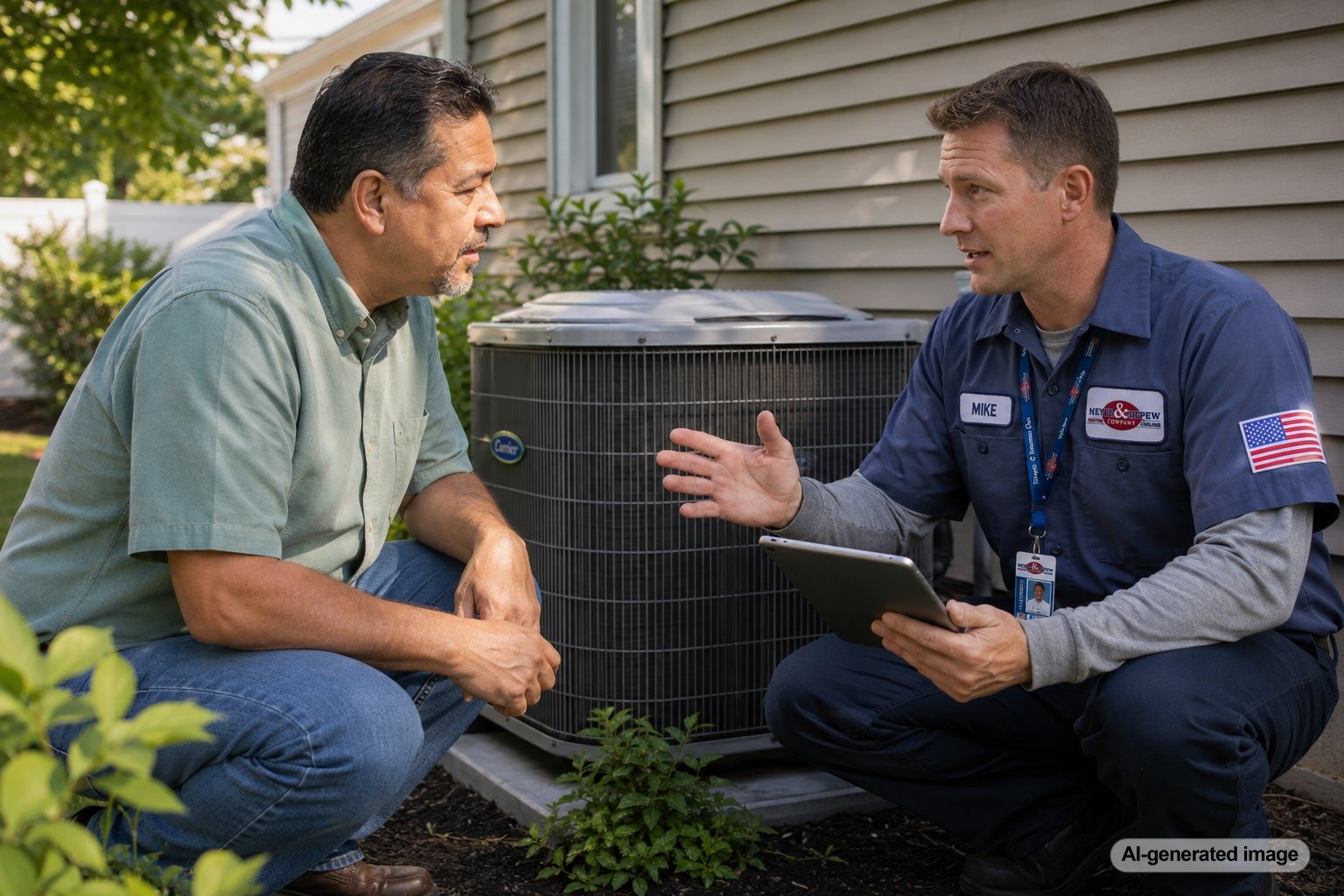
Metal ducts expand and contract in summer because temperature changes make sheet metal move. When your AC starts, cold air rushes through ductwork that may already be warm from an attic, basement, crawl space, wall cavity, or mechanical room. As the metal cools, it can contract. When the system shuts off and the ductwork warms again, it can expand. That movement is often heard as popping, ticking, banging, or creaking from vents, ceilings, or walls.
For many Central and Northern New Jersey homes and commercial spaces, some duct movement is normal during hot, humid weather. Still, repeated loud noises, weak airflow, uneven rooms, or new sounds after years of quiet operation can point to a duct design, airflow, insulation, or equipment issue worth having evaluated. If your cooling system is noisy or struggling to keep up, Meyer & Depew can help with AC service and maintenance for homes throughout the region.
Metal ducts make noise in summer when warm sheet metal reacts to cold AC airflow, pressure changes, and building temperature swings.
- Light ticking or occasional popping can be normal as ducts warm and cool.
- Loud banging may indicate restricted airflow, undersized ductwork, loose sections, or pressure problems.
- Hot attics, humid basements, and long AC run times can make expansion and contraction more noticeable.
- Changing filters, opening vents, and clearing blocked returns may help airflow, but duct repairs should be handled by a qualified professional.
Why summer makes duct movement more noticeable
Sheet metal responds to temperature. In summer, your ductwork may sit in very warm spaces before the AC turns on. Attics can become especially hot, and even finished areas can heat up when the system is off. Once cold conditioned air moves through the ducts, the metal cools quickly. That shift can create small movements along seams, elbows, takeoffs, trunks, and long straight duct runs.
The sound is not always coming from the exact room where you hear it. Ducts run through hidden spaces, so a pop in a ceiling may travel from a nearby trunk line, branch duct, or transition fitting. In older New Jersey homes, where ductwork may have been adapted over time for additions, finished basements, or renovated rooms, these noises can be more noticeable because the system may have a mix of older and newer duct sections.
Temperature change is only part of the story
Expansion and contraction often happen because of temperature, but airflow pressure can make the noise louder. When an AC blower starts, it pushes air through the duct system. If the path is restricted, pressure can build inside the ducts. That pressure may cause metal panels to flex, especially on larger rectangular ducts. When the blower stops, the pressure drops and the duct may flex back.
This is why a sound that seems like simple metal movement can sometimes be linked to airflow. A dirty filter, closed supply vents, blocked return grille, undersized duct section, crushed flexible duct, or poorly supported run can all contribute to pressure changes. The system may still cool, but it may work harder, run longer, or create more noise than it should.
Common duct noises and what they may mean
Not every duct sound requires the same level of concern. The pattern matters. A single tick after the AC starts is different from a loud bang every time the blower cycles. Paying attention to when the noise occurs can help a technician narrow down the cause.
- Light ticking: Often caused by small metal movement as ducts cool or warm.
- Occasional popping: May be normal, especially during strong temperature swings or long cooling cycles.
- Loud oil-can banging: Can suggest duct panels are flexing from pressure changes.
- Rattling: May point to loose fasteners, unsupported ductwork, vibrating registers, or nearby building materials.
- Whistling: Often indicates air being forced through a small gap, dirty filter, blocked return, or restricted vent.
Why New Jersey homes can be prone to summer duct noise
New Jersey summers combine heat, humidity, and long cooling cycles. When humidity is high, AC systems may run for extended periods to help manage comfort. Longer run times mean ductwork repeatedly cools, warms, and reacts throughout the day. If ducts pass through unconditioned spaces, the temperature swing can be even sharper.
Older homes can add another layer. Some were built before central AC became common, so duct systems may have been added later or modified during renovations. In those situations, duct routing, insulation, sealing, sizing, and support can vary from one area of the home to another. A noisy duct does not automatically mean the system is unsafe, but it can be a clue that airflow or duct performance deserves attention.
Safe checks before you call
- Inspect or replace the air filter if it is dirty or overdue.
- Make sure supply vents are open and not blocked by rugs, furniture, curtains, or storage.
- Check that return grilles are not covered or obstructed.
- Listen for whether the noise happens at startup, shutdown, or throughout the full cooling cycle.
- Check whether the sound is coming from one room, several rooms, or near the air handler.
Avoid opening sealed HVAC equipment, modifying ductwork, bypassing safety controls, or trying to adjust electrical or mechanical components yourself. If the noise is paired with burning smells, smoke, sparks, water around equipment, or a system that keeps tripping a breaker, prioritize safety and contact the appropriate professional.
When duct expansion noise needs professional attention
It is time to schedule service if duct noises become louder, happen every cycle, appear suddenly, or come with weak airflow, hot rooms, short cycling, or rising comfort complaints. A qualified technician can look at the equipment, filter, blower performance, static pressure, visible duct condition, and airflow patterns to determine whether the issue is normal movement or a sign of restriction or duct stress.
Professional service may also be helpful if rooms are uneven, if some vents barely move air, or if the system seems to run constantly during summer heat. In some cases, the answer may be as simple as maintenance or airflow correction. In others, duct sealing, support, insulation, resizing, or equipment evaluation may be needed. Meyer & Depew’s service plans can help keep routine HVAC maintenance on schedule before small issues become more disruptive.
FAQ about metal duct expansion in summer
Is it normal for ducts to pop when the AC turns on?
Occasional popping can be normal when warm metal ductwork cools quickly as the AC starts. Repeated loud banging, however, may indicate pressure changes, loose duct sections, or airflow restrictions.
Can a dirty filter make duct noise worse?
Yes. A dirty filter can restrict airflow, which may increase pressure in the duct system and make metal panels flex more noticeably. Replacing the filter is a safe first step for homeowners.
Does duct noise mean my AC is failing?
Not always. Duct noise can be separate from the AC equipment itself. Still, if the sound is new, loud, or paired with poor cooling, short cycling, or weak airflow, professional service is a smart next step.
Can duct insulation help?
Proper duct insulation can reduce heat gain in unconditioned spaces and may help moderate temperature swings. Whether it is the right solution depends on the duct location, condition, airflow, and overall system design.
Metal ducts expand and contract in summer because they are reacting to temperature and pressure changes. Some noise is normal, but loud, frequent, or new duct sounds should not be ignored, especially if comfort or airflow has changed.
Need help with your heating, cooling, or HVAC system?
Meyer & Depew serves homeowners and businesses throughout Central and Northern New Jersey.
Get a quote or call 908.272.2100.