


Why Hybrid Cooling Solutions Make Sense in Older Homes
Estimated reading time: 8 minutes
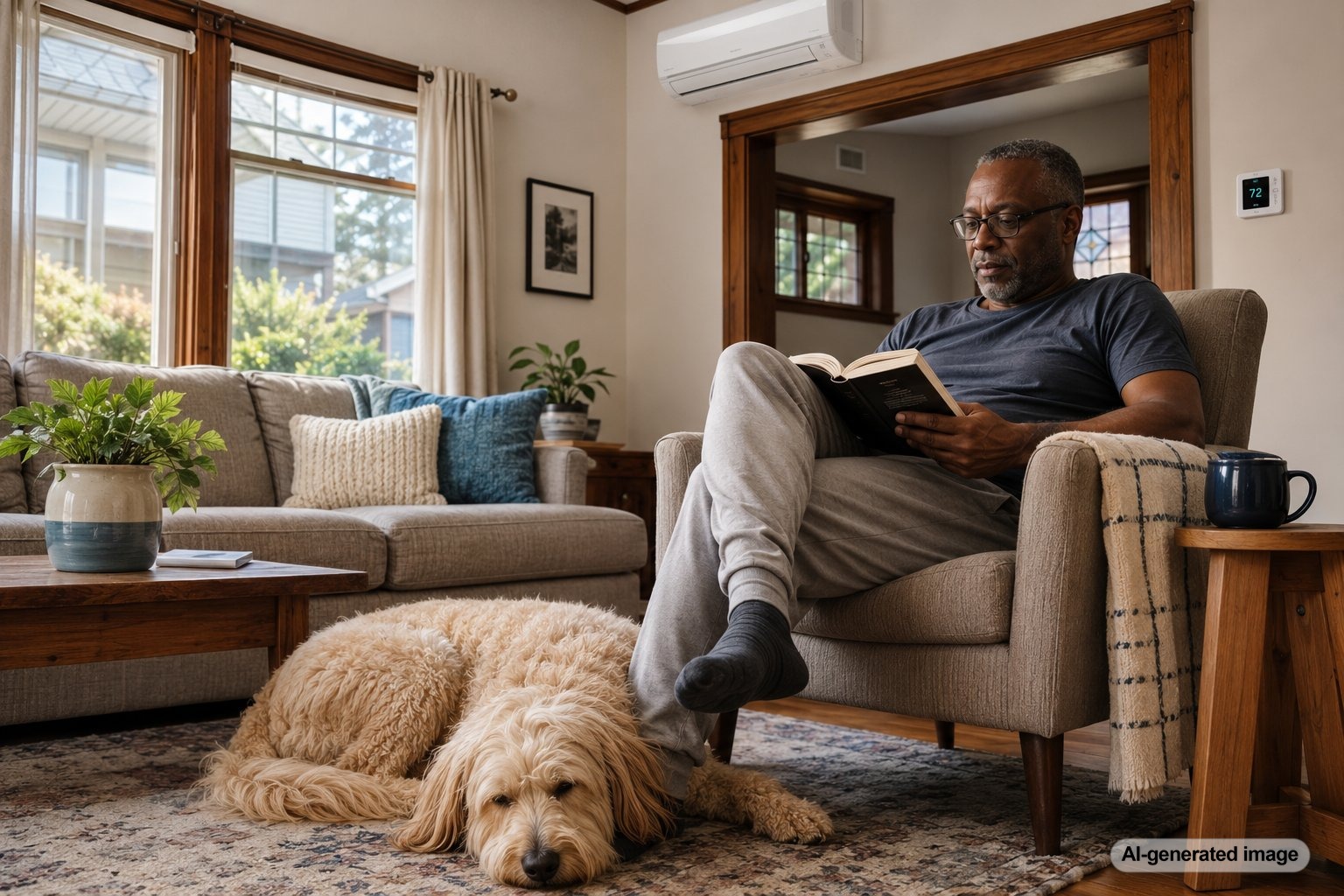
Hybrid cooling solutions make sense in older homes because many older houses were not designed around modern central air. In Central and Northern New Jersey, it is common to find homes with additions, finished attics, sunrooms, enclosed porches, radiator heat, narrow wall cavities, older ductwork, or rooms that never cool evenly. A single cooling approach may work in part of the house while still leaving problem areas uncomfortable.
A hybrid cooling plan combines more than one solution, such as a central AC system for the main living areas and ductless mini split systems for rooms that are difficult to reach. In the right home, this can be a smarter path than forcing oversized ductwork into tight spaces or relying on window units every summer.
Hybrid cooling is often a practical choice for older homes when one system cannot comfortably serve every room. It can help solve hot second floors, finished basements, additions, sunrooms, and rooms with limited duct access while preserving more of the home’s layout and character.
What hybrid cooling means in an older home
Hybrid cooling does not mean one specific product. It means designing a cooling strategy around the way the house actually lives, instead of assuming one system should handle every space the same way.
For one home, hybrid cooling may mean keeping central AC in the areas already served by ductwork and adding a ductless system in a converted attic. For another, it may mean pairing a new air conditioning system with zoning controls, smart thermostats, or supplemental ductless units in rooms that receive heavy afternoon sun.
Older houses often have comfort patterns that are easy for a homeowner to describe but harder for a basic system replacement to fix. The front bedrooms may be too warm, the back addition may never get enough airflow, the first floor may feel fine, and the second floor may stay several degrees hotter. A hybrid design gives a qualified HVAC professional more tools to address those differences.
Why older homes are harder to cool evenly
Many older New Jersey homes were built before central AC became a standard expectation. Even when central cooling was added later, the ductwork may have been routed through whatever space was available, not necessarily through the most efficient path. That can leave long duct runs, undersized returns, tight chases, and rooms with poor air distribution.
Common older-home challenges include:
- Limited duct space: Plaster walls, finished ceilings, masonry, and older framing can make major duct changes invasive.
- Second-floor heat buildup: Upper floors often absorb more roof heat and may not receive enough supply or return airflow.
- Additions and enclosed porches: Spaces added years later may not match the original HVAC design.
- Uneven insulation: Older attics, knee walls, basements, and crawl spaces can affect how quickly rooms gain heat.
- Humidity concerns: New Jersey summers can make a home feel uncomfortable even when the thermostat number looks reasonable.
Because these issues vary room by room, replacing one central unit with a larger one is not always the right answer. In some cases, oversizing can lead to short cycling, weaker humidity control, and higher wear on the system.
Where hybrid cooling can work especially well
Hybrid cooling is most useful when the home has clear comfort zones that behave differently. A qualified technician can evaluate load requirements, duct capacity, airflow, insulation, and equipment condition before recommending a plan.
Finished attics and third floors
Finished attic spaces can be difficult to cool because they sit close to the roofline and often have limited duct access. A ductless mini split may provide targeted cooling without trying to push enough air through long, undersized ducts.
Older homes with boiler or radiator heat
Homes with hydronic heating may not have any existing ductwork. Adding full ducted central AC can be possible in some properties, but it may require significant construction. Ductless cooling, high-velocity systems, or a mixed approach may be more practical depending on the structure.
Sunrooms, additions, and converted spaces
A room added after the original HVAC design may place extra demand on a system that was never sized for it. Instead of overworking the main system, a separate zone can help that room stay comfortable when it is occupied.
Bedrooms with different comfort needs
Families often use bedrooms differently. A nursery, guest room, home office, or primary suite may need more precise control than the rest of the house. Hybrid cooling can create room-by-room flexibility without making the entire home colder than necessary.
Hybrid cooling versus simply replacing the AC
There are times when a straightforward AC replacement is the best option. If the existing system is old, inefficient, unreliable, or incorrectly sized, a properly designed replacement may solve a large part of the problem. Meyer & Depew’s AC installation and replacement services can help homeowners evaluate that path.
But older homes often need more than a like-for-like equipment swap. If the ductwork, layout, or room usage is the real issue, a new central AC system alone may still struggle in the same rooms. That is where hybrid cooling deserves consideration.
| Cooling approach | Best fit | Potential limitation |
|---|---|---|
| Central AC replacement | Homes with usable ductwork and broad whole-home cooling needs | May not solve isolated hot rooms if airflow or layout problems remain |
| Ductless mini split | Additions, attics, rooms without ducts, and targeted comfort zones | Indoor unit placement and capacity must be planned carefully |
| Zoning system | Homes where different areas need different temperature control | Existing ductwork must be evaluated for proper design and airflow |
| Hybrid cooling plan | Older homes with mixed layouts, additions, uneven rooms, or partial duct access | Requires thoughtful design so systems work together instead of competing |
Why ductless and zoning are often part of the conversation
Ductless mini splits are useful in older homes because they do not require large duct runs through walls and ceilings. They can cool specific rooms or zones, and many models can provide heating as well. That flexibility makes them helpful for spaces that are hard to serve with traditional ductwork.
Zoning systems can also be valuable when the existing ducted system can support separate areas of control. Instead of one thermostat trying to represent the whole house, zoning can allow different parts of the home to receive cooling based on demand.
The important word is “design.” A ductless unit should not be added randomly, and zoning should not be installed without understanding duct pressure, airflow, equipment capacity, and thermostat strategy. When systems are designed together, hybrid cooling can feel seamless. When they are pieced together without a plan, comfort problems can continue.
What homeowners can safely check before calling
- Replace or inspect the air filter if it is dirty or overdue.
- Make sure supply and return vents are open and not blocked by furniture, rugs, or curtains.
- Check thermostat settings and confirm the system is set to cooling mode.
- Look for obvious debris around the outdoor unit, keeping the area clear if it is safe to do so.
- Write down which rooms are uncomfortable, what time of day it happens, and whether the issue changes with weather or sunlight.
These checks will not fix every comfort problem, but they give useful clues. If the same rooms stay warm after basic airflow and thermostat checks, the issue may involve duct design, equipment sizing, insulation, system condition, or the need for a supplemental cooling zone.
When to call a professional
Call a qualified HVAC professional if your older home has persistent hot rooms, weak airflow, short cycling, high indoor humidity, rising cooling bills, noisy equipment, or a system that cannot keep up during warm New Jersey weather. You should also schedule service if breakers trip repeatedly, equipment smells like burning, water appears around indoor equipment, or the system stops cooling reliably.
A professional evaluation can compare the condition of the existing AC system, ductwork, insulation influences, room-by-room cooling needs, and upgrade options. That may lead to a central AC replacement, a ductless mini split, zoning improvements, duct repairs, thermostat upgrades, or a hybrid plan that uses more than one approach.
FAQ: Hybrid cooling in older homes
Is hybrid cooling only for very old houses?
No. It is common in older homes, but it can also make sense in newer homes with additions, bonus rooms, finished basements, sunrooms, or rooms that are difficult to cool evenly.
Can a ductless mini split work with my existing central AC?
Yes, in many homes it can. The central system may serve the main areas while the ductless system handles a specific zone. The setup should be planned by a qualified professional so the systems complement each other.
Will hybrid cooling lower my energy bills?
It may help improve efficiency when designed and used properly, especially if it reduces the need to overcool the whole house for one problem room. Actual results depend on the home, system design, usage habits, insulation, and equipment condition.
Is a bigger AC system the best way to cool an older home?
Not necessarily. Bigger is not always better. Oversized equipment can short cycle and may not manage humidity well. The better question is whether the system, ductwork, controls, and room-by-room load match the home.
How do I know which hybrid setup is right?
The right setup depends on your home’s layout, existing equipment, duct access, insulation, comfort complaints, and budget. A professional assessment is the safest way to compare options before investing in equipment.
Older homes often cool best when the HVAC plan respects the home’s structure instead of fighting it. Hybrid cooling can give homeowners more flexibility, better room-by-room comfort, and a practical path forward without unnecessary remodeling.
Thinking about replacing or upgrading your HVAC system?
Meyer & Depew can help you understand your options for comfort, efficiency, and long-term reliability in your New Jersey home or business.
Questions? Contact Meyer & Depew or call 908.272.2100.