

What to Know Before Replacing a Central AC System in Summer
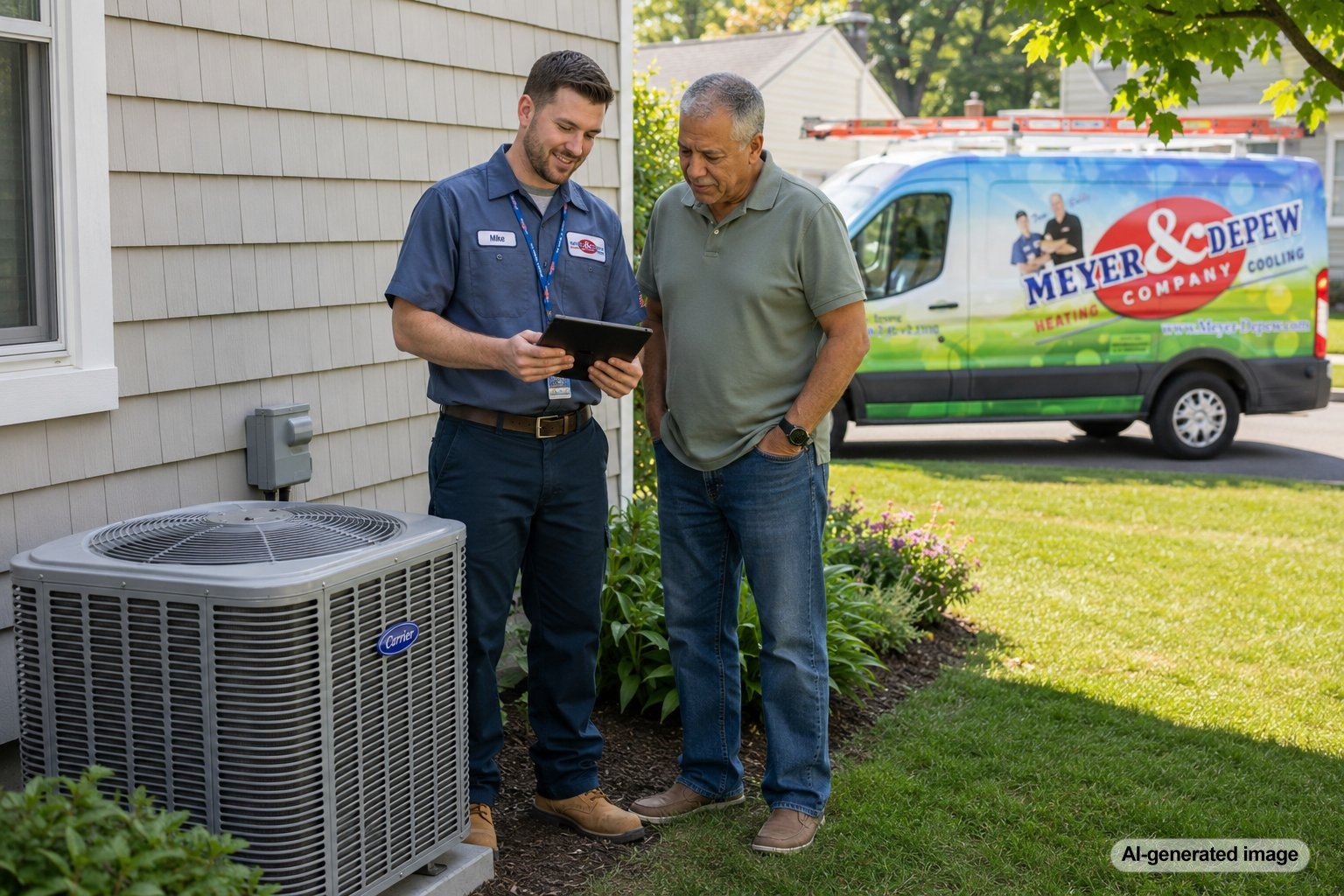
Replacing a central AC system in summer can feel urgent, especially when your home is uncomfortable during a New Jersey heat wave. The right move is not always as simple as swapping out the outdoor unit as quickly as possible. Sizing, ductwork, airflow, electrical readiness, humidity control, and installation timing all affect how well the new system performs.
If your current cooling system is failing, struggling to keep up, or costing too much to repair, a planned replacement can be a smart decision. Meyer & Depew helps homeowners throughout Central and Northern New Jersey evaluate cooling needs, compare options, and plan AC installation and replacement with comfort, reliability, and long-term performance in mind.
Before replacing a central AC system in summer, confirm whether the issue is truly replacement-worthy, make sure the new system is properly sized, ask about ductwork and airflow, plan for installation logistics, and avoid choosing equipment based on price alone.
Summer AC Replacement Is Often About More Than Age
An older AC system may be ready for replacement, but age alone should not be the only factor. A qualified technician can look at repair history, refrigerant type, compressor condition, coil performance, energy use, and how evenly the home cools.
Replacement may make sense when repair costs are getting high, comfort problems keep returning, the system short cycles, rooms stay humid, or the equipment is near the end of its expected service life. On the other hand, a clogged filter, blocked outdoor coil, thermostat issue, or duct restriction may sometimes make a system look worse than it is.
Summer pressure can lead homeowners to rush the decision. A better approach is to separate the immediate comfort problem from the long-term equipment decision. If a safe temporary repair is possible, it may give you time to choose the right system rather than the fastest available option.
Proper Sizing Matters More Than Simply Matching the Old Unit
One of the biggest mistakes in central AC replacement is assuming the old system size is automatically correct. Homes change over time. Insulation may have been added, windows may have been replaced, finished spaces may have been added, and room usage may be different than it was when the original unit was installed.
An oversized AC system can cool the air too quickly without running long enough to manage humidity. That can leave the home feeling clammy, even when the thermostat shows the target temperature. An undersized system may run constantly and still fail to keep up during hot, humid weather.
A professional load calculation helps determine the cooling capacity your home actually needs. It should consider square footage, insulation, window exposure, ceiling height, duct design, air leakage, and how the house responds to sun and humidity. In Central and Northern New Jersey, humidity control is a major part of summer comfort, not just temperature control.
Ductwork And Airflow Should Be Part Of The Conversation
A new AC system can only perform as well as the air distribution system allows. If ducts are undersized, leaky, poorly insulated, kinked, or unbalanced, the new equipment may still leave certain rooms too warm. This is especially common in older New Jersey homes, additions, finished attics, and rooms above garages.
Before replacement, ask whether the existing ductwork can support the new system. A contractor may check static pressure, return air capacity, supply airflow, filter setup, and visible duct conditions. These details help prevent a new system from being installed into the same airflow problems that made the old one struggle.
If uneven comfort is a major issue, the solution may involve more than replacing the central AC. Some homes benefit from duct adjustments, improved returns, zoning systems, or ductless options for hard-to-cool areas.
Summer Timing Can Affect Scheduling And Comfort Planning
AC replacement requests often spike during the hottest weeks of the year. That can affect equipment availability, appointment timing, and how quickly a full installation can be completed. Planning ahead is ideal, but that is not always possible when a system fails in July or August.
Ask what the replacement process will involve from start to finish. That includes equipment selection, installation date, expected downtime, access to indoor and outdoor equipment, thermostat setup, permit or inspection considerations where applicable, and cleanup. Clear expectations make the project less stressful when your home is already warm.
If your current system is still running but unreliable, schedule an evaluation before it fails completely. Even a few days of planning can lead to a better choice than making a same-day decision during an emergency breakdown.
- Make sure the thermostat is set to cooling and the temperature setting is reasonable.
- Inspect or replace a dirty air filter.
- Confirm that supply and return vents are open and not blocked.
- Look for obvious leaves, grass, or debris around the outdoor unit.
- Check whether the breaker has tripped once, if it is safe to do so. If it trips again, stop and call a professional.
Efficiency Ratings Are Important, But Comfort Is The Real Goal
Many homeowners focus on efficiency ratings when comparing new central AC systems. Efficiency matters, but the highest-rated option is not automatically the best fit for every home. Installation quality, equipment sizing, airflow, humidity control, thermostat setup, and maintenance all affect real-world performance.
Ask how different system options may affect comfort in your specific home. Some systems offer staged or variable-speed operation, which may help with longer run times, quieter operation, and better humidity management. Others may be more basic but still appropriate for the home’s needs and budget.
The best choice balances equipment capability, installation quality, long-term maintenance needs, and how your household actually uses the home. A good replacement conversation should feel practical, not like a push toward the most expensive option.
Repair Versus Replacement Should Be A Clear Comparison
When an AC system fails in summer, it is easy to focus only on getting cold air back. Still, it helps to compare the repair path and the replacement path carefully. Consider the age of the system, repair cost, frequency of past breakdowns, refrigerant concerns, comfort problems, and whether the repair is likely to buy meaningful time.
A repair may be reasonable if the system is relatively young, the issue is isolated, and comfort has otherwise been good. Replacement may be the better long-term decision when the system is aging, major components are failing, or repeated repairs are becoming a pattern.
The decision should not rely on pressure or guesswork. A qualified HVAC professional can explain what was found, what the repair would address, what it would not address, and what replacement options are available.
What To Ask Before Approving A Summer AC Replacement
Before moving forward, ask questions that reveal whether the recommendation is thoughtful and complete. A central AC replacement is a major home comfort decision, and the proposal should be easy to understand.
- Was a load calculation or sizing review performed?
- Will the existing ductwork support the new system?
- Are there airflow or humidity concerns that should be addressed?
- What indoor and outdoor equipment will be replaced?
- Will the thermostat need to be updated?
- How long should the installation take?
- What maintenance will the new system need?
You can also ask whether an ongoing maintenance plan would be appropriate after installation. Routine service cannot prevent every breakdown, but it can help keep the system inspected, cleaned, and operating as intended. Learn more about Meyer & Depew Service Plans if you want maintenance to be easier to keep on schedule.
When To Call A Professional
Call a qualified HVAC professional if your central AC is blowing warm air, tripping breakers, making unusual electrical smells, leaking around equipment, freezing repeatedly, short cycling, or failing to cool the home during normal summer operation. Do not open sealed equipment, handle refrigerant, bypass safety switches, or attempt electrical repairs.
If you smell burning, see sparks, notice smoke, or suspect an unsafe electrical condition, prioritize safety and contact the appropriate emergency service or utility before using the system again.
FAQ
Is summer a bad time to replace a central AC system?
Summer is a common time for AC replacement because failures often happen under heavy cooling demand. It may be busier than spring or fall, but a professional contractor can still help you evaluate options and plan the project properly.
Should I replace my AC before it completely stops working?
If your system is older, unreliable, expensive to repair, or no longer keeping the home comfortable, replacing it before total failure may give you more control over timing and equipment selection.
Can I replace only the outdoor AC unit?
Sometimes components are replaced together because indoor and outdoor equipment need to be compatible. A technician can explain what parts of your system should be replaced and why.
Will a new AC fix hot rooms?
It may help, but hot rooms can also be caused by duct issues, insulation gaps, sun exposure, poor returns, or airflow imbalance. Those issues should be evaluated before replacement.
How can I protect a new AC system after installation?
Change filters regularly, keep vents open, keep the outdoor unit clear of debris, use the thermostat properly, and schedule professional maintenance as recommended.
Replacing a central AC system in summer can be the right decision, but the best results come from careful sizing, honest repair-versus-replace guidance, proper airflow evaluation, and a well-planned installation.
Thinking about replacing or upgrading your HVAC system?
Meyer & Depew can help you understand your options for comfort, efficiency, and long-term reliability in your New Jersey home or business.
Questions? Contact Meyer & Depew or call 908.272.2100.