



How to Cool a Nursery Safely During Summer
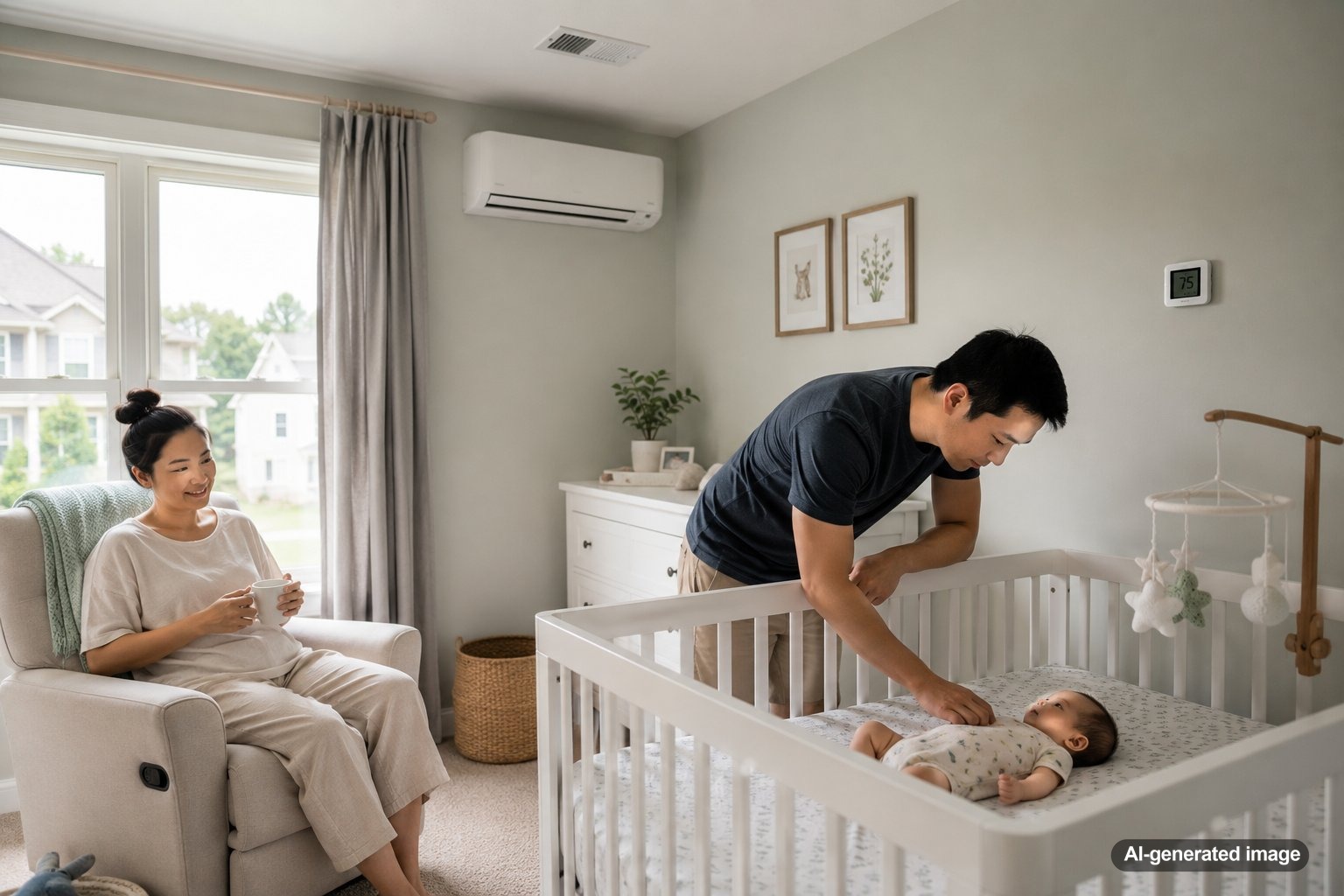
Cooling a nursery safely during summer starts with steady comfort, clean airflow, and common-sense temperature control. The goal is not to make the room feel cold, but to keep it from becoming stuffy, humid, or uneven during hot New Jersey weather. A nursery can warm up faster than the rest of the home because of sun exposure, closed doors, small room size, and limited air movement.
For many families in Central and Northern New Jersey, safe nursery cooling is really a whole-home comfort issue. If the room feels much warmer than nearby spaces, the solution may involve airflow, thermostat settings, window heat gain, humidity, or AC performance. Meyer & Depew helps homeowners evaluate these issues through AC service and maintenance when simple adjustments are not enough.
Keep the nursery comfortable by setting a steady thermostat, reducing direct sunlight, keeping vents and returns clear, using fans carefully for air circulation, managing humidity, and scheduling professional service if the room stays too warm or the AC struggles to keep up.
Start With A Steady, Reasonable Temperature
A nursery should feel comfortable and consistent, not chilly in one hour and warm the next. Large temperature swings can happen when a thermostat is set too low, when the AC short cycles, or when the nursery is far from the main thermostat. Instead of chasing comfort with constant thermostat changes, aim for a stable setting that keeps the home evenly cooled.
One common mistake is lowering the thermostat dramatically at night because one room feels warm. That can overcool other areas while doing little to solve a nursery airflow problem. If the nursery is consistently warmer than the hallway or adjacent bedrooms, the issue may be room balance rather than the thermostat number alone.
Control Sunlight Before It Turns Into Heat
Direct afternoon sun can make a nursery feel warmer even when the AC is working properly. Windows can absorb and radiate heat into the room, especially in upstairs bedrooms or rooms facing west or south. Blackout curtains, light-filtering shades, and closed blinds during the hottest part of the day may help reduce the cooling load.
Window heat gain matters because the AC is trying to remove heat from the whole home, not just one room. When a nursery keeps gaining heat through glass, the room may lag behind the thermostat. This is especially noticeable during humid New Jersey summer afternoons when cooling systems are already working harder.
Use Fans Carefully For Air Movement, Not Direct Cooling
A fan can help circulate air in a nursery, but it should not blast directly at a crib or sleeping area. The safer goal is gentle room circulation that prevents stagnant air. A ceiling fan on a low setting or a small fan placed away from the crib may help move cooled air around the room.
Fans do not lower the actual room temperature. They make air feel more comfortable by improving movement. If a nursery is too warm even with a fan running, the AC system, ductwork, vents, or humidity level may need attention.
Keep Supply Vents And Returns Clear
Furniture placement can quietly create cooling problems. A dresser, crib, glider, toy bin, curtain, or storage basket can block a supply vent and reduce airflow into the room. Return airflow matters too. If air cannot move back toward the return, the nursery may feel closed off and stuffy.
- Make sure supply vents are open and not covered by furniture or curtains.
- Check that the air filter is clean enough for proper airflow.
- Keep the nursery door slightly open when practical to improve air movement.
- Look for obvious debris around the outdoor AC unit.
- Confirm the thermostat is set to cooling mode and a reasonable temperature.
A dirty filter can reduce airflow throughout the home, but it may show up first in rooms that are already harder to cool. Replacing a clogged filter is one of the safest homeowner checks. If airflow still seems weak after that, a qualified technician can evaluate the system more thoroughly.
Watch Humidity, Not Just Temperature
A nursery can feel uncomfortable even when the thermostat reading seems normal if indoor humidity is high. Humid air feels heavier, warmer, and less comfortable. It can also make bedding and soft surfaces feel damp or stale.
Your AC helps remove humidity as it cools, but short cycling, oversized equipment, restricted airflow, or maintenance issues can reduce dehumidification. If the home feels cool but clammy, or if the nursery feels damp rather than simply warm, it may be worth asking about broader air quality and comfort options.
Do Not Close Too Many Vents Around The House
Some homeowners try to force more cool air into a nursery by closing vents in other rooms. Closing one or two vents slightly may not seem like a big change, but closing several vents can raise pressure in the duct system, reduce efficiency, and create new comfort problems. It can also make the AC behave unpredictably.
A better approach is to keep vents open, reduce heat gain, improve circulation, and have the system evaluated if one room never matches the rest of the home. Uneven cooling may be related to duct design, room location, insulation, air leaks, or system performance.
Consider Whether The Nursery Needs Better Room-By-Room Control
Some nurseries are in rooms that were never easy to cool. Finished attic spaces, additions, older bedrooms, and rooms over garages can all have temperature challenges. In those cases, safe nursery comfort may require more than small adjustments.
Depending on the home, options may include duct improvements, thermostat changes, zoning, or a ductless solution for rooms that need independent comfort control. A professional can help determine whether zoning systems or other upgrades make sense for the layout rather than guessing from symptoms alone.
When To Call A Professional
Schedule service if the nursery stays warm despite open vents, clean filters, shaded windows, and reasonable thermostat settings. You should also call if the AC runs constantly, cycles on and off rapidly, blows weak air, makes unusual noises, leaks water, or cools some rooms much better than others.
Do not open HVAC equipment, handle wiring, add refrigerant, bypass safety switches, or attempt major equipment repairs. Cooling issues that involve electrical components, refrigerant, drainage, blower performance, or duct problems should be evaluated by a qualified HVAC technician.
FAQ
Should the nursery door stay open or closed during summer?
An open or partially open door can often help air circulate better, especially if the room does not have a dedicated return. If the door must stay closed, pay closer attention to airflow, temperature, and whether the room feels stuffy.
Is it safe to use a fan in a nursery?
A fan can be useful for gentle air circulation when it is placed safely and not aimed directly at the crib. Keep cords secure, keep portable fans out of reach, and use fan placement that supports room airflow rather than strong direct air.
Why is the nursery warmer than the rest of the house?
Common reasons include sun exposure, blocked vents, poor return airflow, dirty filters, duct imbalance, upstairs heat buildup, or AC performance issues. The cause is not always the AC unit itself, so a full comfort check can be helpful.
Can a smart thermostat help cool a nursery?
A smart thermostat may help with scheduling and comfort awareness, but it cannot fix blocked airflow, duct issues, or equipment problems by itself. It works best as part of a properly performing cooling system.
The safest way to cool a nursery during summer is to focus on steady comfort, gentle airflow, humidity control, shaded windows, and a properly maintained AC system. If one room remains uncomfortable, the home may need a professional airflow or cooling evaluation.
Need help with your heating, cooling, or HVAC system?
Meyer & Depew serves homeowners and businesses throughout Central and Northern New Jersey.
Get a quote or call 908.272.2100.