

Why Your AC May Stop Working When the Drain Line Clogs
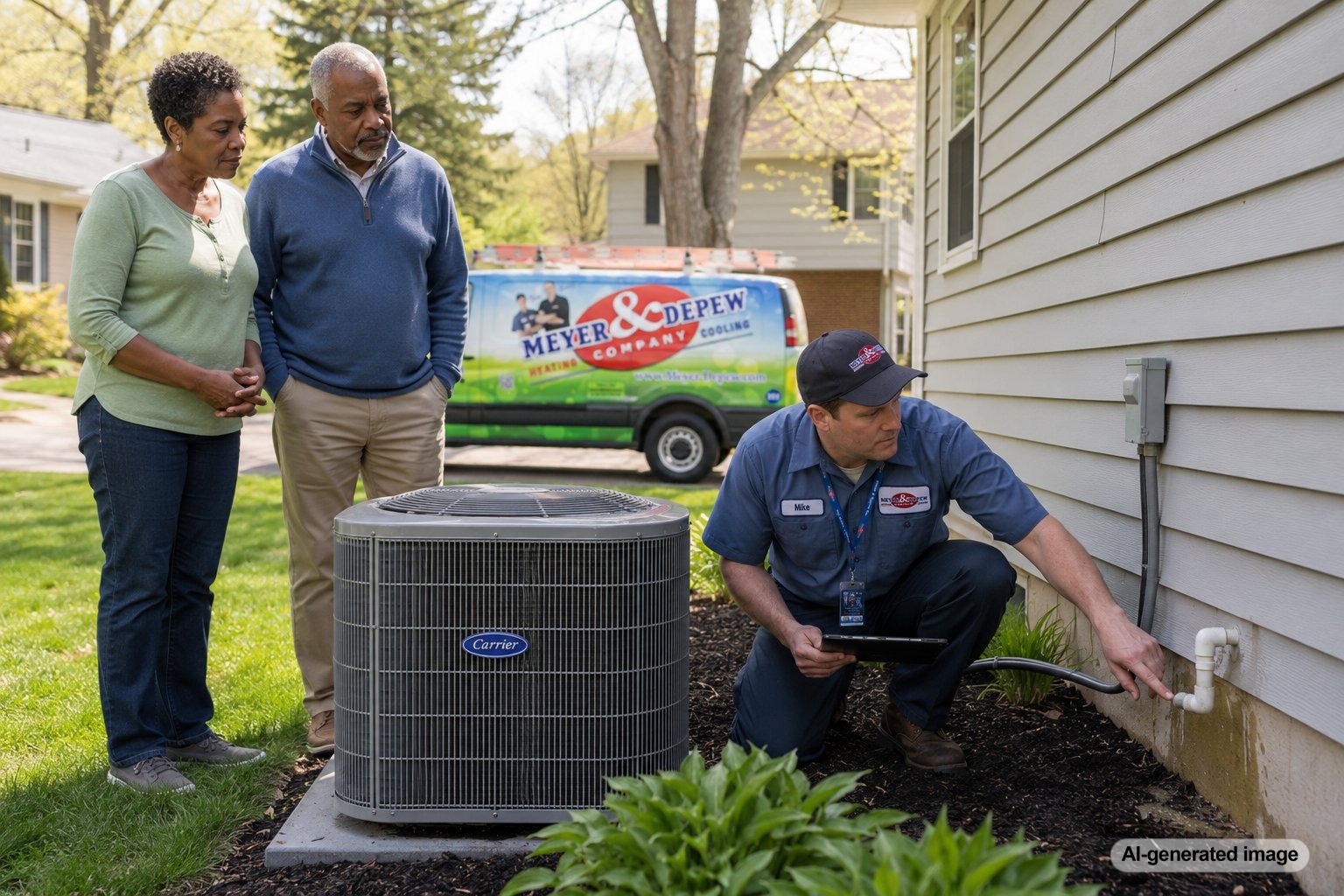
Your AC may seem like it stopped working out of nowhere, but sometimes the problem starts with something simple: water that cannot drain away from the system. When the condensate drain line clogs, moisture can back up, trigger a safety switch, and shut the cooling system down before water damages nearby equipment, ceilings, floors, or walls.
In humid Central and Northern New Jersey summers, air conditioners remove a lot of moisture from indoor air. That moisture has to go somewhere. If the drain line is blocked by algae, debris, dust, sludge, or a poorly draining condensate path, your system may stop cooling even though the main equipment is not necessarily broken. For AC troubleshooting and maintenance, Meyer & Depew provides AC service and maintenance for homeowners throughout the region.
A clogged AC drain line can stop your air conditioner because many systems include a float switch or condensate safety switch. When water backs up in the drain pan or line, the switch may shut the system off to help prevent overflow damage.
- Your thermostat may be on, but the AC may not run.
- You may notice water near the indoor unit, air handler, furnace, or drain pan.
- The system may start again temporarily and then shut off if the water level rises.
- Musty odors, high indoor humidity, or repeated shutdowns can point to a drainage issue.
- If the system keeps stopping, schedule professional service instead of bypassing any safety control.
How a clogged drain line can shut down your AC
Air conditioners cool air by moving heat out of your home, but they also pull moisture from the air. That moisture collects on the indoor evaporator coil, drips into a condensate pan, and exits through a drain line. When that line is clear, the process is quiet and easy to miss.
When the line clogs, water can collect where it should not. Many modern systems have a safety device that senses rising water and interrupts the AC operation. That shutdown is frustrating, especially during a hot day, but it is often doing its job: reducing the chance of water overflowing into finished spaces or sensitive HVAC components.
This is one reason a drainage problem can feel like an electrical or cooling failure. The AC may not be low on refrigerant, and the outdoor unit may not be the root issue. The system may simply be locked out because the condensate has nowhere to go.
Common signs your AC drain line may be clogged
A clogged drain line does not always announce itself clearly. Sometimes the first sign is a warm house. Other times, you see water before you notice the cooling problem.
- AC will not turn on: A float switch may have shut down the system because water backed up in the pan.
- Water near the indoor unit: Moisture around the air handler, furnace, closet, attic, basement, or utility area may point to a condensate issue.
- Repeated short operation: The AC may run briefly, then stop again if the drain line backs up after the pan refills.
- Musty smell: Standing water, algae, or biological buildup in the drain path can create odors near the system or vents.
- Higher indoor humidity: If the system is shutting down or not running long enough, your home may feel sticky even when the thermostat setting looks normal.
Why New Jersey humidity can make the problem worse
During muggy weather, your AC has to manage both heat and moisture. The more moisture it removes, the more condensate has to drain. A partially blocked line might seem fine on a mild day, then back up quickly during a humid stretch when the system is running longer.
Older homes, attic air handlers, finished basements, tight utility closets, and systems with long or awkward drain runs can make a clogged line more noticeable. In some homes, even a small backup can create visible water damage if the equipment is above a ceiling or near finished living space.
Commercial spaces can see similar issues, especially when occupancy patterns, long cooling cycles, and maintenance schedules do not line up. A clogged drain line in an office, retail space, or nonprofit facility may interrupt comfort and disrupt normal operations before anyone realizes the issue started with condensate drainage.
What homeowners can safely check first
- Confirm the thermostat is set to cooling and the temperature setting is below the indoor temperature.
- Check whether the air filter is dirty or heavily restricted, since airflow problems can contribute to coil and condensate issues.
- Look for visible water around the indoor unit, drain pan, or nearby floor area.
- Make sure supply and return vents are open and not blocked by furniture, rugs, or storage.
- If it is safe and accessible, check whether the breaker has tripped once. If it trips again, do not keep resetting it.
These are simple checks, not repairs. Do not bypass a float switch, disconnect a safety device, open sealed electrical compartments, or pour harsh chemicals into the system. Those steps can create bigger problems and may damage equipment or expose you to unsafe conditions.
Why professional service matters for drain line problems
A technician can confirm whether the shutdown is actually related to the condensate drain, then evaluate the full drainage path. That may include checking the primary drain line, secondary drain pan, float switch, trap configuration, slope, pump operation if present, and signs of overflow or water damage.
Professional service is also important because a clogged drain line can be a symptom, not the only problem. Poor airflow, a dirty filter, a dirty coil, improper drainage setup, or a malfunctioning condensate pump can all contribute to recurring water issues. Clearing the immediate blockage may help, but if the cause is not addressed, the system may shut down again.
Routine maintenance can reduce the risk of surprise shutdowns by giving a technician a chance to inspect the drain system before heavy cooling season. For homeowners who want maintenance to stay on a predictable schedule, Meyer & Depew also offers service plans for ongoing HVAC care.
When to call for AC service
Call for service if your AC stops working and you see water near the indoor equipment, notice a full drain pan, smell musty odors, or find that the system keeps shutting off after it briefly restarts. You should also schedule service promptly if the equipment is located in an attic, above a ceiling, or near finished areas where overflow could cause damage.
If you smell electrical burning, see sparks, notice smoke, or have water near electrical components, prioritize safety and contact a qualified professional. Avoid repeated resets or attempts to force the system to run. The shutdown may be protecting your home and equipment from a larger issue.
FAQ
Can a clogged AC drain line really stop the whole system?
Yes. If your system has a condensate safety switch or float switch, backed-up water can trigger a shutdown. The switch is designed to reduce the risk of overflow damage.
Will my AC start again after the drain line clears?
It may, but that does not mean the issue is fully resolved. If buildup remains in the drain line or pan, the system could shut off again during the next long cooling cycle.
Is water around my indoor AC unit always from a clogged drain?
Not always. Water can also be related to a dirty filter, frozen coil, condensate pump issue, damaged drain pan, improper drainage, or other HVAC problems. A technician can evaluate the cause.
Can I keep resetting the system if it shuts off?
No. Repeated resets can ignore the reason the safety switch activated. If the system keeps stopping, it is better to schedule professional AC service.
How can I reduce the chance of future drain line clogs?
Regular AC maintenance, clean filters, proper airflow, and drain line inspection can help reduce the risk. No maintenance can prevent every issue, but routine care can catch drainage concerns earlier.
If your AC stops working during humid weather and you notice water near the indoor unit, a clogged drain line may be the reason. The shutdown may be a protective response, not just a random breakdown.
Need help with your heating, cooling, or HVAC system?
Meyer & Depew serves homeowners and businesses throughout Central and Northern New Jersey.
Get a quote or call 908.272.2100.