

How Wildfire Smoke Can Affect Your Home’s HVAC Filter and What to Do Next
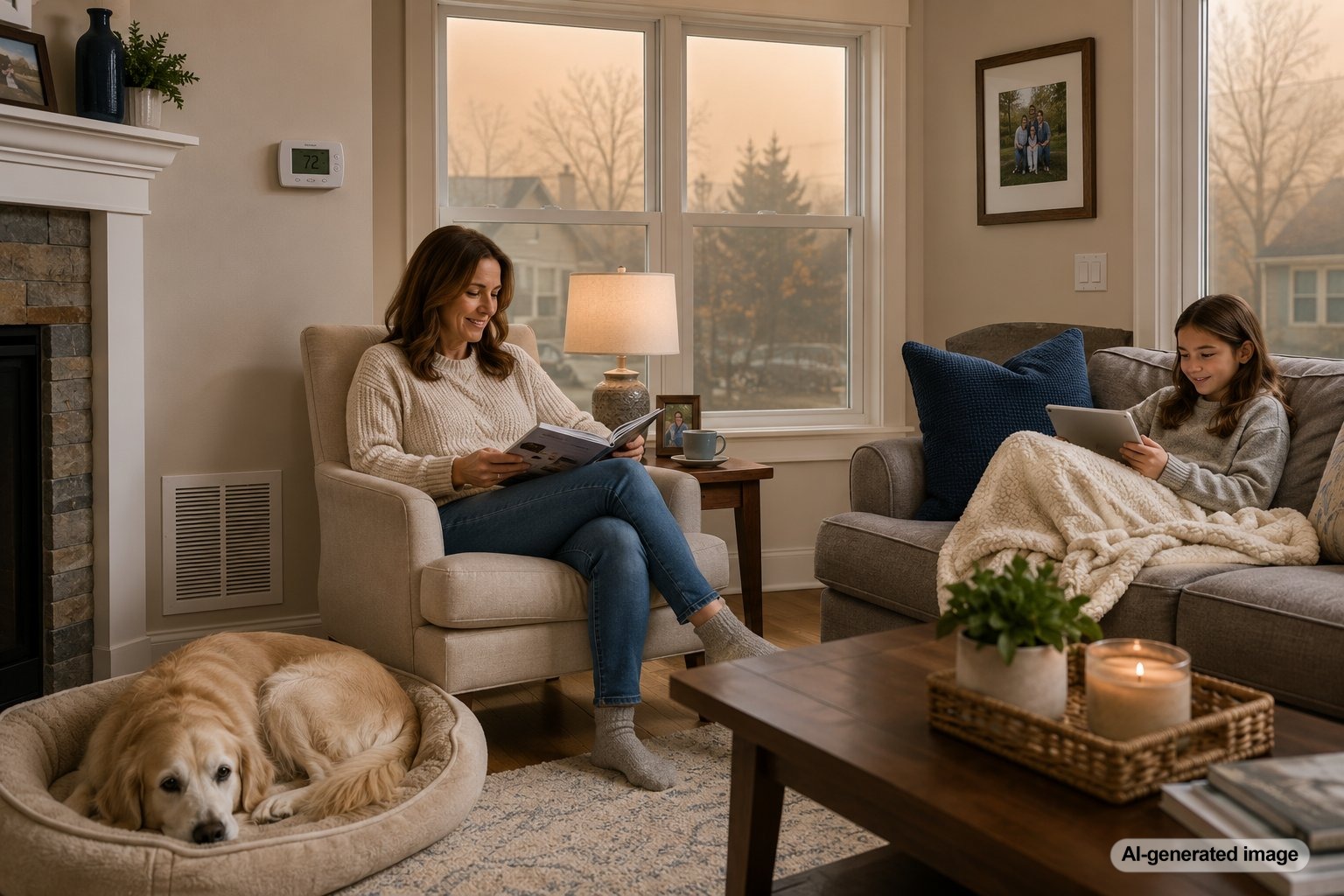
Wildfire smoke can affect homes hundreds of miles from an active fire, especially when changing wind patterns carry fine particles into New Jersey. Once that smoky outdoor air reaches your home, your HVAC filter may collect particles faster than it does during normal conditions, potentially reducing airflow and affecting indoor comfort. Knowing what to watch for can help you respond without overloading your heating or cooling system.
Your HVAC system is only one part of an indoor air quality strategy, but proper filtration can make a meaningful difference. Meyer & Depew offers air quality and comfort solutions for homeowners throughout Central and Northern New Jersey who want help evaluating filtration, purification, ventilation, and system performance.
- Wildfire smoke can load an HVAC filter with fine particles more quickly than ordinary household dust.
- A dirty or restrictive filter may reduce airflow and make the system work harder to circulate conditioned air.
- Inspect the filter more frequently during prolonged smoke events rather than relying only on the usual replacement schedule.
- Use a filter your HVAC system is designed to handle, since a higher-efficiency filter is not automatically appropriate for every system.
- Keep windows and exterior doors closed when outdoor smoke levels are elevated, and schedule professional help if airflow or comfort problems continue.
Why Wildfire Smoke Is Hard on HVAC Filters
Wildfire smoke contains a mixture of gases and very small airborne particles. The visible haze may be outside, but smoke can still enter a building through open doors, leaky windows, exhaust pathways, ventilation systems, and normal air exchange around the structure.
When the HVAC blower circulates indoor air, particles suspended in that air may be captured by the system’s filter. During a significant smoke event, the filter can collect material much faster than it would during an ordinary week. A filter that looked relatively clean before the smoke arrived may darken, develop a smoky odor, or become visibly coated sooner than expected.
Particle size also matters. Basic filters are often designed primarily to protect HVAC equipment from larger debris, such as lint and household dust. They may capture some smoke-related material, but very fine particles can be more difficult to remove. Higher-efficiency filtration may capture smaller particles, although the filter must still be compatible with the system’s airflow requirements.
How a Smoke-Loaded Filter Can Affect Your HVAC System
The filter sits in the system’s return-air path. As it accumulates debris, resistance to airflow can increase. That does not mean every discolored filter is immediately dangerous, but a heavily loaded filter may contribute to several noticeable problems.
Reduced airflow from supply vents
You may notice that the air coming from supply registers feels weaker than usual. Reduced airflow can make it harder to maintain even temperatures, particularly in rooms that are already farther from the air handler.
Longer heating or cooling cycles
If less air moves through the system, it may take longer to reach the thermostat setting. Longer operating cycles can have several possible causes, so the filter should be treated as one practical item to inspect rather than a certain diagnosis.
Uneven temperatures
Rooms with limited airflow may become warmer or cooler than the rest of the home. Existing duct issues, closed vents, zoning conditions, and solar exposure can also contribute, but a restricted filter may make uneven comfort more noticeable.
More strain on system components
An HVAC system is designed to operate within a particular airflow range. Significant restriction may place additional stress on the blower and can interfere with normal heating or cooling performance. Replacing the filter may help when restriction is the cause, but continuing problems should be evaluated by a qualified technician.
How Often Should You Check the Filter During Wildfire Smoke?
There is no single replacement interval that fits every home. Filter size, filter type, system runtime, indoor pets, household activity, air leakage, and the severity of outdoor smoke all affect how quickly a filter becomes loaded.
During prolonged smoky conditions, inspect the filter more often than you normally would. In some homes, checking it every few days during the event may be reasonable. Look for visible particle buildup, dark discoloration, bending, dampness, unusual odor, or a noticeable decline in airflow.
Do not judge the filter by color alone. Some filters naturally discolor as they collect ordinary dust, and the appearance of smoke particles can vary. Compare it with a clean replacement filter when possible, and follow the filter manufacturer’s instructions.
Should You Install the Highest MERV Filter Available?
Not necessarily. MERV, or Minimum Efficiency Reporting Value, describes how effectively a filter captures particles within certain size ranges. A filter with a higher MERV rating may capture smaller particles, but it can also create more resistance to airflow.
The right choice depends on the filter cabinet, blower capacity, duct design, existing static pressure, and equipment specifications. Installing an overly restrictive filter can reduce airflow even when the filter is new. This is especially important in older systems, undersized return-air systems, and equipment that was designed around a basic filter.
Before making a major change in filtration, check the equipment documentation or ask an HVAC professional what range is appropriate. A technician can evaluate airflow and determine whether the system can support a more efficient filter without compromising performance.
Safe Steps Homeowners Can Take During Smoky Conditions
- Inspect the HVAC filter and replace it if it is visibly loaded or due for replacement.
- Confirm that the replacement filter is the correct size and is installed with the airflow arrow pointing in the proper direction.
- Keep supply and return vents open and free from furniture, rugs, boxes, and curtains.
- Keep exterior doors and windows closed when outdoor smoke levels are elevated.
- Use kitchen and bathroom exhaust fans only as needed, since prolonged exhaust operation can draw more outdoor air through gaps in the building.
- Check the thermostat settings and make sure the fan and operating mode are set as intended.
- Avoid activities that add particles indoors, such as smoking, burning candles, or using a wood-burning fireplace.
If your thermostat offers a circulation setting, consider how it operates before using it continuously. More circulation can send additional indoor air through the filter, but it also increases blower runtime and may not be appropriate for every system or humidity condition. System-specific guidance is preferable to assuming continuous fan operation is always best.
Can an Air Purifier Help With Wildfire Smoke?
A properly selected air purification system may provide another layer of particle control. Options can include portable room air cleaners and whole-home systems installed as part of the HVAC system. Performance depends on equipment sizing, filtration efficiency, room layout, airflow, maintenance, and the amount of smoke entering the building.
Portable units are generally intended to serve a defined room or area, not an entire house unless multiple properly sized units are used. Keep them away from walls, curtains, and furniture that block airflow, and replace or clean their filters according to the manufacturer’s directions.
Whole-home solutions can treat air as it circulates through the duct system. Homeowners considering this approach can learn more about air purification systems and discuss whether their HVAC equipment and ductwork are suitable.
Be Careful With Ventilation During a Smoke Event
Fresh-air ventilation is normally valuable because it can help dilute indoor pollutants. During periods of heavy outdoor smoke, however, bringing in untreated outside air may increase indoor particle levels. The best response depends on the home’s ventilation equipment and whether that equipment includes filtration or controls for outdoor-air intake.
Do not block combustion-air openings, appliance vents, or required safety ventilation. Altering those components can create serious hazards. If you are unsure how a ventilator, fresh-air intake, or exhaust system should be operated during smoky conditions, consult a qualified HVAC professional.
When to Call an HVAC Professional
Replacing a dirty filter is a reasonable homeowner task, but it may not resolve every problem associated with wildfire smoke or restricted airflow. Schedule professional service if you notice weak airflow after replacing the filter, unusual system noises, repeated shutdowns, persistent odors, ice on cooling equipment, excessive dust from vents, or rooms that no longer reach the thermostat setting.
A technician can check the blower, coils, filter rack, return-air system, duct restrictions, and overall system airflow. Professional evaluation is also helpful when you want to upgrade filtration and need to know how much resistance your existing equipment can handle.
If you see smoke coming from HVAC equipment, smell electrical burning, notice sparks, or suspect a fire, turn the system off only if it is safe to do so, leave the affected area, and contact emergency services. Do not continue operating equipment that may present a fire or electrical hazard.
Frequently Asked Questions
Can wildfire smoke damage an HVAC system?
Smoke does not automatically damage an HVAC system, but heavy particle buildup can restrict a filter and may contribute to airflow or performance problems. Extended exposure may also increase the need for filter changes, coil inspection, and system cleaning.
Will running the AC keep wildfire smoke out?
Running the AC does not seal the home against smoke. Most central residential systems recirculate indoor air, but smoke can still enter through openings and air leakage. Keeping doors and windows closed and maintaining appropriate filtration can help reduce exposure.
Should I replace my filter immediately after a smoke event?
Inspect it when outdoor conditions improve. Replace it if it is visibly loaded, has a persistent smoky odor, is damaged, or has reached the manufacturer’s recommended service limit. A lightly used filter may not always require immediate replacement.
Can I stack two HVAC filters for better smoke protection?
No. Stacking filters can create excessive airflow resistance and may interfere with system performance. Use one correctly sized filter that is appropriate for the equipment unless the system was specifically designed for another configuration.
Can duct cleaning remove wildfire smoke?
Duct cleaning is not automatically necessary after every smoke event. Persistent odor, visible contamination, renovation debris, moisture, or other specific conditions may justify further evaluation. An HVAC professional can inspect the system before recommending cleaning.
Wildfire smoke can load your HVAC filter faster, reduce airflow, and make existing comfort problems more noticeable. Inspect the filter frequently during smoky periods, use a filter that matches the system’s requirements, limit unnecessary outdoor-air entry, and seek professional help when performance problems continue.
Need help with your heating, cooling, or HVAC system?
Meyer & Depew serves homeowners and businesses throughout Central and Northern New Jersey.
Get a quote or call 908.272.2100.