



Can a Mini Split Help Cool a Home Gym?
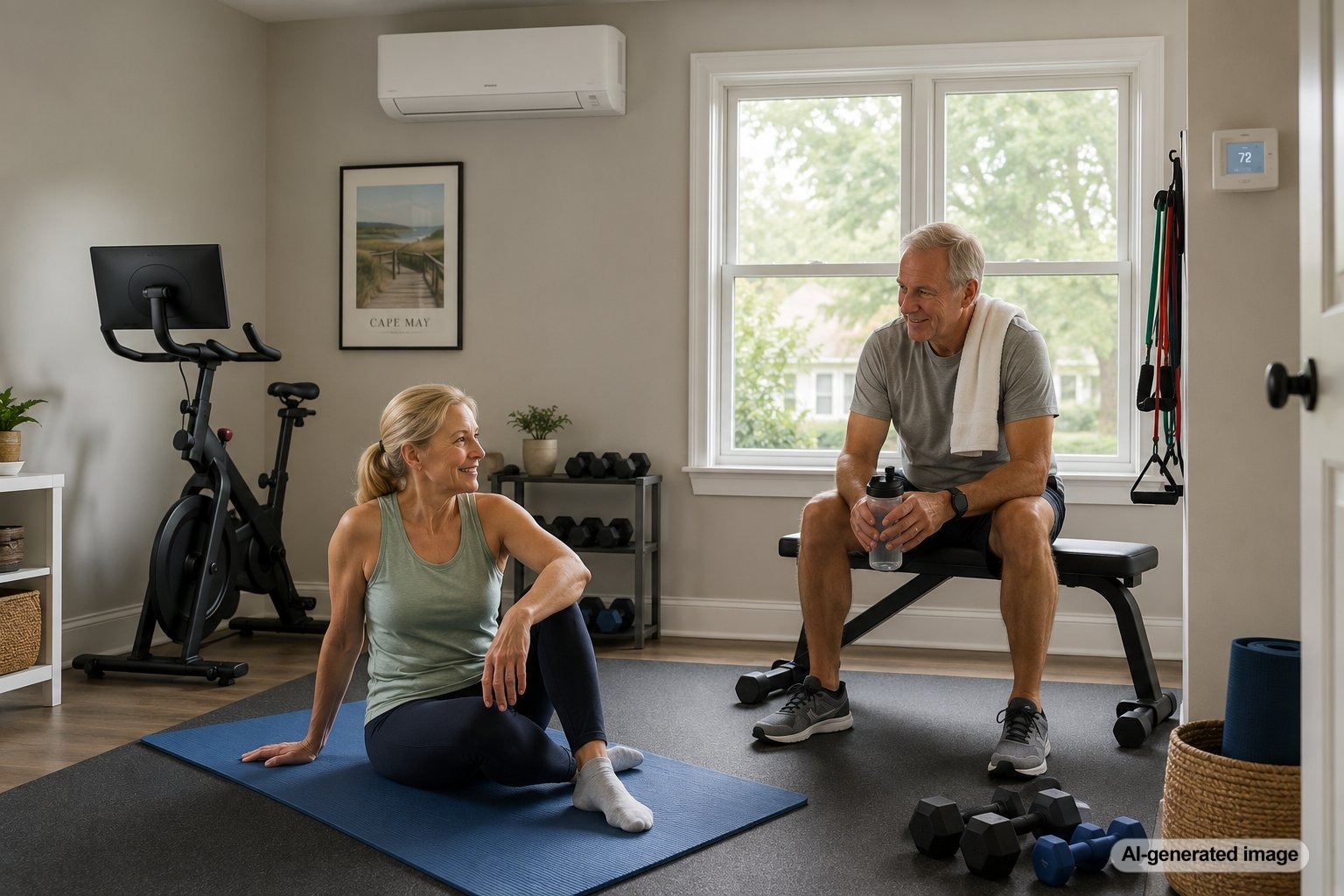
Yes, a mini split can be an effective way to cool a home gym, especially when the space gets hotter than the rest of the house or is not connected to the existing ductwork. A properly selected ductless system can provide targeted temperature control without forcing you to cool every room just to make one workout area comfortable. For homeowners in Central and Northern New Jersey, it can be particularly useful in converted garages, finished basements, additions, and bonus rooms that become warm and humid during summer workouts.
The right result depends on more than square footage. Insulation, ceiling height, sun exposure, workout intensity, equipment heat, and moisture all affect how much cooling the room may need. A professional evaluation can determine whether a ductless mini split system is a practical fit and how it should be sized.
- A mini split can cool a home gym independently from the rest of the house.
- It is often useful for garages, basements, additions, and rooms with weak airflow.
- Correct sizing matters because workouts add heat and moisture to the space.
- Insulation, ventilation, and equipment placement can affect comfort.
- Professional installation is needed for refrigerant, electrical, drainage, and system setup.
Why Home Gyms Often Need Their Own Cooling
A room that feels acceptable while sitting still can become uncomfortable once someone starts exercising. People release heat and moisture during a workout, while treadmills, bikes, televisions, lighting, and other electronics may add even more heat. If the gym is located above a garage, in an attic-adjacent bonus room, or in a converted garage, outdoor temperatures and sun exposure can make the problem worse.
The central HVAC system may not have been designed for the room’s new use. A former storage area or lightly occupied bedroom can require different airflow once it becomes a regular workout space. Extending existing ductwork is not always practical, and lowering the main thermostat may overcool the rest of the house before the gym becomes comfortable.
How a Mini Split Can Improve Home Gym Comfort
A mini split provides heating and cooling directly to a designated room or zone. The indoor unit circulates conditioned air within the gym, while the outdoor unit handles the heat-transfer process. Because the system serves the workout area independently, the homeowner can adjust the gym temperature without making unrelated rooms colder.
This room-by-room control can be especially helpful when the gym is used for only an hour or two at a time. Instead of changing the temperature throughout the house well before a workout, the user can operate the gym’s dedicated system based on that room’s schedule and comfort needs.
It Can Address Weak or Missing Ductwork
Converted garages, additions, sunrooms, and finished lower levels may have little or no connection to the home’s central duct system. Even when supply vents are present, the room may still receive inadequate airflow because of long duct runs, poor return-air pathways, or the original system design. Ductless equipment can serve the space without requiring a major duct extension.
It May Help Manage Summer Humidity
New Jersey summers can make an enclosed gym feel damp as well as hot. Cooling equipment removes some moisture while operating, which may make the room feel more comfortable and reduce the heavy, sticky feeling that can develop during exercise. However, a mini split is not a substitute for correcting water intrusion, wet foundation conditions, or other building moisture problems.
It Can Provide Heating in Colder Weather
Many mini split systems can also provide heat. That can be useful in a garage gym, basement, or addition that becomes uncomfortable during colder months. The system still needs to be selected for the space and local conditions rather than chosen only for its cooling capacity.
What Determines Whether a Mini Split Will Work Well?
A mini split is not automatically the right answer for every home gym. The system must be matched to the room’s actual heating and cooling load. Several details can make a meaningful difference.
- Room size and ceiling height: A large gym or a room with high ceilings contains more air and may require greater capacity.
- Insulation and air sealing: An uninsulated garage can gain heat quickly and may remain difficult to cool efficiently until the building envelope is improved.
- Windows and sun exposure: Large west-facing windows can create substantial afternoon heat gain.
- Occupancy: A gym used by several people at once will usually have a different cooling load than a room used by one person.
- Exercise equipment: Motorized treadmills, televisions, lighting, and other electronics contribute heat.
- Workout style: High-intensity training may call for lower temperatures and stronger air circulation than stretching or light resistance work.
- Ventilation needs: Cooling recirculates indoor air, but it does not automatically provide outdoor air ventilation.
Why Correct Sizing Matters
Choosing equipment based only on a rough square-foot estimate can lead to disappointing performance. An undersized unit may run for long periods without reaching the desired temperature. An oversized unit may cool the room quickly but shut off before removing as much moisture as expected, potentially leaving the space cool but clammy.
A qualified HVAC professional can evaluate insulation levels, windows, room orientation, occupancy, ceiling height, equipment heat, and the home’s construction. This load-based approach provides a more reliable basis for selecting capacity than relying on a generic online BTU chart.
Placement Can Affect the Workout Experience
The indoor unit should distribute air across the room without creating an uncomfortable blast directly onto a treadmill, lifting bench, yoga area, or stationary bike. Wall space, ceiling height, furniture, mirrors, and equipment layout all influence placement.
The outdoor unit also needs an appropriate location with adequate clearance and access for service. Refrigerant lines, condensate drainage, electrical requirements, and exterior appearance must be considered as part of the installation. These are professional installation tasks and should not be treated as a do-it-yourself project.
What Homeowners Can Check Before Requesting a Quote
- Measure the room and note the ceiling height.
- Identify whether the walls, ceiling, and garage door are insulated.
- Note how many people normally use the gym at one time.
- List heat-producing equipment such as treadmills, televisions, and bright lighting.
- Observe when the room feels hottest and which windows receive direct sun.
- Check whether the room has an existing supply vent and a clear return-air path.
- Think about where an indoor unit could deliver air without blowing directly on the main workout area.
These observations can help an HVAC professional understand how the space is used. They do not replace a proper load calculation or an evaluation of the home’s electrical capacity and building conditions.
When Another Solution May Make More Sense
A mini split may not be the first step when the main problem is poor insulation, major air leakage, a damaged garage door seal, or water entering a basement. Correcting those issues can reduce the cooling load and improve comfort regardless of which HVAC option is selected.
If the gym is already connected to a central system, an airflow or zoning evaluation may reveal another practical solution. Blocked returns, closed dampers, duct leakage, or an unbalanced system can contribute to uneven temperatures. In some homes, a professionally designed zoning system may be worth considering. In others, a mini split remains the simpler way to give the gym independent control.
When to Call an HVAC Professional
Professional guidance is appropriate when the gym remains uncomfortable despite reasonable thermostat settings, when the room has little or no ducted airflow, or when you are converting a garage, basement, attic area, or addition into a permanent exercise space. An HVAC contractor can assess the load, discuss equipment options, plan safe electrical and refrigerant connections, and determine how condensate should be managed.
Schedule service rather than continuing to operate equipment if you notice an electrical burning smell, repeated breaker trips, water leaking near HVAC components, unusual noises, smoke, or another unsafe condition. Do not open sealed equipment, handle refrigerant lines, or modify high-voltage wiring.
Frequently Asked Questions
Can a mini split cool a garage gym?
It can, but the garage’s insulation, air leakage, door construction, ceiling height, and sun exposure must be considered. An uninsulated garage may need building improvements before any cooling system can perform effectively.
Will a mini split remove workout odors?
A mini split filters and recirculates room air, but it does not automatically bring in fresh outdoor air. Cleaning equipment, managing damp towels, maintaining the filter, and providing appropriate ventilation may still be necessary.
Can I turn the mini split on only when I exercise?
Independent control is one of the main advantages of a ductless system. However, the room may need time to reach the desired temperature, especially on very hot days. Operating strategy can vary based on insulation, equipment, humidity, and how frequently the gym is used.
Does a home gym need a separate thermostat?
A ductless system normally uses its own controls, allowing the gym to operate as a separate comfort zone. This prevents the main household thermostat from being the only way to adjust the workout area.
Can one mini split serve multiple workout rooms?
Some ductless configurations can serve more than one indoor zone, but the design should reflect how each room is used and whether simultaneous heating or cooling is needed. A professional can compare single-zone and multi-zone options.
A mini split can be a strong option for a home gym that is consistently hotter, more humid, or less comfortable than the rest of the house. The best results come from evaluating the room’s construction and workout load, selecting the correct capacity, and installing the equipment in a location that supports comfortable airflow.
Thinking about replacing or upgrading your HVAC system?
Meyer & Depew can help you understand your options for comfort, efficiency, and long-term reliability in your New Jersey home or business.
Questions? Contact Meyer & Depew or call 908.272.2100.