

What Homeowners Should Know About Condensate Safety Switches
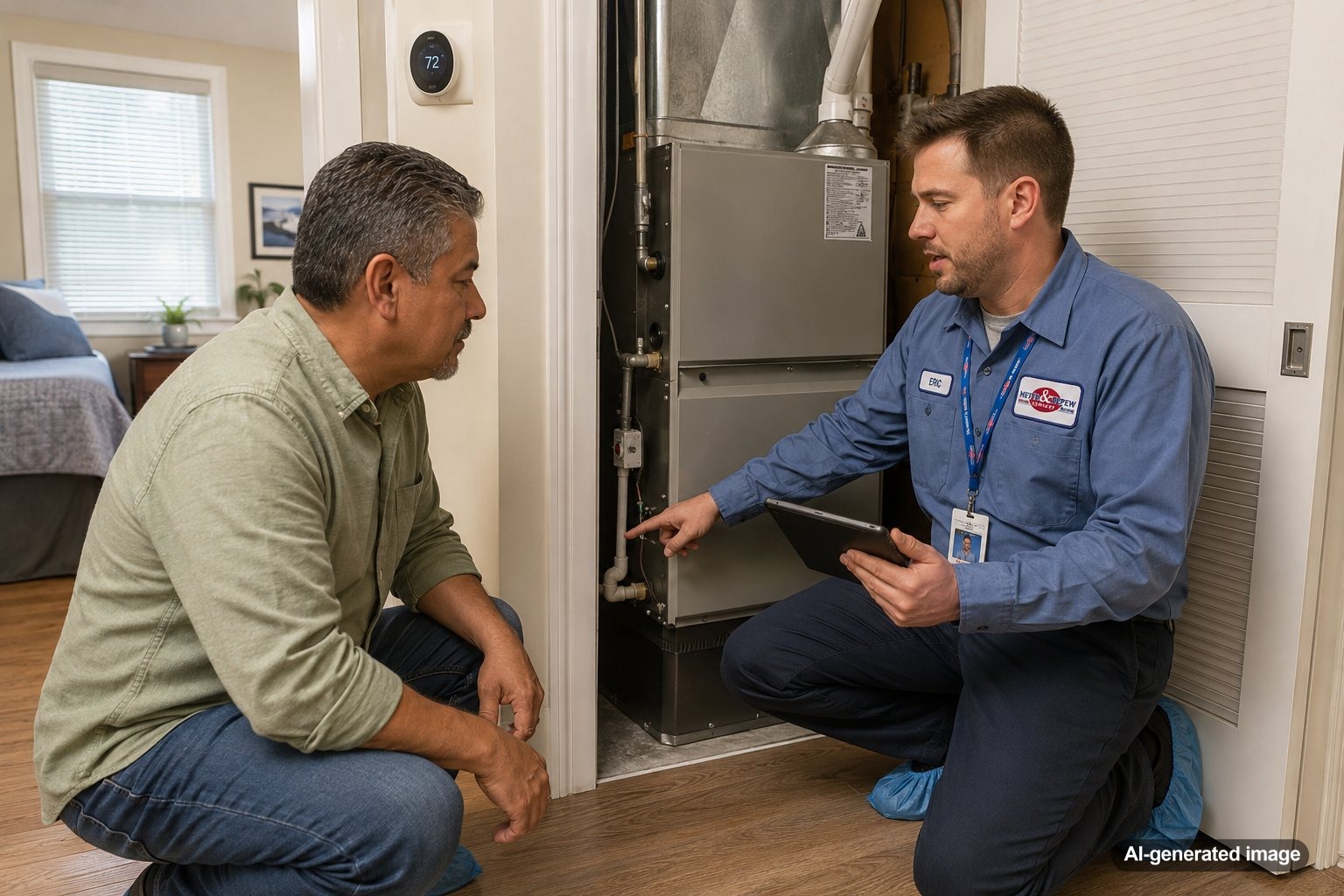
A condensate safety switch is a small component with an important job: it can shut down your AC system when collected moisture is not draining properly. That shutdown may feel inconvenient on a hot New Jersey day, but it is often protecting your home from an overflowing drain pan, ceiling damage, damaged equipment, or water around the indoor unit.
Homeowners do not need to repair or bypass this device themselves. Understanding what it does, why it may trip, and when to schedule professional AC service and maintenance can help you respond safely and avoid turning a drainage problem into a larger repair.
A condensate safety switch monitors water near an AC drain pan or condensate line. If water rises beyond a safe level, the switch may interrupt the cooling system until the drainage problem is corrected.
- It helps reduce the risk of overflow and water damage.
- It may trip because of a clogged drain line, blocked outlet, dirty drain pan, or failed condensate pump.
- A system that suddenly stops cooling may be responding to the switch.
- The switch should never be bypassed to keep the AC running.
What Is a Condensate Safety Switch?
Air conditioners remove heat and moisture from indoor air. As humid air passes over the cold evaporator coil, water vapor condenses into liquid. That water normally falls into a drain pan and travels through a condensate drain line to an approved discharge point.
A condensate safety switch, sometimes called a float switch, overflow switch, or wet switch, is designed to detect water where it should not be accumulating. Depending on the HVAC setup, it may be installed in the primary drain line, secondary drain pan, auxiliary drain connection, or near the equipment base.
When rising water activates the switch, it opens an electrical control circuit and may stop the cooling system. The exact response depends on the equipment and wiring. Some systems stop the outdoor unit while the indoor fan continues to run. Others may appear to lose cooling completely.
Why the Switch May Shut Off Your AC
A tripped switch usually means condensate is not leaving the system as intended. It does not identify the exact cause, but it provides an important warning that a qualified technician should evaluate.
A clogged condensate drain line
Dust, biological buildup, debris, or sludge can collect inside the drain line over time. New Jersey’s summer humidity can cause an AC system to produce a considerable amount of condensate, so even a partial restriction may become noticeable during long cooling cycles.
A blocked drain outlet
The outdoor end of a condensate line may become obstructed by dirt, landscaping debris, insects, or an improperly positioned object. A blockage can prevent water from flowing freely even when the indoor portion of the line appears normal.
A dirty, damaged, or misaligned drain pan
An aging drain pan may corrode, crack, shift, or collect debris. Water can then pool in an unintended area or reach the safety switch before it drains normally.
A condensate pump problem
Some systems rely on a condensate pump when gravity drainage is not practical. If the pump loses power, its reservoir fills, its discharge tubing becomes restricted, or the pump fails, a safety circuit may stop the AC.
An installation or drainage slope issue
Condensate lines generally need proper support and slope so water can move toward the outlet. Sagging sections, poor routing, disconnected fittings, or an improperly leveled indoor unit can contribute to standing water and recurring switch trips.
What a Tripped Safety Switch Can Look Like
The symptoms are not always obvious. A homeowner may notice that the thermostat is calling for cooling but the outdoor unit is not running. In other cases, the system may shut off unexpectedly, restart intermittently, or leave the indoor fan operating without producing cool air.
You may also see water in an auxiliary drain pan, moisture around the air handler, staining below attic equipment, or dampness near a furnace or fan coil. These signs should not be ignored, especially when equipment is located above a finished ceiling or on an upper floor.
Because thermostat problems, electrical issues, frozen coils, and other HVAC faults can produce similar symptoms, the switch should not be treated as a certain diagnosis. A qualified technician can determine whether condensate drainage is responsible.
Why You Should Never Bypass the Switch
A condensate safety switch is not an unnecessary obstacle. It is part of the system’s protection strategy. Bypassing, rewiring, taping down, or otherwise defeating the switch could allow water to continue overflowing while the AC runs.
That may lead to damaged drywall, insulation, flooring, cabinetry, electrical components, or HVAC equipment. It can also leave hidden moisture inside walls or ceilings. The safest approach is to leave the switch in place and correct the drainage issue that caused it to activate.
Safe Checks Homeowners Can Make
- Check the thermostat settings and confirm that it is set to cooling.
- Inspect the air filter and replace it if it is visibly dirty and you can do so safely.
- Look for visible water around the indoor unit or in an accessible auxiliary drain pan.
- Make sure supply and return vents are open and not blocked.
- Check whether the HVAC breaker has tripped once, but do not repeatedly reset it.
- Keep belongings away from wet equipment and avoid opening electrical panels.
If you see active leaking, water near electrical components, ceiling damage, or repeated shutdowns, turn the system off at the thermostat when it is safe to do so and request professional service. Do not remove access panels, disconnect the switch, pour chemicals into an unfamiliar drain opening, or attempt electrical repairs.
How a Technician Evaluates the Problem
A professional evaluation may include inspecting the primary and secondary drain paths, checking the drain pan, testing the switch, confirming the air handler is level, and determining whether a condensate pump is operating correctly. The technician may also check for conditions that increase condensate or contribute to drainage trouble, such as restricted airflow or a frozen evaporator coil.
Clearing the immediate blockage is only part of the job when the problem keeps returning. The technician may need to identify improper drain slope, damaged fittings, recurring buildup, a failing pump, or a switch that is poorly positioned or no longer operating reliably.
Can Maintenance Help Prevent Condensate Problems?
Routine HVAC maintenance may help reduce the risk of unexpected drainage issues by giving a technician an opportunity to inspect accessible drain components, look for standing water, evaluate the drain pan, and identify developing problems before peak cooling demand.
Maintenance cannot prevent every clog or equipment failure, but it can make overlooked conditions easier to catch. Homeowners who want a more consistent approach to seasonal care can review Meyer & Depew’s HVAC service plans.
When to Call an HVAC Professional
Schedule service when the AC will not run, the switch trips repeatedly, water is visible near the equipment, the condensate pump is not operating, or moisture appears on a ceiling or wall below the indoor unit. Prompt attention is especially important for attic systems and equipment installed above finished living spaces.
A professional should also evaluate recurring drain clogs. Repeatedly clearing the symptom without identifying the reason can leave an underlying installation, airflow, drainage, or equipment issue unresolved.
Frequently Asked Questions
Does every AC system have a condensate safety switch?
Not every system has the same type or location of safety switch. Requirements and installation practices vary by equipment configuration, drain setup, and applicable codes. A technician can identify which condensate protections are installed on your system.
Will a condensate safety switch reset itself?
Some switches may return to their normal position after the water level drops, but the cause of the backup may still be present. An AC system that restarts does not necessarily mean the drainage problem has been resolved.
Can a dirty air filter cause the switch to trip?
A dirty filter does not directly clog the condensate drain, but severe airflow restriction may contribute to coil icing. When the ice melts, the resulting water can overwhelm or expose problems in the drainage system.
Why is my indoor fan running but the AC is not cooling?
Some safety switch configurations interrupt only part of the cooling system. However, several other faults can cause the same symptom, so professional diagnosis is appropriate if basic thermostat and filter checks do not resolve it.
Is water in the secondary drain pan normal?
The secondary pan is intended as backup protection. Water collecting there often indicates that the primary drainage path is restricted, leaking, or not working correctly and should be inspected.
A condensate safety switch may stop your AC at an inconvenient time, but it is often preventing a drainage problem from causing expensive water damage. Do not bypass it. Look for visible moisture, complete only safe basic checks, and arrange professional service when the system remains off or the problem returns.
Need help with your heating, cooling, or HVAC system?
Meyer & Depew serves homeowners and businesses throughout Central and Northern New Jersey.
Get a quote or call 908.272.2100.