



Why Thermostats in Hallways Can Misread Bedroom Comfort
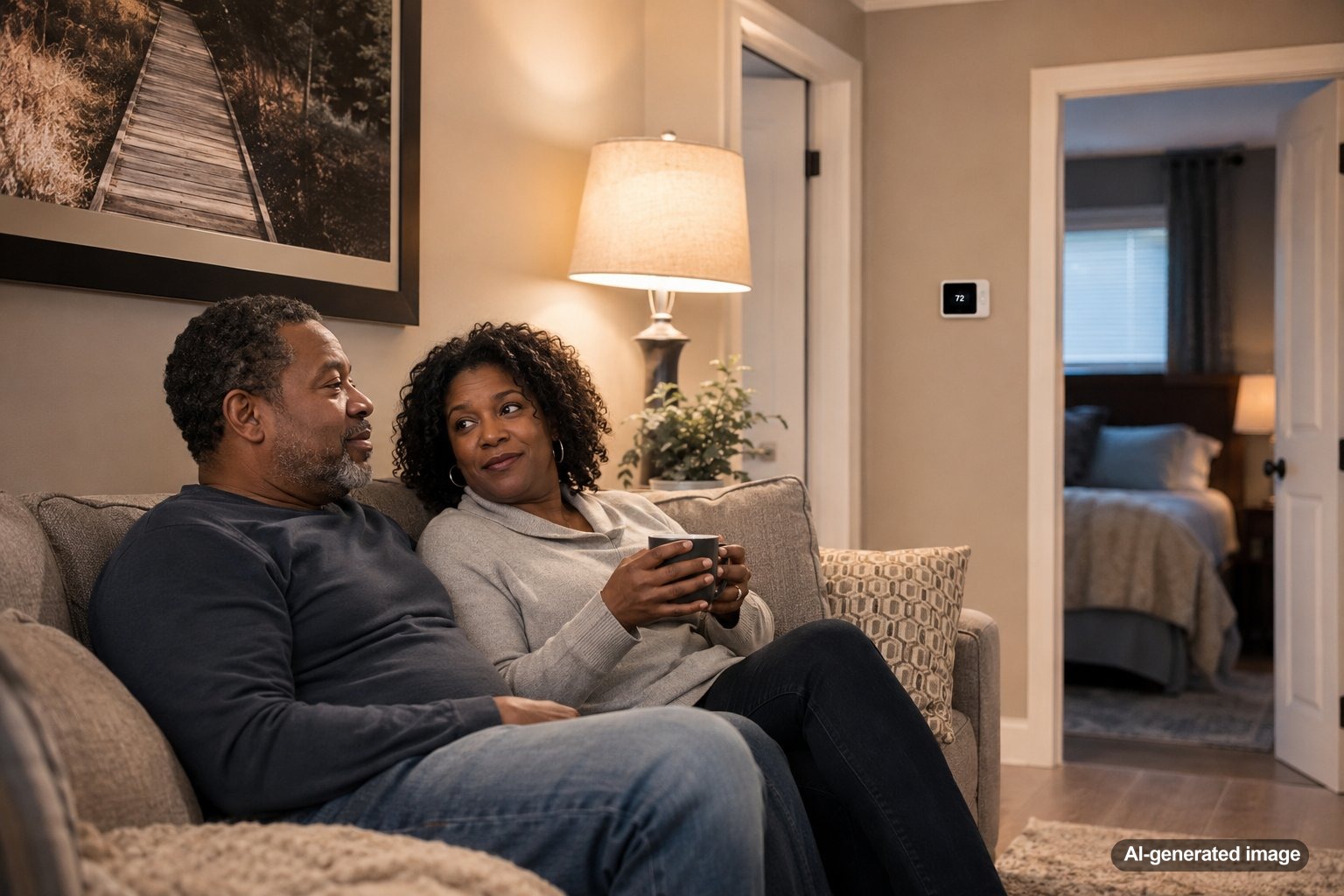
A thermostat in a hallway can report a comfortable temperature even when nearby bedrooms feel noticeably warmer or colder. The thermostat only measures conditions at its own location, so it may not detect closed bedroom doors, weak airflow, afternoon sun, second-floor heat buildup, or other room-specific conditions.
This mismatch is common in New Jersey homes with multiple floors, long duct runs, additions, finished attics, or bedrooms located far from the central return. The HVAC system may be operating normally while the thermostat receives an incomplete picture of the comfort people experience where they sleep.
A hallway thermostat can misread bedroom comfort because the hallway often has different airflow, sunlight, occupancy, and heat gain than the bedrooms. Improving airflow, using compatible room sensors, adjusting system balancing, or installing a zoning system may help the HVAC system respond more accurately to room-by-room needs.
Why The Hallway Temperature Can Be Misleading
Central thermostats are designed to control the HVAC system based on the temperature around the thermostat. They do not directly measure every room. When the hallway reaches the set temperature, the thermostat may stop the heating or cooling cycle even if a bedroom has not caught up.
Hallways also tend to have fewer exterior walls and windows than bedrooms. They may receive steady airflow from nearby supply vents, remain open to other parts of the home, and experience less solar heat gain. A bedroom with two exterior walls and west-facing windows can behave very differently, especially on a hot summer afternoon.
Closed Bedroom Doors Change Airflow
A bedroom may receive conditioned air through a supply vent but have no dedicated return vent. When the door is closed, air pressure can build inside the room and reduce the amount of new conditioned air entering through the supply duct. The hallway thermostat does not sense this pressure imbalance.
A noticeable temperature change after closing the bedroom door can be an important clue. Transfer grilles, jump ducts, properly sized return pathways, or other professional airflow improvements may help, depending on the home’s layout. Cutting or modifying doors, walls, or ductwork without evaluating the system is not recommended.
Bedrooms Often Have Different Heating And Cooling Loads
Several room-specific factors can cause bedroom temperatures to drift away from the hallway reading:
- Sun exposure: South- and west-facing bedrooms may absorb more heat during the day.
- Exterior surfaces: Corner bedrooms often have more exterior wall area than interior hallways.
- Room location: Second-floor and attic-adjacent bedrooms may become warmer as heat rises and the roof absorbs sunlight.
- Duct distance: Bedrooms at the end of a long duct run may receive less airflow than rooms closer to the air handler.
- Window and insulation conditions: Air leakage, aging windows, or uneven insulation can increase heat loss or heat gain.
- Occupancy and electronics: People, televisions, computers, and gaming equipment add heat that a quiet hallway does not experience.
Thermostat Placement Can Add To The Problem
Even within a hallway, thermostat placement matters. Readings may be distorted if the thermostat is near a supply register, return grille, exterior door, stairwell, skylight, kitchen opening, or a wall that becomes unusually warm or cold.
A thermostat should generally be located where it can measure representative indoor conditions. Moving it may help in some homes, but relocation alone will not correct undersized ducts, weak return airflow, insulation gaps, or large differences between floors.
Safe Checks Homeowners Can Make
- Compare the hallway and bedroom temperatures with reliable thermometers placed away from windows and vents.
- Make sure bedroom supply and return vents are fully open and not blocked by furniture, rugs, curtains, or stored items.
- Inspect or replace the HVAC air filter if it is dirty or overdue for replacement.
- Notice whether the comfort difference becomes worse when bedroom doors are closed.
- Confirm that ceiling fans are rotating in the appropriate direction for the season.
- Check whether curtains, shades, or blinds reduce afternoon heat gain in sunny bedrooms.
Avoid closing multiple supply vents in an attempt to force air toward one bedroom. This can increase system pressure and may create other airflow or equipment performance problems.
Can Smart Thermostat Sensors Help?
Some smart thermostats support wireless room sensors that measure temperature in bedrooms or other priority spaces. Depending on the thermostat, the system may average multiple sensor readings or prioritize a selected room during certain hours.
For example, a bedroom sensor may be prioritized overnight so the system responds to sleeping-area conditions instead of relying only on the hallway. This can improve temperature awareness, but a sensor cannot create airflow where the duct system cannot deliver enough conditioned air. Meyer & Depew can help evaluate compatible thermostat options and determine whether sensors are appropriate for the existing system.
When Zoning May Be A Better Solution
Zoning divides a home into separately controlled areas using multiple thermostats or sensors and motorized duct dampers. It can be useful when upstairs bedrooms consistently need different heating or cooling than the main living level.
Zoning is not simply a matter of adding dampers to any duct system. Proper design must account for equipment capacity, airflow, duct sizing, pressure, and minimum operating requirements. A qualified HVAC professional can determine whether the existing system is suitable or whether another approach, such as duct modifications or a ductless mini split, would be more practical.
When To Schedule A Professional Comfort Evaluation
Professional evaluation is worthwhile when bedroom temperatures remain several degrees different from the hallway, airflow feels weak, doors move or whistle when the system runs, or the HVAC system cycles frequently without making the bedrooms comfortable.
A technician may inspect supply and return airflow, duct condition, filter restriction, blower performance, thermostat placement, insulation-related clues, and system sizing. The goal is not to assume the thermostat is defective, but to understand why the hallway reading does not represent the bedroom environment.
Frequently Asked Questions
Should I move my thermostat into the bedroom?
Not automatically. Moving the thermostat could improve nighttime bedroom comfort but create temperature problems in other areas. Room sensors, airflow corrections, or zoning may provide better whole-home control.
Why is my bedroom hotter than the hallway in summer?
Common causes include afternoon sun, second-floor heat buildup, limited return airflow, a long duct run, closed doors, air leakage, or inadequate insulation. More than one factor may be involved.
Will closing vents in other rooms push more air into the bedroom?
It may change airflow temporarily, but closing several vents can increase duct pressure and interfere with system operation. Keep vents open unless an HVAC professional recommends a specific balancing adjustment.
Can a thermostat sensor control one bedroom separately?
A remote sensor can help the thermostat respond to that bedroom’s temperature, but it does not always provide independent control. True room or zone control may require a properly designed zoning or ductless system.
Is uneven bedroom comfort always an HVAC equipment problem?
No. The cause may involve duct design, return airflow, thermostat location, windows, insulation, sun exposure, or room use. A comfort evaluation can help separate equipment issues from building-related factors.
A hallway thermostat can accurately measure the hallway while still missing uncomfortable bedroom conditions. The best solution depends on whether the underlying issue is thermostat placement, airflow, duct design, room heat gain, or the need for more precise temperature control.
Need help with your heating, cooling, or HVAC system?
Meyer & Depew serves homeowners and businesses throughout Central and Northern New Jersey.
Get a quote or call 908.272.2100.