

How Can Businesses Reduce the Risk of Weekend HVAC Breakdowns?
Businesses can reduce the risk of weekend HVAC breakdowns by combining preventive maintenance, sensible thermostat scheduling, routine filter and airflow checks, early attention to warning signs, and a clear response plan. No maintenance program can prevent every equipment failure, but preparation can make unexpected shutdowns less likely and reduce confusion when a problem occurs outside normal business hours.
Weekend failures can be especially disruptive for restaurants, medical offices, retail stores, apartment buildings, warehouses, nonprofits, and other facilities that operate beyond a traditional Monday-through-Friday schedule. In Central and Northern New Jersey, sustained summer heat, winter cold, humidity, storms, and rapidly changing temperatures can place additional strain on commercial equipment. A structured commercial HVAC maintenance plan can help facility teams stay ahead of routine service needs instead of reacting only after comfort is lost.
The most practical ways to lower weekend HVAC risk include:
- Schedule preventive service before peak cooling and heating seasons.
- Replace filters and keep supply and return airflow paths clear.
- Review thermostat schedules before weekends, holidays, and special events.
- Investigate unusual noise, odor, cycling, leakage, or temperature changes promptly.
- Create a written after-hours response plan with contacts and equipment information.
Build Preventive Maintenance Around the Building’s Actual Use
A commercial HVAC maintenance schedule should reflect how the property operates, not just the calendar. A professional office that closes Friday evening has different risks from a restaurant, fitness center, assisted living facility, or retail location that stays busy all weekend.
Maintenance planning may consider equipment age, operating hours, occupancy, indoor heat-producing loads, filter conditions, rooftop exposure, and the consequences of losing heating or cooling. Systems that run for extended hours or serve sensitive areas may require closer observation than equipment serving lightly occupied storage space.
Professional maintenance can include inspection, cleaning, testing, measurement, and evaluation of components that building staff should not handle. The goal is not to promise that equipment will never fail. It is to identify developing concerns, maintain proper operation, and reduce avoidable stress on the system.
Schedule Service Before High-Risk Weekends
Some weekends create more operational risk than others. A holiday promotion, major event, forecasted heat wave, extended cold period, or planned increase in occupancy can push equipment harder than a normal business day.
Facility managers should avoid waiting until the Friday before a major event to address recurring comfort complaints. Whenever possible, schedule seasonal maintenance and known repairs early enough to allow time for evaluation, parts planning, and follow-up work.
It is also helpful to review upcoming closures. A building that will be mostly empty may need different temperature settings, while a property hosting a weekend event may require an adjusted schedule. These changes should be planned rather than made hastily at the end of the week.
Keep Filters and Airflow From Becoming Hidden Problems
Restricted airflow can make commercial HVAC equipment work harder and may contribute to poor comfort, longer operating cycles, or system shutdowns. Filters are a common source of restriction, particularly in buildings with construction dust, heavy foot traffic, open exterior doors, manufacturing activity, or high particulate loads.
Filter replacement frequency should be based on actual conditions and manufacturer requirements rather than a one-size-fits-all interval. Facility teams can also check that return grilles are not blocked by inventory, furniture, partitions, displays, or temporary event equipment.
Supply registers should remain open unless a qualified professional has designed the system to operate differently. Closing numerous vents in an attempt to redirect air can disrupt airflow and may create additional comfort issues.
Review Thermostat Schedules Before Staff Leave
Programmable and building-control schedules can reduce unnecessary operation, but incorrect settings can also leave occupied spaces uncomfortable or allow temperatures to drift too far during unoccupied periods.
Before weekends and holidays, confirm that schedules match actual building use. Check for temporary overrides that were never cleared, incorrect day settings, unexpected hold modes, and zones scheduled as unoccupied while people are still present.
A thermostat problem can look like an equipment problem. Incorrect mode settings, unrealistic temperature changes, disabled schedules, or failed batteries in applicable controls may prevent the system from operating as expected. Building staff can review normal user settings, but programming, control wiring, sensors, and integration problems should be evaluated by a qualified professional.
Act on Warning Signs Before Friday Afternoon
Commercial systems often show signs of trouble before they stop operating completely. These signs do not confirm a specific failure, but they may justify a professional evaluation.
- Some zones are consistently warmer or colder than usual.
- The equipment starts and stops more frequently than normal.
- Airflow has weakened in several areas.
- New rattling, grinding, squealing, or banging sounds appear.
- Musty, burning, electrical, or unusual odors are present.
- Water is collecting near indoor equipment or drains.
- The system runs continuously without maintaining the expected temperature.
- Employees repeatedly reset controls or breakers to restore operation.
Recurring symptoms should not be dismissed simply because the system starts working again. Intermittent problems can become full shutdowns when equipment operates under heavier weekend loads.
Pay Special Attention to Rooftop Units
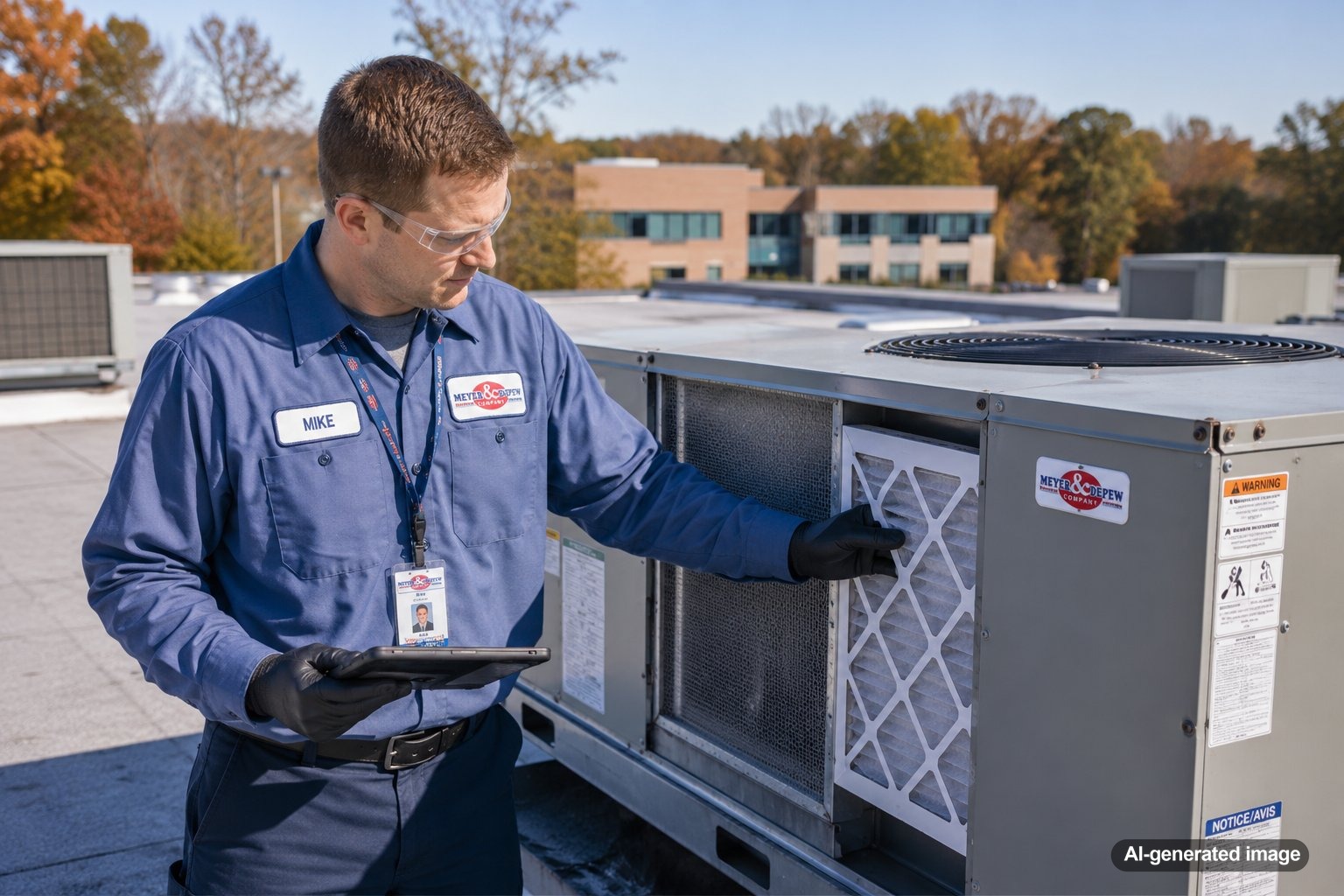
Many commercial buildings rely on packaged rooftop units. These systems are exposed to sunlight, rain, snow, wind, debris, and wide temperature swings. Because they are out of sight, developing problems may go unnoticed until indoor comfort changes noticeably.
Building personnel can visually report obvious exterior issues from a safe location, but they should not climb onto roofs without proper authorization, training, and fall protection. Access panels, electrical components, refrigerant circuits, belts, motors, gas components, and internal controls should be handled by qualified professionals.
Older equipment may also require more deliberate repair-versus-replacement planning. Repeated service calls, declining performance, difficult parts availability, and increasing operational disruption can indicate that it is time to evaluate rooftop unit replacement rather than continuing to make isolated repairs.
Create a Simple Friday HVAC Checklist
A short, repeatable checklist can help staff catch basic issues before the building manager leaves. It should take only a few minutes and should focus on safe observations rather than technical repairs.
- Confirm thermostat modes, setpoints, and schedules.
- Verify that occupied zones feel reasonably consistent.
- Inspect accessible filters and replace them when appropriate.
- Make sure supply and return vents are open and unobstructed.
- Look for visible water near accessible indoor equipment.
- Listen for new or unusual operating sounds.
- Confirm that doors, storage, displays, or furniture are not blocking airflow.
- Record concerns and arrange service before closing when possible.
If a breaker has tripped, authorized personnel may check it once when it is safe and consistent with the facility’s procedures. A breaker that trips again should not be repeatedly reset. Repeated tripping can indicate an electrical or equipment problem that requires professional attention.
Prepare an After-Hours Response Plan
Even well-maintained systems can experience unexpected problems. A written response plan helps employees take appropriate action without guessing.
The plan should identify who has authority to request service, where equipment information is stored, which areas have priority, and how occupants or customers will be protected if temperatures become unsafe. Include the building address, access instructions, alarm details, unit locations, equipment labels, and the names of employees who can provide entry.
Businesses with temperature-sensitive inventory, medical operations, animals, vulnerable occupants, computer rooms, or continuous production may also need contingency plans for temporary relocation, backup cooling or heating, protected storage, or operational shutdowns.
Know When the Situation Requires Immediate Action
Some conditions should be treated as safety concerns rather than ordinary comfort problems. If employees notice smoke, sparks, an electrical burning smell, a gas odor, suspected carbon monoxide, significant flooding around equipment, or another unsafe condition, they should follow the facility’s emergency procedures and contact the appropriate emergency service, utility, or qualified professional.
Employees should not open sealed HVAC equipment, bypass safety devices, work on high-voltage components, adjust gas pressure, or attempt to add refrigerant. These tasks require training, tools, and appropriate safety procedures.
Frequently Asked Questions
Can maintenance guarantee that our HVAC system will not fail on a weekend?
No. Mechanical and electrical equipment can fail unexpectedly. Preventive maintenance may reduce the risk of avoidable breakdowns and help identify developing concerns, but it cannot guarantee uninterrupted operation.
How often should a commercial HVAC system be serviced?
The appropriate schedule depends on equipment type, operating hours, environment, occupancy, system age, and manufacturer guidance. Many businesses plan service before cooling and heating seasons, while demanding facilities may need more frequent attention. A qualified commercial HVAC provider can recommend a schedule based on the property.
Should we shut the HVAC system off when the building is empty?
Not necessarily. Complete shutdown may create humidity, freezing, ventilation, equipment, inventory, or recovery-time concerns. Unoccupied settings are often more appropriate, but the right strategy depends on the building and its contents.
What information should we provide during an after-hours service call?
Provide the property address, affected areas, equipment label if available, observed symptoms, thermostat readings, access instructions, safety concerns, and the name of an authorized contact. Clear information can help the service provider understand the situation before arrival.
When should a business consider replacing older commercial equipment?
Replacement may be worth evaluating when equipment has recurring failures, rising repair needs, poor comfort performance, difficult parts availability, or an unacceptable risk of operational disruption. A professional assessment can compare repair needs with long-term replacement considerations.
The strongest weekend HVAC strategy is a combination of preventive service, basic staff checks, accurate schedules, prompt attention to warning signs, and a documented response plan. These steps cannot eliminate every breakdown, but they can reduce avoidable risk and help businesses respond more effectively.
Need commercial HVAC support in New Jersey?
Meyer & Depew works with businesses, organizations, and commercial properties throughout Central and Northern New Jersey.
Learn more about commercial HVAC maintenance plans.