

What Should You Do When Your AC Breaks During a Heat Wave?
When your AC breaks during a heat wave, act quickly but calmly: reduce heat entering the building, check a few safe and accessible system components, protect anyone vulnerable to high temperatures, and arrange professional service if cooling does not return. A struggling air conditioner can become more than an inconvenience when outdoor temperatures and indoor humidity rise together.
Heat waves place unusually heavy demand on cooling equipment throughout Central and Northern New Jersey. An AC system may run longer than normal even when it is working properly, but warm air, little airflow, repeated shutdowns, unusual odors, or a steadily rising indoor temperature can signal a problem that needs attention. Meyer & Depew’s AC service and maintenance team can evaluate the system without asking you to take risks around electrical or refrigerant components.
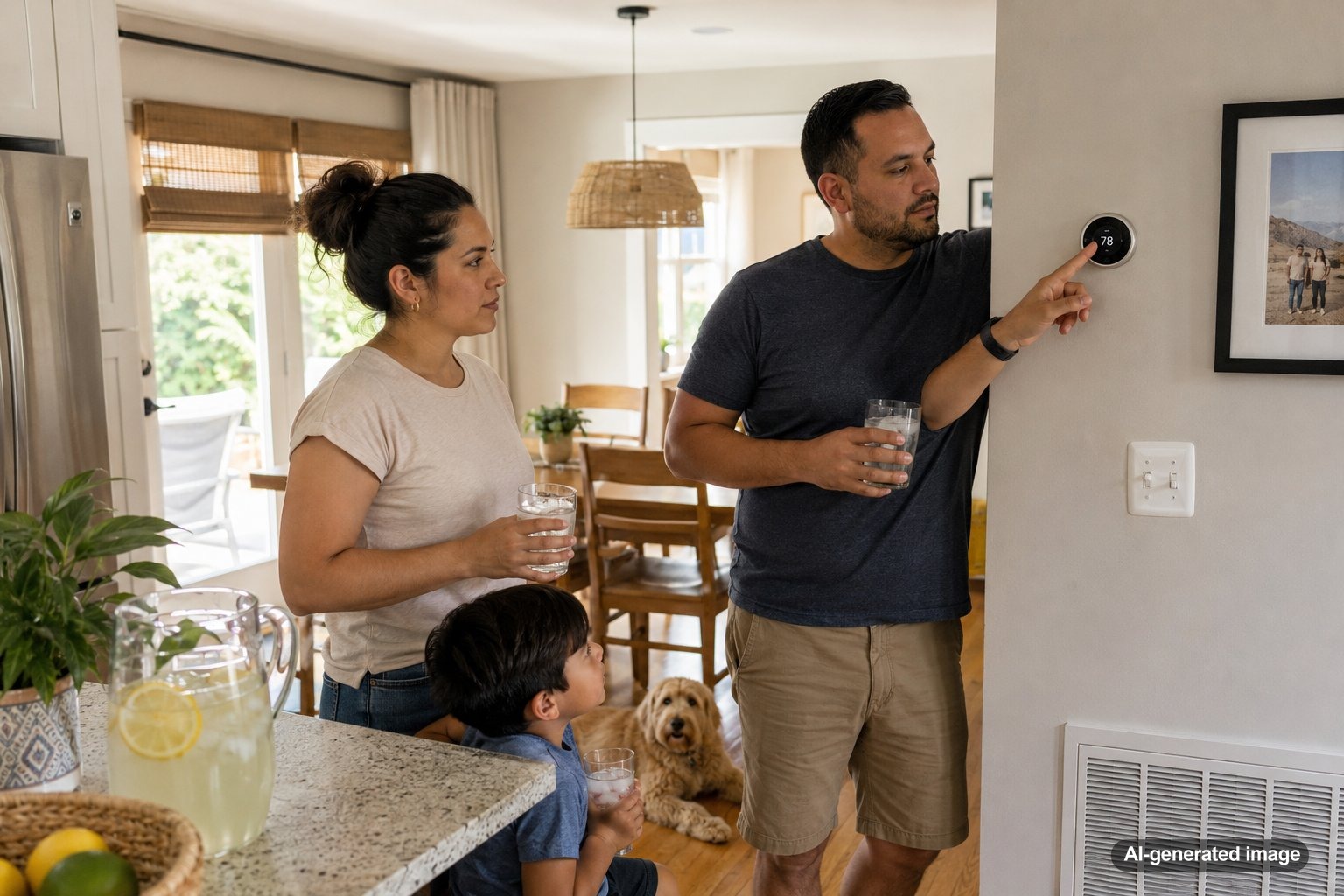
- Confirm the thermostat is set to cooling and the temperature setting is below the current room temperature.
- Inspect the air filter and make sure supply vents and return grilles are open and unobstructed.
- Reduce sunlight, cooking, appliance use, and unnecessary door openings.
- Move children, older adults, pets, and people with health concerns to a cooler location if indoor temperatures become unsafe.
- Request professional AC service if cooling does not return or the system shows signs of an electrical, airflow, drainage, or refrigerant problem.
Start With a Few Safe AC Checks
Before assuming the air conditioner has completely failed, look for simple issues that can interrupt cooling. These checks should be limited to controls and components that homeowners can access safely. Do not remove equipment panels, touch exposed wiring, open refrigerant lines, or bypass a safety switch.
- Check the thermostat mode. Make sure it is set to COOL rather than HEAT, OFF, or FAN. Set the target temperature a few degrees below the current indoor temperature.
- Check the thermostat display. A blank screen could indicate depleted batteries, interrupted power, or another control issue.
- Inspect the air filter. A heavily clogged filter can restrict airflow and may contribute to poor cooling or system icing. Replace it with the correct size and type if needed.
- Open supply and return vents. Furniture, rugs, curtains, boxes, and closed registers can interfere with airflow.
- Look around the outdoor unit. Remove obvious loose debris nearby, but keep hands and tools away from the fan and internal components.
- Check the breaker once. If it is safe to access the electrical panel, see whether the AC breaker has tripped. Reset it only once. If it trips again, leave it off and contact a qualified professional.
If the system begins cooling after one of these checks, continue monitoring it. Cooling that returns briefly and then stops may indicate an underlying issue rather than a lasting fix.
Reduce the Heat Entering Your Home
While waiting for service, focus on slowing the indoor temperature increase. Close blinds, shades, or curtains on windows receiving direct sunlight. Exterior shading can be especially helpful, but do not attempt temporary installations that require unsafe ladder use during extreme heat.
Keep exterior doors and windows closed when the outdoor air is hotter and more humid than the indoor air. Opening windows may feel helpful for a moment, but it can allow additional heat and moisture into the home. Once evening temperatures fall below indoor temperatures, cross-ventilation may become useful if outdoor air quality is acceptable.
Avoid using ovens, clothes dryers, dishwashers, and other heat-producing appliances during the hottest part of the day. Choose meals that require little or no cooking. Turn off unnecessary lighting and electronics because even small heat sources can add to the cooling load.
Use Fans the Right Way
Ceiling fans and portable fans can improve comfort by moving air across the skin, but they do not lower the actual room temperature. Use fans in occupied rooms and turn them off when everyone leaves. In very hot indoor conditions, a fan alone may not provide adequate protection, particularly for older adults or people with certain medical conditions.
Do not aim a powerful fan directly at an open oven, hot appliance, or questionable electrical equipment. Keep portable fans on stable surfaces, away from water, and connected without overloaded extension cords or power strips.
Create a Cooler Zone Instead of Cooling Every Room
If part of the home remains cooler, gather household members there and close doors to unused rooms. Lower levels are often cooler than upper floors because heat rises, although finished basements can have humidity or air quality concerns that should be considered.
Use portable cooling equipment only according to the manufacturer’s instructions. A portable air conditioner must be vented correctly, and its electrical requirements matter. Avoid improvised exhaust arrangements or overloaded circuits. A window unit should be securely installed so it cannot fall or allow significant outdoor air and rain into the opening.
Protect People and Pets From Heat
Watch the indoor temperature rather than relying only on how the room feels. Heat and humidity can affect people differently, and vulnerable household members may become overheated before others recognize a problem.
Drink water regularly, wear lightweight clothing, and reduce strenuous activity. Check frequently on infants, older adults, people with mobility limitations, and anyone with a medical condition that may make heat more dangerous. Give pets access to fresh water and cooler flooring, and never leave them in a parked vehicle.
If anyone develops confusion, fainting, severe weakness, a very high body temperature, or other signs of a heat emergency, move them to a cooler area and seek emergency medical help. HVAC troubleshooting should never take priority over personal safety.
Know When to Leave the Home Temporarily
A hotel, family member’s home, public cooling center, library, shopping center, or another air-conditioned location may be the safest choice when indoor temperatures keep climbing. Leaving is particularly important when the outage affects sleeping conditions overnight or when vulnerable people cannot cool down adequately.
Before leaving, close blinds, turn off unnecessary heat-producing devices, and make sure pets are not left behind in unsafe conditions. Keep your phone available so the HVAC company can reach you about the service appointment.
Watch for Signs That Require Professional Service
An AC system can stop cooling for many reasons, including a failed capacitor, control problem, drainage issue, blower malfunction, damaged electrical component, frozen evaporator coil, low refrigerant condition, or compressor problem. Similar symptoms can have different causes, so diagnosing the failure from one clue is rarely reliable.
Request professional service when the thermostat is calling for cooling but the system does not respond, the indoor fan runs without cool air, airflow is extremely weak, the outdoor unit repeatedly starts and stops, or the breaker trips again after one reset. You should also call when ice is visible, water is collecting around indoor equipment, or cooling performance continues to decline.
Turn the system off and prioritize safety if you notice smoke, sparks, a burning electrical odor, severe buzzing, flooding near electrical components, or another condition that appears unsafe. Contact emergency services or the appropriate utility when the situation warrants it.
Do Not Make These Heat Wave AC Mistakes
- Do not keep lowering the thermostat. Setting it extremely low will not make a malfunctioning AC cool faster and may cause a working system to run continuously.
- Do not repeatedly reset the breaker. A breaker that trips more than once could be responding to an electrical fault.
- Do not open sealed equipment. Internal HVAC components may involve high voltage, moving parts, refrigerant, and stored electrical energy.
- Do not add refrigerant yourself. Refrigerant work requires proper training, tools, and evaluation of why the charge may be low.
- Do not block return grilles. Restricting return airflow can make cooling problems worse.
- Do not run a dirty system indefinitely. Continuing to operate equipment with severe airflow restriction, ice, or unusual noises may contribute to additional damage.
Why AC Systems Struggle During Heat Waves
Air conditioners are designed around specific indoor and outdoor conditions. During an extended heat wave, the system may have to run for long periods to remove both heat and moisture. Longer cycles are not automatically a sign of failure, especially during the hottest afternoon hours.
However, extreme weather can expose weaknesses that were less noticeable on mild days. A dirty coil, restricted filter, weak electrical component, duct leakage, poor airflow, aging compressor, or undersized system may become apparent when cooling demand peaks. Homes with large west-facing windows, limited insulation, hot attics, or significant air leakage may also gain heat faster than the AC can remove it.
If the system is running continuously but the indoor temperature remains close to the thermostat setting, it may simply be working near its capacity. If the temperature keeps rising, rooms receive little airflow, or the system cycles off unexpectedly, professional evaluation is more appropriate.
Should You Repair or Replace the AC?
A heat wave is not the ideal time to make a rushed replacement decision, but some failures reveal broader concerns. The right choice depends on the system’s age, repair history, condition, comfort performance, efficiency, available parts, and the cost and scope of the current repair.
A repair may make sense when the system is otherwise dependable and the failure is isolated. Replacement may deserve consideration when breakdowns are recurring, major components are failing, the system uses an older refrigerant type with limited service options, or the home has persistent comfort problems even when the equipment is operating.
A qualified technician can explain what failed, whether another problem contributed to the failure, and what reasonable repair and replacement paths are available. For homeowners considering a new system, Meyer & Depew also provides information about AC installation and replacement.
How to Reduce the Risk of Another Mid-Summer Breakdown
No maintenance plan can prevent every equipment failure, but routine inspection may help identify worn electrical parts, airflow restrictions, drainage problems, dirty coils, and other developing concerns before cooling demand peaks.
Replace filters on a schedule appropriate for the home, filter type, pets, occupancy, and indoor conditions. Keep the outdoor unit reasonably clear of leaves, grass clippings, and overgrown vegetation. Avoid covering supply or return vents, and pay attention to changes in sound, airflow, cycle length, humidity, or room-to-room comfort.
Scheduling AC maintenance before the hottest weather can also provide more time to consider recommendations without the pressure of an active breakdown. Homeowners who prefer a structured maintenance schedule can review Meyer & Depew’s service plans.
Frequently Asked Questions
How long should an AC run during a heat wave?
Long cycles can be normal during extreme outdoor temperatures, particularly in the afternoon. The more important questions are whether the system is producing cool air, maintaining reasonable indoor conditions, and operating without unusual noises, odors, ice, water leakage, or repeated shutdowns.
Should I turn off the AC if it is blowing warm air?
Check the thermostat and air filter first. If the system continues blowing warm air, ice is present, the outdoor unit is not operating, or another abnormal condition appears, turning the system off and requesting service may help avoid continued operation with a possible malfunction.
Can a dirty filter cause the AC to stop cooling?
A severely restricted filter can reduce airflow and contribute to poor cooling or coil icing. Replacing a dirty filter may help when restriction is the main issue, but continued cooling problems should be professionally evaluated.
Is it safe to reset the AC breaker?
You may check and reset a tripped breaker once if the panel is accessible and there are no signs of electrical danger. If it trips again, do not continue resetting it. Leave the equipment off and contact a qualified HVAC professional.
What temperature is too hot inside a house?
There is no single threshold that is safe for every person. Humidity, age, health, medications, activity, and access to water all affect heat risk. When occupants cannot cool down, feel ill, or belong to a high-risk group, relocate to an air-conditioned space rather than waiting for the temperature to rise further.
When your AC stops working during a heat wave, perform only safe basic checks, reduce indoor heat gain, protect vulnerable people and pets, and arrange professional service promptly. Leave the home for a cooler location if indoor conditions are becoming unsafe.
Need help with your heating, cooling, or HVAC system?
Meyer & Depew serves homeowners and businesses throughout Central and Northern New Jersey.
Get a quote or call 908.272.2100.