



Is It Cheaper to Maintain One Temperature or Adjust the Thermostat?
Estimated reading time: 8 minutes
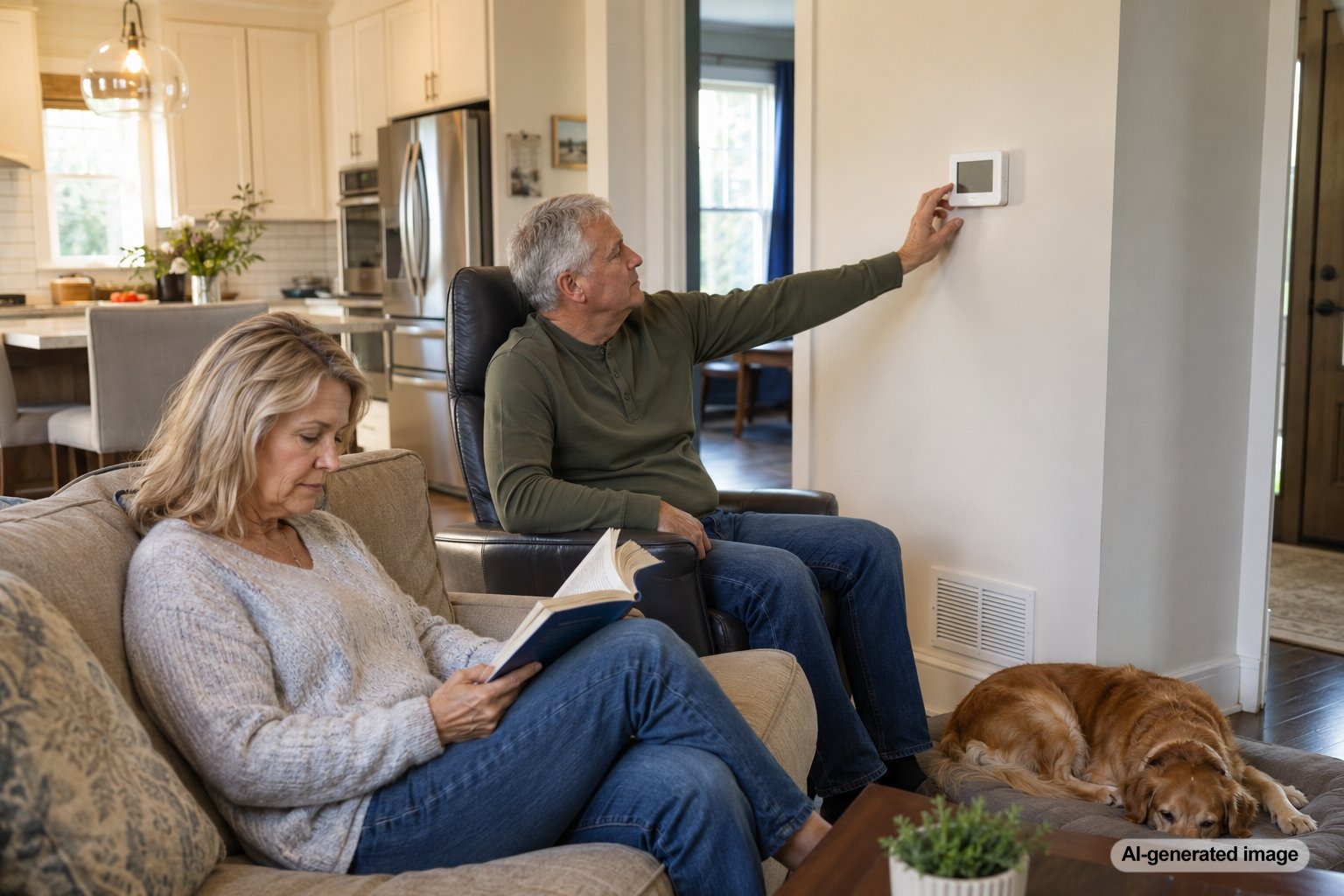
For most homes, it is cheaper to adjust the thermostat when the house is empty or everyone is asleep than to maintain the same temperature around the clock. Your heating or cooling system generally uses less energy when the indoor temperature is allowed to move closer to the outdoor temperature for several hours.
The best strategy is not constant manual adjustment or an extreme setback. A modest, consistent schedule usually offers a better balance of energy use, comfort, humidity control, and equipment operation. The right settings depend on your HVAC system, household routine, home construction, and New Jersey’s changing weather. A programmable or smart thermostat can make those adjustments automatically.
- Adjusting the thermostat for extended periods usually uses less energy than holding one temperature continuously.
- Small, scheduled changes are generally more practical than frequent or extreme adjustments.
- Heat pumps, radiant heating systems, and homes with humidity concerns may require a more conservative strategy.
- Turning the thermostat far beyond the desired setting will not heat or cool most homes faster.
- If temperature recovery takes too long, the issue may involve the schedule, equipment, airflow, insulation, or system condition.
Why Adjusting the Thermostat Can Cost Less
Heat naturally moves from warmer areas to cooler ones. During winter, a warm house loses heat to the colder outdoors. During summer, outdoor heat moves into the cooler house. The greater the difference between indoor and outdoor temperatures, the faster that heat transfer tends to occur.
Lowering the heating setting while you are away reduces the indoor-outdoor temperature difference. Raising the AC setting accomplishes the same thing in summer. Although the system must later bring the house back to the preferred temperature, the energy used during recovery generally does not erase the energy avoided during the setback period.
The key is duration. A one-degree adjustment for a brief trip may have little practical effect. A planned change lasting several hours, such as during a workday or overnight, gives the home more time to operate at the less demanding setting.
Constant Temperature vs. A Scheduled Adjustment
| Strategy | Potential advantage | Potential drawback |
|---|---|---|
| One temperature all day | Simple and consistently comfortable | May use energy conditioning an empty home |
| Moderate scheduled setbacks | Can reduce unnecessary heating or cooling | Requires a suitable schedule and recovery period |
| Frequent large adjustments | Few meaningful advantages in most homes | Can create discomfort and inefficient operating patterns |
A scheduled adjustment is most useful when the household follows a predictable routine. If someone works from home, young children or older adults are present, or pets require a limited temperature range, the setback can be smaller. Energy management should support the people in the home rather than force an uncomfortable schedule.
How Large Should the Temperature Change Be?
There is no single ideal number for every household. Start with a modest adjustment and observe how the home responds. The system should be able to recover without running for an unusually long time or leaving rooms uncomfortable when people return.
Home construction makes a difference. A well-insulated house may change temperature slowly, limiting both the discomfort and the short-term benefit of a brief setback. An older or draftier house may change temperature quickly, making a scheduled adjustment more noticeable but also requiring adequate recovery time.
Outdoor conditions matter as well. During a mild spring day, the system may recover easily. During a humid New Jersey heat wave or a winter cold snap, a deep setback can make recovery slower and place greater demand on the equipment. A thermostat with adaptive recovery can begin heating or cooling early enough to reach the target at the scheduled time.
Special Considerations for Different HVAC Systems
Heat pumps
Large winter setbacks can be counterproductive with some heat pump configurations if recovery triggers auxiliary or backup electric heat. That backup heat may cost more to operate than the heat pump’s normal heating cycle. A smaller setback or thermostat controls designed for heat pump operation may be more appropriate. A qualified technician can review the system and thermostat configuration.
Radiant heating
Radiant floors and other high-mass heating systems respond slowly. They may continue releasing heat after the thermostat setting changes and may take hours to recover. These systems often work better with small adjustments or a nearly steady setting.
Central AC and humidity
Raising the cooling setting while the home is empty can reduce energy use, but shutting cooling off for long periods during humid weather may allow indoor moisture to rise. High humidity can make the house uncomfortable even after the temperature falls. It may also point to equipment sizing, airflow, or moisture-control issues that deserve evaluation.
Zoned and ductless systems
Zoning and ductless equipment can provide more targeted control. Instead of applying one schedule to the entire property, occupants may be able to adjust less-used areas independently. Controls must still be used correctly, and homeowners should not close ordinary supply vents in an attempt to create makeshift zoning. Anyone dealing with persistent room-to-room differences can explore professionally designed zoning systems.
Thermostat Habits That Do Not Help
Setting an extreme temperature for faster results
Most residential HVAC systems do not heat or cool faster because the thermostat is set far beyond the desired temperature. Setting the AC to an unusually low number may simply make it run longer and overshoot a comfortable target. Choose the temperature you actually want.
Changing the setting every few minutes
Repeated adjustments make it difficult to judge system performance and can create an inconsistent comfort cycle. Allow the equipment and thermostat time to respond. If the system does not appear to be operating normally, investigate the cause instead of continually changing the setting.
Ignoring the fan setting
For many systems, the thermostat fan should remain on Auto during normal use. An On setting runs the blower continuously. That may increase electricity use, and during cooling season it can sometimes return moisture from the indoor coil to the air after the compressor stops. Specific indoor air quality or circulation needs may call for a different approach, so ask a technician about the best setting for your equipment.
Using Hold indefinitely
A permanent hold can quietly override an energy-saving schedule for days or weeks. Temporary holds are useful when routines change, but check that the thermostat returns to its normal program afterward.
A Practical Thermostat Schedule for Real Households
Build the schedule around occupancy rather than using a generic template. Identify when everyone normally wakes, leaves, returns, and goes to sleep. Then select comfortable occupied settings and modest adjustments for periods when heating or cooling demand can be reduced.
- Morning: Have the home reach the occupied setting shortly before the household wakes.
- Work or school hours: Use a less demanding setting if the home will be empty for several hours.
- Evening: Restore the comfortable setting before occupants return.
- Overnight: Choose a sleeping temperature that is comfortable and appropriate for household health needs.
- Vacation: Use an energy-saving setting without exposing plumbing, pets, plants, furnishings, or the building to unsafe temperatures or excessive humidity.
Smart thermostats can simplify this routine with scheduling, remote access, occupancy features, and usage reports. Those features only help when configured correctly. Review the schedule after seasonal time changes, vacations, and major routine changes.
Safe Checks If Energy Use Seems Too High
- Confirm that the thermostat is in the correct heating or cooling mode.
- Check for an unintended permanent hold or outdated schedule.
- Inspect or replace the air filter according to the system’s requirements.
- Make sure supply registers and return vents are open and not blocked by furniture or rugs.
- Look for obvious debris restricting airflow around the outdoor unit.
- Compare energy use with weather conditions and household occupancy, not only with the previous bill.
A higher bill does not automatically mean the thermostat strategy is wrong. Severe weather, utility rate changes, dirty filters, duct leakage, equipment wear, added occupants, and changes in daily routines can all affect consumption. Thermostat data can reveal longer run times, but it cannot identify every mechanical or airflow problem.
When to Call an HVAC Professional
Professional evaluation is appropriate when the home takes unusually long to recover, the system runs almost continuously, temperatures vary significantly between rooms, or energy use changes without an obvious explanation. Short cycling, unusual sounds, weak airflow, recurring thermostat errors, or difficulty controlling humidity also deserve attention.
A technician can evaluate the thermostat location and configuration, equipment operation, filter and airflow conditions, ductwork, system capacity, and control compatibility. Routine HVAC maintenance and service plans can also help keep seasonal inspections on schedule, though maintenance cannot prevent every breakdown or eliminate every source of energy loss.
Frequently Asked Questions
Does reheating or recooling the house use more energy than maintaining one temperature?
Usually not. During the setback period, the smaller difference between indoor and outdoor temperatures reduces heat transfer. Recovery uses energy, but it generally does not cancel the energy avoided during a meaningful setback. System type and operating conditions can affect the result.
Should I turn the HVAC system completely off when I leave?
Usually, a controlled setback is more practical than turning the system off. Complete shutdown can create temperature extremes, humidity concerns, frozen-pipe risk, and long recovery times. The appropriate setting depends on the season, home, occupants, and equipment.
Is it cheaper to leave the AC on all day?
It is generally cheaper to raise the cooling setting while the home is empty than to maintain the same cool temperature all day. In humid weather, avoid settings that allow indoor moisture or temperature to become excessive.
Can a smart thermostat lower HVAC costs automatically?
A smart thermostat may help reduce unnecessary operation by following schedules and managing setbacks consistently. Results depend on the settings, household routine, HVAC equipment, weather, and condition of the home. The device cannot correct equipment faults, poor insulation, or major duct problems.
Why does my system struggle after a thermostat setback?
The setback may be too large for the weather or system type. Slow recovery can also be associated with a clogged filter, restricted airflow, incorrect thermostat configuration, aging equipment, duct losses, or a system that needs professional evaluation.
For most households, a moderate thermostat schedule is more economical than maintaining one temperature around the clock. Keep the adjustments consistent, account for equipment type and humidity, and avoid extreme settings. Comfort problems or unusually long recovery times may signal an issue beyond the thermostat.
Want to make HVAC maintenance easier to stay on top of?
A service plan can help keep routine heating and cooling maintenance on your calendar before small issues become bigger headaches.
You can also request a service appointment.