



How To Set Your AC For Pets While You Are Away
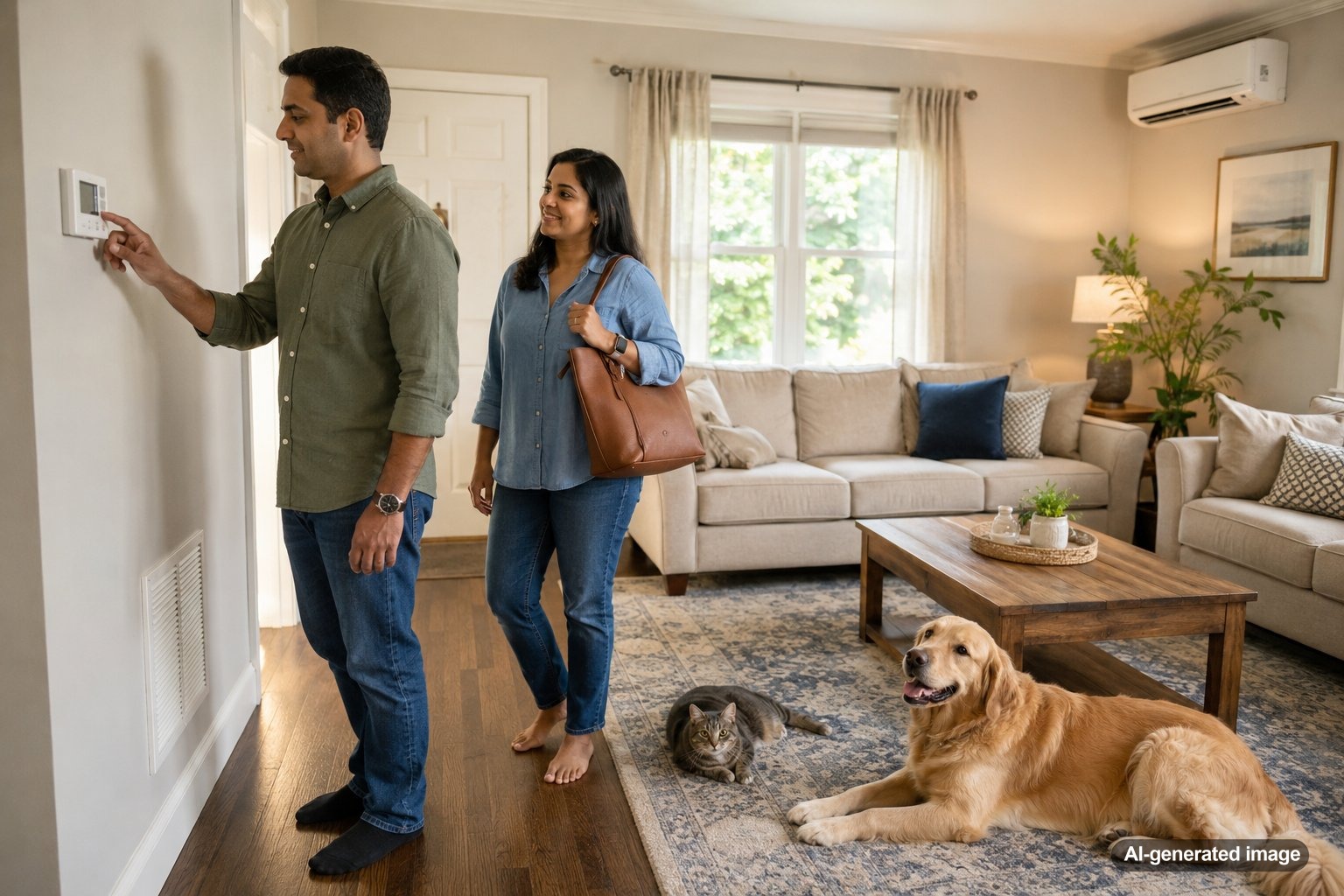
When pets stay home while you travel, turning the AC off or using an aggressive energy-saving setting can allow indoor temperatures and humidity to climb. A safer approach is to leave the cooling system on at a stable temperature your pet already finds comfortable. For many healthy cats and dogs, approximately 75 to 78 degrees F can be a practical starting range, but age, health, breed, coat, species, and veterinary guidance should shape the final setting.
New Jersey homes can heat up quickly during humid summer weather, especially in sunny rooms or upper floors. A reliable thermostat schedule, unrestricted airflow, a clean filter, and a backup plan can help protect your pet’s comfort while you are gone. If you need better control over the temperature when nobody is home, explore available thermostat options before your trip.
Set the AC close to the temperature your pet experiences when you are home, without using a high vacation setting that allows the house to become hot or humid.
- Keep the cooling system running rather than shutting it off.
- Use approximately 75 to 78 degrees F as a starting point for many healthy cats and dogs.
- Choose a cooler setting when recommended for senior, very young, short-nosed, thick-coated, overweight, or medically vulnerable pets.
- Check the filter, vents, thermostat, and system operation before leaving.
- Arrange for someone to check the home and your pets during an extended absence.
Start With The Temperature Your Pet Knows
The most practical AC setting is usually one close to the normal daytime temperature in your home. A sudden change from a routinely cool house to a much warmer one may be uncomfortable, even if the new setting seems reasonable on paper. Avoid making a major thermostat adjustment for the first time as you walk out the door.
If your pets are comfortable when the thermostat is set to 75 degrees F during an ordinary day, keeping that setting while you are away provides consistency. If your home is normally warmer, a setting near the upper end of the range may be appropriate for a healthy pet that tolerates warmth well. The goal is steady, moderate cooling rather than making the house unusually cold.
Ask your veterinarian for individual guidance if your pet has breathing trouble, heart disease, limited mobility, a heavy coat, a history of heat sensitivity, or another medical concern. Advice for a healthy adult cat or dog may not be suitable for a rabbit, bird, reptile, senior pet, puppy, kitten, or animal with a health condition.
Account For Breed, Age, Health, And Species
There is no universal thermostat number for every animal. Short-nosed dogs and cats may have more difficulty releasing heat through normal breathing. Senior animals and very young pets may also regulate body temperature less effectively. Thick coats, excess weight, medication, and chronic health problems can further change what feels safe and comfortable.
Species matters as much as breed. Rabbits, birds, reptiles, fish, and other animals can have environmental requirements that differ considerably from those of cats and dogs. Some need carefully controlled humidity, enclosure temperatures, or separate heat sources. Follow species-specific veterinary guidance and never assume that a general household AC recommendation covers an animal living in a specialized habitat.
Consider Where Your Pet Spends The Day
The thermostat measures temperature at its own location, not necessarily where your pet rests. A thermostat reading of 76 degrees F does not guarantee that a sunny upstairs bedroom, enclosed porch, finished attic, or room with a closed supply vent is also 76 degrees F. Temperature differences are especially relevant in multistory homes, older New Jersey houses, and rooms with strong afternoon sun.
Keep your pet in a part of the home with dependable airflow and access to cooler surfaces. Make sure supply and return vents are open and not blocked by furniture, bedding, crates, or curtains. Close blinds or shades in rooms that receive intense sunlight, but do not close interior doors if doing so restricts the airflow needed by your HVAC system.
Provide multiple bowls of fresh water in stable locations. Avoid relying on a single container that could spill. Fans may help circulate conditioned air, but a fan is not a substitute for AC because it does not lower the room temperature.
Use Thermostat Features Carefully
A programmable or smart thermostat can help maintain a consistent setting and may let you monitor the indoor temperature remotely. Before relying on alerts or app controls, confirm that the thermostat is connected, notifications are enabled, and another responsible person can enter the home if a warning appears.
Test any new schedule several days before leaving. Check that the AC starts at the intended temperature and that the occupied room actually remains comfortable during the warmest part of the afternoon. Avoid schedules that let the home warm substantially during the day before beginning a late cooling cycle. The HVAC system must remove both heat and moisture, and recovering from a high indoor temperature may take time during humid New Jersey weather.
Do not depend solely on a remote app. Internet service, batteries, device settings, or power interruptions can affect connectivity. Remote monitoring is most useful when paired with a nearby friend, relative, neighbor, or pet sitter who can respond.
Prepare Your AC Before You Leave
Run the system long enough to confirm that it is cooling normally before departure. Inspect or replace a dirty air filter, make sure vents and returns are unobstructed, and look for obvious debris around the outdoor unit. Listen for unfamiliar noises and notice whether the system is cycling normally rather than starting and stopping repeatedly.
- Confirm the thermostat is set to cooling mode rather than fan-only mode.
- Install fresh thermostat batteries if the model uses them.
- Inspect the air filter and replace it when dirty or due for replacement.
- Make sure supply and return vents are open and clear.
- Verify that conditioned air is reaching the room where your pet will stay.
- Arrange an in-person check for a longer trip or severe-weather period.
If the system is struggling, making unusual sounds, producing weak airflow, or failing to maintain the set temperature, schedule professional service before leaving. Do not open equipment panels, handle refrigerant components, bypass safety controls, or attempt electrical repairs.
Plan For Power Or Equipment Failure
Even a well-maintained AC system can lose power or develop a problem. Leave a key and clear instructions with someone you trust. That person should know where the pets are, how to read the thermostat, who to call, and where the carriers, leashes, medications, and veterinary information are located.
A temperature alert can provide an early warning, but the alert needs a response plan. Decide in advance what indoor temperature should prompt an immediate visit based on your pet’s needs and veterinary advice. Include an alternate safe location where the pet can be taken if cooling cannot be restored promptly.
During an outage or suspected AC failure, the caregiver should prioritize moving the pet to a safe, conditioned location. Repeatedly resetting a tripped breaker or attempting internal equipment repairs is not appropriate. If smoke, sparks, or an electrical burning smell is present, the caregiver should keep clear of the equipment and contact the appropriate emergency service and a qualified professional.
Avoid Common AC Mistakes Around Pets
- Turning the AC off: A closed home can become much warmer and more humid than the outdoor temperature suggests.
- Using an extreme vacation setting: A setting chosen for an empty building may not be suitable when animals remain inside.
- Closing too many vents: This can disrupt airflow and may leave the pet’s room warmer than expected.
- Trying a new schedule at departure: Test changes while you are still available to observe indoor conditions.
- Relying only on technology: Alerts are valuable, but they cannot refill spilled water or move a pet during a cooling failure.
- Ignoring humidity: A home can feel uncomfortable even when the displayed temperature appears acceptable.
When To Call An HVAC Professional
Arrange an HVAC evaluation before traveling if the AC cannot hold the thermostat setting, airflow has weakened, some rooms remain noticeably warmer, the system short cycles, water is collecting around indoor equipment, or unusual noises and odors have developed. These symptoms can have several causes, and a qualified technician can evaluate the system without guessing.
Routine maintenance may help identify developing airflow, drainage, electrical, or performance concerns before they disrupt cooling. Maintenance cannot prevent every breakdown, so an emergency contact and pet-care plan remain important whenever animals will be home without you.
Frequently Asked Questions
Should I leave the AC on for my pets while I am away?
Yes. During warm weather, leave the AC running at a stable setting that is appropriate for your pet. Turning it off can allow heat and humidity to build inside the home.
Is 78 degrees F too hot for a dog or cat?
Many healthy adult cats and dogs may be comfortable around 78 degrees F, but it is not suitable for every animal. Breed, age, weight, health, coat, sunlight, airflow, and room temperature all matter. Use a cooler setting when recommended by your veterinarian or when your pet is heat-sensitive.
Should I leave a fan running for my pet?
A fan can circulate conditioned air but should not replace AC. Position cords safely and make sure the fan cannot tip over or be reached by a pet that chews. Keep dependable cooling and fresh water available.
Can a smart thermostat keep my pet safe?
A smart thermostat can improve monitoring and provide useful temperature alerts, but it cannot guarantee safety. Pair remote monitoring with a trusted person who can reach the home if the AC, electricity, internet connection, or thermostat fails.
How early should I test my vacation thermostat setting?
Test it for several typical warm days before leaving, including an afternoon when outdoor conditions are demanding. Observe the room where your pet stays, not just the thermostat display, and correct comfort or airflow concerns before the trip.
Leave the AC on, maintain a familiar and moderate temperature, account for your pet’s individual needs, and test the complete plan before departure. Reliable cooling, clear airflow, fresh water, remote alerts, and an in-person backup provide stronger protection together than any thermostat number alone.
Need help with your heating, cooling, or HVAC system?
Meyer & Depew serves homeowners and businesses throughout Central and Northern New Jersey.
Get a quote or call 908.272.2100.