

Why Does Moving From Cooling to Heating Expose Thermostat Problems?
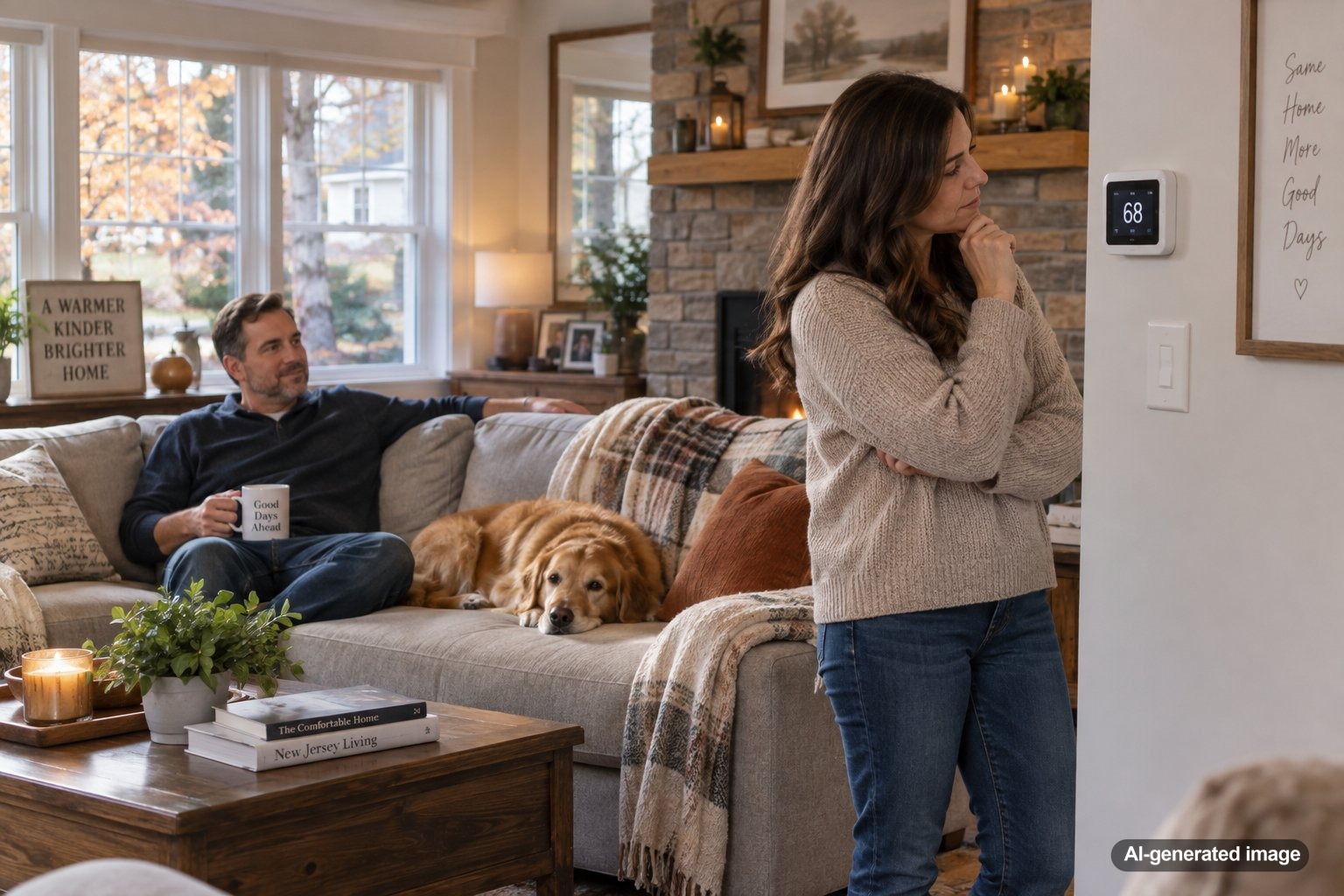
Moving your thermostat from cooling to heating can seem like a simple seasonal change, but it asks your HVAC system to use a different set of controls and equipment. A thermostat that appeared perfectly normal all summer may suddenly fail to start the heat, run the system incorrectly, display an unexpected setting, or leave the house feeling uncomfortable. In many cases, the change from cooling to heating does not create the problem. It exposes an issue that was already present but had no reason to appear while the AC was running.
This is especially noticeable during fall in Central and Northern New Jersey, when homeowners may switch between cooling and heating as temperatures change. Understanding what changes inside the control system can help you separate a simple setting issue from a problem that deserves professional attention. Meyer & Depew provides thermostat solutions as well as heating service for homeowners dealing with seasonal comfort problems.
Switching from cooling to heating can reveal thermostat problems because the thermostat begins using different control circuits and calling on different HVAC components. Problems with heat-mode settings, wiring, thermostat configuration, sensors, batteries, zoning controls, or the heating equipment itself may remain unnoticed during cooling season.
Why Cooling Can Work Even When Heating Does Not
A thermostat does not simply tell the HVAC system to turn on or off. Depending on the equipment, it can send different control signals for cooling, heating, the indoor fan, auxiliary heat, heat pump operation, and other functions. That means successful AC operation does not automatically prove every thermostat function is working correctly.
During summer, the thermostat may spend months sending cooling calls without ever needing its heating circuit. When the first cool fall morning arrives and you move the system to Heat, that previously unused part of the control sequence becomes important again.
If a wire is loose, a thermostat setting is incorrect, or the heating equipment is not responding to the call, the problem may appear immediately. The timing can make it seem as though changing modes caused the failure when the seasonal switch simply revealed it.
Heat Mode Uses Different Thermostat Controls
Conventional furnaces, boilers, heat pumps, and multi-stage systems do not all respond to thermostats in exactly the same way. A thermostat must be configured for the type of equipment installed in the home.
For example, a thermostat controlling a conventional furnace may handle the heating call differently from one controlling a heat pump. Heat pump installations can also involve reversing-valve operation, auxiliary heat, and other settings that are not involved when a traditional furnace is paired with central AC.
A thermostat replacement, reset, software update, wiring change, or configuration mistake can therefore affect heating while leaving cooling apparently normal. This is one reason equipment type matters when evaluating a seasonal thermostat problem.
Common Thermostat Problems That Appear During the Changeover
Incorrect heat settings
The simplest possibility is that the thermostat has not actually been configured to request heat. Check that the system mode is set to Heat and that the requested temperature is above the current room temperature. If the thermostat has a schedule, verify that an unexpected programmed temperature is not overriding what you expect.
Weak or depleted thermostat batteries
Some thermostats depend on replaceable batteries, while others receive power through the HVAC control system. Weak batteries can contribute to blank screens, intermittent operation, lost schedules, or other unusual behavior. If your thermostat uses homeowner-replaceable batteries and indicates that they are low, replacing them is a reasonable first step.
A problem with the heating control circuit
The wires and terminals responsible for a heating call may be different from those used for cooling. A connection problem can therefore affect heat without affecting AC. Homeowners should not remove panels or alter HVAC wiring to investigate this. A qualified technician can safely evaluate the thermostat, low-voltage control circuit, and equipment response.
Thermostat configuration does not match the equipment
Modern thermostats often need to know whether they control a furnace, heat pump, boiler, multi-stage system, or another equipment arrangement. Incorrect configuration can lead to confusing symptoms during heating operation even if cooling appeared acceptable.
If thermostat problems began after a thermostat was replaced, reset, reconfigured, or upgraded, the equipment configuration is an especially useful detail to mention when scheduling service.
Temperature sensing problems
A thermostat can technically start the heating system while still producing poor comfort if it is sensing room temperature inaccurately. Direct sunlight, nearby electronics, drafts, exterior walls, or unusual airflow can affect how the space around the thermostat behaves.
The symptom may become more obvious during heating season because warm air distribution and room-to-room temperature patterns differ from cooling operation.
Zoning or communicating-control issues
Homes with zoning systems, multiple thermostats, or communicating HVAC controls have additional components involved in deciding which areas receive heating or cooling. A problem may appear only when the system changes operating modes or when particular zones begin calling for heat.
If one area heats normally while another does not, the thermostat may be only one part of the issue. Meyer & Depew also works with zoning systems designed for more precise temperature control.
The Thermostat May Not Be the Actual Problem
One of the most important distinctions is that a thermostat symptom does not automatically mean the thermostat itself has failed. The thermostat can request heat correctly while the furnace, boiler, heat pump, control board, safety system, or another component fails to respond as expected.
For example, a thermostat might show that it is heating while no warm air reaches the rooms. That could point toward a heating-system problem rather than a thermostat display or programming problem. Similarly, a heat pump may respond differently depending on outdoor temperature and system configuration.
A professional diagnosis can determine whether the thermostat is sending the proper signal and whether the heating equipment is receiving and acting on it.
Why Fall Makes These Problems More Noticeable
New Jersey’s shoulder season can involve warm afternoons followed by chilly nights. A household may use AC one day, leave the HVAC system off the next, and request heat soon afterward. Frequent mode changes make inconsistencies easier to notice than they would be during a long period of steady summer cooling or winter heating.
The first heating cycle can also reveal issues elsewhere in the system that developed or went unnoticed during the warmer months. A heating problem discovered during the thermostat changeover may therefore involve both controls and equipment.
Safe Checks Homeowners Can Make
- Confirm that the thermostat is set to Heat rather than Cool or Off.
- Set the desired temperature above the current room temperature and allow the system time to respond.
- Check for a low-battery warning and replace homeowner-serviceable thermostat batteries if needed.
- Review the thermostat schedule for an unexpected setback or programmed temperature.
- Make sure supply and return vents are open and not blocked.
- Inspect the HVAC air filter and replace it if it is due for replacement.
- If appropriate and safe for your system, check whether the HVAC breaker has tripped once. Do not repeatedly reset a breaker that continues to trip.
Avoid removing equipment panels, moving thermostat wires, bypassing switches, or attempting electrical or combustion repairs. Those checks are better left to a qualified HVAC technician.
When Should You Call an HVAC Professional?
Schedule service if the thermostat repeatedly fails to start the heating system, behaves differently between heating and cooling, loses power, produces inconsistent temperatures, or shows signs that its configuration may not match the HVAC equipment.
Professional evaluation is also appropriate when the thermostat indicates a heating call but the system does not produce heat, repeatedly starts and stops, or behaves differently than it did during the previous heating season. Meyer & Depew’s heating service and maintenance can help identify whether the issue is in the thermostat, controls, or heating equipment.
If you notice smoke, sparks, an electrical burning smell, a suspected gas odor, or a carbon monoxide concern, prioritize safety. Leave the affected area when appropriate and contact the proper emergency service, utility, or qualified professional rather than attempting to troubleshoot the equipment yourself.
Can a Smart Thermostat Reduce Seasonal Changeover Problems?
A properly selected and configured smart thermostat can make seasonal control more convenient, but it cannot correct an underlying equipment, wiring, airflow, or heating-system problem. Compatibility is important, particularly with heat pumps, multi-stage systems, zoning equipment, and other more complex HVAC arrangements.
Some thermostats can automatically switch between heating and cooling within configured temperature limits. That can be useful during mild fall weather, but automatic changeover should still be set up with an appropriate temperature range so the system is not unnecessarily alternating between heating and cooling.
Frequently Asked Questions
Why does my thermostat work for AC but not heat?
Cooling and heating can use different thermostat terminals, control signals, and HVAC components. A thermostat may successfully operate the AC while a heating-specific connection, setting, configuration, or piece of equipment has a problem.
Should I replace the thermostat if the heat will not turn on?
Not necessarily. The thermostat is only one possible cause. The heating equipment, control circuit, electrical supply, system configuration, or another component could be involved. Diagnosis before replacement can help avoid changing a thermostat that is functioning correctly.
How long should I wait after switching from Cool to Heat?
Some thermostats and HVAC systems use short built-in delays to protect equipment or manage operation. Give the system a reasonable amount of time to respond rather than repeatedly changing settings. If it consistently fails to start, professional evaluation may be appropriate.
Can changing thermostat batteries fix a heating problem?
If your thermostat uses replaceable batteries and they are weak, fresh batteries may resolve certain display or control problems. If the thermostat still does not properly control the heat afterward, another issue may be present.
Why does the thermostat say Heat On when no warm air is coming out?
The display may indicate that the thermostat is requesting heat, but that does not prove the heating equipment successfully started. A technician can determine whether the thermostat’s call is reaching the equipment and why the system is not responding normally.
Moving from cooling to heating often exposes thermostat problems because heating uses controls and equipment that may have been inactive for months. Start with simple settings, batteries, schedules, vents, and filters. If the problem continues, an HVAC technician can determine whether the thermostat, control system, or heating equipment is responsible.
Need help with your heating, cooling, or HVAC system?
Meyer & Depew serves homeowners and businesses throughout Central and Northern New Jersey.
Get a quote or call 908.272.2100.