



When Should You Consider a Whole-Home Humidifier for Winter?
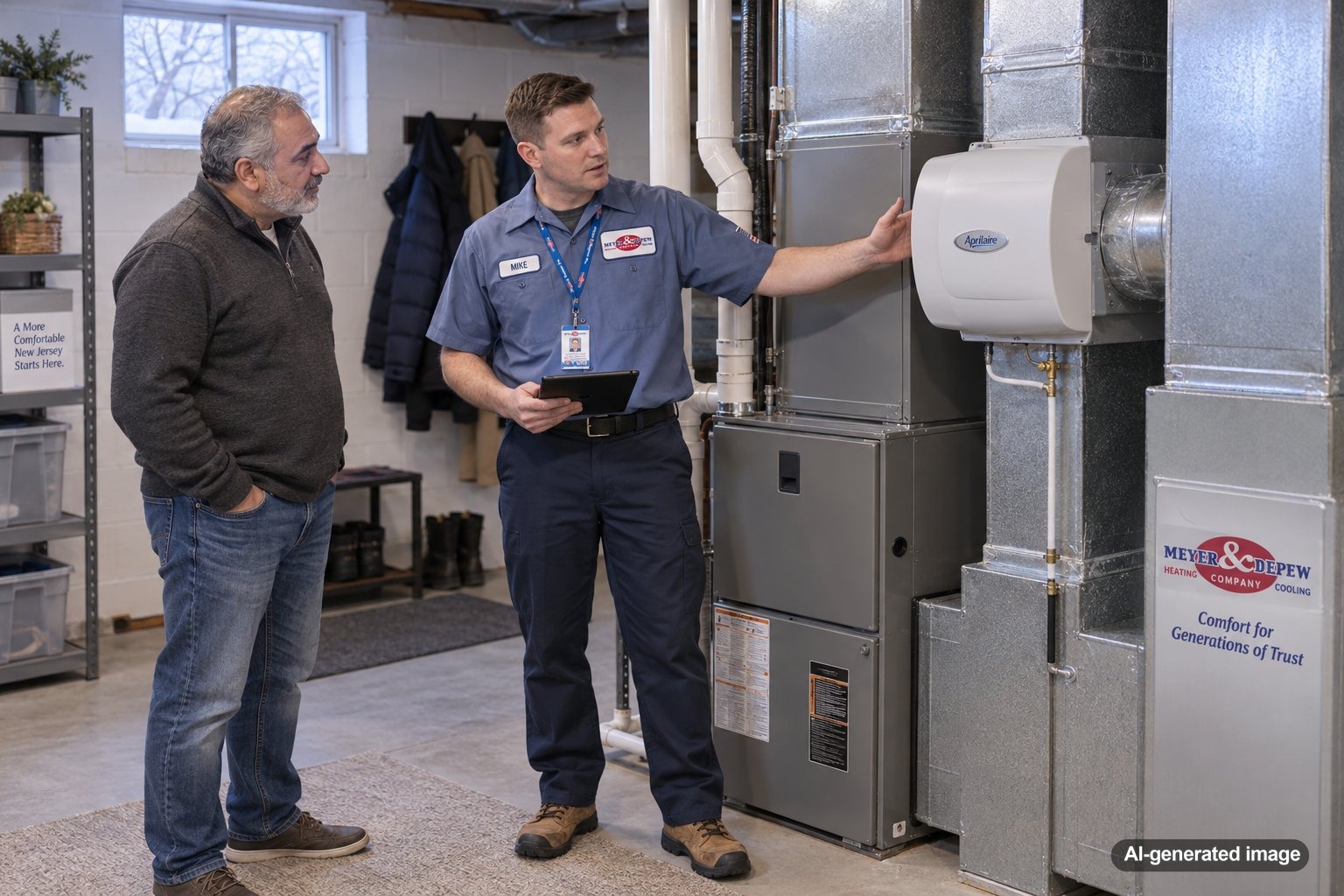
A whole-home humidifier may be worth considering when winter heating repeatedly leaves your home feeling uncomfortably dry, especially when low humidity affects multiple rooms instead of one isolated space. In Central and Northern New Jersey, cold outdoor air combined with indoor heating can cause relative humidity to drop significantly during the winter. A properly selected and controlled humidifier can add moisture through the home’s HVAC system rather than relying on separate portable units in several rooms.
The goal is not to make a home feel humid. It is to maintain a reasonable moisture level while avoiding condensation and other problems caused by excessive humidity. If dry winter air has become a recurring comfort issue, learning about whole-home humidifiers can help you decide whether this type of system makes sense for your home.
You may want to consider a whole-home humidifier if indoor humidity stays low during heating season, several rooms feel dry, static electricity becomes frequent, wood finishes seem unusually dry, or portable humidifiers are becoming inconvenient. Indoor relative humidity is commonly kept around 30 to 50 percent, but the appropriate winter setting can depend on outdoor temperature, insulation, windows, air leakage, and the home’s construction. Visible condensation is a warning that the humidity setting may be too high for current conditions.
Why Indoor Air Often Gets Drier in Winter
Cold outdoor air generally contains less moisture than warm summer air. When that outdoor air enters a house through normal ventilation, opening doors, exhaust fans, or air leakage and is then heated, its relative humidity can become quite low. A heating system raises the temperature, but it does not automatically replace the moisture that is missing.
The effect can be especially noticeable during extended New Jersey cold snaps. A house that feels comfortable during mild fall weather may become much drier once the heating system begins running for longer periods.
How quickly humidity falls varies from one home to another. Older homes with more air leakage may exchange indoor and outdoor air more rapidly. Newer or tighter homes may retain moisture more effectively. Occupancy, cooking, showers, ventilation systems, fireplaces, exhaust fans, and even the amount of indoor air leakage can influence the final humidity level.
Signs a Whole-Home Humidifier May Be Worth Considering
Low humidity is affecting several rooms
A portable humidifier can be useful for a bedroom, office, or another individual space. If dryness is noticeable throughout the house, however, managing multiple portable units may become inconvenient. A whole-home system is designed to address humidity more broadly when connected to a compatible HVAC system.
You are constantly dealing with static electricity
Frequent static shocks are common in very dry indoor environments. Static electricity alone does not prove that your house needs a humidifier, but when it appears alongside consistently low readings on a humidity gauge, it can be another practical clue that winter air has become unusually dry.
Wood floors, trim, or furniture seem unusually dry
Wood naturally responds to changing moisture conditions. Very dry indoor air can contribute to seasonal shrinking, small gaps, or movement in wood flooring, furniture, trim, and other materials. Humidity control may help reduce extreme seasonal swings, although existing wood damage or structural problems should not automatically be blamed on indoor humidity.
Dry-air discomfort returns every heating season
Some households notice the same pattern every winter: dry skin, irritated nasal passages, scratchy throats, or generally uncomfortable indoor air. Humidification is not a treatment for medical conditions, and persistent symptoms should be discussed with an appropriate healthcare professional. From a home-comfort standpoint, however, consistently low measured humidity can be a reason to evaluate whether additional moisture control would be useful.
Portable humidifiers have become a daily chore
Portable units require filling, cleaning, positioning, and individual adjustment. If you are maintaining several of them throughout the house, a central solution may offer more convenient humidity management. A professional can determine whether your existing HVAC configuration can accommodate a whole-home humidifier and what type would be appropriate.
Measure Humidity Before Assuming You Need More Moisture
One of the simplest steps is to measure indoor relative humidity with a hygrometer rather than relying only on how the air feels. Humidity levels can vary by floor, room, weather conditions, and time of day, so checking several locations over multiple days provides a more useful picture.
Indoor humidity is often maintained in roughly the 30 to 50 percent range. That does not mean every New Jersey home should be held at the same setting throughout the winter. During very cold weather, the appropriate indoor humidity may need to be lower because windows, exterior walls, or other cold surfaces can develop condensation.
If you already see moisture collecting on windows, walls, or other surfaces, adding more humidity without understanding the cause may make the problem worse. Condensation can indicate that indoor moisture is exceeding what portions of the building envelope can tolerate under current outdoor temperatures.
Whole-Home Humidifier vs. Portable Humidifiers
The best choice depends largely on the size of the problem. A portable humidifier can make sense when you only want additional moisture in one room. It is relatively easy to add or remove and does not require integration with central HVAC equipment.
A whole-home humidifier is generally more attractive when humidity control is needed across a larger portion of the house. Depending on the system, it can work with ductwork and controls to distribute moisture more consistently. It also eliminates the need to keep filling several small reservoirs around the home.
Neither option is maintenance-free. Portable units require regular cleaning and water management. Whole-home equipment also requires inspection, cleaning, and replacement of applicable water panels, pads, canisters, filters, or other components according to the equipment manufacturer’s requirements.
Why More Humidity Is Not Always Better
Winter dryness can be uncomfortable, but excessive indoor moisture creates a different set of concerns. High humidity can contribute to condensation and provide conditions that support mold or other unwanted biological growth. Moisture can also collect in areas you cannot easily see if warm, humid indoor air reaches sufficiently cold building materials.
The home’s windows and construction matter. An older house with drafty windows or colder interior glass surfaces may begin showing condensation at a lower indoor humidity than a newer home with better-insulated windows. This is one reason a fixed humidity setting should not be treated as a universal number for every house and every outdoor temperature.
If windows begin fogging or water droplets collect on cold surfaces after humidification is increased, the setting should be reevaluated. Persistent condensation deserves attention rather than simply wiping the moisture away every morning.
Consider the Condition of Your HVAC System and Home
A humidifier should be considered as one part of the home’s overall comfort system. Before installation, it is useful to look at airflow, duct configuration, heating equipment, controls, water access, drainage requirements, and the home’s existing moisture conditions.
Air leakage deserves attention as well. If a home exchanges large amounts of indoor air with cold outdoor air, a humidifier may have to work harder to maintain the desired level. Addressing obvious air-sealing or building-envelope problems may be part of a broader comfort strategy.
Homeowners who are experiencing several indoor comfort concerns may also want to review broader air quality and comfort options. Humidification addresses moisture levels specifically; it does not replace appropriate ventilation, filtration, equipment maintenance, or solutions for unrelated indoor air quality problems.
What Homeowners Can Safely Check
- Use a hygrometer to measure relative humidity in several areas of the home.
- Look for condensation on windows, exterior walls, or other cold surfaces.
- Note whether dryness occurs throughout the house or only in one room.
- Check that supply and return vents are open and not blocked.
- Inspect or replace the HVAC air filter according to the appropriate schedule.
- Keep track of whether the problem becomes noticeably worse during colder outdoor temperatures.
These observations can give an HVAC professional useful context. Homeowners should not open HVAC cabinets, alter wiring, modify ductwork, or attempt plumbing or electrical connections for humidification equipment unless they are qualified to perform that work safely.
When to Call an HVAC Professional
Professional evaluation makes sense when low humidity is persistent across the home, you are considering installing a whole-home unit, or you are uncertain whether existing HVAC equipment can support one properly. A technician can evaluate system compatibility, installation location, controls, airflow considerations, water and drainage requirements, and appropriate capacity.
Professional input is also useful if you are experiencing both dryness and condensation. Those symptoms may seem contradictory, but they can occur in homes with uneven temperatures, cold surfaces, air leakage, or moisture distribution issues. Simply increasing humidifier output may not address the underlying situation.
Installation quality matters because humidification equipment interacts with water, HVAC airflow, and controls. Correct setup helps the system operate as intended while reducing the risk of leaks, excessive moisture, or other avoidable problems.
Frequently Asked Questions About Whole-Home Humidifiers
What humidity level should I use during winter?
Many homes are comfortable within an indoor relative humidity range of roughly 30 to 50 percent, but the appropriate winter setting depends on outdoor temperature and the home’s construction. If condensation appears on windows or other cold surfaces, the humidity may need to be reduced.
Do I need a whole-home humidifier if only one bedroom feels dry?
Not necessarily. When dryness is limited to a single room, a properly maintained portable unit may be sufficient. A whole-home system becomes more compelling when low humidity is affecting much of the house or portable units are required in several locations.
Can a humidifier eliminate static electricity?
Increasing very low indoor humidity can reduce conditions that encourage static electricity, but results vary. Static shocks should be considered one clue rather than the sole reason to install a humidifier.
Can a whole-home humidifier cause too much moisture?
Yes. Improper settings, equipment problems, changing weather, or installation issues can result in excessive moisture. Condensation on windows and other surfaces is an important warning sign that humidity conditions should be checked.
Does a whole-home humidifier require maintenance?
Yes. Maintenance requirements vary by humidifier type and manufacturer. Components may require periodic cleaning, inspection, or replacement. Following the manufacturer’s maintenance instructions is important for proper operation.
The Bottom Line for New Jersey Homes
A whole-home humidifier is most worth considering when measured winter humidity stays low, dryness affects multiple areas of the house, and you want a centralized alternative to maintaining several portable units. The system should be sized and controlled with the home’s HVAC equipment, construction, windows, and condensation risk in mind. The goal is balanced humidity, not simply adding as much moisture as possible.
For homes throughout Central and Northern New Jersey, winter conditions can change quickly enough that humidity needs may vary during the season. Paying attention to actual humidity readings and signs of condensation can help you make a more informed decision.
Need help with your heating, cooling, or HVAC system?
Meyer & Depew serves homeowners and businesses throughout Central and Northern New Jersey.
Get a quote or call 908.272.2100.