

Why Do Allergy Symptoms Sometimes Get Worse When the Heat Comes On?
If you start sneezing, coughing, or noticing a stuffy or irritated nose shortly after the heat comes on, the heating system itself may not be creating an allergy. More often, turning on a forced-air system changes how air moves through the house, potentially redistributing dust, pet dander, pollen, mold particles, and other material that has accumulated in living spaces or parts of the HVAC system. At the same time, heated winter air can feel dry and irritating, which may make nasal and throat symptoms more noticeable.
For homeowners in Central and Northern New Jersey, this can become especially noticeable when heating season begins after months of limited furnace use. Understanding the difference between allergens, dry-air irritation, and an HVAC problem can help you decide whether you need better housekeeping, humidity management, indoor air quality improvements, or professional HVAC service.
Allergy symptoms may seem worse when the heat comes on because moving air can redistribute indoor allergens, a dirty or poorly maintained filter may allow more particles to circulate, dust can collect around the HVAC system and home, and lower indoor humidity can irritate the nose and throat. Mold or other biological contaminants can also contribute in some homes. The timing of symptoms offers a clue, but it does not identify the cause with certainty.
Why can turning on the heat affect allergy symptoms?
A forced-air heating system pulls household air through return vents, conditions it, and sends it back through supply ducts. That circulation is useful for keeping rooms comfortable, but it also means particles already present in the home can become airborne and move from one area to another.
Common indoor allergy triggers include dust mites, pet dander, mold, and pollen that has made its way indoors. Dust and debris may also accumulate on surfaces, near registers, around return grilles, or in portions of an HVAC system. When airflow increases at the beginning of heating season, people who are sensitive to those particles may notice symptoms more readily.
It is important to distinguish correlation from diagnosis. Sneezing when the furnace starts does not automatically mean the furnace is dirty, the ducts need cleaning, or the HVAC equipment is defective. Symptoms can have many causes, and an allergy or respiratory concern should be discussed with an appropriate healthcare professional.
Dust and settled allergens can start moving again
During warmer months, dust can accumulate throughout a home, including on supply registers, return grilles, furnishings, carpeting, and other surfaces. Pollen brought in through open doors and windows or carried indoors on clothing can become part of that household dust. Pet dander can remain in fabrics and carpeting as well.
Once the heating system begins running regularly, normal household air movement may stir up some of these particles. This is one reason symptoms can appear to coincide with the first sustained use of heat even though the underlying allergens were already present.
Cleaning accessible registers and surrounding surfaces, vacuuming with appropriate filtration, reducing clutter that collects dust, and keeping bedding and other fabrics clean may help reduce the amount of material available to circulate.
Your HVAC filter plays an important role
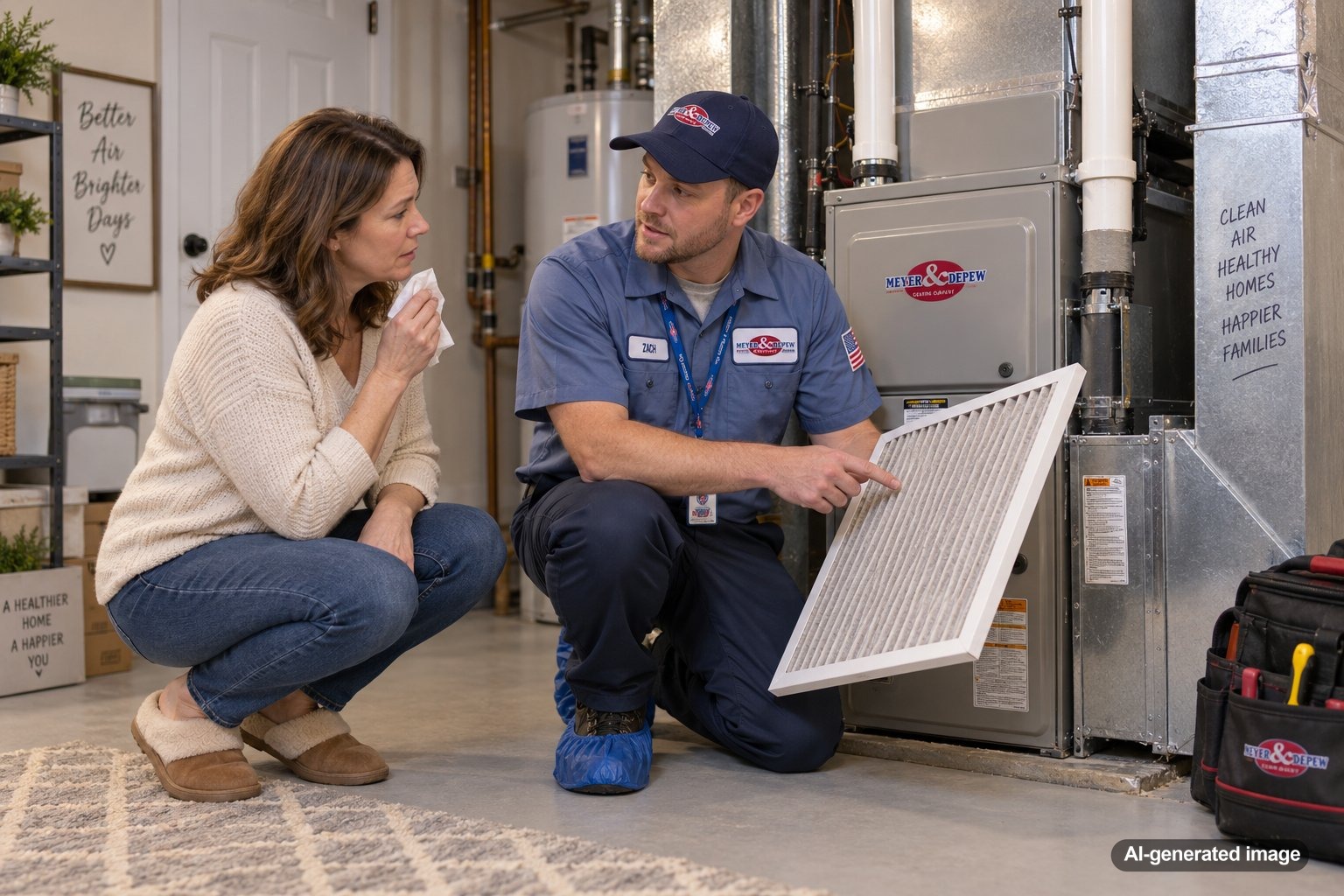
The air filter is one of the simplest parts of a forced-air HVAC system, but it can influence both equipment airflow and particle capture. A filter that is overdue for replacement can become heavily loaded with debris. The right filter, installed correctly and replaced according to the system and filter requirements, can help capture particles moving through the return air stream.
More filtration is not automatically better for every HVAC system. Filters with greater particle-capturing capability can also create more airflow resistance, depending on the filter and equipment. Using a filter that is not appropriate for the system may contribute to airflow problems. If you are considering a substantial filtration upgrade, an HVAC professional can evaluate what your equipment can accommodate.
Homeowners interested in additional filtration or purification options can also learn about air purification systems designed to work with residential HVAC systems.
Dry winter air can feel like an allergy flare
Not every symptom that appears during heating season comes from an allergen. Cold outdoor air generally contains less moisture, and heating that air indoors can result in low relative humidity. Dry air may contribute to a dry nose, scratchy throat, irritated eyes, dry skin, and general respiratory discomfort.
Those sensations can overlap with symptoms people associate with allergies. Someone may therefore assume that dust from the furnace is responsible when indoor dryness is contributing to the discomfort.
Humidity needs balance. Excess indoor moisture can encourage conditions that support mold and dust mites, while air that is too dry can be uncomfortable. Rather than adding as much humidity as possible, the goal is sensible humidity control appropriate for the home and outdoor conditions. Any humidifier should also be maintained according to its instructions because poorly maintained water reservoirs can become sources of unwanted biological growth.
Could mold or contaminants inside the HVAC system contribute?
It is possible for portions of mechanical heating and cooling systems to collect dust and debris, and moisture-prone components can sometimes support microbial growth if conditions allow. That does not mean every home with allergy symptoms has mold in its ductwork or HVAC equipment.
Persistent musty odors, known moisture problems, visible growth in accessible areas, water intrusion, or symptoms that consistently occur in one building may justify a closer evaluation. Moisture problems should be addressed at their source rather than relying only on sprays, fragrances, or other products intended to cover odors.
If you suspect contamination inside equipment or inaccessible HVAC components, professional inspection is safer than opening equipment cabinets or attempting to clean internal components yourself.
What can homeowners safely check?
- Inspect the HVAC filter and replace it if it is due for replacement, using a filter appropriate for your system.
- Make sure supply registers and return vents are open and not blocked by furniture, rugs, boxes, or other objects.
- Vacuum or wipe dust from accessible register covers and nearby surfaces.
- Notice whether symptoms happen only when the heating system runs or throughout the day.
- Pay attention to unusual musty, smoky, or burning odors.
- Consider whether the home feels unusually dry during colder weather.
These observations can help narrow down what is happening without requiring you to open HVAC equipment or attempt repairs. They can also give an HVAC technician more useful information if professional service is needed.
When might the HVAC system need professional attention?
If allergy-like symptoms repeatedly seem to coincide with HVAC operation, particularly when accompanied by weak airflow, unusual odors, excessive visible dust, humidity problems, or overdue maintenance, a qualified technician can inspect the system for conditions that may be affecting comfort or indoor air quality.
A professional evaluation may include checking the filter setup, system cleanliness in accessible equipment areas, airflow, humidity conditions, and other HVAC factors. The appropriate solution depends on what is actually found. In some homes, routine maintenance and filter changes may be the main issue. In others, humidity control, ventilation, air purification, or correction of an underlying moisture problem may deserve consideration.
If symptoms are severe, persistent, or include wheezing or difficulty breathing, seek guidance from a healthcare professional rather than assuming the HVAC system is the sole cause. HVAC service can address building and equipment conditions, but it cannot diagnose an allergy or medical condition.
Does duct cleaning always solve heating-season allergies?
No. Allergy symptoms alone are not proof that ducts need cleaning, and duct cleaning should not be treated as an automatic cure for allergies. Allergens can come from many sources throughout a home, including bedding, carpeting, upholstered furniture, pets, outdoor pollen, moisture problems, and ordinary household dust.
A more useful approach is to identify likely sources before choosing a remedy. Filter condition, housekeeping, moisture control, equipment maintenance, ventilation, and the presence of known allergy triggers can all matter. If there is a specific concern about contamination or debris inside ductwork, it can be evaluated based on the actual conditions in the home.
Why the first few heating cycles can be especially noticeable
Many New Jersey homes go through a long stretch when their heating equipment runs little or not at all. When colder weather arrives and the system begins operating regularly, dust that accumulated around accessible registers and other surfaces may become more noticeable. Residents also spend more time indoors with windows closed, increasing their exposure to indoor sources.
That seasonal combination can make it seem as though the furnace suddenly caused an allergy problem. In reality, the shift may involve several factors at once: more time indoors, recirculated air, accumulated household dust, lower humidity, pets spending more time inside, and reduced natural ventilation.
Frequently asked questions
Can a dirty furnace filter make allergies worse?
A filter that is heavily loaded or inappropriate for the system may reduce effective filtration or contribute to airflow issues. Replacing filters as needed with a type suitable for your HVAC equipment is a sensible first step, but a filter alone cannot remove every allergen from a home.
Why do I sneeze as soon as the furnace turns on?
Air movement may be redistributing dust or other particles already present in the house. The timing can be useful information, but it does not prove that the furnace itself is contaminated or identify a specific allergen.
Can dry heat cause allergy symptoms?
Dry air does not create an allergy, but it can irritate the nose, throat, eyes, and skin. Because some of those symptoms resemble allergy symptoms, low humidity can make heating-season discomfort more noticeable.
Would a humidifier help?
A humidifier may improve comfort when indoor air is overly dry, but too much humidity can encourage mold and dust mites. Proper sizing, settings, cleaning, and maintenance matter. An HVAC professional can help evaluate whole-home humidity concerns.
Should I have my HVAC system inspected if symptoms happen every winter?
If symptoms consistently coincide with heating operation, an HVAC inspection can help identify equipment, filtration, airflow, moisture, or indoor air quality conditions that may be contributing. Medical symptoms themselves should be evaluated by a qualified healthcare professional.
When allergy symptoms seem to worsen after the heat comes on, look beyond the furnace alone. Air circulation, household dust, filter condition, indoor humidity, moisture, pets, and other allergen sources can all play a role. Basic cleaning and filter checks are reasonable first steps, while persistent HVAC or indoor air quality concerns deserve a professional evaluation.
Need help with your heating, cooling, or HVAC system?
Meyer & Depew serves homeowners and businesses throughout Central and Northern New Jersey.
Get a quote or call 908.272.2100.