


How Can Indoor Air Quality Change When You Start Using the Heat?
Indoor air quality can change noticeably when you start using the heat for the season. In many New Jersey homes, heating season brings drier air, more noticeable dust, different household odors, and longer periods with windows and doors closed. A forced-air heating system can also circulate particles that have collected around vents, ductwork, or equipment during months of limited use.
These changes do not automatically mean something is wrong with your heating system. However, they can reveal filter, humidity, ventilation, cleanliness, or equipment issues that were less noticeable during warmer weather. Understanding what changes are common can help you decide whether a simple homeowner check is enough or whether it is time to schedule professional service. Meyer & Depew also offers air quality and comfort solutions for homes throughout Central and Northern New Jersey.
When you begin using the heat, indoor air may feel drier, dust may become more noticeable, odors can appear, and airborne particles may circulate differently. Your filter, humidity level, ventilation, and the condition of the heating system can all influence how the air feels during heating season.
Why indoor air can feel different when the heating season begins
The transition from mild fall weather to regular heating changes how your home operates. Windows tend to stay closed more often, outdoor air exchanges may decrease, and your heating equipment begins moving or warming indoor air for longer periods.
In a forced-air system, the blower continuously pulls air through return vents, sends it through the heating equipment, and distributes it through supply vents. If dust has settled near registers, returns, or other parts of the system, some of it may become more noticeable when regular airflow resumes.
Homes with boilers or other non-forced-air heating systems may not experience the same increase in air movement, but occupants can still notice winter dryness, stale-feeling rooms, or odors as the house remains closed up for longer periods.
Dry air can become more noticeable
One of the most common comfort changes during heating season is lower indoor humidity. Cold outdoor air generally contains less moisture, and when that air enters a home and is heated, the relative humidity indoors can drop.
You might notice dry skin, static electricity, dry nasal passages, or wood furnishings and flooring reacting to changing humidity. Those symptoms do not necessarily point to an HVAC malfunction, but they can indicate that your home’s humidity balance deserves attention.
A properly selected and maintained whole-home humidifier may help manage dryness in appropriate homes. Humidity should still be controlled carefully because excessive moisture can create its own comfort and building concerns.
Dust and particles may become easier to notice
Heating season can make dust more obvious, particularly in homes with forced-air systems. Airflow can move settled particles from floors, furnishings, vents, and other surfaces. A dirty or overly restricted air filter may also affect airflow and filtration performance.
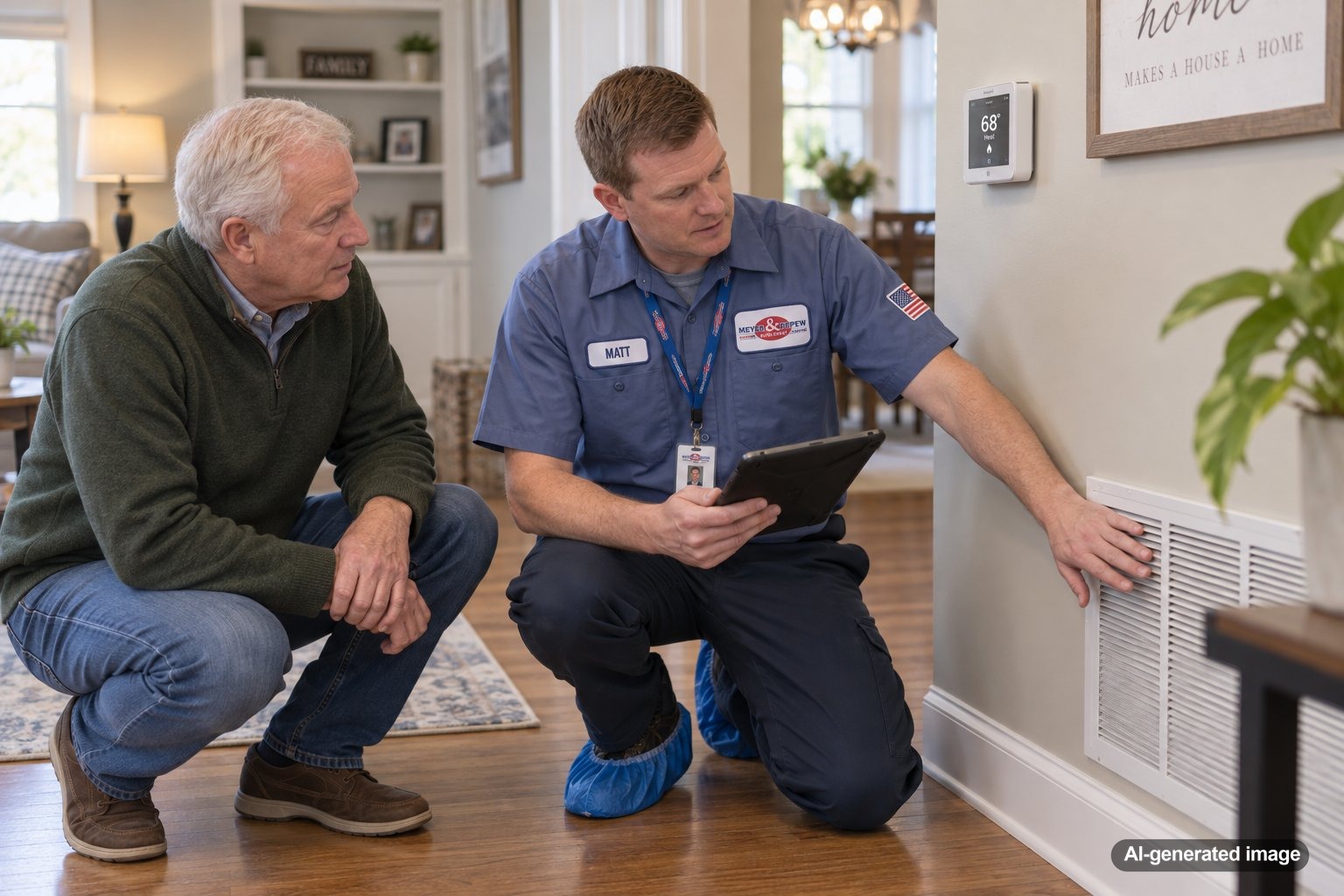
Check your HVAC filter and replace it when needed according to the filter and equipment requirements. It is also worth making sure return grilles are not blocked by furniture, rugs, boxes, or other household items. Supply registers should generally remain open unless your HVAC professional has recommended a specific system configuration.
If dust returns quickly after cleaning, certain rooms consistently feel stuffy, or family members notice a significant change whenever the system runs, a qualified HVAC professional can evaluate airflow, filtration, equipment condition, and other possible contributors.
What about that smell when the heat first turns on?
A mild dusty odor can sometimes occur when heating equipment is first used after sitting idle for an extended period. Dust on warm surfaces may create a temporary smell that fades as the system operates.
Persistent or unusual odors deserve more attention. A strong electrical burning smell, visible smoke, sparks, or an odor that suggests overheating should not be ignored. Turn the system off if it is safe to do so and contact a qualified professional. If you smell gas, prioritize safety, leave the area as appropriate, and contact the gas utility or emergency services according to their guidance.
Do not open equipment panels or attempt to repair electrical, gas, combustion, or other internal heating components yourself.
Closed windows can change ventilation and freshness
During fall and winter in New Jersey, homes are often sealed more tightly than they are during spring or early fall. That helps retain heat, but it can also change how fresh the indoor air feels. Cooking odors, cleaning products, pet odors, moisture, and other indoor pollutants may linger longer when less outdoor air enters naturally.
Mechanical ventilation can be useful in some homes because it provides a more controlled approach to air exchange. The right strategy depends on the home’s construction, existing HVAC equipment, occupancy, and other factors. Ventilation should be evaluated as part of the overall comfort and indoor air quality picture rather than treated as a one-size-fits-all solution.
Your air filter becomes especially important
The HVAC filter is one of the simplest parts of the system for a homeowner to check safely. If the filter is heavily loaded with dust, airflow may be restricted. If the filter does not fit correctly, air may bypass it rather than passing through the filter media as intended.
More filtration is not automatically better. A filter with greater resistance may not be appropriate for every HVAC system. If you are considering a major change in filter type or filtration level, an HVAC professional can help determine what your equipment and duct system can handle without creating unwanted airflow problems.
Safe checks homeowners can make
- Inspect the HVAC filter and replace it if needed.
- Make sure supply and return vents are open and not blocked.
- Look for excessive visible dust around accessible registers and grilles.
- Pay attention to whether unusual odors fade quickly or continue while the system operates.
- Notice whether dryness, stuffiness, or dust affects the whole home or only certain rooms.
- Check thermostat settings to confirm the system is operating as expected.
These observations can also give an HVAC technician useful information if you need service. Avoid opening sealed equipment, changing electrical components, adjusting gas controls, or attempting internal repairs.
When indoor air changes point to a professional evaluation
Consider professional service when indoor air concerns continue after basic checks, especially if they occur along with weak airflow, unusual system noises, frequent cycling, persistent odors, uneven temperatures, or heating performance that has changed from previous seasons.
A technician can evaluate the heating system, filter setup, airflow, and other comfort factors without assuming that one symptom has one specific cause. If your system is due for seasonal attention, Meyer & Depew’s heating service and maintenance information explains options for professional heating care.
Frequently asked questions about heating and indoor air quality
Is it normal for the house to smell dusty when the heat first comes on?
A temporary dusty smell can occur when a heating system is used after sitting idle. The odor should not be confused with persistent burning, electrical, gas, or smoke odors, which require prompt attention.
Can heating make the air in my home too dry?
Indoor relative humidity commonly falls during cold weather. Heating itself is only part of the picture; cold outdoor air, air leakage, ventilation, and the home’s moisture sources also affect indoor humidity.
Will changing the furnace filter improve indoor air quality?
A clean, properly fitted filter can support filtration and normal system airflow, but changing the filter may not address every indoor air quality concern. Ventilation, humidity, pollutants, system condition, and household activities can also matter.
Why does my home feel stuffier after I start using the heat?
Homes are often kept more tightly closed during heating season, reducing natural air exchange. Indoor odors, moisture, and other pollutants may therefore become more noticeable. An HVAC professional can help evaluate whether ventilation or another indoor air quality strategy makes sense for your home.
Should indoor air quality be checked during heating maintenance?
If you have concerns about dust, dryness, odors, ventilation, or filtration, mention them during a heating service visit. The technician can consider those concerns along with the condition and operation of the HVAC system.
Starting the heat can change how your indoor air feels because airflow, humidity, ventilation, filtration, and household conditions all shift with the season. Basic checks such as inspecting the filter and keeping vents clear are appropriate for homeowners, while persistent odors, airflow problems, or other unusual symptoms deserve professional evaluation.
Need help with your heating, cooling, or HVAC system?
Meyer & Depew serves homeowners and businesses throughout Central and Northern New Jersey.
Get a quote or call 908.272.2100.