


Can Duct Leaks Pull Dust and Odors Into the Heating System?
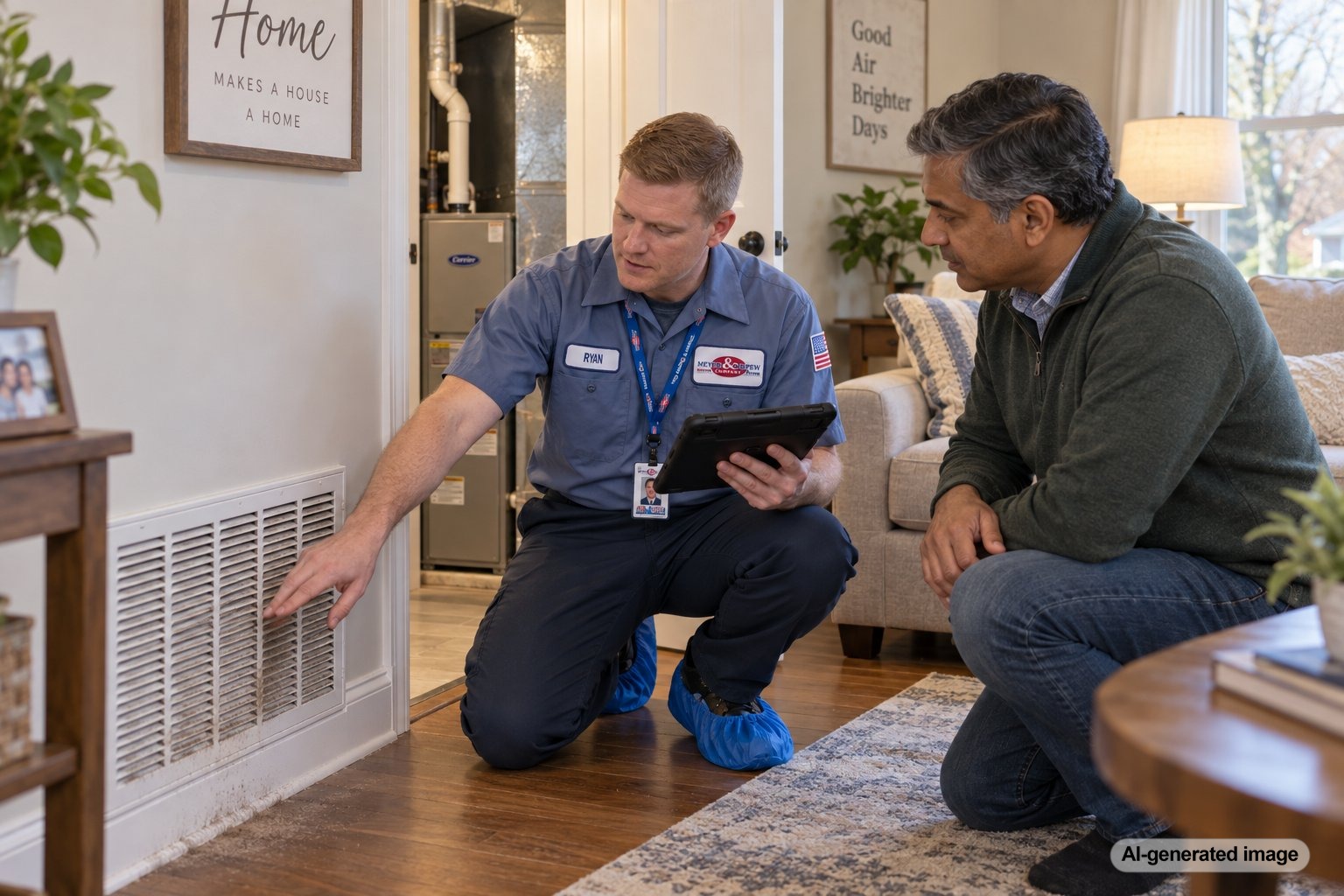
Yes. Leaks in certain parts of a duct system can pull dust, odors, insulation particles, and other airborne contaminants into the airflow that circulates through a home. The problem is especially likely when leaks are located on the return side of the ductwork, where the heating system is drawing air back toward the equipment. Instead of pulling all of that air through the intended return grilles and filter, a leaky return can draw some air from an attic, basement, crawlspace, utility area, wall cavity, or other unfinished space.
For homeowners in Central and Northern New Jersey, this can become more noticeable when the heating system begins running regularly in fall and winter. A brief dusty smell at the beginning of heating season can have several explanations, but persistent dust, musty odors, or unusual smells from the vents deserve a closer look. Meyer & Depew’s Air Quality & Comfort resources can also help homeowners understand how airflow and indoor air quality are connected.
Duct leaks can contribute to dust and odors when the air handler or furnace draws contaminated air through openings in return ductwork or when supply leaks disturb dusty areas around the ducts.
- Return-side leaks are particularly important because they can pull surrounding air into the HVAC system.
- Dust or odors may originate in attics, basements, crawlspaces, wall cavities, garages, or other nearby areas.
- A dirty filter can make air quality problems worse, but replacing the filter will not seal leaking ducts.
- Persistent odors, visible duct damage, or unusually dusty rooms should be evaluated rather than assumed to be normal.
How return duct leaks can pull contaminants into the system
A forced-air heating system depends on two basic sides of the duct network. Supply ducts carry heated air from the equipment to rooms, while return ducts bring room air back to the system so it can be heated again. When the blower operates, the return side is under negative pressure relative to the surrounding space.
If return duct connections are loose, seams have opened, or sections are damaged, that negative pressure can draw air through those gaps. Where the leak is located matters. A return leak inside a clean, conditioned room may have a different effect from a leak running through a dusty attic, unfinished basement, crawlspace, or wall cavity.
The filter is designed to treat air entering through the intended return path. When air is pulled into ductwork through a leak downstream of the filter, some contaminants may bypass normal filtration altogether. Even when a leak is located before the filter, excessive dust entering the system can load the filter faster and contribute to housekeeping and airflow concerns.
Where the dust and odors may be coming from
Duct leakage does not create dust or odors by itself. It provides an unintended pathway that may allow surrounding air to enter or escape. Finding the source therefore requires looking at both the duct condition and the environment around the affected ducts.
Unfinished basements and utility areas
Basements can contain concrete dust, stored materials, laundry odors, paint or household product smells, and moisture-related odors. If return ductwork in the basement has loose joints or damaged sections, some of that surrounding air may be drawn into the system.
Attics
Attic air may contain insulation fibers, construction dust, outdoor air, and odors from roofing or stored materials. Temperature differences can also be significant. Leaks in attic ductwork can therefore affect more than cleanliness; they may also contribute to comfort and efficiency problems.
Crawlspaces
Crawlspaces can be dusty or damp depending on the building and conditions. A return leak in this area may introduce musty or earthy odors into the air stream. Moisture problems themselves should be addressed at the source rather than relying on the HVAC system to mask the symptoms.
Wall and floor cavities
Some duct runs and return pathways pass through concealed building cavities. Gaps or deteriorated connections can allow air to move through spaces that were never intended to serve as part of the return-air pathway. That can make the source of dust or odors harder for a homeowner to identify.
Why supply duct leaks behave differently
Supply ducts are generally under positive pressure when the blower is operating. Instead of pulling surrounding air inward, a supply leak usually allows conditioned air to escape outward. That lost airflow can reduce the amount of heat reaching a room and may contribute to uneven comfort.
Supply leakage can still be associated with dust problems. Air escaping through gaps can disturb settled dust or insulation around the ductwork. Pressure imbalances created by significant leakage may also influence how air moves through the building. However, when the specific concern is contaminated air being pulled directly into the HVAC system, return-side leakage is often the more important possibility to investigate.
Signs that duct leakage may be contributing to the problem
No single symptom proves that ducts are leaking, because dirty filters, moisture issues, equipment conditions, household activities, and other building problems can cause similar complaints. Still, several patterns may justify checking the duct system more closely.
- Dust seems to return quickly after cleaning.
- Dust or debris appears repeatedly around particular supply registers.
- Musty, basement-like, attic-like, or stale odors become stronger when the blower starts.
- One part of the home has noticeably weaker airflow than comparable rooms.
- Duct sections or connections that are safely visible appear separated, loose, crushed, or damaged.
- The air filter becomes dirty unusually quickly without an obvious change in household conditions.
- Some rooms are consistently harder to heat even though their vents are open.
These symptoms can point in several directions, so duct leakage should be treated as a possible cause rather than an automatic diagnosis.
Safe checks homeowners can make
- Inspect the HVAC filter and replace it if it is dirty and replacement is due.
- Make sure supply registers and return grilles are open and not blocked by furniture, rugs, or stored items.
- Notice whether an odor appears only when the heating system starts or remains present even when the system is off.
- Look at ductwork that is already exposed and easily accessible for obvious disconnected sections or visible damage.
- Pay attention to whether the problem affects the whole house or only certain rooms.
Homeowners should not cut into ductwork, open heating equipment, disturb unknown insulation, or attempt repairs involving electrical, combustion, or other hazardous components. If ducts run through difficult-to-access areas, professional inspection is safer and more useful than trying to reach them.
Could the air filter be the real problem?
A dirty, damaged, missing, or poorly fitted filter can certainly contribute to indoor dust problems. Checking the filter is therefore a sensible first step. But the filter and the duct system perform different jobs.
If contaminated air is entering through a return leak after the filter location, changing the filter will not stop that pathway. If dust is entering before the filter, the filter may capture some of it but could load more quickly. A very restrictive filter can also affect airflow if it is not appropriate for the system.
Persistent dust problems sometimes require looking at the complete airflow path rather than treating the filter as the only variable. Homeowners interested in broader options can learn about Air Purification Systems, but filtration or purification should complement correction of significant duct or moisture problems rather than substitute for it.
Why odors should be identified instead of covered up
Different odors can point to very different issues. A mild dusty smell when heat first operates after a long period of inactivity may come from accumulated dust being warmed. A persistent musty smell may be associated with moisture somewhere in the home or HVAC system. Other unusual odors can have unrelated causes.
If you smell smoke, electrical burning, or gas, do not assume leaking ducts are responsible. Prioritize safety, leave the affected area when appropriate, and contact the utility, emergency services, or a qualified HVAC professional based on the situation. Do not continue operating equipment that appears unsafe.
How a professional can evaluate suspected duct leakage
A qualified HVAC technician can examine accessible duct connections, airflow conditions, filtration, equipment operation, and other factors that may contribute to dust or odor complaints. The goal is not simply to find any small gap, but to determine whether leakage is substantial enough and located in a place where it can meaningfully affect the home.
An evaluation may also reveal that the suspected duct problem has another cause. For example, an airflow complaint could be related to a blocked return, dirty filter, damaged flexible duct, blower issue, poor duct design, or another restriction. Likewise, an odor may originate from moisture or another building condition rather than from the heating equipment itself.
This distinction matters because sealing a random visible joint will not necessarily correct a system-wide airflow or indoor air quality complaint. A professional assessment can help identify which repairs or improvements are actually relevant.
Can duct leaks make some rooms dustier than others?
They can. The effect depends on where the leakage occurs, how the duct system is arranged, and how air moves through the house. A return leak can introduce contaminants into air that is then distributed to multiple rooms, while a supply-side problem may reduce airflow to only one branch or area.
Room-to-room differences can also come from other sources, including open windows, pets, flooring, renovation dust, leaky exterior doors, or differences in return-air pathways. Looking for a consistent pattern helps narrow down the cause.
Does sealing ductwork improve indoor air quality?
Correcting meaningful duct leaks can reduce an unintended pathway for dusty or odorous air to enter the HVAC system. The actual indoor air quality result depends on the source of the contamination, the condition of the rest of the duct system, filtration, ventilation, moisture, and other building factors.
Duct sealing should therefore be viewed as one part of an overall solution when leakage is confirmed. It is not a guarantee that every dust or odor concern will disappear.
Frequently asked questions
Why does my heat smell dusty when it first turns on?
If the heating system has been unused for an extended period, small amounts of settled dust may produce a temporary odor when the system first warms up. If the smell continues, becomes stronger, or is accompanied by other symptoms, the filter, ductwork, equipment, and surrounding areas may need evaluation.
Can a return duct leak pull air from a basement?
Yes. If return ductwork in a basement has openings, the blower’s negative pressure can draw some surrounding basement air into the return system. The significance depends on the size and location of the leak and the conditions in the basement.
Will replacing my furnace filter stop dust caused by leaking ducts?
Not necessarily. A clean filter is important, but it cannot physically seal duct openings. Air entering through a leak located downstream of the filter may also bypass filtration.
Should I seal visible duct gaps myself?
Simple observations are appropriate for homeowners, but duct repairs can be difficult to assess correctly, especially in concealed or hard-to-reach locations. Avoid disturbing insulation or working around electrical, combustion, or other hazardous equipment. Professional service is appropriate when the source is uncertain or the problem persists.
When should persistent vent odors be checked?
If an odor continues beyond a brief seasonal startup period, repeatedly returns whenever the blower operates, or is accompanied by visible moisture, unusual dust, poor airflow, or equipment problems, scheduling an HVAC evaluation is reasonable. Smoke, electrical burning odors, or gas odors should be treated as safety concerns rather than routine indoor air quality issues.
Leaking return ductwork can pull dust and odors from surrounding spaces into a heating system, particularly when ducts pass through unfinished or contaminated areas. A filter check and simple visual inspection can provide useful clues, but persistent problems deserve a broader look at duct condition, airflow, filtration, moisture, and equipment operation.
Need help with your heating, cooling, or HVAC system?
Meyer & Depew serves homeowners and businesses throughout Central and Northern New Jersey.
Get a quote or call 908.272.2100.
Article requirements and Meyer & Depew service context were provided in the source brief. fileciteturn0file0L5-L8