



Can Early Heating Use Cause Dry Skin and Static Electricity?
Estimated reading time: 8 minutes
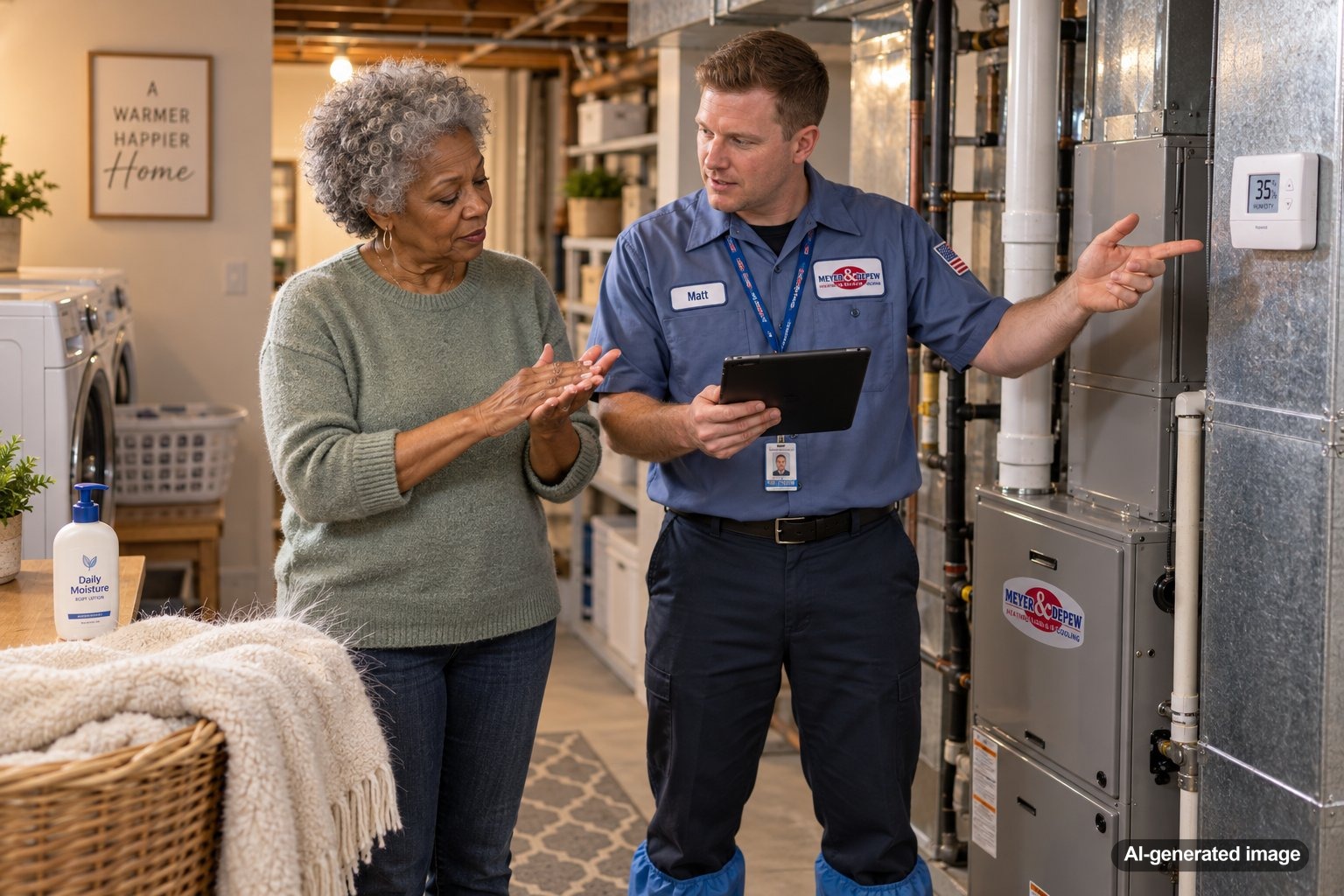
Yes. Turning on the heat early in the season can contribute to dry skin and more noticeable static electricity, especially when outdoor air is becoming cooler and less humid. The heating system itself is not necessarily removing moisture from the home, but warming relatively dry air lowers its relative humidity. That can make your indoor environment feel noticeably drier even before winter is fully underway.
For homeowners in Central and Northern New Jersey, this can become apparent during the first stretches of cool fall weather. You may notice dry hands, chapped lips, a scratchy feeling in the nose or throat, static shocks when touching metal, or clothing that clings more than usual. If low humidity becomes an ongoing comfort issue, it may be worth exploring whole-home humidification options rather than treating each symptom separately.
Early heating use can make indoor air feel drier because warming cool, low-moisture air reduces its relative humidity. Lower indoor humidity can contribute to dry skin, irritated nasal passages, static electricity, and other dry-air complaints.
- Cold outdoor air generally carries less moisture than warm summer air.
- Heating that air indoors lowers its relative humidity unless moisture is added.
- Dry skin and frequent static shocks can both be clues that indoor humidity is low.
- A hygrometer can help you determine whether the issue is actually related to humidity.
- Humidification may help when low humidity is persistent, but too much humidity can create separate problems.
Why Heating Season Can Make a Home Feel Drier
The change often begins with the outdoor air. As fall temperatures drop in New Jersey, the amount of moisture in the outside air typically falls as well. That air enters homes through normal ventilation, door openings, exhaust systems, and small gaps in the building envelope.
Once the air is heated indoors, its capacity to hold moisture increases. If no additional moisture has been added, the relative humidity drops. In practical terms, air that seemed reasonably comfortable while cool can feel quite dry after it has been warmed to a typical indoor temperature.
This is one reason dry-air complaints can appear surprisingly early. You do not need weeks of freezing weather before indoor humidity begins changing. A few cool days, longer furnace run times, and a tightly closed home can be enough to make the difference noticeable.
How Low Humidity Can Contribute to Dry Skin
Skin naturally loses water to the surrounding environment. When indoor air is dry, that moisture loss can become more noticeable. Central heating, fireplaces, and space heating are commonly associated with lower indoor relative humidity during colder weather.
Some people notice the change first on their hands, face, lips, or lower legs. Others experience itching or generally tight-feeling skin. Long hot showers, frequent hand washing, harsh soaps, and cold outdoor wind can make the same problem more noticeable, so heating may be one part of a larger seasonal change rather than the only cause.
If dry skin is persistent, painful, inflamed, severely cracked, or otherwise concerning, it is better treated as a healthcare question rather than assuming your HVAC system is responsible. Indoor humidity can affect comfort, but it should not be used to diagnose a skin condition.
Why Static Electricity Becomes More Noticeable
Static electricity is another classic sign associated with dry indoor conditions. Friction between materials can transfer electrical charge. When the air contains more moisture, that charge can dissipate more readily. Very dry air allows charge to remain on surfaces and people longer, making a small shock more likely when you touch a conductive object.
You may notice this after walking across carpet and touching a doorknob, getting out of a fabric-covered chair, removing synthetic clothing, folding laundry, or petting a dog or cat. Clothing may cling together, and lightweight blankets may crackle when moved.
A few occasional shocks do not necessarily mean there is an HVAC problem. If static becomes frequent at the same time that your home feels dry, however, indoor humidity is worth checking.
What Indoor Humidity Should You Aim For?
There is no single humidity setting that is perfect for every home in every season. A commonly used general comfort range is roughly 30% to 50% relative humidity, but the practical target can depend on outdoor temperature, insulation, window performance, air leakage, and the specific home.
More humidity is not automatically better. Excess indoor moisture can cause condensation on windows and other cold surfaces. Persistent condensation may contribute to mold, dust mite growth, or moisture damage. Older New Jersey homes with colder windows or less insulation may begin showing condensation at humidity levels that another home handles without difficulty.
For that reason, humidity control is about balance. The goal is enough moisture for reasonable comfort without pushing indoor humidity high enough to create condensation or other moisture concerns.
How to Tell Whether Your Home Is Actually Too Dry
Comfort symptoms can point you in the right direction, but measuring humidity is more useful than guessing. An inexpensive digital hygrometer can provide a basic indoor relative humidity reading.
Take readings in commonly occupied rooms rather than relying on one unusual location. A bathroom immediately after a shower, a kitchen while cooking, or a spot directly beside a supply register may not represent conditions throughout the house.
Patterns are particularly useful. If your home repeatedly falls into a low-humidity range when the heating system operates more often, and the timing matches an increase in dry-air symptoms, that is more informative than a single reading.
Safe Things Homeowners Can Check
- Use a hygrometer to check relative humidity in several occupied rooms.
- Make sure supply and return vents are open and are not blocked by furniture or rugs.
- Inspect the HVAC filter and replace it if it is due according to the filter or equipment guidance.
- Check thermostat settings and confirm the system is operating normally rather than running continuously because of an unusually high temperature setting.
- Look for window condensation if you are already using a portable or whole-home humidifier.
- If a humidifier is installed, follow its manufacturer instructions for cleaning and maintenance rather than adjusting internal HVAC components yourself.
Portable humidifiers can add moisture to an individual room, but they require regular cleaning and proper water management. Dirty humidifiers can disperse unwanted microorganisms or mineral particles into indoor air, depending on the equipment type. Whole-home systems are designed to address humidity more broadly and can be integrated with a home’s heating and cooling equipment when appropriate.
Could the First Few Heating Cycles Make the Change Feel Sudden?
Yes. Early-season weather can swing rapidly between mild afternoons and cold nights. Your furnace may barely operate one day and run for hours the next. At the same time, windows may remain closed more often and naturally humid outdoor summer air is disappearing.
That combination can make the shift feel abrupt. A homeowner might reasonably think, “I turned on the heat and suddenly everything became dry.” The heating season can absolutely be associated with that change, although the underlying cause is the interaction between outdoor moisture levels, indoor temperature, ventilation, air leakage, and household moisture generation.
When a Whole-Home Humidifier May Be Worth Considering
If low humidity is persistent throughout much of the house rather than limited to one room, a whole-home humidifier may be worth discussing with an HVAC professional. These systems are designed to add controlled moisture as part of the home’s broader comfort system.
The right solution depends on the building. Home size, heating equipment, ductwork, insulation, windows, air leakage, and existing humidity levels can all matter. A professional can also help determine whether the real issue is low humidity or whether another comfort factor deserves attention.
Meyer & Depew’s air quality and comfort services cover humidity and other indoor comfort concerns for homeowners throughout Central and Northern New Jersey.
When to Have the HVAC System Checked
Dry air by itself does not necessarily indicate that your heating system needs repair. However, professional service makes sense when the dryness appears alongside unusual HVAC behavior such as excessive cycling, poor airflow, persistent temperature problems, unusual odors, abnormal noises, or a system that seems to run far longer than expected.
It can also be helpful to have existing whole-home humidification equipment checked if it is not maintaining expected humidity. Filters, water panels, drains, controls, sensors, water supply components, and installation factors may affect performance depending on the type of humidifier.
A qualified technician can evaluate the heating and humidity-control equipment without requiring the homeowner to open panels, alter wiring, or make internal adjustments.
Frequently Asked Questions
Does a furnace actually remove moisture from the air?
Not necessarily. A typical furnace mainly heats the air. The important change is that warming air without adding moisture reduces its relative humidity, which can make the indoor environment feel much drier.
Can low indoor humidity really increase static electricity?
Yes. Electrical charges tend to dissipate less readily in dry air, so static shocks and cling can become more noticeable as indoor humidity falls.
Can heating cause dry skin?
Indoor heating can contribute to conditions that encourage dry skin, particularly when relative humidity becomes low. Cold weather, hot showers, soaps, wind, and individual skin conditions may also play a role.
Should I turn the heat down to fix dry air?
Lowering an unnecessarily high thermostat setting may reduce how dry the air feels in some situations, but temperature alone does not solve persistent humidity problems. Measuring relative humidity provides a better starting point.
Is a portable humidifier or whole-home humidifier better?
A portable unit can be useful for one room, while a whole-home humidifier is designed to provide broader humidity control. The appropriate choice depends on the home’s size, HVAC configuration, humidity pattern, maintenance preferences, and comfort goals.
If dry skin and static electricity seem to arrive as soon as you begin using the heat, low indoor humidity may be contributing. Measure the humidity first, watch for condensation as well as dryness, and consider professional guidance if the problem affects the entire home or continues throughout the heating season.
Need help with your heating, cooling, or HVAC system?
Meyer & Depew serves homeowners and businesses throughout Central and Northern New Jersey.
Get a quote or call 908.272.2100.