



Why Do Cold Floors Make a Room Feel Chilly Even When the Thermostat Is Comfortable?
Estimated reading time: 8 minutes
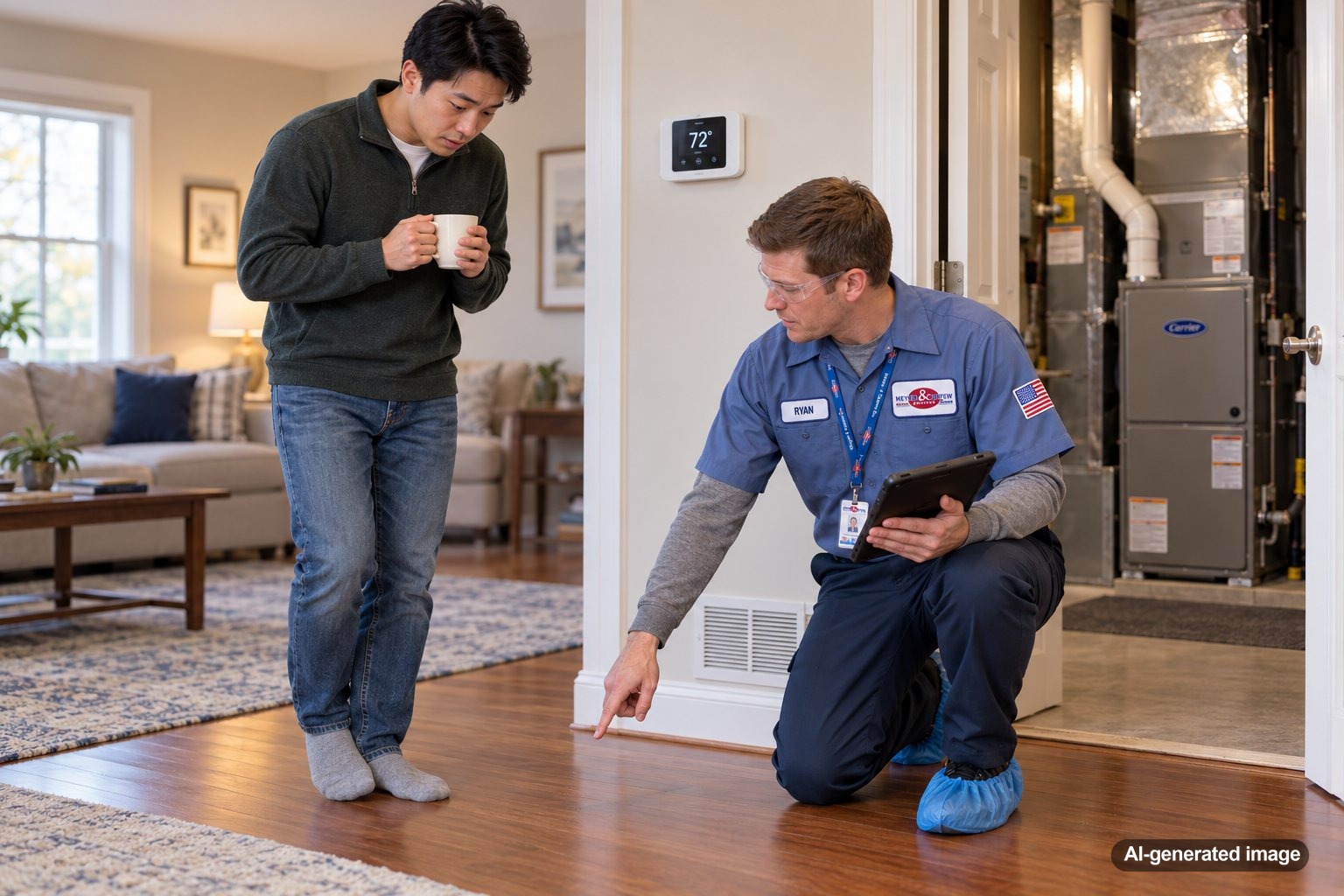
A thermostat can say the room is comfortable while your feet tell you something very different. Cold flooring does more than make socks feel mandatory. The temperature of the floor and other surrounding surfaces affects how warm a room feels, so a space can seem chilly even when the air near the thermostat has reached its setting.
This is especially noticeable during a New Jersey winter, when floors over garages, crawlspaces, basements, slabs, or poorly insulated areas may become much colder than the room air. The result is often a comfort problem that cannot be understood by looking at the thermostat alone. If the issue is persistent, a professional evaluation of your heating system and its performance can help identify whether HVAC operation, airflow, insulation, or several factors are contributing.
- A thermostat primarily measures air temperature where the thermostat is located, not the temperature of every surface in the room.
- Cold floors can increase the sensation of being chilly because your body is affected by surrounding surface temperatures as well as air temperature.
- Floors can become especially cold over unheated spaces, slabs, poorly insulated areas, or locations with air leakage.
- Uneven airflow and room-to-room heating differences can make the problem more noticeable.
- Repeatedly raising the thermostat may mask the symptom without addressing the reason the room feels uncomfortable.
The Thermostat Does Not Measure Everything You Feel
Your thermostat has an important but limited job. It senses the temperature at its location and tells the heating system when to operate based on the settings you have chosen. It does not directly measure how cold the floor is beneath your feet, the temperature of an exterior wall, or whether a nearby window is creating a noticeably colder area.
That distinction matters because human comfort is influenced by more than air temperature. You exchange heat with the surfaces around you. When floors, walls, windows, or other surfaces are substantially colder than the room air, the space can feel less comfortable even though the thermostat displays a temperature that normally feels fine.
This helps explain a familiar winter scenario: the thermostat reads 70 degrees, yet someone sitting near an exterior wall or walking across a cold tile floor reaches for a sweater. The thermostat may be working correctly. The comfort problem may simply be happening somewhere the thermostat cannot detect.
Why Cold Floors Have Such a Noticeable Effect
Floors are different from many other cold surfaces because you are often in direct contact with them. Tile, stone, concrete, hardwood, and other hard surfaces can feel particularly cool underfoot during heating season. The sensation can be even more noticeable when people are barefoot or wearing thin socks.
The floor also represents a large surface within the room. When that surface remains cold, it can contribute to an overall feeling that the room is cooler than the air temperature suggests. This is one reason simply increasing the thermostat by a degree or two does not always produce the comfort improvement a homeowner expects.
What Can Make a Floor Colder Than the Rest of the Room?
Several conditions can create unusually cold flooring, and they do not all point to an HVAC malfunction. Understanding what is below and around the floor is often an important clue.
Floors Over Unheated Spaces
A room located over an unheated garage, crawlspace, or another cold area may have a much colder floor than a room located over conditioned living space. The difference may become especially obvious during prolonged cold weather.
Slab-On-Grade Construction
Concrete slabs can remain cool during winter because they are influenced by ground temperatures and the details of the home’s construction. Flooring installed directly over a slab may therefore feel noticeably colder than flooring elsewhere in the house.
Insulation Gaps
Insulation beneath the floor helps separate the living space from colder areas below it. Missing, inadequate, displaced, or deteriorated insulation can contribute to a colder floor. Determining whether insulation is involved may require evaluating the building envelope rather than the heating equipment alone.
Air Leakage
Cold outdoor air entering around doors, windows, sill areas, penetrations, or other openings can cool surfaces and create drafts near floor level. A room with air leakage may therefore feel much colder than another room with the same measured air temperature.
Uneven Heating or Airflow
Sometimes the floor is only part of the story. A room may also receive less heated air than other areas because of duct design, blocked registers, airflow restrictions, or differences in the home’s layout. Rooms farther from the heating equipment, additions, finished spaces, and areas with large exterior exposures can have their own comfort challenges.
Why Turning Up the Thermostat May Not Fix the Problem
When your feet are cold, raising the thermostat is an understandable reaction. It may help temporarily, but it can also make other areas of the house warmer than necessary while the original room still feels uncomfortable.
Imagine a thermostat located in a central hallway. The hallway reaches the selected temperature quickly, so the heating system cycles off. A room at the edge of the house has a colder floor, more exterior wall area, and less favorable airflow. That room can continue to feel chilly even though the thermostat believes the heating cycle has done its job.
If this happens routinely, the more useful question is not simply whether the furnace or boiler can make warmer air. It is why comfort differs so much between the thermostat location and the problem room.
Cold Floors Can Point to a Broader Uneven-Comfort Problem
Pay attention to whether the cold floor is isolated or part of a larger pattern. One small patch near an exterior door may suggest something different from an entire first floor that stays uncomfortable throughout winter.
Other useful observations include whether the room warms slowly, whether supply airflow seems weaker than in neighboring rooms, whether the problem becomes much worse during very cold weather, and whether the room is above a garage, crawlspace, basement, or slab.
Homes with recurring room-to-room temperature differences may also benefit from evaluating their temperature-control strategy. Depending on the home’s layout and HVAC design, options such as zoning systems can be worth discussing with a qualified HVAC professional. Zoning is not the answer to every cold-floor problem, especially when insulation or air leakage is the primary issue, but it can be relevant when uneven temperature control is part of the problem.
Safe Things Homeowners Can Check
- Make sure supply registers and return vents are open and not blocked by furniture, rugs, or other objects.
- Inspect the HVAC air filter and replace it if needed according to the equipment and filter manufacturer’s recommendations.
- Check whether the chilly room is located over an unheated garage, crawlspace, basement area, or slab.
- Notice whether you feel obvious drafts around exterior doors and windows.
- Compare the problem room with nearby rooms rather than relying only on the thermostat reading.
- Note whether the problem appears mainly during very cold outdoor conditions or persists throughout the heating season.
These observations can provide useful context without requiring you to open HVAC equipment, alter wiring, or attempt repairs. If airflow remains poor or the heating system is not maintaining comfort reliably, professional service is the safer next step.
Could the Heating System Still Be Involved?
Yes. A cold floor does not automatically mean the heating system is malfunctioning, but HVAC performance can contribute to the overall comfort problem. Restricted airflow, duct issues, equipment performance, thermostat placement, system sizing, or uneven distribution may all deserve consideration depending on the home.
In some houses, the HVAC system is doing exactly what the thermostat asks while building-envelope conditions make certain rooms harder to keep comfortable. In others, both the building and the HVAC system contribute. A qualified technician can evaluate system operation rather than assuming the cold floor itself identifies a particular equipment failure.
When to Call an HVAC Professional
Consider scheduling service when cold-floor discomfort is accompanied by weak airflow, large temperature differences between rooms, unusually long heating cycles, frequent cycling, difficulty maintaining the thermostat setting, or a significant change from how the home performed in previous winters.
It is also worth getting the system evaluated if you continually raise the thermostat to compensate for one uncomfortable area while the rest of the house becomes too warm. That pattern can indicate that the real issue is uneven comfort rather than an inadequate thermostat setting.
An HVAC technician can evaluate heating-system operation, accessible airflow conditions, thermostat performance, and other equipment-related factors. If the evidence points toward insulation, air sealing, windows, or another building-envelope issue instead, knowing that can help you pursue the appropriate next step rather than repeatedly changing the temperature setting.
Frequently Asked Questions About Cold Floors
Why are my floors cold even though my house is warm?
The air temperature and floor surface temperature can be quite different. Floors over slabs, garages, crawlspaces, unheated basements, or poorly insulated areas may remain cool even when the surrounding air reaches the thermostat setting.
Does a cold floor mean my furnace is not working properly?
Not necessarily. The heating system could be operating normally while insulation, air leakage, construction, or room location causes the floor to stay cold. However, weak airflow or uneven heating can contribute, so persistent comfort problems are worth evaluating.
Why does tile feel colder than carpet?
Different flooring materials transfer heat from your feet at different rates and can therefore feel very different even when their temperatures are similar. A hard floor such as tile may feel substantially colder underfoot than carpet or another insulating floor covering.
Can closing vents in warmer rooms send more heat to a cold room?
Closing multiple supply vents is not a reliable way to balance an HVAC system and can interfere with intended airflow. Keep vents open and unobstructed unless a qualified professional has recommended a specific adjustment for your system.
Should I turn the thermostat higher when my floors feel cold?
You can adjust the thermostat for personal comfort, but continually increasing the setting may not address the underlying reason one room or floor feels chilly. If the problem is persistent, identifying the source of the uneven comfort is usually more useful than relying on higher settings alone.
A comfortable thermostat reading does not guarantee that every part of a room will feel comfortable. Cold floors, cold surrounding surfaces, drafts, insulation conditions, and uneven HVAC airflow can all affect how warm you feel. If one area of your home repeatedly feels chilly despite an apparently normal thermostat setting, look at the entire comfort picture rather than the thermostat number alone.
Need help with your heating, cooling, or HVAC system?
Meyer & Depew serves homeowners and businesses throughout Central and Northern New Jersey.
Get a quote or call 908.272.2100.