



Why Does a Sunroom Get Cold So Quickly on Fall Evenings?
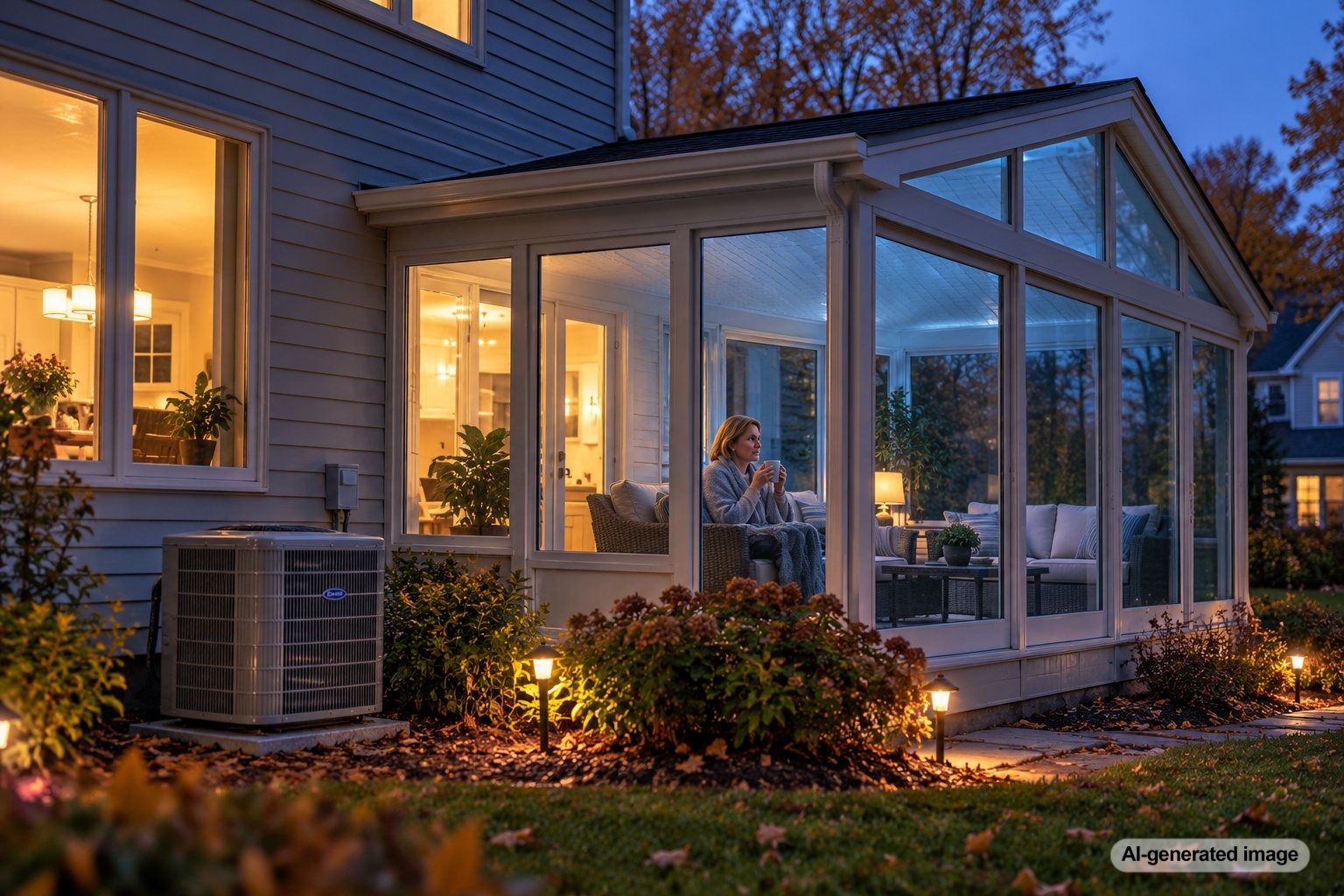
A sunroom can feel pleasantly warm on a sunny fall afternoon and surprisingly chilly only a short time after sunset. The reason is usually a combination of large glass surfaces, limited insulation, rapid heat loss, and the way the room is connected to the rest of the home’s heating system. In Central and Northern New Jersey, where fall afternoons can be mild but evening temperatures drop quickly, those characteristics become especially noticeable.
If your sunroom is consistently colder than nearby rooms, the issue does not automatically mean your heating system is failing. It may be a room-specific comfort problem. Depending on the layout, options such as zoning systems or ductless mini split systems may be worth considering when the temperature difference is persistent.
Sunrooms often get cold quickly after sunset because glass loses heat faster than a well-insulated wall, the room may have more exterior exposure, and the existing HVAC system may not deliver enough heat to offset that loss.
- Large windows can release stored daytime warmth quickly after sunset.
- Sunroom walls, floors, ceilings, and doors may have less insulation than the main house.
- Air leakage around windows or exterior doors can make the room feel colder than the thermostat reading suggests.
- The home’s heating system may have been designed before the sunroom was added or may not be balanced for that space.
- A thermostat located elsewhere in the home may stop calling for heat while the sunroom is already cooling.
Why glass changes the temperature so quickly
Windows are one of the biggest reasons sunrooms behave differently from conventional rooms. During the day, sunlight passing through the glass can warm floors, furniture, and other surfaces. That solar gain can make the room feel warmer than the rest of the house even when the heating system is doing very little.
Once the sun goes down, the equation changes. Glass generally resists heat transfer less effectively than a properly insulated exterior wall. A sunroom with windows on two or three sides has far more exposed glass than a typical bedroom or living room, so heat can leave the space faster. The effect may be especially noticeable on clear fall evenings when outdoor temperatures fall sharply.
Insulation may be different from the rest of the house
Not every sunroom was built to the same standard as the home’s original conditioned space. Some were designed primarily for three-season use, while others were converted from porches or enclosed later. Even a finished-looking room can have less insulation in the ceiling, floor, knee walls, or around the window framing.
A floor over an unconditioned crawl space or an elevated deck structure can contribute to a cold feeling from below. Likewise, a lightly insulated roof can lose heat quickly. If the sunroom has a slab floor, the surface itself may feel cold and make the room less comfortable even when the air temperature is only a few degrees lower than nearby rooms.
Small air leaks can feel much bigger in a sunroom
Because sunrooms have so many windows and exterior joints, there are more places where outdoor air may enter. Worn weatherstripping, gaps around doors, aging window seals, and penetrations around framing can all contribute to drafts.
Drafts matter because comfort is not determined by thermostat temperature alone. Moving cold air across your skin can make a room feel chilly even if a nearby thermometer does not show a dramatic temperature drop. Cold glass surfaces can also create a downdraft effect as room air cools near the windows and sinks toward the floor.
The heating system may not be sized or balanced for the sunroom
A common situation is a sunroom that was added years after the original heating system was installed. The furnace, heat pump, ductwork, or hydronic system may have been designed for the original footprint of the home. Adding conditioned square footage can change how well the system serves individual rooms.
Even when the overall system has enough capacity, airflow distribution can still be a problem. A sunroom may have only one small supply vent, no dedicated return, or long duct runs that reduce delivered airflow. Closing doors between the sunroom and the rest of the house can also change circulation patterns.
It is important not to assume that simply installing a larger furnace or heat pump is the answer. Oversizing equipment can create other comfort and efficiency problems. A qualified HVAC technician can evaluate airflow, duct design, heat loss, thermostat control, and the room’s construction before recommending changes.
Your thermostat may not know the sunroom is cold
Most central HVAC systems respond to the temperature where the thermostat or approved room sensors are located. If the thermostat is in a warmer interior hallway or living room, the system may be satisfied while the sunroom is already several degrees cooler.
This is one reason rooms with unusually high heat loss sometimes benefit from a more targeted comfort strategy. Depending on the home’s equipment and layout, a technician may evaluate thermostat placement, compatible remote sensors, airflow balancing, or a separate zone. The right approach depends on the existing system rather than a one-size-fits-all fix.
Window coverings can affect evening comfort
Window treatments can change how quickly a sunroom feels cold after sunset. Insulated shades or properly fitted curtains may help reduce the sensation of cold radiating from large areas of glass. They can also reduce air movement close to windows.
However, window treatments are not a substitute for correcting significant drafts, poor insulation, or inadequate HVAC delivery. They are best viewed as one part of the room’s overall comfort strategy.
What homeowners can safely check
- Make sure supply and return vents serving the sunroom are open and not blocked by furniture, rugs, or window treatments.
- Check the thermostat settings and confirm the heating schedule is appropriate for cooler evenings.
- Inspect the HVAC air filter and replace it if it is due for replacement according to the system or filter manufacturer’s guidance.
- Feel for obvious drafts around exterior doors and accessible window edges without removing trim or opening equipment.
- Note whether the room becomes cold only after sunset or stays colder throughout the day. That distinction can help identify whether solar gain is masking a larger heat-loss issue.
- Pay attention to whether closing the sunroom door makes the temperature problem better or worse.
When a cold sunroom points to a larger HVAC issue
If the sunroom has always cooled quickly after sunset, its construction and HVAC design may simply make it more temperature-sensitive. A new or worsening problem deserves more attention.
Schedule professional service if the heating system is struggling throughout the house, airflow has noticeably weakened, some vents no longer seem to deliver warm air, the system is cycling unusually, or the sunroom comfort problem has changed significantly from previous seasons. A technician can determine whether the issue is limited to the room or connected to a broader heating or airflow problem.
For routine heating concerns, Meyer & Depew’s heating service and maintenance information can help homeowners understand when professional evaluation makes sense.
What are the most practical ways to make a sunroom more comfortable?
The best solution depends on whether the main problem is heat loss, air leakage, inadequate HVAC delivery, or a combination of several factors. Improving weatherstripping or insulation may help when the room is losing heat rapidly. Airflow balancing may help if the room is under-supplied. A dedicated ductless system or properly designed zoning approach may make sense when the sunroom has a very different heating and cooling load from the rest of the house.
The key is to avoid treating a room-specific problem with a whole-house solution before the cause is understood. Measuring temperature differences, checking airflow, and evaluating the sunroom’s construction can provide a clearer path forward.
Frequently asked questions about cold sunrooms
Is it normal for a sunroom to be colder than the rest of the house?
Yes, some temperature difference is common because sunrooms usually have more glass and exterior exposure. A large or persistent difference can indicate insulation, air leakage, airflow, or HVAC design issues that are worth evaluating.
Why does my sunroom feel warm during the day but freezing at night?
Daytime solar gain can warm the room substantially, especially through south- or west-facing windows. After sunset, that heat gain disappears while the large glass area continues transferring heat outdoors, so the room may cool much faster than interior spaces.
Will closing the sunroom door keep the rest of the house warmer?
It may reduce the amount of cooler air mixing with nearby rooms, but the effect depends on the home’s HVAC layout. If the sunroom contains supply or return vents, closing it off can also change airflow. Avoid permanently blocking vents or modifying ductwork without professional guidance.
Can a ductless mini split heat a sunroom?
A properly selected ductless heat pump can be an option for some sunrooms because it provides dedicated temperature control. Suitability depends on the room’s construction, heat loss, electrical requirements, and expected outdoor conditions, so professional sizing and installation are important.
Should I use a space heater in a cold sunroom?
Portable space heaters can add localized heat, but they introduce electrical and fire-safety considerations and should never be used as a substitute for correcting a significant HVAC, insulation, or building-envelope problem. Follow all manufacturer safety instructions and keep heaters away from combustible materials.
A sunroom cools quickly on fall evenings because it typically gains heat rapidly from sunlight and loses it rapidly through glass, exterior surfaces, drafts, and limited insulation. If basic checks do not explain the temperature difference, an HVAC evaluation can help determine whether airflow, controls, zoning, or dedicated heating would improve comfort.
Need help with your heating, cooling, or HVAC system?
Meyer & Depew serves homeowners and businesses throughout Central and Northern New Jersey.
Get a quote or call 908.272.2100.