



Why Does a Heat Pump Run Longer on Cool Fall Mornings Than Mild Afternoons? What New Jersey Homeowners Should Know
A heat pump can run noticeably longer on a cool fall morning than it does during a mild afternoon, and that difference is often normal. When outdoor temperatures drop overnight, the system has to move heat from colder outdoor air into a house that may also have cooled for several hours. Later in the day, warmer outdoor temperatures and a smaller indoor-to-outdoor temperature difference can make the same heating job easier.
For homeowners in Central and Northern New Jersey, these changing runtimes can be especially noticeable during fall, when mornings may feel chilly but afternoons turn comfortable. Longer runtime alone does not automatically mean something is wrong, but changes in comfort, airflow, noise, or unusually persistent operation can justify a closer look or professional heating service and maintenance.
A heat pump usually runs longer on a cool fall morning because the outdoor air contains less readily available heat, the home may need to recover from overnight cooling, and the temperature difference between indoors and outdoors is greater. During a mild afternoon, warmer outdoor air and reduced heating demand often allow the system to satisfy the thermostat more quickly.
Why outdoor temperature changes heat pump runtime
A heat pump does not create heat in the same way as a furnace. In heating mode, it transfers heat from the outdoor air into the building. There is still usable heat outdoors even when the weather feels cold, but extracting and transferring that heat generally becomes more demanding as outdoor temperatures fall.
Imagine a New Jersey morning when the temperature outside is in the 40s and the thermostat is set for a comfortable indoor temperature. The system has a larger temperature difference to overcome than it might several hours later when the afternoon warms significantly. That increased heating load can translate into longer operating cycles.
Long cycles are not necessarily undesirable for a heat pump. Many modern systems are designed to operate steadily rather than repeatedly turning on and off. Consistent operation can be part of normal heat pump behavior, particularly when the system is matching its output to the home’s heating demand.
Overnight temperature setbacks can add to the morning workload
Thermostat settings can make the morning difference even more noticeable. If the indoor temperature is lowered substantially overnight and then raised several degrees in the morning, the heat pump has to recover that temperature while outdoor conditions may still be near their daily low.
That combination can produce a much longer heating cycle than simply maintaining a relatively steady setpoint. Depending on the system and thermostat configuration, a large temperature adjustment may also affect how supplemental heating is used.
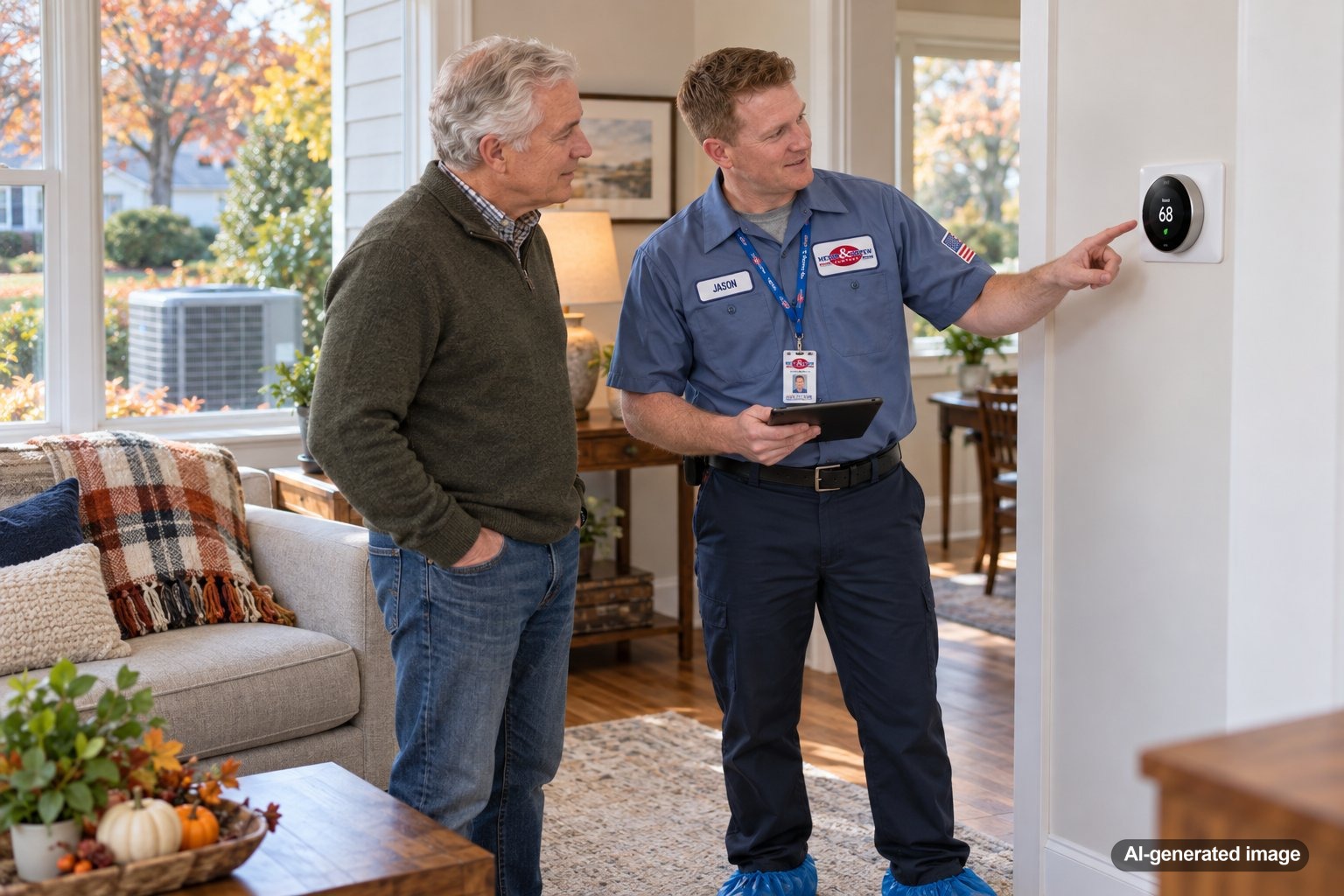
Homeowners who regularly notice long recovery periods may want to review how their thermostat is scheduled. Meyer & Depew also provides information about thermostat options for homeowners evaluating temperature controls and scheduling features.
Your home’s heat loss is usually greater in the morning
The heat pump is only one part of the equation. The house itself may lose heat faster during the coldest part of the day. Windows, exterior walls, doors, attics, ductwork, and air leakage all influence how much heat the system must replace.
An older or draftier home may therefore show a more dramatic difference between morning and afternoon runtime. Solar gain can also matter. As sunlight warms rooms, roofs, walls, and windows later in the day, the heating system may receive some help from the sun that was not available before sunrise.
This is one reason two homes with similar heat pumps can behave differently under the same outdoor conditions.
Defrost operation can temporarily change what you notice
Under certain cool and damp conditions, frost can develop on the outdoor heat pump coil. Heat pumps are designed to manage this with a defrost cycle when needed. During defrost, the system temporarily changes operation to remove frost from the outdoor coil.
An occasional defrost cycle in appropriate weather can be normal. However, unusually frequent defrosting, heavy ice that does not clear, or a system that struggles to maintain the thermostat setting could indicate a condition that should be evaluated by a qualified HVAC technician.
Longer runtime is different from a heat pump that cannot keep up
The important question is not simply how many minutes the heat pump runs. Pay attention to what happens while it is running. A system that operates for an extended period while steadily maintaining the desired temperature may be doing exactly what it was designed to do.
It becomes more concerning when the indoor temperature continues falling, airflow becomes unusually weak, the system runs almost continuously even during mild weather, or operation changes sharply from the way the equipment normally behaves.
Other signs worth professional attention may include repeated breaker trips, unusual mechanical noises, persistent icing, electrical or burning odors, or substantial temperature differences between rooms. Smoke, sparks, a burning electrical smell, or other unsafe conditions should be treated as a safety issue rather than a routine troubleshooting problem.
Safe things homeowners can check
- Check that the thermostat is in heating mode and set to the intended temperature.
- Inspect the air filter and replace it if it is dirty and replacement is appropriate for your system.
- Make sure supply registers and return vents are open and not blocked by furniture, rugs, or other objects.
- Look for leaves, plants, or obvious debris restricting airflow around the outdoor unit.
- Consider whether a large overnight thermostat setback is creating a demanding morning recovery period.
- If the problem continues or comfort is deteriorating, schedule professional service rather than opening equipment or attempting electrical or refrigerant repairs.
Homeowners should not attempt to add refrigerant, bypass safety controls, open sealed HVAC components, modify electrical wiring, or make other internal equipment adjustments. Those tasks require appropriate training and equipment.
When should longer heat pump runtime be checked professionally?
If the heat pump runs longer only during colder mornings and returns to shorter or less frequent operation as the day warms, that pattern can be consistent with normal changes in heating demand. A service visit becomes more reasonable when the pattern is new, comfort has declined, energy use appears unexpectedly different, airflow has weakened, or the heat pump cannot maintain the thermostat setting.
A qualified technician can evaluate airflow, controls, equipment condition, refrigerant performance, temperature readings, the outdoor unit, and other factors that cannot be determined reliably from runtime alone.
Frequently asked questions about heat pump runtime
Is it normal for a heat pump to run for a long time in heating mode?
Yes. Heat pumps can use relatively long heating cycles, particularly as outdoor temperatures fall. Longer operation by itself does not prove there is a malfunction. Comfort, airflow, temperature stability, weather conditions, and changes from normal system behavior provide more useful context.
Why does my heat pump stop running as much in the afternoon?
The afternoon may be warmer outdoors, reducing the amount of heat the home is losing and making heat transfer easier for the system. Sunlight can also provide some passive warming inside the home.
Can lowering the thermostat overnight make my heat pump run longer in the morning?
Yes. A large overnight setback can leave the system with several degrees of temperature recovery to complete during one of the colder parts of the day. How significant that effect is depends on the house, equipment, thermostat configuration, and outdoor conditions.
Should I worry if my heat pump seems to run constantly?
Not necessarily, especially during colder weather. However, if the system cannot maintain the set temperature, runs unusually long during mild conditions, develops heavy ice, produces weak airflow, or shows a sudden change in operation, professional evaluation is appropriate.
Cool fall mornings place a greater heating load on a heat pump than mild afternoons. Colder outdoor air, overnight heat loss, thermostat recovery, and occasional defrost operation can all contribute to longer morning cycles. The most important distinction is whether the system continues to maintain comfortable, stable indoor temperatures or shows signs that performance has changed.
Need help with your heating, cooling, or HVAC system?
Meyer & Depew serves homeowners and businesses throughout Central and Northern New Jersey.
Get a quote or call 908.272.2100.