


Why Is There Water Near My Furnace After I Start Using the Heat?
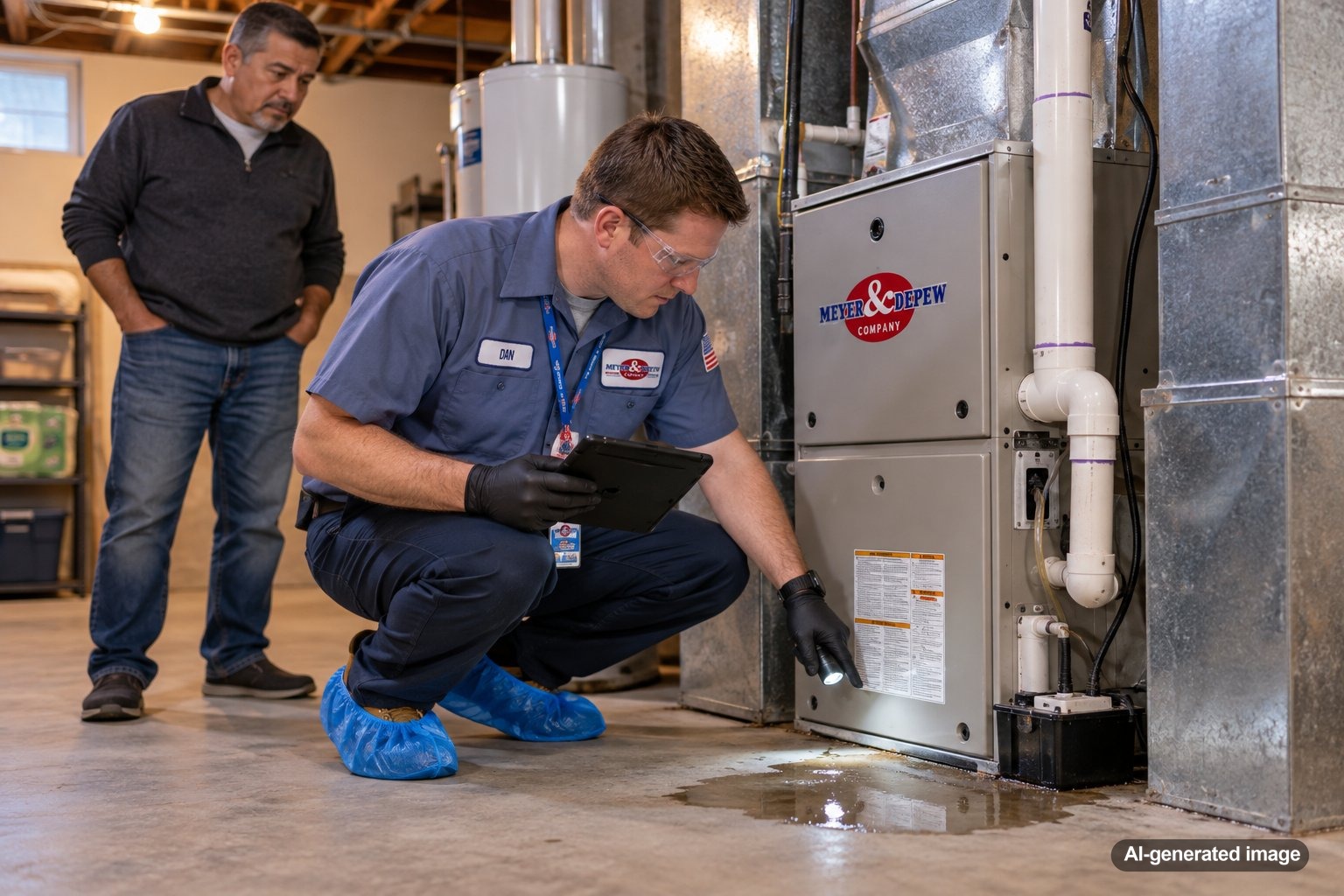
Finding water near your furnace shortly after you start using the heat can be confusing, especially if the floor was dry all summer. In some homes, a small amount of water is related to normal condensation from a high-efficiency furnace. In others, water may point to a blocked condensate drain, a failing condensate pump, a whole-home humidifier problem, or even a leak from equipment located nearby.
The important distinction is whether the water is being contained and drained as designed or is escaping onto the floor. If you notice recurring moisture, a growing puddle, or water near electrical components, it is worth having the system evaluated. Meyer & Depew provides heating service and maintenance for homeowners throughout Central and Northern New Jersey.
Water near a furnace after the heat starts may be normal condensate that is not draining correctly, a condensate pump problem, a humidifier leak, or water coming from another nearby appliance or pipe. A conventional furnace generally should not create water during normal heating operation, while many high-efficiency condensing furnaces do produce condensate that must drain away properly.
Why Some Furnaces Produce Water During Heating
Not every furnace handles moisture the same way. A high-efficiency condensing furnace is designed to extract additional heat from combustion gases. During that process, water vapor can condense into liquid inside the system. That condensate is normally routed through tubing or piping to a drain or condensate pump.
When everything is working properly, you may never see that water. A puddle on the floor can mean the condensate is not reaching its intended destination. A loose connection, clogged drain path, damaged tubing, backed-up trap, or condensate pump issue may allow water to escape.
Older or standard-efficiency furnaces generally do not create liquid condensate in the same way during normal heating operation. If water appears around one of these systems, the source may be a humidifier, plumbing line, air conditioning component, floor drain, or another appliance nearby.
Common Reasons Water Appears Near a Furnace
A Condensate Drain Is Not Flowing Properly
High-efficiency furnaces rely on a drainage path to carry condensation away. Dirt, sediment, biological buildup, a kinked tube, or a drainage problem farther downstream can interfere with that flow. Water may then collect around the furnace cabinet or nearby piping.
The Condensate Pump Is Having Trouble
Some furnace installations use a small condensate pump when gravity drainage is not practical. The pump collects water and moves it to an appropriate drain location. If the reservoir overflows, the discharge tubing becomes restricted, or the pump stops operating correctly, water can appear on the floor.
A homeowner can look for obvious standing water around the pump, but electrical or mechanical repairs should be left to a qualified technician.
A Whole-Home Humidifier May Be Leaking
Many New Jersey homeowners begin using a furnace-mounted humidifier when dry fall and winter air arrives. That timing can make a humidifier leak look like a furnace leak. Water may escape from a drain line, supply connection, internal water panel area, or another component associated with the humidifier.
If the water only appears after the humidifier has been activated for the season, that is an important detail to mention when scheduling service.
The Water May Be Coming From Somewhere Else
Mechanical rooms often contain several possible water sources. A water heater, boiler piping, plumbing connection, air conditioner condensate line, utility sink, floor drain, or nearby pipe can leak in a way that makes the furnace appear responsible.
Water can also travel along a pipe, duct, cabinet edge, or slightly sloped floor before becoming visible. The spot where you see the puddle is not always the point where the leak began.
Why The Problem May Appear Right When Heating Season Begins
The first cool days of fall put equipment back into operating modes that may have been unused for months. A condensate pump may not have run during the summer in the same way it does during furnace operation. A humidifier may also be turned on for the first time since spring.
Seasonal startup can therefore expose problems that were not noticeable during cooling season. In Central and Northern New Jersey, where temperatures can swing considerably during fall, a furnace may initially run only occasionally. A small drainage problem can appear intermittent before becoming more obvious as heating cycles become longer and more frequent.
Safe Checks You Can Make Without Opening The Furnace
- Look at the floor and try to determine whether the water is coming from the furnace, a condensate pump, humidifier, water heater, pipe, or another nearby source.
- Check whether visible condensate tubing has come loose, become kinked, or is obviously overflowing without disconnecting or modifying it.
- Notice whether the water appears only while the furnace is running or continues when the heating system is off.
- If you use a whole-home humidifier, note whether the leak began after the humidifier was turned on for the season.
- Keep the area around the furnace clear so a technician can inspect the equipment and drainage system safely.
Do not remove furnace panels, bypass safety switches, work on wiring, adjust gas components, or attempt to disassemble a condensate pump. Those tasks can involve electrical, combustion, or equipment safety risks.
When Water Near A Furnace Needs Professional Attention
A few drops from an identifiable source are different from recurring water accumulation. Schedule professional service if water continues to return, the puddle is getting larger, the furnace stops operating, the condensate pump appears to be overflowing, or you cannot determine where the moisture originates.
Water near electrical components deserves extra caution. If you can safely do so without stepping into water or touching wet electrical equipment, stop heating operation at the thermostat and arrange professional service. Do not handle wet wiring, switches, plugs, or internal furnace components.
If you smell gas, suspect carbon monoxide, see smoke or sparks, or believe there is an immediate electrical or combustion hazard, leave the area and contact the appropriate emergency service or utility rather than attempting to troubleshoot the furnace yourself.
Can A Furnace Leak Cause Damage If It Is Ignored?
Even a relatively small leak can create secondary problems if it continues. Repeated moisture can affect flooring, nearby drywall, stored belongings, or metal components. More importantly, an unresolved drainage problem may eventually interfere with furnace operation depending on the system design.
Finding the source early is usually easier than waiting until the puddle becomes larger or the heating system stops working. A technician can determine whether the moisture is normal furnace condensate escaping from its drainage path or water from another source in the mechanical area.
Frequently Asked Questions
Is it normal for a high-efficiency furnace to make water?
Yes. Many high-efficiency condensing furnaces produce liquid condensate during normal operation. The water should be collected and drained properly, however. It should not routinely form a puddle on the floor.
Why would my furnace leak water only when the heat is on?
If the furnace is a condensing model, heating operation can produce condensate that exposes a drainage or pump problem. A furnace-mounted humidifier may also operate during heating calls and can be another possible source.
Could the water actually be from my air conditioner?
It is possible, particularly when heating and cooling equipment share the same mechanical area or drainage system. During mild New Jersey fall weather, a home may alternate between cooling and heating, making the source less obvious.
Should I shut off my furnace if there is water around it?
If there is significant water, water near electrical equipment, or you are unsure whether operation is safe, stopping the system at the thermostat can be a sensible precaution if it can be done without entering a wet area or touching electrical components. A qualified technician can then evaluate the source.
Can a clogged furnace filter cause water on the floor?
A dirty filter can contribute to airflow problems, but water near a furnace can have several possible causes. Do not assume the filter is the only issue. Replacing an obviously dirty filter is a reasonable homeowner task, but recurring water should still be investigated.
Water near a furnace after heating season begins can come from normal condensate that is not draining correctly, a condensate pump, a humidifier, or another nearby water source. The key is that water should not repeatedly collect on the floor. If the source is unclear or the leak continues, professional inspection can identify the cause without unnecessary guesswork.
Need help with your heating, cooling, or HVAC system?
Meyer & Depew serves homeowners and businesses throughout Central and Northern New Jersey.
Get a quote or call 908.272.2100.