



Why Does the Upstairs Stay Warm While the First Floor Feels Cold in Fall?
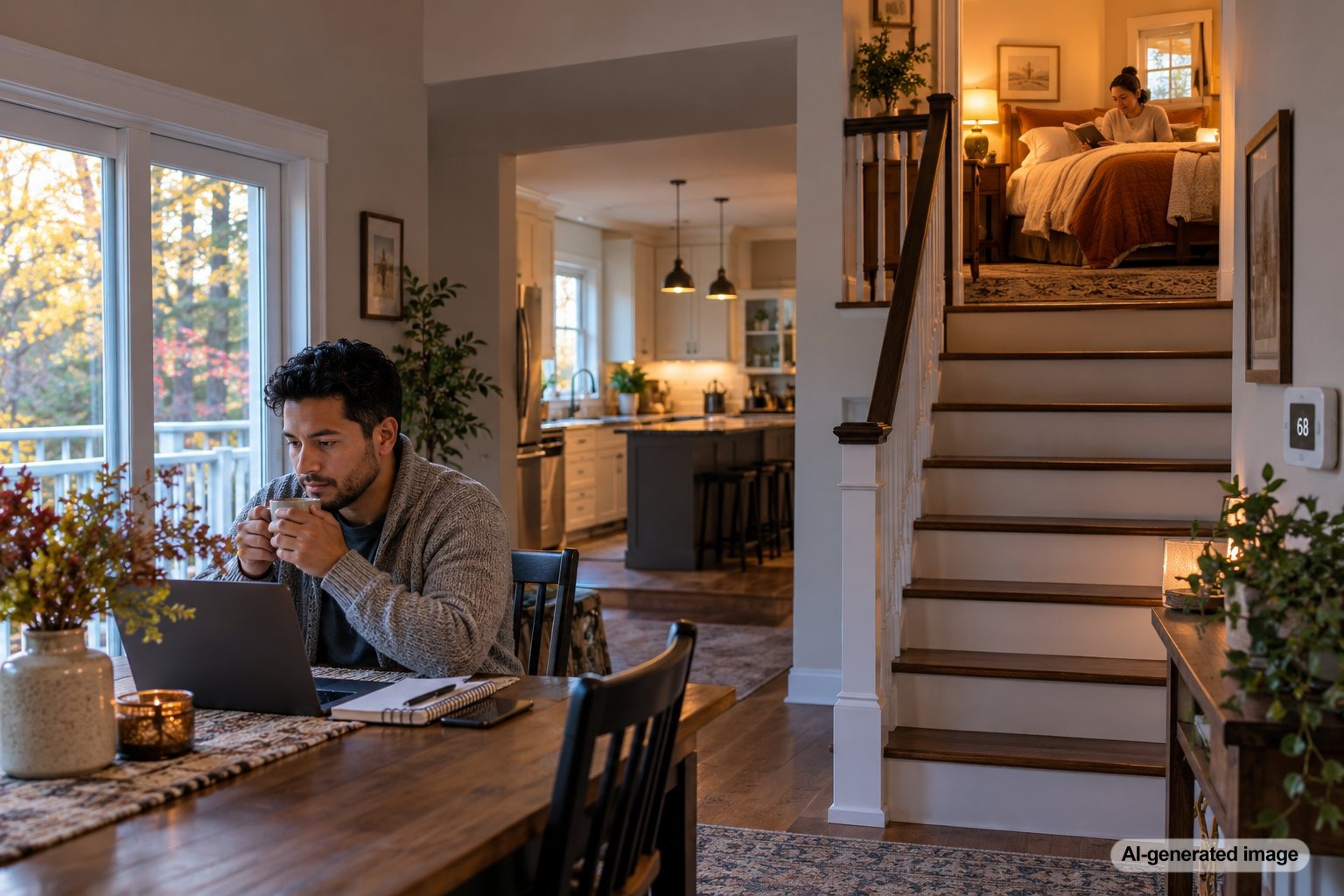
It is common for a two-story home to feel uneven during a New Jersey fall, with the upstairs remaining comfortable or even warm while the first floor feels noticeably chilly. The difference usually comes from a combination of natural heat movement, changing outdoor temperatures, thermostat location, airflow, and the way the heating system serves each level. A small temperature difference can be normal, but a large or persistent imbalance may point to an HVAC or airflow issue worth investigating.
Fall makes this problem especially noticeable because outdoor temperatures can swing significantly between sunny afternoons and cool evenings. Your heating system may run only in short cycles, while heat that accumulated upstairs during the day can remain there long after the first floor has cooled. If uneven temperatures are a recurring problem, options such as zoning systems may help provide more precise temperature control in some homes.
An upstairs can stay warmer than the first floor in fall because warm air naturally rises, upper rooms may receive more solar heat, the thermostat may not represent both floors accurately, and airflow can differ between levels. Short fall heating cycles can make these differences more obvious. If the temperature gap is substantial, persistent, or accompanied by weak airflow or unusual system behavior, a qualified HVAC technician can evaluate the system.
Why warm air tends to collect upstairs
Warm air is less dense than cooler air, so heat naturally moves upward through stairwells, hallways, wall cavities, and other openings in a home. In a two-story house, this can create a noticeable vertical temperature difference even when the HVAC equipment is operating normally.
This effect can become more pronounced during fall because the first floor may lose heat to cooler outdoor air, a basement, a crawlspace, or an attached garage while the second floor benefits from heat rising from below. The upper level may also retain warmth from the roof and attic area after a sunny afternoon.
Fall temperature swings can exaggerate the difference
Autumn weather in Central and Northern New Jersey can shift quickly. A house might warm naturally during a mild, sunny afternoon and then cool rapidly after sunset. Upstairs bedrooms may still hold daytime warmth while rooms on the first floor, particularly those with exterior doors or larger windows, become uncomfortable sooner.
During mild weather, the heating system may run for only a few minutes at a time. Those short cycles may satisfy the thermostat before enough warm air reaches the areas that cool fastest. The result can be a home that technically reaches the thermostat setting while still feeling uneven from room to room or floor to floor.
The thermostat may be comfortable while the first floor is not
A thermostat measures the temperature where it is installed, not the average temperature throughout the entire house. If it is located near a stairway, in a central hallway, close to a supply register, or in an area that stays relatively warm, it may stop calling for heat even though other first-floor rooms remain cooler.
The opposite can happen when a thermostat is located in a naturally cold area. The heating system may continue running while upstairs rooms become warmer than necessary. Thermostat placement is therefore an important part of diagnosing persistent comfort differences.
Airflow differences can make one floor harder to heat
Heating systems depend on both supply airflow and return airflow. If certain rooms receive less conditioned air, or if return pathways are restricted, temperatures can become uneven. Problems may be caused by blocked registers, furniture covering return grilles, a heavily loaded air filter, duct leakage, duct sizing limitations, or balancing issues.
In some homes, the duct system simply distributes air more effectively to one level than another. Older houses, remodeled homes, finished additions, and buildings that were not originally designed for modern forced-air HVAC systems can be particularly prone to uneven temperatures.
Solar gain can keep the second floor warmer
Upper-level rooms often receive more direct sunlight than lower rooms, especially when trees or neighboring buildings shade the first floor. Sunlight through south- or west-facing windows can raise room temperatures substantially during the afternoon.
That warmth can remain upstairs into the evening, even after outdoor temperatures fall. The first floor may then feel cool by comparison, although the difference is partly caused by passive solar heating rather than a malfunctioning furnace or heat pump.
Insulation and air leakage can affect each floor differently
Uneven insulation or air leakage can also contribute to temperature differences. First-floor rooms near exterior doors, garages, crawlspaces, basements, or older windows may lose heat more quickly. Meanwhile, upstairs rooms can benefit from heat rising through the house.
Attic insulation matters as well. Although poor attic performance is often associated with upstairs comfort problems, every home is different. A complete comfort evaluation may involve looking at the HVAC system, ductwork, insulation, air sealing, thermostat location, and how the home is used.
What homeowners can safely check
- Check the thermostat setting and confirm it is operating in heating mode.
- Inspect the HVAC air filter and replace it if it is dirty and replacement is appropriate for your system.
- Make sure first-floor supply registers are open and not covered by furniture, rugs, or curtains.
- Check that return vents are open and unobstructed.
- Notice whether the temperature difference happens all day or mainly after sunny afternoons and cool evenings.
- Compare airflow from several first-floor and second-floor registers without opening or modifying HVAC equipment.
Avoid closing large numbers of upstairs vents in an attempt to force more heat downstairs. Restricting too much airflow can create system performance problems. If balancing adjustments are needed, an HVAC professional can evaluate the duct system and determine an appropriate approach.
When zoning may help with two-story comfort
Homes with recurring floor-to-floor temperature differences may benefit from HVAC zoning. A zoning system uses separate temperature controls and motorized dampers to direct conditioned air where it is needed. This can be useful when upstairs and downstairs areas have different heating and cooling loads.
Zoning is not automatically the right answer for every uneven home. If the underlying problem is restricted airflow, faulty equipment, duct leakage, inadequate duct design, or another system issue, that should be addressed first. A qualified technician can determine whether zoning is appropriate for the existing equipment and ductwork.
When to schedule professional HVAC service
Consider professional service when the temperature difference between floors is persistent, getting worse, or accompanied by weak airflow, unusually long or short heating cycles, rooms that never become comfortable, unusual noises, or a heating system that struggles to maintain the thermostat setting.
A technician can evaluate airflow, thermostat operation, system performance, duct distribution, and other factors that are difficult to assess from room temperature alone. Meyer & Depew provides heating service and maintenance for homeowners throughout Central and Northern New Jersey.
Frequently asked questions
Is it normal for the upstairs to be warmer than downstairs?
A modest difference can be normal because heat naturally rises and upper rooms may receive more solar gain. A large or persistent difference deserves further investigation, especially if one floor remains uncomfortable.
Why is the problem more noticeable in fall?
Fall often brings warm afternoons, cool nights, and shorter heating cycles. The upstairs may retain daytime warmth while the first floor cools quickly after sunset, making the difference feel larger.
Should I close upstairs vents to send more heat downstairs?
Closing one or two registers slightly may change room airflow, but homeowners should not close many vents or make major balancing changes without professional guidance. Excessive airflow restriction can affect HVAC performance.
Can a smart thermostat fix uneven temperatures?
A thermostat with remote sensors may provide better temperature information from different parts of the home, but it cannot correct every airflow, duct, insulation, or equipment problem. The cause of the imbalance should be identified first.
Does uneven heating mean I need a new furnace or heat pump?
Not necessarily. Uneven heating can result from airflow, thermostat placement, ductwork, insulation, solar gain, or normal heat movement. Equipment replacement is only one possible solution and should be considered after the actual cause is identified.
If your upstairs stays warm while the first floor feels cold in fall, the cause is often a combination of natural heat movement, changing outdoor temperatures, thermostat location, and airflow. Simple checks such as inspecting the filter and making sure vents are open can rule out obvious problems. Persistent or significant temperature differences are best evaluated by a qualified HVAC professional.
Need help with your heating, cooling, or HVAC system?
Meyer & Depew serves homeowners and businesses throughout Central and Northern New Jersey.
Get a quote or call 908.272.2100.