



Can Ceiling Fans Make a Room Feel Colder in Fall?
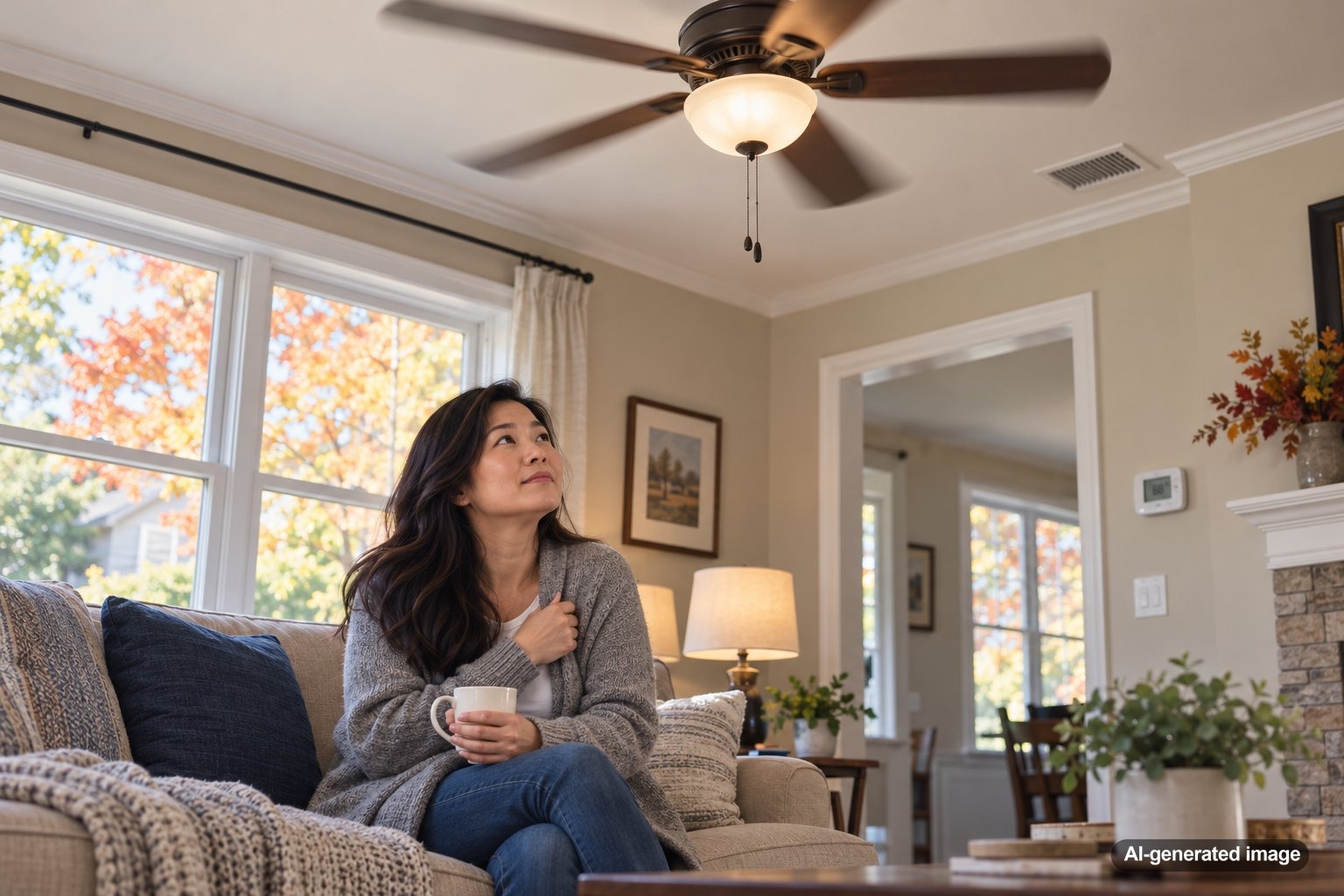
Yes. A ceiling fan can make a room feel colder in fall, especially if it is still running in its summer direction or at a high speed. The fan usually is not lowering the actual room temperature. Instead, moving air across your skin can increase the cooling sensation, much like a breeze outdoors. As temperatures begin changing across Central and Northern New Jersey, a fan setting that felt comfortable in August may suddenly feel chilly in September or October.
The solution can be as simple as adjusting the fan direction or speed, but persistent cold spots may also point to airflow or heating issues. If rooms remain uncomfortable after basic adjustments, Meyer & Depew’s heating service and maintenance options can help identify whether the HVAC system is contributing to the problem.
- Ceiling fans can make people feel cooler by moving air across the skin.
- During cooler weather, many reversible fans should run clockwise at low speed.
- A high fan speed can create an uncomfortable draft even when the thermostat reading is normal.
- Fans redistribute air. They do not create heat.
- If one room stays noticeably colder than the rest of the home, the fan may not be the only cause.
Why a ceiling fan can make you feel colder without changing the thermostat
A ceiling fan primarily changes how air moves through a room. When airflow passes over your skin, it can increase evaporation and heat transfer from your body. That is why a fan can make a warm summer room feel more comfortable even though the thermostat may show almost the same temperature.
In fall, that same effect can work against your comfort. A room at a moderate temperature may feel chilly if the fan is pushing a noticeable stream of air downward. This is especially common when someone leaves the fan on the same direction and speed used throughout the summer.
Ceiling fans therefore cool people more than they cool rooms. If nobody is using the room, leaving the fan running generally does not provide the same comfort benefit.
Check the fan direction as the weather gets cooler
Many residential ceiling fans have a reversible motor. During summer, the typical setting is counterclockwise when viewed from below. That direction generally pushes air downward and creates the breeze people associate with ceiling fan cooling.
During cooler weather, many manufacturers recommend reversing the fan so it turns clockwise at a low speed. Instead of creating a strong downward breeze, this setting is intended to produce a gentler circulation pattern that can help redistribute warmer air that collects near the ceiling.
The key phrase is low speed. Running a fan aggressively in either direction can create noticeable air movement at occupant level. If you feel a steady breeze while sitting underneath the fan in fall, try lowering the speed or turning the fan off temporarily and see whether your comfort improves.
High ceilings can make fan settings more noticeable
Warm air naturally tends to collect higher in a room, which can make temperature differences more noticeable in spaces with cathedral ceilings, two-story foyers, lofts, or open staircases. In those rooms, gentle fan circulation may help mix the air rather than allowing excessive heat to remain near the ceiling.
That does not mean every high-ceiling room should have the fan running constantly. Fan size, mounting height, speed, room layout, and heating system design all influence the result. The best setting is one that mixes the room gently without creating a cold draft where people sit, work, or sleep.
Do not confuse a fan draft with an HVAC airflow problem
If switching off the ceiling fan immediately makes the room comfortable, the fan setting was probably an important part of the issue. If the room still feels colder than neighboring spaces, look beyond the fan.
Common factors can include a blocked supply vent, furniture covering a return, a dirty HVAC filter, uneven duct airflow, thermostat location, large windows, exterior walls, air leakage, or a heating system that is not distributing warmth evenly. Homes with additions, finished spaces, or significantly different room layouts can also develop comfort differences during shoulder seasons.
For homes with recurring room-to-room temperature differences, options such as zoning systems may be worth discussing when the HVAC design and equipment are appropriate for them.
Fall can make comfort problems easier to notice
Fall is an unusual comfort season in New Jersey because outdoor temperatures can change substantially between afternoon and overnight. Your home may need little or no heat during the day, then feel cool after sunset. A ceiling fan that was helpful a few hours earlier can suddenly feel drafty.
Heating systems may also run only occasionally during mild weather. That can make room temperature differences more noticeable because there is less frequent HVAC airflow to mix conditioned air throughout the house.
Instead of repeatedly raising the thermostat to compensate for one chilly room, first determine whether the ceiling fan itself is causing the sensation. Turning the fan off for 10 or 15 minutes while leaving the thermostat unchanged can give you a simple comfort comparison.
- Turn the ceiling fan off and see whether the room immediately feels more comfortable.
- If the fan is reversible, confirm its direction according to the manufacturer’s instructions.
- Use a low fan speed during cooler weather rather than creating a strong breeze.
- Check the thermostat settings and make sure the heating mode is appropriate for current conditions.
- Inspect or replace the HVAC air filter if it is dirty.
- Make sure supply and return vents are open and not blocked by furniture, rugs, or other objects.
Should you leave ceiling fans running all fall?
Not necessarily. Use a ceiling fan when its air movement improves comfort. If it makes occupants feel chilly, there is little reason to keep it running simply because the HVAC system is operating.
A fan can be particularly useful in rooms where warm air collects near a high ceiling, but it should be operated gently. In a standard room with relatively even temperatures, you may prefer to leave the fan off once cooling season ends.
The goal is not to follow a rigid calendar rule. It is to match fan operation to how the room actually behaves as outdoor conditions and heating needs change.
When a colder room deserves professional attention
A ceiling fan should not be used to explain away a room that consistently struggles to stay comfortable. If one area remains cold after you turn the fan off, verify the basic thermostat, filter, and vent conditions. Persistent uneven heating may indicate an airflow, duct, equipment, control, or home-envelope issue that deserves a closer look.
Professional evaluation is especially useful when the room has weak airflow from its supply vents, the heating system cycles unusually, several rooms are affected, or comfort has changed compared with previous seasons. A qualified technician can evaluate the HVAC system without assuming that any single component is automatically at fault.
Frequently asked questions about ceiling fans in fall
Does a ceiling fan actually lower room temperature?
A typical ceiling fan mainly circulates air rather than actively cooling it. The moving air can make people feel cooler, which is why the room may seem colder even when the thermostat reading changes very little.
Which direction should a ceiling fan turn in cooler weather?
Many reversible ceiling fans are designed to run clockwise at low speed during colder weather. Check the fan manufacturer’s instructions because controls and recommended operation can vary by model.
Why do I still feel cold when the thermostat says the room is warm?
Air movement can affect perceived comfort. Drafts from a ceiling fan, windows, doors, supply vents, or air leakage may make you feel cooler than the thermostat reading suggests. Thermostat location also matters because it measures temperature where the thermostat is installed, not at every seat or corner of the room.
Can a ceiling fan help distribute heat?
In some rooms, especially those with high ceilings, gentle fan operation can help redistribute warmer air that has collected overhead. The fan should generally operate slowly enough that occupants do not feel an uncomfortable draft.
What if one room stays cold even with the fan off?
Check the filter, thermostat settings, open supply vents, and unobstructed return vents. If the room remains noticeably colder or has weak airflow, schedule professional service so the HVAC system and airflow can be evaluated.
A ceiling fan can absolutely make you feel colder in fall even when it does not meaningfully lower the room’s measured temperature. Start by reducing the fan speed, checking its seasonal direction, or turning it off. If the room remains colder than the rest of the home, investigate the heating and airflow system rather than relying on the fan setting alone.
Need help with your heating, cooling, or HVAC system?
Meyer & Depew serves homeowners and businesses throughout Central and Northern New Jersey.
Get a quote or call 908.272.2100.