


Should You Leave the Heat On When Traveling in October?
Estimated reading time: 10 minutes
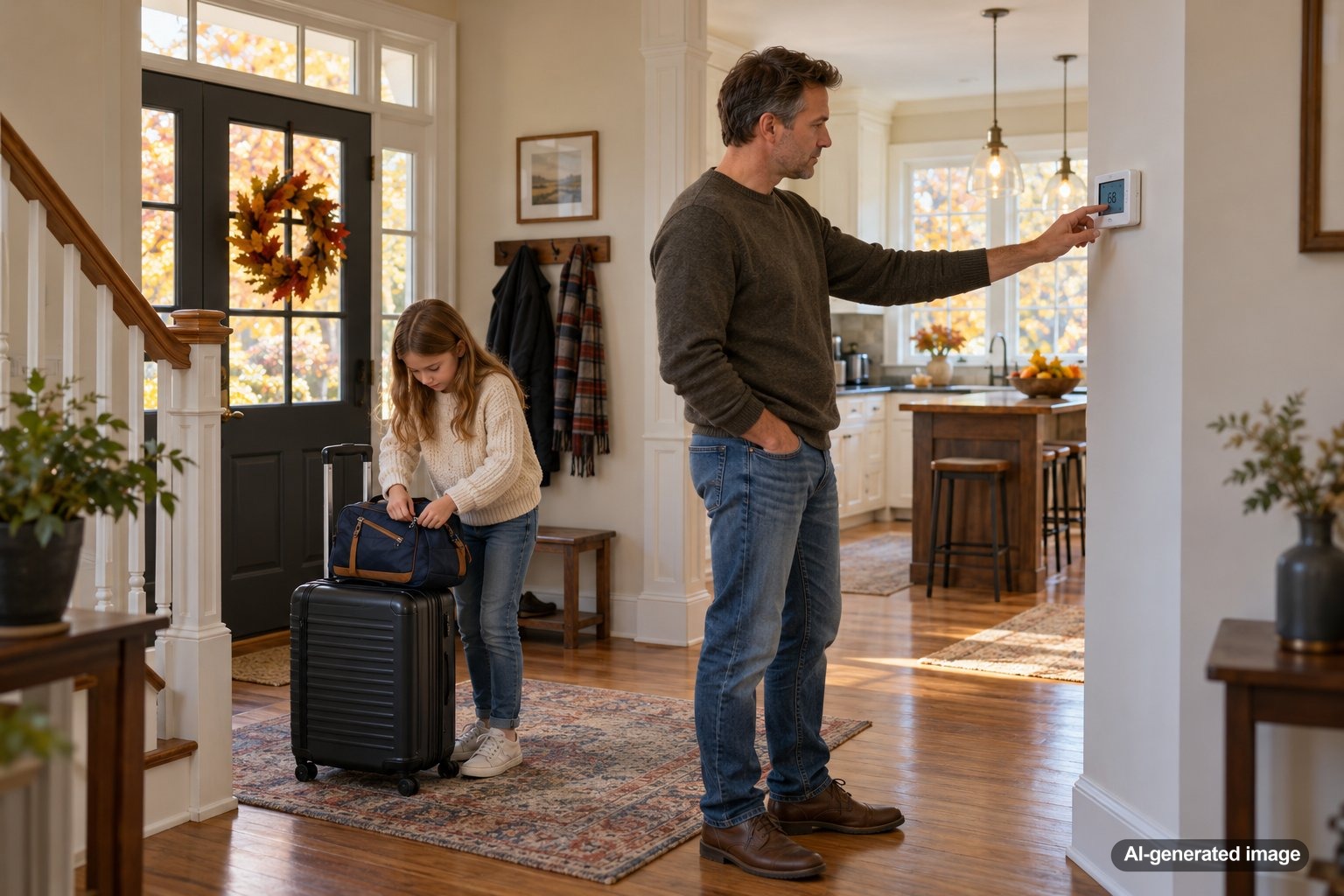
Should you leave the heat on when traveling in October? For most homeowners in Central and Northern New Jersey, the safest approach is to leave the heating system available and lower the thermostat rather than shutting the heat off completely. October weather can be surprisingly unpredictable, with comfortable afternoons followed by chilly nights. Even if your home feels warm when you leave, a sudden temperature drop during a long weekend or weeklong trip can change conditions indoors. A reasonable setback temperature helps protect the house while avoiding unnecessary heating when nobody is home.
The right setting depends on your home’s insulation, heating system, plumbing locations, and how long you’ll be away. Before packing your bags, it is worth checking your thermostat and making sure your heating equipment is ready for colder weather. If your system has not been evaluated recently, professional heating service and maintenance can help identify potential concerns before your trip.
In October, keep your heating system enabled while traveling and use a lower thermostat setting that is appropriate for your home and the forecast.
- For many occupied-season homes, 55 degrees Fahrenheit is commonly treated as a starting point for freeze protection, not a universal guarantee.
- A higher setting, such as 60 to 65 degrees, may be more appropriate for a drafty house, exposed plumbing, sensitive occupants, or uncertain conditions.
- Use a thermostat schedule or vacation mode if your equipment supports it.
- Check the forecast for overnight lows, not just daytime temperatures.
- Arrange for someone to check the property during longer absences, especially if cold weather is expected.
Why Leaving the Heat On Makes Sense in October
October sits between the cooling season and the colder months when heating becomes a daily necessity. In New Jersey, that transition rarely happens at exactly the same pace from one year to the next. Some days still feel like late summer, while overnight temperatures can approach freezing, particularly in cooler inland areas.
When a house is empty, nobody is there to notice a sudden cold snap, a thermostat programming mistake, or a heating system that stops operating. Leaving the heat enabled does not mean maintaining the same temperature you would use when everyone is home. It means allowing the system to respond if indoor temperatures fall below your selected minimum.
This distinction is especially important in older homes with drafty basements, unfinished crawl spaces, or plumbing along exterior walls. Those areas can become colder than the temperature displayed on a centrally located thermostat.
What Temperature Should You Set the Thermostat to While Away?
There is no single thermostat setting that fits every New Jersey home. The commonly suggested minimum of 55 degrees Fahrenheit can be a useful reference for certain properties, but it should not be treated as proof that pipes cannot freeze. Localized cold spots, inadequate insulation, heating equipment problems, and extended freezing conditions can create risks even when the main living area remains above that temperature.
For a short October weekend
If the forecast calls for mild weather throughout your absence, a modest setback may be sufficient. Some homeowners prefer approximately 60 to 65 degrees during fall trips, particularly when nights are chilly but prolonged freezing conditions are not expected. A well-insulated home may require little heating during that period.
For a week or longer
A longer absence calls for a more conservative approach because the forecast can change before you return. Consider the coldest temperatures likely during the trip, whether your heating system is dependable, and whether someone can inspect the house if needed. A thermostat setting around 60 degrees or higher may be appropriate for homes with known cold spots, but the suitable minimum depends on the property.
For homes with vulnerable plumbing
Basement pipes, crawl-space plumbing, exterior-wall supply lines, and poorly insulated utility areas deserve extra attention. If your home has experienced frozen pipes before, do not assume that a low thermostat setting alone will provide adequate protection. Consult a qualified plumbing or heating professional about the conditions in those areas and the appropriate precautions.
Should You Turn the Furnace or Boiler Off Completely?
Generally, turning off the heating system completely is not the best choice when a property will be unattended during potentially cold October weather. With the thermostat set to heat, the system can operate automatically when the indoor temperature drops. With the equipment switched off, that automatic protection is unavailable.
The distinction matters for both furnaces and boilers. A forced-air furnace distributes heated air through ductwork, while a boiler may supply radiators, baseboard heating, or radiant floors. Some hydronic systems also contain water-filled components in areas that may be vulnerable to freezing. Each system has its own operating requirements, and some installations include special freeze-protection controls.
Homeowners with heat pumps should also avoid assuming that a large setback is always the most efficient choice. Depending on the thermostat and system configuration, recovering from a deep setback may engage auxiliary heat or take longer than expected. Follow the equipment manufacturer’s recommendations and ask your HVAC professional about an appropriate vacation schedule.
For any heating system, leaving the thermostat operational is only one part of protecting the property. The equipment must be in working condition, have its required power or fuel supply, and be able to distribute heat where it is needed.
How October Weather Changes the Decision
New Jersey homeowners should pay particular attention to overnight temperatures and the possibility of a sudden cold front. Afternoon highs alone do not tell the full story.
Mild days and cool nights
When the daytime temperature remains comfortable but nights turn chilly, an automatic heating setting can provide a practical compromise. The equipment may remain off for much of the day and operate only when necessary to maintain your selected indoor minimum.
Near-freezing overnight temperatures
When lows are expected near freezing, leaving the heating system enabled becomes more important. Review whether your thermostat setting is suitable for the house, particularly if plumbing runs through unconditioned or poorly insulated spaces.
An early-season cold snap
A sharp temperature change can expose heating problems that have gone unnoticed since spring. A furnace that operated properly months earlier may still have a dirty filter, an ignition issue, or another condition requiring professional attention. If your heating equipment has not been tested this season, avoid making departure day its first trial run.
How to Prepare Your Heating System Before an October Trip
A few straightforward checks can make a noticeable difference when leaving the house unattended. These steps do not replace professional maintenance, but they can help identify obvious issues before you leave.
- Test the heat early. Turn on the heating system before departure and confirm that it operates normally and the indoor temperature responds.
- Check thermostat settings. Confirm the correct operating mode, schedule, temperature, and vacation settings.
- Inspect the air filter. If you have a forced-air system, replace a dirty filter according to the manufacturer’s instructions.
- Keep vents and returns clear. Avoid blocking airflow with furniture, storage boxes, or closed-off return openings.
- Check thermostat batteries if applicable. Replace weak batteries and verify the display and controls are functioning.
- Review the forecast. Pay attention to the coldest expected overnight temperatures during the entire trip.
- Arrange a home check. Ask a trusted person to inspect the property if you will be away for an extended period.
If you notice unusual noises, unreliable ignition, persistent temperature problems, or repeated cycling during your test, schedule a professional inspection instead of assuming the equipment will work normally throughout your absence. Never bypass safety controls or attempt repairs involving electrical wiring, gas components, or combustion equipment.
Can a Smart Thermostat Help While You Travel?
A smart thermostat can make vacation temperature management more convenient, especially when the forecast changes after you leave. Many models offer scheduling, remote adjustments, and alerts, although individual capabilities vary.
For example, you might choose a moderate setback for a three-day trip and schedule a return to your usual comfort setting shortly before arriving home. If colder weather is predicted, compatible remote controls may let you adjust the thermostat without asking someone to visit the house.
However, remote access depends on electricity, an operating heating system, and often a functioning internet connection. A thermostat that displays a heating command does not necessarily confirm that every room is warm enough or that the furnace or boiler is performing correctly. Remote temperature sensors and alerts can provide additional information where supported, but they are not substitutes for reliable equipment or property inspections.
If you are considering updated controls, Meyer & Depew offers information about thermostat options that can support everyday comfort and temperature management.
Other Home Protection Issues to Consider
Thermostat settings are only part of the preparation for an unattended home. Before leaving, think about any conditions that could become problems if nobody is present to notice them.
Plumbing in cold areas
If pipes run along exterior walls, through crawl spaces, or in drafty utility rooms, maintaining the temperature in the main living area may not be enough to protect them. A licensed plumber can recommend appropriate insulation, water shutoff practices, or other precautions based on your home. Do not drain a hydronic heating system or shut off water supplies serving heating equipment without qualified guidance.
Power interruptions
Most modern furnaces, boilers, and heat pumps require electricity to operate their controls and other components. Even gas-fired heating equipment generally cannot provide normal automatic heat during an electrical outage. Consider how a prolonged outage would affect your property and arrange for someone to check it when severe weather is expected.
Home insurance and property requirements
Some insurance policies and property agreements include conditions related to maintaining heat, inspecting vacant homes, or taking precautions against freezing. Check your specific documents rather than assuming that a commonly recommended thermostat temperature satisfies every requirement.
Pets, plants, and other temperature-sensitive items
A temperature that protects an empty building may be inappropriate when pets remain at home or when plants and stored materials have special temperature requirements. Set the thermostat according to those needs and arrange suitable care and monitoring.
When Should You Schedule HVAC Service Before Traveling?
If your heating system is struggling to start, failing to reach the thermostat setting, producing unfamiliar noises, or operating inconsistently, it deserves attention before the property is left unattended. The same applies if you have noticed cold rooms, repeated system shutdowns, or an unexpected change in airflow.
Fall is also a practical time for preventive heating maintenance. A qualified technician can evaluate system operation, inspect relevant components, and identify conditions that may require correction. Maintenance cannot guarantee uninterrupted operation, but it can reduce uncertainty before colder weather arrives.
If you smell gas, leave the area and contact your gas utility or emergency services from a safe location. If a carbon monoxide alarm sounds, follow its emergency instructions, evacuate, and contact emergency services. Do not remain inside to troubleshoot the equipment yourself.
Frequently Asked Questions
Is 55 degrees warm enough for a vacant house in October?
It may be an appropriate minimum for some homes, but it is not a universal safe setting. Pipes in poorly insulated areas can become much colder than the thermostat location. A higher setting may be necessary depending on the forecast, building conditions, and plumbing layout.
Does leaving the heat on waste energy when nobody is home?
Maintaining a lower indoor temperature generally reduces heating demand compared with keeping the home at its usual occupied setting. The appropriate setback depends on the heating equipment, home construction, and freeze-protection needs. Turning the system off entirely may expose the property to avoidable risks during cold weather.
Should I close all the heating vents before leaving?
No. Closing many supply vents or blocking return-air openings can interfere with airflow in a forced-air heating system. Leave vents appropriately open and follow the guidance for your equipment and any professionally designed zoning system.
Can I turn the heat off if the October forecast looks warm?
A short period of reliably mild weather may mean your heating system rarely needs to operate, even when enabled. Leaving it available is usually the more practical choice because forecasts can change and indoor temperatures may differ from outdoor conditions. Property-specific risks should guide the decision.
Should I raise the thermostat before coming home?
You can schedule a gradual return to your normal comfort setting if your thermostat and heating equipment support it. Heat pump owners should follow their system’s setback guidance to avoid unnecessary auxiliary heating where applicable. There is usually no need to set a thermostat much higher than the desired temperature in an attempt to make the house warm faster.
The Bottom Line for New Jersey Homeowners
For most October trips, leave your heating system enabled and choose a sensible lower thermostat setting instead of shutting the heat off completely. Consider the coldest possible overnight temperatures, vulnerable plumbing, your system’s condition, and how long the home will be unattended. Test the heating equipment before leaving, and have a plan for checking the property if unexpected cold weather or an outage occurs.
A little preparation before a fall getaway can help you return to a comfortable home without discovering a heating problem that developed while you were away.
Want to make HVAC maintenance easier to stay on top of?
A service plan can help keep routine heating and cooling maintenance on your calendar before small issues become bigger headaches.
You can also request a service appointment.