



How Does a Condensate Neutralizer Work on a High-Efficiency Furnace?
Estimated reading time: 9 minutes
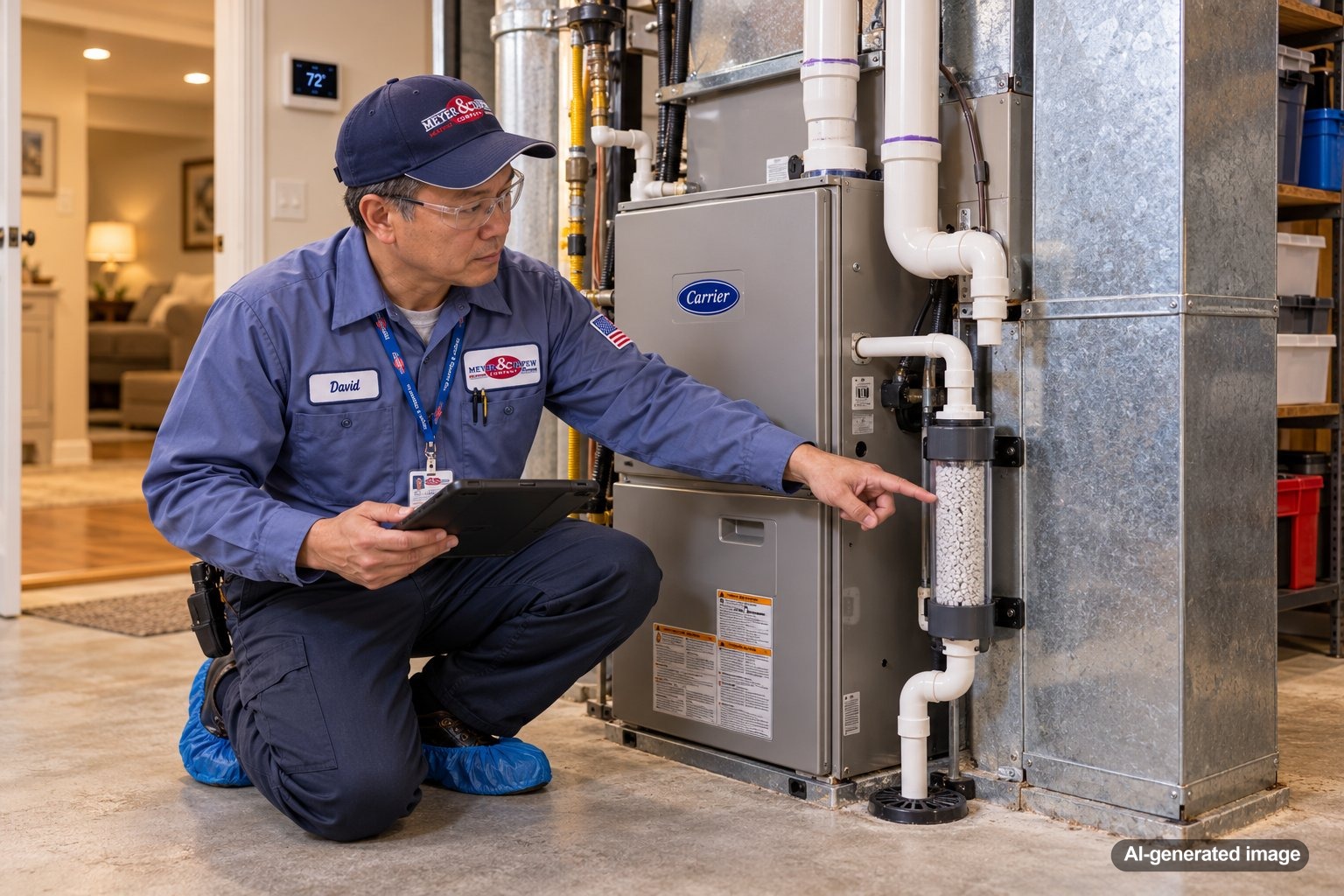
A high-efficiency furnace can heat your home while using more of the energy available from its fuel, but that efficiency creates an important plumbing consideration. As the furnace extracts additional heat from combustion gases, water vapor condenses into liquid. That liquid is typically acidic, which means it may need treatment before entering certain drain systems. A condensate neutralizer handles this job by allowing the acidic water to pass through a special mineral material that raises its pH before it leaves the furnace drainage system.
For homeowners in Central and Northern New Jersey, understanding this small component can help explain why a modern furnace installation may include equipment that an older furnace never needed. Whether you are considering a replacement or maintaining an existing system, proper condensate management is part of reliable home heating.
A furnace condensate neutralizer is a device containing an alkaline mineral medium, commonly limestone or calcium carbonate. Acidic water produced by a condensing furnace flows through the medium, where a chemical reaction reduces its acidity. The treated water then continues to an approved drain or condensate pump. The medium gradually dissolves or becomes depleted and must be inspected and replaced according to the manufacturer’s instructions.
Why Does a High-Efficiency Furnace Produce Acidic Water?
Conventional gas furnaces release combustion gases through a vent while those gases are still relatively hot. High-efficiency condensing furnaces use an additional heat exchanger to capture more heat before the exhaust leaves the equipment.
As the combustion gases cool, some of their water vapor changes into liquid water. This is called condensate. The furnace collects that liquid and directs it through a drainage system.
Because combustion-related compounds dissolve into the water, furnace condensate can be acidic. Its exact pH varies with the equipment, fuel, operating conditions, and other factors. The important distinction is that furnace condensate is not necessarily equivalent to ordinary tap water.
Over time, untreated acidic condensate can contribute to deterioration of vulnerable drainage materials. Whether neutralization is required depends on the installation, applicable plumbing requirements, equipment instructions, and the materials receiving the discharge.
How the Condensate Neutralizer Actually Works
Most residential furnace condensate neutralizers use a straightforward process. They contain a bed of alkaline material inside a corrosion-resistant housing. The housing is installed in the condensate drainage path where its position and flow arrangement meet the manufacturer’s requirements.
Step 1: Acidic Condensate Enters the Housing
Water leaving the furnace’s condensate collection system enters the neutralizer through an inlet connection. Depending on the installation, the liquid may move by gravity or travel through a system that incorporates a condensate pump.
The arrangement matters. A neutralizer should not interfere with the furnace’s required condensate trap, drainage slope, venting provisions, or safety controls. Some installations place the neutralizer before a pump, while others use components specifically approved for a different arrangement.
Step 2: The Water Contacts Alkaline Minerals
Inside the cartridge or housing, the water passes over material such as calcium carbonate. The acidic compounds react with the alkaline minerals, consuming some of the acidity and increasing the water’s pH.
Think of the mineral bed as a treatment medium rather than a filter that simply traps dirt. The material participates in a chemical reaction. As it reacts, some of it is consumed.
Contact time also matters. If condensate travels through the media too quickly, bypasses part of the bed, or encounters severely depleted material, the unit may not achieve the intended treatment level.
Step 3: Treated Condensate Leaves the Device
After moving through the media, the condensate exits the neutralizer and continues toward an approved discharge location. The goal is to bring the water into the pH range required for the particular installation and applicable discharge rules.
A neutralizer does not eliminate the water, and it does not replace proper drainage. It simply changes the characteristics of the condensate before discharge.
Does Every High-Efficiency Furnace Need a Neutralizer?
Not necessarily. A condensing furnace produces condensate, but the requirement for a neutralizer depends on several installation details.
- Local plumbing requirements: Applicable codes and discharge rules may establish when neutralization is necessary.
- Drainage materials: Some piping materials are more vulnerable to acidic water than others.
- Discharge destination: A connection to a sanitary drain may have different requirements from another approved discharge arrangement.
- Equipment instructions: Furnace and neutralizer manufacturers may specify particular installation or treatment requirements.
- Combined condensate sources: An installation collecting water from multiple appliances may need a different neutralizer capacity.
For example, a modern furnace connected to an older drainage system may raise compatibility questions that would not exist with an entirely different piping arrangement. A qualified installer should evaluate the actual discharge path instead of assuming every house needs the same setup.
What Happens When Neutralizer Media Wears Out?
Neutralizer media is a consumable material. As acidic condensate reacts with the minerals, the available treatment capacity decreases. The housing may still look normal from the outside even when its contents are no longer performing adequately.
Depending on the design, the media may gradually shrink, break down, collect deposits, or become less effective. Some cartridges are replaced as complete units, while serviceable housings allow the mineral material to be replenished.
A depleted neutralizer may allow condensate to leave at a lower pH than intended. However, poor neutralization does not always create an obvious furnace performance problem. A heating system can continue operating while condensate treatment requires attention.
Restricted drainage presents a separate concern. Mineral residue, sediment, or accumulated deposits may interfere with the flow of water through the neutralizer or associated piping. If condensate cannot drain properly, it may collect inside the furnace’s drainage system and potentially trigger a safety shutdown.
How Often Should a Furnace Condensate Neutralizer Be Serviced?
There is no universal replacement interval that applies to every installation. The appropriate schedule depends on the neutralizer model, mineral composition, condensate volume, furnace operating hours, and manufacturer recommendations.
A furnace that runs extensively during a long New Jersey heating season may generate more condensate than one used less frequently. That does not automatically establish how quickly the media will be exhausted, but it illustrates why maintenance should reflect actual equipment conditions.
During professional heating service and maintenance, a technician can evaluate the condensate system and determine whether the neutralizer needs attention.
Depending on the equipment and service requirements, this may include checking drainage, inspecting the media condition, evaluating for restrictions or leaks, and measuring the treated condensate pH with an appropriate test method.
Simply looking at the amount of material remaining may not provide a complete picture of how effectively the device is working.
Important Installation Details Homeowners Often Overlook
Neutralizer Capacity Must Match the Application
Neutralizers are available in different sizes and configurations. A unit must be appropriate for the condensate volume and characteristics of the connected equipment. An undersized device may provide inadequate treatment, particularly when multiple appliances share a drainage arrangement.
Condensate Must Still Drain Freely
Gravity drainage requires suitable piping arrangements and slope. If the furnace is below the available drain connection, a condensate pump may be necessary. The neutralizer must be compatible with the proposed layout and should not create excessive restriction or backpressure.
Neutralization Does Not Replace a Condensate Trap
A condensate trap and a neutralizer perform different jobs. Where required by the furnace design, the trap supports proper drainage and pressure separation within the equipment. The neutralizer treats the acidity of the water. Installing one does not eliminate the need for the other.
Service Access Is Part of Good Installation
A neutralizer tucked behind inaccessible equipment can make routine inspection unnecessarily difficult. Technicians should be able to reach the unit for appropriate testing and media replacement without disturbing unrelated furnace components.
What Can Homeowners Safely Check?
Most condensate neutralizer maintenance is best handled by an HVAC professional. Homeowners can still watch for visible conditions that suggest the drainage system deserves attention.
- Look for visible water around the furnace or condensate pump without opening equipment panels.
- Notice whether the furnace repeatedly shuts off or displays a fault message.
- Check for obvious external drain line damage, disconnections, or leaks.
- Keep stored belongings away from accessible condensate components and service areas.
- Review maintenance records to see when the neutralizer was last inspected or serviced.
Do not disconnect condensate piping, open sealed furnace compartments, remove safety switches, or attempt to modify the drainage configuration. If water is leaking near electrical equipment, avoid contact and arrange qualified service. A neutralizer should also never be bypassed simply because its media needs replacement.
When Should You Call an HVAC Professional?
Professional evaluation is appropriate if you notice recurring water near the furnace, a condensate pump that runs unusually, drainage-related shutdowns, damaged piping, or a neutralizer with unknown service history.
It is also worth asking about condensate management when replacing an older furnace with a high-efficiency condensing model. The existing drain arrangement may need changes even when the new furnace fits within the same general equipment area.
A qualified technician can assess the furnace’s condensate production, applicable installation requirements, drain materials, neutralizer capacity, and ongoing maintenance needs. These details are especially important in older New Jersey homes where heating equipment and plumbing may have been updated at different times.
Frequently Asked Questions About Furnace Condensate Neutralizers
Can a Furnace Run Without a Condensate Neutralizer?
Some installations are designed and approved without one. However, removing or bypassing a neutralizer from an installation that requires it can expose drainage components to untreated acidic condensate and create code or manufacturer-compliance concerns. A technician should determine what is appropriate for the specific system.
Does a Neutralizer Make Furnace Condensate Safe to Drink?
No. A condensate neutralizer is intended to adjust acidity for appropriate discharge. It is not a drinking-water treatment device, and furnace condensate should not be used as potable water.
Can a Clogged Neutralizer Shut Down the Furnace?
Potentially. If a blockage prevents condensate from draining, a properly equipped furnace may shut down through a condensate overflow or related safety control. Other drainage issues can produce similar symptoms, so professional diagnosis is important.
Is a Condensate Neutralizer the Same as a Condensate Pump?
No. A neutralizer changes the acidity of condensate, while a pump moves the water to a suitable discharge point when gravity drainage is not practical. Some systems use both components.
Can the Neutralizer Media Be Replaced Without Changing the Whole Unit?
That depends on the design. Certain neutralizers have refillable housings, while others use replaceable cartridges or complete assemblies. The correct media type and service procedure should follow the manufacturer’s instructions.
The Bottom Line on Furnace Condensate Neutralizers
A condensate neutralizer is a relatively simple device with an important purpose. It uses alkaline minerals to reduce the acidity of water produced by a high-efficiency condensing furnace before that water enters the approved drainage system.
Proper sizing, installation, drainage, and periodic media replacement all affect how well it performs. If you are upgrading your furnace or are unsure whether an existing neutralizer is functioning correctly, a professional inspection can clarify what your system needs.
Need help with your heating, cooling, or HVAC system?
Meyer & Depew serves homeowners and businesses throughout Central and Northern New Jersey.
Get a quote or call 908.272.2100.