



Why Does a Heat Pump Need a Drainage Plan for Winter Defrost Water? Prevent Ice Buildup and Protect Your Heating System
Estimated reading time: 11 minutes
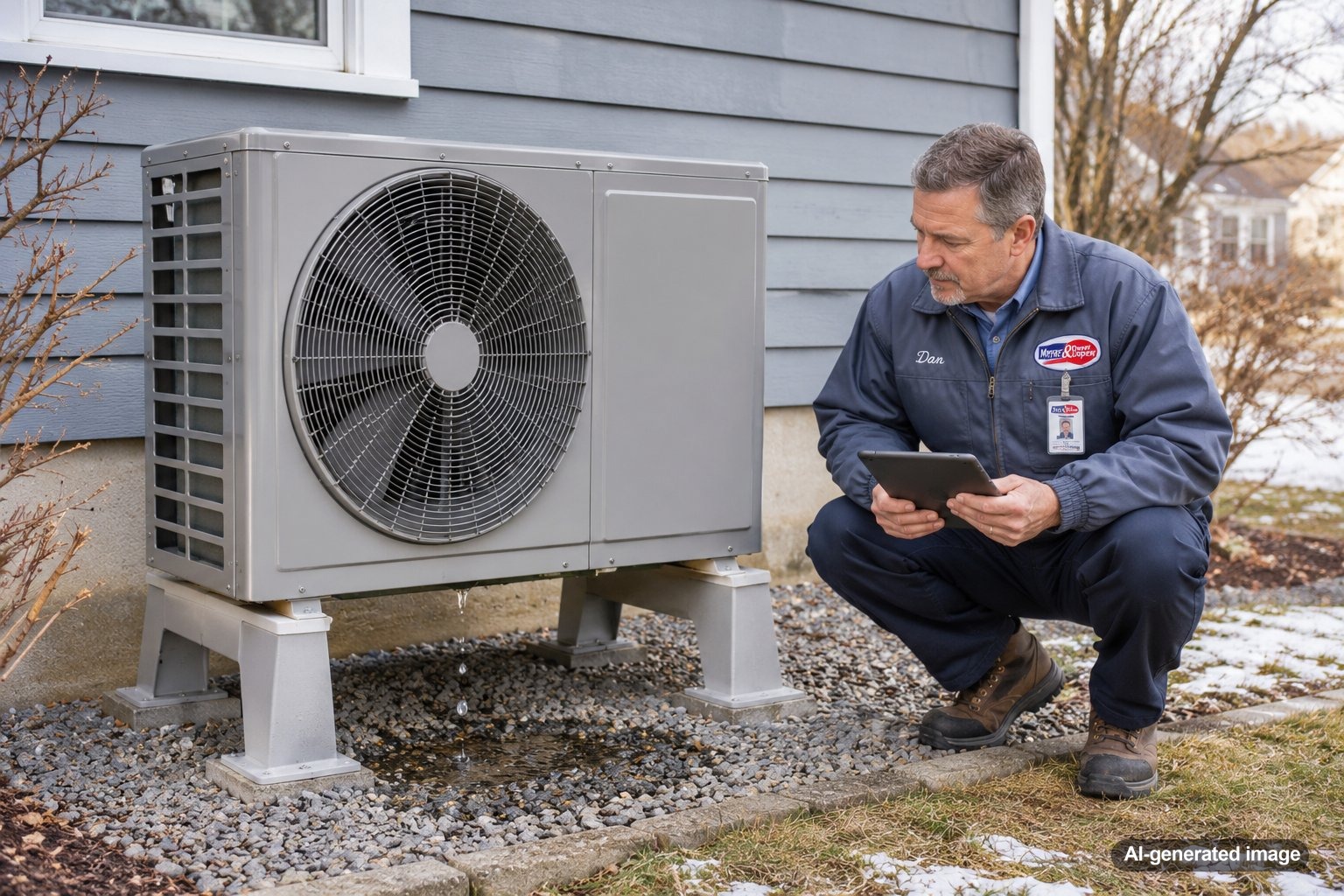
A heat pump needs a drainage plan for winter defrost water because the moisture released during normal defrost cycles can freeze beneath and around the outdoor unit. Without adequate drainage, repeated freezing can create an expanding layer of ice that interferes with airflow, obstructs equipment drainage openings, damages components, and creates slippery conditions near walkways. The heat pump may be operating exactly as designed while the area surrounding it gradually becomes a problem.
Throughout Central and Northern New Jersey, winter temperatures frequently move above and below freezing. These conditions make outdoor equipment placement, mounting height, and drainage particularly important. Whether you are installing a new heat pump or maintaining an existing system, understanding where defrost water goes can help you avoid preventable winter heating complications.
Heat pumps periodically melt frost from their outdoor coils during heating operation. The resulting water needs a clear path away from the equipment before it freezes again. Proper installation accounts for mounting height, ground conditions, snow accumulation, drainage openings, and nearby pedestrian areas.
Where Does Winter Heat Pump Defrost Water Come From?
During heating operation, an air-source heat pump extracts thermal energy from outdoor air. Its outdoor coil can become colder than the surrounding air, allowing atmospheric moisture to condense and freeze on the coil surface.
This frost formation is a normal part of cold-weather heat pump operation. However, accumulated frost restricts airflow and reduces the system’s ability to collect heat.
To address this, the heat pump periodically enters a defrost cycle. Most conventional air-source heat pumps temporarily reverse their refrigeration cycle to warm the outdoor coil. Frost melts, and water drains through the bottom of the outdoor unit.
You might notice dripping water, a temporary change in operating sounds, or a cloud of water vapor rising from the equipment during this process. These observations are not necessarily signs of equipment failure.
The concern begins when melted frost has nowhere suitable to go. A professional heating system maintenance visit can help distinguish normal defrost activity from drainage or equipment problems.
What Happens When Defrost Water Freezes Beneath a Heat Pump?
A single defrost cycle may leave only a modest amount of water beneath an outdoor unit. During extended periods of freezing weather, however, repeated cycles can deposit additional water onto an already frozen surface.
Instead of draining away, each new release of water may freeze over the previous layer. The resulting ice formation can grow upward toward the equipment or spread outward across the surrounding ground.
Ice Can Block Equipment Drainage Openings
Outdoor heat pump cabinets typically incorporate openings that allow water to escape. If ice accumulates against the underside of the cabinet, these openings may become obstructed.
Subsequent defrost water can then collect inside the base of the unit and refreeze. Depending on the equipment design, this may expose internal components to additional ice buildup.
Ice Can Interfere With Outdoor Fan Operation
In severe cases, accumulated ice may reach areas near the outdoor fan or other moving components. This can create unusual noises, interfere with normal operation, and potentially damage equipment.
Ice near moving components is not something homeowners should attempt to remove themselves.
Airflow Can Become Restricted
Heat pumps depend on adequate outdoor airflow during heating operation. Ice and snow accumulating around the cabinet can restrict airflow, particularly when the equipment is mounted close to the ground.
Restricted airflow may contribute to reduced heating performance and additional operating difficulties.
Nearby Walkways Can Become Slippery
Equipment protection is only one reason to manage defrost water. An outdoor unit located beside a driveway, patio, exterior staircase, or frequently used walkway can discharge water into areas where people regularly travel.
Water that appears harmless during an afternoon thaw may become a slippery sheet of ice after temperatures fall overnight.
Why New Jersey Winters Make Heat Pump Drainage Particularly Important
Extremely cold weather is not the only condition that creates defrost drainage problems. Damp weather near the freezing point can also encourage frost formation on outdoor heat pump coils.
New Jersey homeowners may experience several challenging conditions within the same winter weather pattern:
- Cold, damp mornings that encourage frost formation.
- Afternoon temperatures that temporarily allow accumulated ice to melt.
- Overnight temperature drops that cause standing water to refreeze.
- Snowfall that obstructs drainage paths around outdoor equipment.
- Freezing rain that adds ice to already frozen surfaces.
- Periods when frozen soil absorbs very little additional water.
A drainage arrangement that performs adequately during mild weather may behave very differently when the ground is frozen and surrounded by snow.
What Should a Heat Pump Winter Drainage Plan Include?
Effective drainage involves more than placing the outdoor unit on a level equipment pad. The installation must account for how the equipment, supporting surface, surrounding landscape, and winter weather interact.
Adequate Equipment Elevation
Outdoor heat pumps may require elevated mounting above the supporting surface to accommodate defrost drainage, expected snow accumulation, and manufacturer-specified clearances.
Suitable mounting arrangements depend on the equipment design, installation location, structural support, and local conditions. There is no universal mounting height that is appropriate for every heat pump.
An equipment stand or approved mounting system can provide space for water to escape without immediately encountering ice or snow at the bottom of the cabinet.
A Suitable Surface Beneath the Equipment
Concrete, gravel, soil, and paved surfaces all handle water differently.
A solid concrete pad may provide excellent structural support but allow water to collect if the surrounding drainage conditions are unfavorable. A properly designed gravel drainage area may help distribute water, although frozen ground beneath it can still limit drainage.
The objective is to maintain stable equipment support while providing an appropriate destination for released water.
A Drainage Path Away From the Home
Defrost water should not routinely collect against the home’s foundation, basement window wells, exterior door thresholds, or other moisture-sensitive areas.
Existing landscape grading is an important consideration, particularly when an outdoor unit is installed close to the house. Moving water away from the heat pump should not simply transfer the problem to another vulnerable part of the property.
Protection From Roof Runoff
A heat pump positioned beneath a roof edge, overflowing gutter, or downspout may receive additional water unrelated to its own defrost cycle.
Roof runoff can substantially complicate winter ice conditions around outdoor equipment. A technician evaluating persistent ice buildup should consider whether the water originates from the heat pump, surrounding structures, or both.
Allowance for Snow Accumulation
Even a well-designed drainage area can become ineffective if snow piles block the intended water path.
Equipment placement should consider naturally occurring snowdrifts and areas where snow is commonly deposited during driveway or walkway clearing.
Does Every Heat Pump Need a Defrost Drain Pipe?
No. A drainage plan does not necessarily mean installing a drain pipe or attaching a hose to the outdoor unit.
Many outdoor heat pumps are designed to release defrost water directly through multiple openings in the base of the equipment. In cold climates, unrestricted drainage may be preferable to collecting water in a narrow pipe that could freeze.
Some equipment designs offer manufacturer-approved drainage accessories or base pan heaters. These may be appropriate for particular installations, but their suitability depends on the specific model and operating conditions.
A conventional unheated drain hose can become blocked with ice, potentially making the drainage problem worse rather than better. Certain manufacturers also restrict the use of drain fittings in freezing environments.
Homeowners should avoid attaching aftermarket drain hoses, sealing cabinet openings, or installing improvised heating elements. Drainage accessories should be selected and installed according to the equipment manufacturer’s requirements by a qualified HVAC professional.
Different Installation Locations Create Different Drainage Challenges
Ground-Mounted Heat Pumps
Ground-mounted systems need adequate clearance above the supporting surface and consideration of soil drainage, frozen ground, snow accumulation, and equipment stability.
A low spot in the landscape may encourage water to collect directly beneath the outdoor unit.
Wall-Mounted Heat Pumps
Wall-mounted systems can provide additional clearance above snow and ice. However, the water still needs somewhere appropriate to fall.
An elevated unit mounted above a walkway or basement entrance can create an icing problem below it even when the equipment itself remains clear.
Heat Pumps Installed Beside Patios or Driveways
Hard surfaces can allow defrost water to travel considerable distances before freezing. A slight pavement slope toward a frequently used walking area can create recurring winter hazards.
Evaluating the direction of runoff is particularly important in these installations.
Multiple Outdoor Heat Pump Units
Properties with several outdoor units may have multiple sources of defrost water within a relatively small area. A drainage arrangement suitable for one unit may not adequately accommodate several systems releasing water into the same location.
Equipment spacing and shared drainage conditions deserve attention when planning these installations.
How Can You Tell Normal Defrost Water From a Drainage Problem?
Seeing water beneath a heat pump during winter does not automatically mean something is wrong. The location, persistence, and extent of the resulting ice provide more useful clues.
- Usually normal: Water dripping beneath the outdoor unit during or shortly after a defrost cycle.
- Usually normal: Temporary water vapor rising from the outdoor coil during defrost.
- Worth monitoring: A small amount of ice forming on the ground while equipment clearances remain unobstructed.
- Potential drainage problem: Ice growing upward toward the bottom of the cabinet.
- Potential drainage problem: Repeated ice formation across nearby walkways or stairs.
- Requires professional evaluation: Persistent heavy ice inside the cabinet, unusual fan noises, or noticeable heating performance problems.
A persistent coating of ice across the outdoor coil that does not clear during normal defrost operation may also indicate a separate equipment issue. Drainage improvements alone may not resolve a malfunctioning defrost system.
What Homeowners Can Safely Check During Winter
- Observe the outdoor unit from a safe, accessible location.
- Look for visible ice accumulating beneath the equipment.
- Check whether surrounding snow is blocking open areas around the unit.
- Keep loose snow away from the surrounding ground when it is safe to do so, maintaining manufacturer-required equipment clearances.
- Notice whether roof runoff or nearby downspouts are contributing additional water.
- Watch for recurring ice formation on nearby walking surfaces.
- Take photographs of developing ice buildup to share with your HVAC technician.
Never chip ice away from the heat pump cabinet with a hammer, shovel, or sharp object. Avoid pouring boiling water over the equipment, applying chemical ice-melting products directly to it, or attempting to force the system into defrost mode.
These actions can damage components or create additional safety concerns without correcting the underlying problem.
Can an Existing Heat Pump Installation Be Improved?
Yes. Depending on the installation, equipment condition, and site limitations, a qualified HVAC contractor may identify practical ways to improve winter drainage.
Potential improvements include evaluating equipment elevation, correcting surrounding drainage conditions, addressing nearby water sources, and determining whether manufacturer-approved cold-weather accessories are appropriate.
Raising or relocating an existing heat pump is not a simple landscaping project. The equipment is connected to refrigerant lines, electrical wiring, and other system components. Changes to its mounting arrangement require professional assessment.
In some situations, the most useful improvement may involve addressing the landscape around the equipment rather than modifying the heat pump itself.
When Should You Call an HVAC Professional?
Arrange professional service if ice repeatedly reaches the bottom of the outdoor cabinet, appears to obstruct drainage openings, or accumulates around moving components.
Other reasons to request an evaluation include abnormal grinding or scraping sounds, persistent coil icing, declining indoor comfort, and unusually frequent reliance on supplemental heating.
If ice is interfering with the fan or the equipment appears physically damaged, avoid attempting to remove the obstruction yourself. If it is safe to do so, turn the system off at the thermostat and contact a qualified HVAC professional for guidance.
For homeowners considering a new heat pump, drainage should be discussed before the equipment location and mounting arrangement are finalized. Planning for winter conditions during installation is often easier than addressing recurring ice problems afterward.
Frequently Asked Questions About Heat Pump Winter Defrost Drainage
Is it normal for a heat pump to drip water in winter?
Yes. Water released during a defrost cycle is a normal result of melting frost from the outdoor coil. Persistent ice buildup that obstructs equipment drainage or airflow, however, warrants professional attention.
How much water does a heat pump produce during defrost?
The amount varies with outdoor temperature, humidity, equipment size, operating conditions, and the amount of frost accumulated on the coil. There is no single expected water volume that applies to every system.
Will a base pan heater eliminate ice underneath my heat pump?
Not necessarily. A manufacturer-approved base pan heater may help reduce freezing within designated areas of the equipment, but it does not automatically prevent discharged water from freezing on the ground. External drainage remains important.
Should I put a tray underneath my heat pump to collect winter defrost water?
Not without professional guidance. An improvised collection tray may retain water that subsequently freezes, obstruct drainage, or reduce necessary equipment clearance. Consult the equipment manufacturer’s instructions and an HVAC professional.
Does a cold-climate heat pump still need winter drainage?
Yes. Cold-climate heat pumps are designed to provide heating in lower outdoor temperatures, but they can still accumulate frost and require defrost cycles. Proper equipment placement and drainage remain important parts of installation.
Winter Drainage Is Part of a Reliable Heat Pump Installation
Defrost water is a predictable consequence of normal heat pump operation, not an unexpected inconvenience. A well-planned installation considers where that water will travel during freezing temperatures, how snow will affect drainage, and whether surrounding surfaces can safely accommodate runoff.
For New Jersey homeowners, addressing these details before recurring ice problems develop can help protect equipment, maintain appropriate airflow, and reduce avoidable winter maintenance concerns.
Need help with your heating, cooling, or HVAC system?
Meyer & Depew serves homeowners and businesses throughout Central and Northern New Jersey.
Get a quote or call 908.272.2100.