



Why Do Some Ducts Pop Only After Long Heating Cycles?
Estimated reading time: 11 minutes
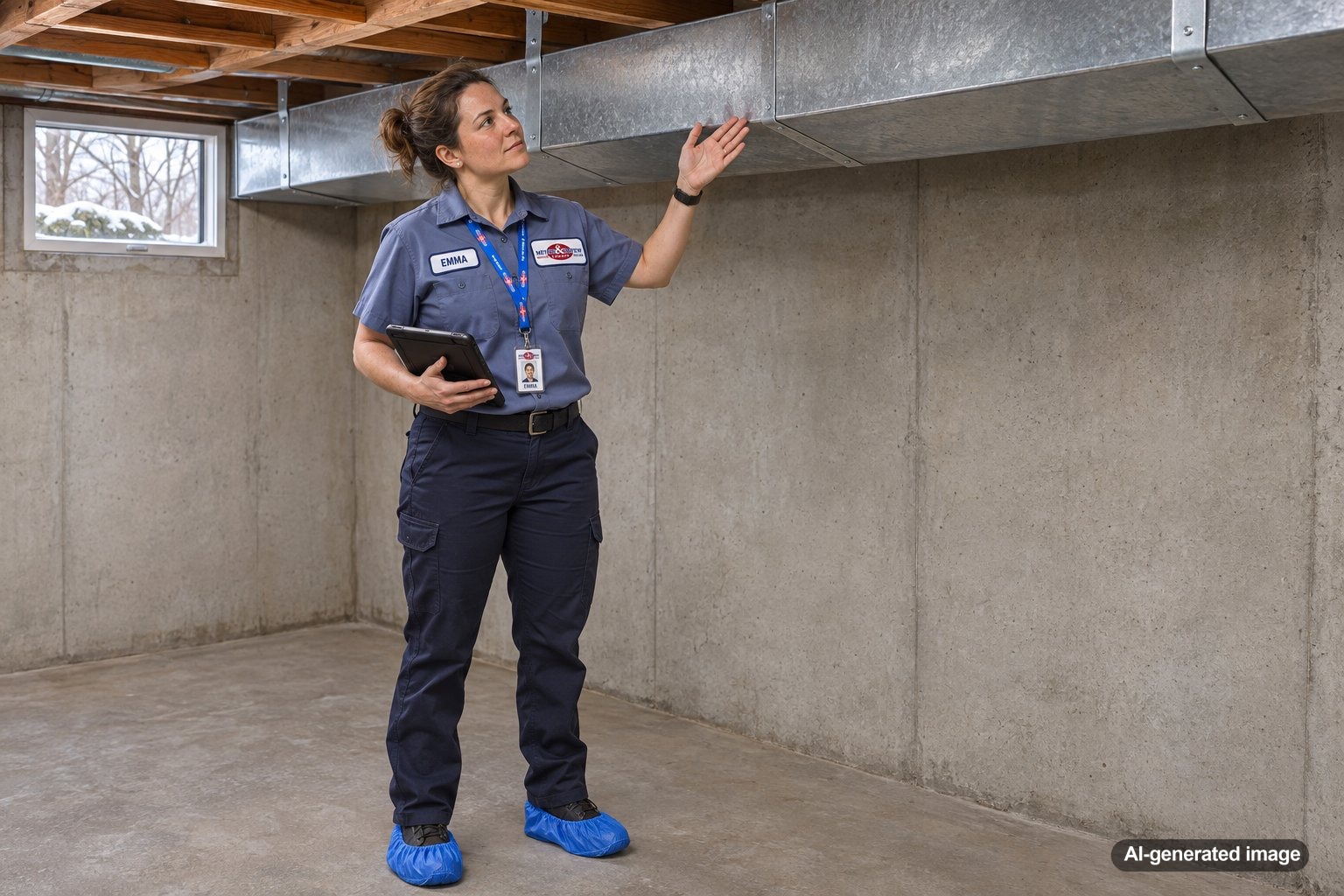
Your furnace has been running quietly for the better part of an hour when a surprisingly loud pop suddenly comes from somewhere beneath the floor or behind a wall. Nothing appears to be wrong with the heat, yet the noise returns whenever the system runs for an extended period. Ducts that pop only after long heating cycles often do so because sheet metal gradually expands, accumulates mechanical stress, and eventually flexes or shifts. Air pressure, duct construction, and the way the ductwork is supported can all influence when that sound occurs.
For homeowners throughout Central and Northern New Jersey, these noises may become particularly noticeable during extended periods of cold weather. Understanding why the timing matters can help distinguish ordinary thermal movement from an airflow or ductwork problem that deserves professional attention.
Ductwork may pop after a long heating cycle because sustained exposure to warm air allows metal panels to expand enough to suddenly change shape or move against their supports. Elevated duct pressure, insufficient reinforcement, and restricted airflow can make the noise more pronounced. Occasional light popping may be harmless, but frequent, loud, or worsening noises should be investigated.
Why Ductwork Does Not Always Pop Immediately
When a furnace or forced-air heat pump begins heating your home, warm air travels through the supply ducts. The air temperature changes relatively quickly, but the surrounding metal, mounting hardware, and building materials respond at different rates.
A short heating cycle might end before a particular section of ductwork becomes warm enough to produce noticeable movement. During a longer cycle, however, heat has more time to spread throughout the metal.
As the duct expands, its movement may be limited by screws, seams, hangers, framing, or connections to other duct sections. Mechanical stress can build gradually until a panel flexes or a connection shifts slightly, releasing that stress in an audible pop.
This delayed reaction explains why a furnace can sound perfectly normal during several short cycles but produce a distinct noise during its longest run of the evening.
The Relationship Between Metal Expansion and Ductwork Noise
Sheet metal expands when heated and contracts as it cools. Although the dimensional changes are generally small, the combined effects across a long stretch of ductwork can be enough to create noticeable sounds.
Consider a rectangular supply duct running beneath the first floor of an older New Jersey home. The duct passes through several supports and connects to smaller branches serving individual rooms. As its temperature rises, different sections may attempt to expand at different rates.
If one section cannot move freely, the resulting stress may cause a flat metal panel to suddenly bow outward or inward.
The sound can resemble a metallic snap, a hollow bang, or someone pressing and releasing the lid of a metal container. The noise itself does not necessarily indicate that the duct has cracked or separated.
Oil Canning: Why Large Duct Panels Suddenly Snap
HVAC professionals sometimes describe this type of sheet metal movement as oil canning. It occurs when a relatively broad, flat metal surface flexes between different shapes.
Rectangular ductwork is particularly susceptible because its flat sides can deflect under pressure and mechanical stress. Large panels with insufficient reinforcement may move more readily than smaller or properly stiffened sections.
Oil canning can occur when the blower starts, while the heating system operates, or when airflow stops. Thermal expansion can also alter the stresses within a panel, making it more likely to snap after an extended heating period.
Several characteristics can make oil canning more noticeable:
- Wide rectangular supply or return ducts with large, flat surfaces.
- Sheet metal that is insufficiently reinforced for the application.
- Long duct runs with limited room for thermal movement.
- Uneven support or existing deformation in duct panels.
- Air pressure that causes duct surfaces to bow during blower operation.
Identifying which panel is moving is often more useful than assuming the entire duct system needs replacement.
What the Timing of the Pop Can Tell You
Not every ductwork noise has the same cause. Paying attention to exactly when the sound occurs can provide useful clues during an HVAC service appointment.
Popping While the Furnace Is Still Heating
A delayed pop during uninterrupted heating may indicate that a duct panel or connection has reached a point where accumulated thermal stress causes sudden movement. Air pressure may also contribute to the panel’s tendency to flex.
A Bang Immediately After the Blower Stops
When the blower stops, pressure differences within the duct system diminish. A panel that was bowed during operation may return to its resting shape, producing a sharp metallic sound.
Popping Several Minutes After Heating Ends
Sounds that continue after both heating and blower operation have ended are more consistent with cooling metal, thermal contraction, or movement where ducts contact surrounding materials.
Noise When the Heating System Changes Output
Some two-stage and variable-capacity HVAC systems change heating output and blower operation during longer calls for heat. Changes in airflow or supply air temperature may trigger duct movement even though the thermostat has not yet reached its setting.
The important distinction is whether the sound follows a temperature change, a blower change, or the end of the heating cycle.
Can Excessive Air Pressure Cause Ducts to Pop?
Yes. Air moving through a duct system creates pressure differences that can cause sheet metal surfaces to deflect. Supply ducts typically operate under positive pressure relative to their surroundings, while return ducts typically operate under negative pressure.
Restricted airflow and duct design problems can create unfavorable pressure conditions in certain parts of the system. These conditions may make otherwise minor thermal movement considerably louder.
Potential contributors include:
- A heavily loaded air filter or an unsuitable replacement filter.
- Multiple closed or obstructed supply registers.
- Furniture blocking return air grilles.
- Undersized or poorly configured ductwork.
- Blower airflow settings that do not match the duct system’s requirements.
- Problems with zoning dampers or their operation.
It is worth noting that a longer heating cycle does not automatically mean duct pressure is increasing. If blower operation remains unchanged, pressure may remain relatively stable while thermal stress continues to develop. In other systems, a change in heating stage or zone configuration may also change airflow and pressure.
Professional heating service and maintenance can help determine whether abnormal airflow conditions are contributing to the noise.
Why the Noise May Be Worse During New Jersey Cold Spells
During particularly cold weather, heating equipment may operate for longer periods to maintain the thermostat setting. Extended operation gives ductwork more time to reach its operating temperature.
Ducts passing through unconditioned basements, attics, or other cooler spaces may also experience more substantial temperature changes between heating cycles.
After sitting cold overnight, for example, a metal supply duct may undergo considerable thermal movement during a long morning recovery cycle. The same duct might remain relatively quiet during shorter afternoon cycles because it has not cooled as much between calls for heat.
Long heating cycles are not inherently a problem. Properly operating high-efficiency and variable-capacity equipment may run for extended periods by design. The presence of a noise during those cycles does not necessarily mean the furnace or heat pump is operating incorrectly.
Why Popping Sometimes Starts After HVAC Equipment Replacement
Homeowners occasionally notice ductwork noises after installing a new furnace or air handler, even though the existing ducts were previously quiet.
The replacement equipment may have different blower characteristics, heating stages, operating temperatures, or cycle lengths. These changes can expose an existing weakness in the duct system.
For example, a new system might operate at a lower heating output for longer periods than the old equipment. That extended operation may allow a metal duct section to warm more thoroughly, revealing a thermal movement problem that previously went unnoticed.
Alternatively, the new equipment’s airflow requirements may expose an undersized return duct or a restrictive supply arrangement.
New ductwork noises following equipment replacement warrant a review of system configuration, airflow measurements, and the condition of the existing duct system rather than an assumption that the new equipment is defective.
What Homeowners Can Safely Check Before Scheduling Service
You do not need to dismantle ductwork or open your heating equipment to collect helpful information about a recurring popping sound.
- Note how long the heating system has been running before the first pop occurs.
- Determine whether the sound happens while the blower is running or after it stops.
- Inspect the air filter and replace it if necessary using the type specified for your equipment.
- Make sure normal supply registers are open and unobstructed.
- Check that rugs, furniture, and stored belongings are not blocking return air grilles.
- Notice whether the sound is limited to one room, wall, ceiling, or basement duct location.
- Record whether the noise changes when outdoor temperatures drop or the thermostat recovers from a scheduled setback.
- Make a short audio or video recording of the sound if you can do so safely.
A recording can be particularly useful when a noise requires a long heating cycle to develop and does not occur immediately after a technician arrives.
Avoid drilling into ducts, striking noisy panels, adding screws, forcing ductwork away from framing, or modifying blower settings yourself. These actions may damage the system or interfere with proper operation.
How an HVAC Technician Investigates Delayed Duct Popping
A thorough evaluation involves more than listening for a noise at furnace startup. Because delayed popping may depend on sustained heating, the technician may need to observe the equipment through an extended operating cycle.
Depending on the system and symptoms, an evaluation may include:
- External static pressure measurements: Checking whether the equipment is operating within applicable manufacturer airflow and pressure specifications.
- Temperature rise measurements: For applicable furnace systems, evaluating the temperature difference between return and supply air against equipment requirements.
- Duct panel inspection: Looking for broad, unsupported surfaces that may flex or snap during operation.
- Support and clearance evaluation: Identifying areas where expanding metal may contact framing, hangers, or adjacent materials.
- Blower operation review: Determining whether changes in airflow coincide with the noise.
- Filter and return air assessment: Checking for restrictions that could contribute to unfavorable operating conditions.
- Zoning system evaluation: Where applicable, examining whether damper operation affects duct pressure or airflow.
Depending on the findings, appropriate corrective work may involve reinforcing a specific duct panel, improving its support, correcting an airflow restriction, addressing blower configuration, or modifying a problematic duct section.
Replacing the entire duct system is not automatically necessary.
When Is Popping Ductwork a Reason to Call for Service?
An occasional, familiar metallic tick or light pop associated with temperature changes may simply reflect ordinary material movement. However, recurring loud bangs or changes in the character of the noise deserve attention.
Arrange an HVAC evaluation if you notice any of the following:
- Popping becomes progressively louder or more frequent.
- The noise begins suddenly after years of quiet operation.
- Airflow from several registers appears weaker than usual.
- Rooms become increasingly difficult to heat evenly.
- The heating equipment repeatedly shuts down before satisfying the thermostat.
- Accessible duct sections appear visibly distorted or separated.
- The noise began after equipment replacement or ductwork modification.
Also pay attention to where the sound originates. A bang coming directly from a gas furnace during ignition is different from sheet metal ductwork popping after sustained heating. Unusual ignition noises require prompt professional evaluation.
If you smell natural gas, leave the building immediately and contact your gas utility or emergency services from a safe location. If a carbon monoxide alarm activates, evacuate and contact emergency services. Do not assume these warning signs are related to ordinary duct expansion.
Frequently Asked Questions About Heating Ducts That Pop
Is it normal for air ducts to pop during long heating cycles?
Occasional light popping can result from normal thermal expansion and contraction. Loud, repetitive, or worsening popping may indicate excessive panel movement, an airflow restriction, inadequate reinforcement, or another condition worth investigating.
Can a dirty furnace filter make ductwork pop?
Yes, potentially. A restrictive filter can affect airflow and pressure distribution within the HVAC system. Depending on the blower and duct configuration, this may contribute to metal panel movement. A dirty filter is not necessarily the sole cause of the noise.
Why do my ducts pop at night but not during the day?
Colder nighttime temperatures can lead to longer heating cycles or greater temperature changes within the ductwork. A quieter household may also make existing noises easier to hear.
Does ductwork popping mean I am losing heated air?
Not necessarily. A metal panel can flex without developing an air leak. However, loose connections, damaged seams, or other duct defects may allow air leakage. A professional inspection can distinguish noise-producing movement from actual leakage.
Can noisy ducts be fixed without replacing the furnace?
Often, yes. If the source is duct panel movement, inadequate support, or an airflow problem, targeted corrective work may address the issue without replacing otherwise functional heating equipment. The appropriate solution depends on the inspection findings.
A Quiet Heating System Starts With Understanding the Noise
Ducts that pop only after long heating cycles provide an important diagnostic clue. The delay suggests that sustained heating, accumulated thermal stress, changes in airflow, or a combination of these factors may be involved.
Rather than shortening heating cycles unnecessarily or accepting increasingly disruptive noises, have the underlying condition evaluated. A properly assessed duct system may operate more quietly while continuing to deliver the airflow your heating equipment needs.
Need help with your heating, cooling, or HVAC system?
Meyer & Depew serves homeowners and businesses throughout Central and Northern New Jersey.
Get a quote or call 908.272.2100.