



Why Is Condensation Appearing Behind Curtains During Freezing Weather? Causes, Warning Signs, and Practical Solutions
Estimated reading time: 7 minutes
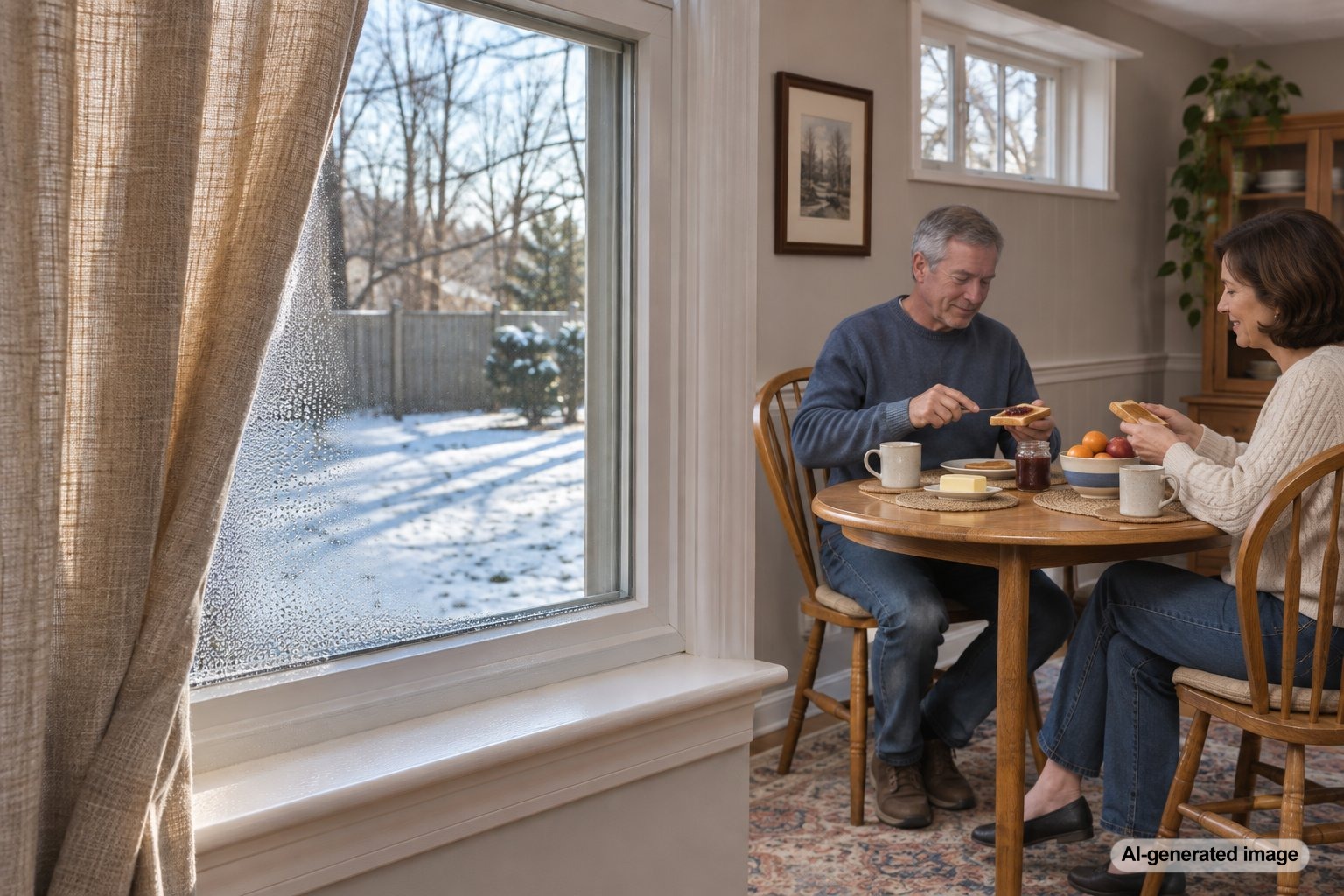
Pulling back your bedroom curtains on a freezing morning can reveal something unexpected: wet window glass, damp window sills, and sometimes even a thin layer of frost. Condensation appearing behind curtains during freezing weather usually develops because warm, moisture-containing indoor air encounters cold window surfaces in an area with restricted air circulation. Although closing curtains can help reduce heat loss and improve personal comfort, doing so can also create a colder pocket of air next to the window.
For homeowners throughout Central and Northern New Jersey, this problem can become particularly noticeable during extended periods of below-freezing temperatures. Understanding how heating, indoor humidity, window insulation, and airflow interact can help you determine whether simple household adjustments or professional indoor air quality and comfort solutions may be appropriate.
Condensation forms behind curtains when window surfaces become colder than the dew point of nearby indoor air. Closed curtains restrict the circulation of heated room air, allowing glass temperatures to drop. Excessive indoor humidity, inefficient windows, air leaks, and blocked heating vents can make the problem worse.
Why Closed Curtains Make Window Condensation Worse
Warm indoor air contains water vapor from everyday activities such as cooking, showering, breathing, and doing laundry. When this air encounters a sufficiently cold surface, some of its moisture can turn into liquid water.
The temperature at which this happens is called the dew point. During freezing weather, the inside surface of a window may become cold enough for condensation to develop, even when the surrounding room feels comfortably warm.
Heavy curtains and thermal drapes can intensify this temperature difference. They reduce the amount of warm room air reaching the glass while limiting circulation within the space between the fabric and the window.
Closing curtains does not necessarily increase the total amount of moisture inside your home. Instead, it can create conditions that make existing moisture more likely to condense.
Common Reasons Moisture Collects Behind Curtains
Indoor Humidity Is Too High for Outdoor Conditions
A humidity level that causes no noticeable problems during mild weather may produce significant window condensation when outdoor temperatures fall below freezing.
Although relative humidity between 30 and 50 percent is a common general indoor guideline, colder weather may require levels toward the lower end of that range or below it to prevent condensation on vulnerable surfaces. The appropriate setting depends on window performance, outdoor temperatures, and the construction of your home.
If your home has a whole-house humidifier, its winter settings may need adjustment as outdoor temperatures change.
Curtains Are Restricting Heating Airflow
Many New Jersey homes have heating registers, radiators, or baseboard heating units positioned near windows. These locations can help counteract the cooling effect of exterior walls and glass.
Furniture or window coverings that interfere with the distribution of heat may leave window surfaces colder than they would otherwise be. Long curtains can also prevent warm air from circulating effectively around the window.
Always maintain the clearances required by the heating equipment manufacturer, particularly around electric baseboard heaters and other hot surfaces.
Older Windows Lose Heat More Readily
Older single-pane windows, deteriorated weatherstripping, and poorly insulated window frames may develop colder interior surfaces during winter.
Even modern double-pane windows can experience condensation during severe cold if indoor humidity is sufficiently high. However, persistent moisture concentrated around one window may point toward a localized insulation or air leakage issue.
Overnight Moisture Accumulates in Bedrooms
Bedrooms are common locations for condensation behind curtains because people release moisture through breathing throughout the night. Closed doors, tightly drawn curtains, and limited ventilation can allow humidity to accumulate locally.
A bedroom may therefore experience wet windows while the living room remains completely dry, even though both spaces are served by the same heating system.
Everyday Household Activities Increase Moisture
Long showers, uncovered cooking pots, indoor clothes drying, and portable humidifiers can all contribute to elevated indoor moisture. Homes with limited ventilation may retain more of that moisture throughout the winter.
Energy-efficient improvements that reduce uncontrolled outdoor air infiltration can also change how a home manages humidity, making appropriate ventilation increasingly important.
What the Location of Condensation Can Tell You
Before making changes to your heating system, identify exactly where the moisture appears. Different patterns can suggest different underlying conditions.
- Water on the room-facing glass: Often associated with indoor humidity, cold glass, and restricted airflow.
- Moisture concentrated along the bottom of the window: May develop where glass edges and frames are colder or where condensed water collects.
- Fogging between sealed window panes: May indicate a failed insulating glass seal rather than an indoor humidity problem.
- Wet drywall or trim around the window: Could indicate persistent condensation, air leakage, exterior water intrusion, or another building-related issue.
- Frost on interior glass: Suggests that the affected surface is cold enough for moisture to freeze or frost to form.
These observations are useful starting points, but they do not establish a definitive diagnosis. Moisture between window panes, for example, generally calls for evaluation by a window specialist rather than an HVAC adjustment alone.
How to Reduce Condensation Behind Curtains During Winter
- Open curtains periodically during the day to encourage air circulation around windows.
- Use a digital hygrometer to monitor indoor relative humidity.
- Check accessible humidifier controls and follow the manufacturer’s recommended cold-weather settings.
- Make sure heating supply registers and return grilles are unobstructed.
- Use bathroom and kitchen exhaust fans that vent outdoors when generating moisture.
- Dry accumulated condensation from glass, window sills, and surrounding surfaces.
- Inspect or replace accessible HVAC air filters according to manufacturer recommendations.
If moisture develops mainly overnight, try leaving curtains partially open or using window coverings that allow more circulation around the glass. Compare the amount of condensation over several mornings with similar outdoor temperatures.
It is also helpful to measure humidity in the affected room rather than relying exclusively on a thermostat located elsewhere. A central humidity reading may not reflect conditions in a closed bedroom.
Can Turning Up the Heat Stop Window Condensation?
Increasing the temperature of the window surface may reduce condensation, but raising the thermostat is not necessarily the most effective solution.
If curtains continue to isolate the window from heated room air, the glass may remain cold despite a warmer thermostat setting. Increasing the heat also does not directly remove excess moisture from indoor air.
Addressing humidity and airflow together often provides a more useful starting point than simply increasing the temperature. If certain rooms remain noticeably colder than others, professional heating system service and maintenance may help identify whether equipment performance or heat distribution is contributing to the problem.
When Winter Window Condensation Becomes a Bigger Concern
A small amount of temporary condensation during exceptionally cold weather does not automatically mean your heating system is malfunctioning. However, repeated or prolonged moisture deserves attention.
Water that regularly collects on wooden window frames, painted trim, drywall, and curtain fabric can contribute to deterioration and conditions favorable to mold growth.
Watch for peeling paint, swollen wood, recurring musty odors, staining, and curtains that remain damp after the room has warmed up.
If several rooms experience persistent condensation despite reasonable humidity adjustments and improved circulation, an HVAC professional can evaluate heating performance, humidifier operation, ventilation, and accessible airflow conditions. A window or building-envelope specialist may also be needed if the problem involves insulation, window seals, or exterior water intrusion.
Frequently Asked Questions About Winter Window Condensation
Does condensation behind curtains mean my windows need replacing?
Not necessarily. Excessive humidity and restricted airflow can cause condensation even on relatively new windows. Persistent fogging between sealed panes, noticeable drafts, or damaged frames may justify a separate window evaluation.
Should I turn off my whole-house humidifier during freezing weather?
You may need to reduce its humidity setting during particularly cold conditions. Whether turning it off temporarily is appropriate depends on indoor humidity readings, window condensation, and the manufacturer’s operating recommendations.
Why does condensation disappear when I open the curtains?
Opening curtains allows warmer room air to circulate near the glass. This may increase the window surface temperature and encourage existing moisture to evaporate. The moisture still needs to be managed through appropriate indoor humidity control and ventilation.
Can condensation develop in a room that feels dry?
Yes. A room can feel relatively dry while its window glass remains cold enough for condensation to form. Measuring relative humidity and considering surface temperatures provides more useful information than relying on personal comfort alone.
Is condensation behind curtains always an HVAC problem?
No. Window construction, insulation, air leakage, curtain placement, household moisture production, and ventilation can all contribute. HVAC evaluation is particularly useful when condensation accompanies uneven heating, excessive humidity, or inadequate air circulation.
Keep Your New Jersey Home Comfortable Without Excess Winter Moisture
Condensation behind curtains during freezing weather reflects the relationship between indoor moisture, cold surfaces, and restricted airflow. The most effective approach begins with understanding which of these factors is contributing to the problem in your home.
By monitoring humidity, improving circulation around windows, and addressing uneven heating, homeowners may reduce recurring condensation and protect vulnerable interior finishes. When simple adjustments are not enough, Meyer & Depew can help evaluate the HVAC-related factors affecting your home’s winter comfort.
Need help with your heating, cooling, or HVAC system?
Meyer & Depew serves homeowners and businesses throughout Central and Northern New Jersey.
Get a quote or call 908.272.2100.