



Why Does My AC Turn On but the Blower Take Several Minutes to Start?
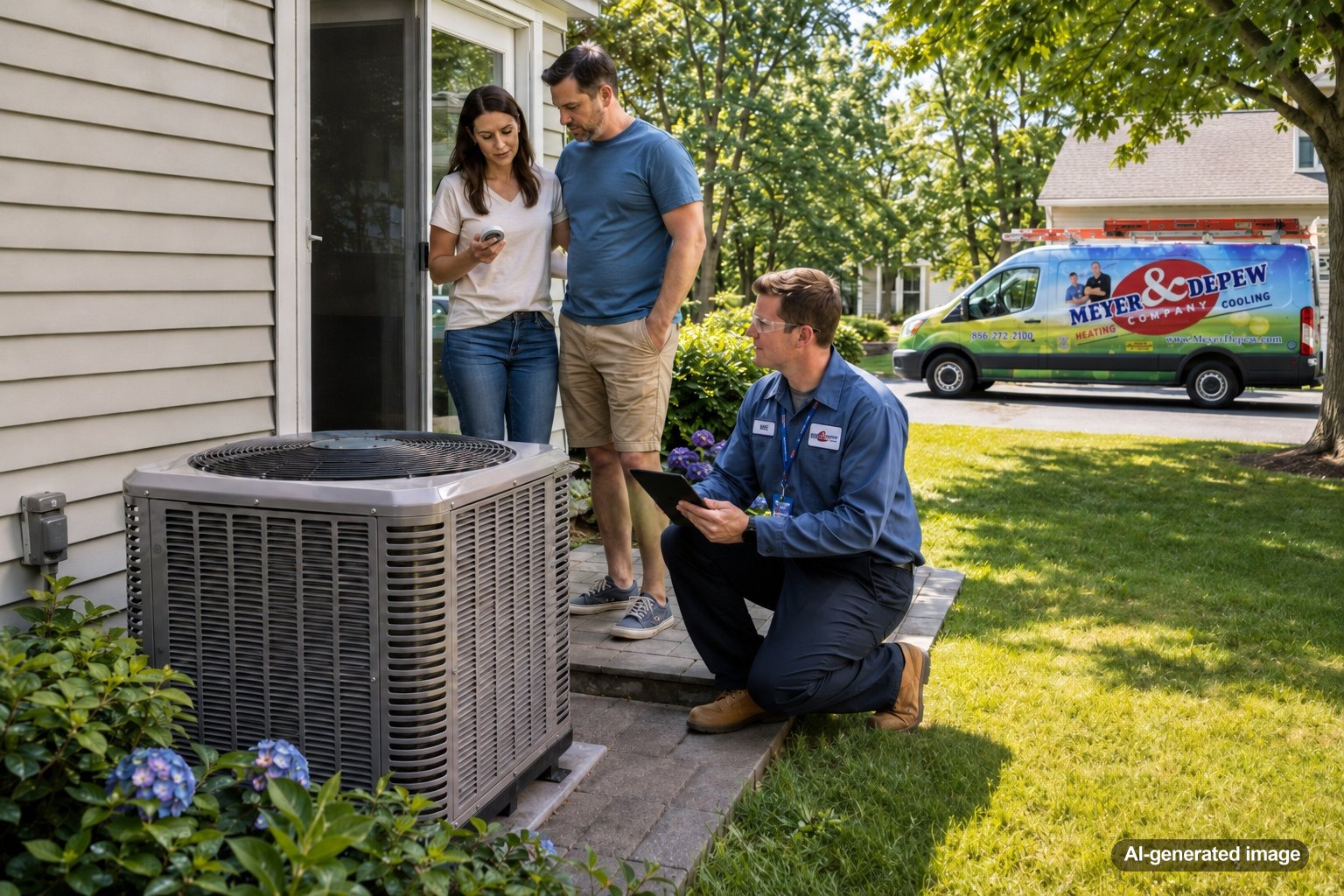
When your AC appears to turn on but the indoor blower does not start for several minutes, the delay may come from normal control programming, a variable-speed startup sequence, or a developing problem with the blower motor or its controls. The most important distinction is what is actually running during that delay. If the thermostat is simply waiting before starting the system, a short pause may be normal. If the outdoor AC unit is already running while no air is moving through the vents, however, a repeated delay of several minutes deserves attention.
For homeowners in Central and Northern New Jersey, this problem can become especially noticeable during hot, humid weather when the cooling system is cycling frequently. Meyer & Depew’s AC service and maintenance team can evaluate delayed blower operation when the cause is not obvious from safe homeowner checks.
An AC blower that starts late may be responding to an intentional control delay, but a delay of several minutes can also point to a thermostat or control issue, a weak blower motor component, an electronic motor problem, or another airflow-related fault.
- A brief programmed delay can be normal on some systems.
- A variable-speed blower may ramp up gradually rather than starting at full speed.
- If the outdoor unit runs for several minutes before the indoor blower starts, professional evaluation is a good idea.
- Repeated delayed starts accompanied by humming, weak airflow, unusual odors, or inconsistent cooling should not be ignored.
What Does It Mean When the AC Starts Before the Blower?
A central air conditioning system depends on several components starting in the correct sequence. When the thermostat calls for cooling, the system’s controls coordinate the outdoor condenser and the indoor air handler or furnace blower. The blower moves household air across the indoor evaporator coil, where heat is removed before the cooled air returns to the rooms.
Some systems intentionally delay blower operation for a short period. Equipment with variable-speed technology may also begin at a lower airflow and increase gradually. Those behaviors can be part of normal operation, particularly when the system has been designed to manage humidity or comfort in stages.
The situation is different when the outdoor unit is clearly operating but the indoor blower remains completely off for several minutes. Without enough indoor airflow, the evaporator coil cannot exchange heat properly. If this happens repeatedly, cooling performance may suffer and the coil may become unusually cold or begin to ice. The symptom does not identify one specific failed part, but it gives an HVAC technician an important clue about where to begin testing.
Common Reasons an AC Blower May Take Several Minutes to Start
Normal thermostat or control delays
Modern thermostats and HVAC controls often use built-in delays to protect equipment from rapid cycling. For example, after the system has just shut down, the thermostat may wait before allowing another cooling cycle to begin. In that situation, both the outdoor and indoor equipment may remain off during the delay.
That is different from a condition where the outdoor condenser starts immediately and the blower remains off. Watching which part of the system starts first can help you describe the issue accurately when scheduling service.
Variable-speed blower operation
Variable-speed and electronically controlled blowers do not always behave like older single-speed fans. Instead of snapping instantly to one fixed speed, they may start softly and ramp toward the airflow needed for the current cooling demand. A gentle increase in airflow can be normal.
What is less typical is complete silence and no detectable airflow for several minutes while the cooling equipment outside is already running. If the startup behavior has changed from what you normally hear and feel, the change itself is useful information for a technician.
Blower motor or motor-control problems
An aging blower motor may not start as reliably as it once did. Depending on the type of motor installed, the problem could involve the motor itself or an associated electrical component or electronic control. A technician may need to measure voltage, current, motor operation, and control signals to determine what is actually happening.
Homeowners should not open electrical compartments or attempt to test or replace these components. HVAC equipment can contain high-voltage parts even when the problem appears to involve only a fan.
Control board, relay, or wiring issues
The indoor blower receives instructions through the system’s controls. A control board, relay, connection, or related electrical component that is operating inconsistently could delay blower startup. These problems are not always visible and may be intermittent, which is one reason the system can appear normal during one cycle and act differently during the next.
Because multiple components can create similar symptoms, replacing a part based only on the delay is not a reliable diagnosis. A qualified technician can trace the sequence of operation and determine whether the thermostat, control board, motor, or another component is responsible.
Airflow restrictions and related system problems
A dirty filter or blocked return does not usually explain a blower that remains completely stationary and then suddenly begins operating minutes later, but airflow restrictions can complicate the situation. Restricted airflow can reduce cooling performance, increase system strain, and contribute to evaporator coil icing.
If airflow becomes weak after the blower finally starts, or if you see ice on accessible refrigerant tubing or notice water around the indoor equipment, turn the cooling system off and arrange professional service rather than continuing to run it.
A 30-Second Delay Is Different From a Five-Minute Delay
The length and pattern of the delay matter. A brief pause that has occurred consistently since the system was installed may simply reflect its normal operating sequence. A delay that has suddenly grown longer, varies from cycle to cycle, or now lasts several minutes is more likely to warrant investigation.
Also pay attention to what you hear. A blower that is intentionally waiting is often quiet. A motor that hums, clicks repeatedly, attempts to start, or begins only after several tries may be showing a different kind of problem. These observations can help an HVAC technician narrow down the cause without requiring you to open the equipment.
Safe Things You Can Check Before Scheduling Service
- Confirm that the thermostat is set to COOL and that the temperature setting is below the current room temperature.
- Check whether the thermostat display shows a delay, waiting, or similar message.
- Inspect the air filter and replace it if it is dirty and you can do so safely.
- Make sure supply registers and return grilles are open and not blocked by furniture, rugs, or other items.
- Listen for whether the outdoor unit starts before the indoor blower and note approximately how long the blower takes to begin moving air.
- If a breaker has tripped, it may be checked once if it is safe to do so. If it trips again, leave it off and contact a qualified professional.
You can also try switching the thermostat fan setting from AUTO to ON. If the blower still does not start promptly, that information can be helpful when describing the problem. Do not remove access panels, bypass switches, handle wiring, or attempt electrical testing.
Why the Timing of the Outdoor Unit Matters
One of the most useful observations is whether the outdoor condenser is operating during the blower delay. If neither the outdoor unit nor the blower is running, the system may simply be in a thermostat or equipment protection delay. If the outdoor unit is running while the indoor blower is not moving air, the system is attempting to cool without the airflow it normally needs.
A repeated no-airflow condition can interfere with heat transfer across the indoor coil. During humid New Jersey summer weather, that can quickly become noticeable as longer cooling cycles, poor temperature control, or reduced dehumidification. If you suspect the outdoor unit is operating for several minutes before indoor airflow begins, scheduling professional AC service is a sensible next step.
When Should You Call an HVAC Professional?
Professional service is appropriate when the blower delay is new, becoming longer, happens on most cooling cycles, or is accompanied by other symptoms. Those symptoms can include weak airflow, unusual humming or clicking, intermittent blower operation, ice, water around the air handler, frequent cycling, rooms that no longer cool evenly, or an AC system that runs much longer than usual.
If you notice smoke, sparks, a burning electrical odor, or another unsafe condition, shut the equipment off if you can do so safely and contact the appropriate emergency service or qualified professional. Do not continue operating equipment that appears to present an electrical or fire hazard.
An HVAC technician can observe the startup sequence, inspect the blower assembly, evaluate the thermostat and control signals, and test the electrical and motor components safely. The goal is to identify why the blower is delayed rather than assuming that one particular component must be replaced.
Could a Delayed Blower Mean the AC Needs to Be Replaced?
Not necessarily. A delayed blower startup is a symptom, not a replacement verdict. Some causes may involve a serviceable control or blower component, while other situations can be more complicated. The age and overall condition of the HVAC system, repair history, comfort performance, and cost of the needed repair all matter when deciding what makes sense.
If the system has otherwise been reliable and the issue is isolated, repair may be practical. If delayed blower operation is one of several recurring problems on an aging system, it may be worth discussing both repair and replacement options so you understand the tradeoffs before making a decision.
Frequently Asked Questions About Delayed AC Blower Startup
Is it normal for the blower to start after the outdoor AC unit?
A short delay may be normal on some systems, depending on the thermostat, control strategy, and equipment design. A delay of several minutes, especially if it is new or inconsistent, should be evaluated.
Why does my blower start faster when I set the thermostat fan to ON?
The ON setting requests continuous blower operation rather than waiting for the normal cooling-cycle fan command. If this changes the behavior significantly, tell your HVAC technician. It may help with diagnosis, but it does not by itself identify the failed component.
Can a dirty air filter cause the blower to start late?
A dirty filter is more commonly associated with restricted airflow than with a blower that remains completely off for several minutes. It is still worth checking because poor airflow can contribute to other cooling problems and may make system symptoms worse.
Should I keep running the AC if the outdoor unit starts but the blower does not?
If the blower repeatedly fails to move air while the outdoor unit continues running, avoid repeatedly operating the system and schedule professional service. Insufficient airflow can contribute to poor cooling and evaporator coil icing.
Why did this problem suddenly start after years of normal operation?
A new startup delay can be associated with changing motor performance, an intermittent control problem, a thermostat issue, or another developing equipment fault. Because several causes can look similar from outside the system, testing is usually needed to determine the actual source.
A small, consistent blower delay may be part of normal AC operation, but a blower that suddenly takes several minutes to start deserves closer attention, particularly when the outdoor condenser is already running. Check the thermostat, filter, vents, and startup pattern, then arrange professional service if the delay continues.
Need help with your heating, cooling, or HVAC system?
Meyer & Depew serves homeowners and businesses throughout Central and Northern New Jersey.
Get a quote or call 908.272.2100.