



How to Tell If Your AC Is Cooling but Not Dehumidifying
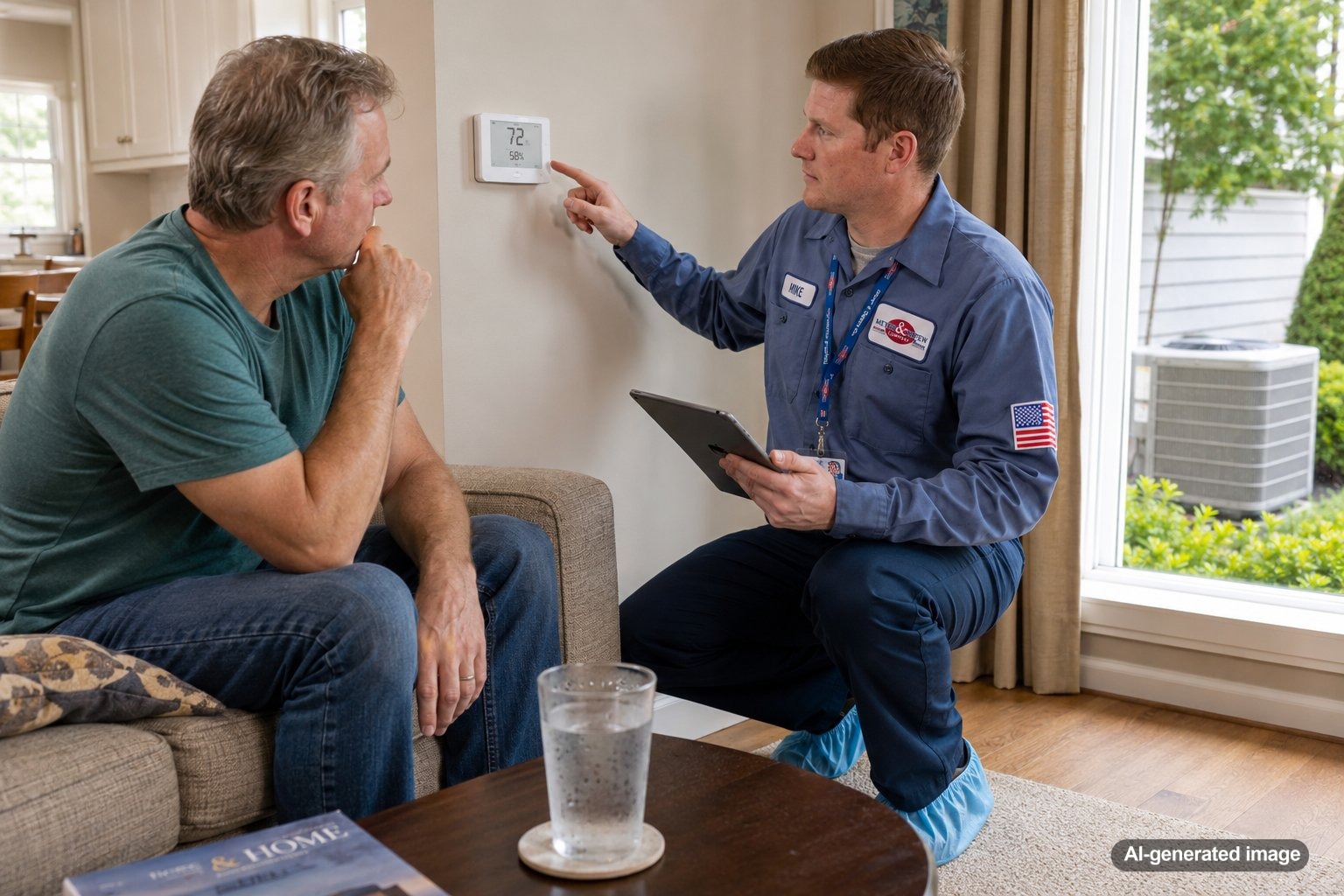
An air conditioner can make your home feel cooler without making it feel comfortably dry. If the thermostat reaches its set temperature but the air still feels sticky, clammy, or heavy, your AC may be cooling without removing enough moisture. This can happen when the system does not run long enough, airflow is not right, the equipment is oversized for the home, or another condition interferes with normal moisture removal.
This issue can be especially noticeable during humid New Jersey summers. Temperature and humidity are separate parts of comfort, so a room can be 72 degrees and still feel unpleasant if the moisture level remains high. If the problem continues, professional AC service and maintenance can help determine whether the cause is related to operation, airflow, drainage, controls, or equipment sizing.
Your AC may be cooling but not dehumidifying if the thermostat reaches the target temperature while rooms still feel sticky, condensation appears on cool surfaces, humidity readings remain elevated, or the system runs in short bursts instead of longer cooling cycles. Common causes can include short cycling, oversized equipment, incorrect thermostat fan settings, airflow restrictions, coil problems, or condensate drainage issues.
What dehumidification has to do with AC cooling
Your air conditioner does more than lower indoor temperature. As warm household air passes across the cold evaporator coil, moisture in that air can condense on the coil. The collected water is then directed through the condensate drainage system.
This moisture-removal process depends partly on how long the system operates. An AC that runs for a reasonable cooling cycle generally has more opportunity to remove moisture than one that repeatedly turns on for only a few minutes. That is why a system can technically satisfy the thermostat while leaving the house more humid than expected.
Humidity also affects how temperature feels. Moist air can make a comfortably cool thermostat setting feel warmer or stickier because perspiration does not evaporate from your skin as readily. Some homeowners respond by lowering the thermostat further, but that does not necessarily correct the underlying humidity problem.
Signs your AC may not be removing enough humidity
The clearest clue is a mismatch between temperature and comfort. Your thermostat shows that the house is cool, but the rooms do not have the crisp, dry feeling you normally expect from air conditioning.
- The home feels sticky or clammy even though the temperature is comfortable.
- You notice persistent condensation on cold pipes, windows, or other cool surfaces.
- A separate indoor humidity monitor consistently shows more moisture than you expect.
- The AC turns on and off frequently without running for sustained periods.
- Some rooms feel noticeably more humid than others.
- Fabrics, bedding, or upholstered furniture feel damp or slow to dry.
One humid afternoon does not automatically mean the AC has a problem. Doors opening frequently, cooking, showering, outdoor humidity, ventilation, basement moisture, and other household conditions can temporarily raise indoor humidity. A recurring pattern while the cooling system is operating normally deserves more attention.
Why an oversized AC can cool before it dehumidifies
One possible cause is an air conditioner that has more cooling capacity than the home requires under many conditions. An oversized system can lower the temperature quickly, satisfy the thermostat, and shut off before enough air has spent time moving across the cold evaporator coil for effective moisture removal.
This is commonly described as short cycling, although short cycling can have other causes as well. If the system repeatedly starts, cools aggressively for a brief period, and shuts down, the house may reach the set temperature without achieving the humidity control you want.
Proper AC sizing is not simply a matter of choosing a larger unit. Home size, insulation, windows, orientation, air leakage, ductwork, occupancy, and other factors can influence the cooling load. If sizing appears to be contributing to a recurring comfort problem, a qualified HVAC professional can evaluate the system rather than relying on square footage alone.
Check whether the thermostat fan is set to On
A simple thermostat setting can sometimes affect how humid the home feels. Many thermostats allow the indoor blower fan to be set to either Auto or On.
With the fan set to Auto, the blower generally operates along with the cooling cycle. With the fan set to On, the blower can continue circulating air after the compressor stops. Under some conditions, that continued airflow can allow moisture remaining on the evaporator coil to evaporate back into the air instead of draining away.
As a safe homeowner check, look at your thermostat and see whether the fan is set to Auto or On. If you normally use On and are experiencing excess humidity, switching to Auto may be worth trying. Do not change advanced installer settings unless you understand their purpose or have been directed to do so by a qualified technician.
Restricted airflow can interfere with normal operation
Your AC is designed to move a certain amount of air through the system. A severely dirty filter, blocked return, closed supply vents, or another airflow restriction may affect cooling performance and how the evaporator coil operates.
Homeowners can safely inspect the air filter and replace it if it is dirty and the correct replacement filter is available. Make sure return grilles are not covered by furniture, boxes, rugs, or curtains, and confirm that supply vents are open unless your HVAC professional has advised otherwise.
Avoid trying to diagnose blower motors, refrigerant conditions, evaporator coil problems, or internal duct restrictions yourself. Those issues require the proper instruments and professional evaluation.
Evaporator coil conditions can affect moisture removal
The evaporator coil is where both cooling and moisture removal take place. If the coil is dirty, airflow is abnormal, refrigerant conditions are incorrect, or the system is experiencing another technical problem, dehumidification can be affected.
A frozen evaporator coil is another warning sign that something is wrong. Ice may result from airflow problems, refrigerant-related issues, or other conditions. Continuing to operate equipment with a significant freeze-up can lead to additional problems, so professional service is appropriate if you see ice or repeatedly experience freezing.
Homeowners should not open sealed equipment, handle refrigerant, or attempt to clean internal components that require disassembly. A technician can inspect temperatures, airflow, coil condition, refrigerant performance, and other operating data to determine what is actually happening.
Condensate drainage problems can be part of the issue
Water removed from indoor air has to go somewhere. In a typical central AC system, moisture condensed on the evaporator coil collects in a drain pan and exits through a condensate drain.
If the drainage system is clogged, damaged, or not working correctly, you may notice water around the indoor equipment, a full drain pan, unexpected system shutdowns, or other moisture-related symptoms. Water around HVAC equipment should not be ignored because it can damage nearby materials and may indicate a drainage or equipment problem.
Do not bypass condensate safety switches or attempt repairs that require opening electrical or mechanical components. If water is leaking from the system or the drain repeatedly backs up, schedule professional service.
Very mild weather can create a temperature-humidity mismatch
Humidity problems are not limited to the hottest days of summer. A warm, damp day with a relatively small cooling load can actually be challenging because the AC may not need to run very long to maintain the thermostat setting.
For example, a house may reach 72 degrees quickly on a cloudy 78-degree day while outdoor humidity remains high. Because the AC has relatively little cooling work to do, its run time may be too short to remove as much moisture as you would prefer.
This distinction can help explain why humidity complaints sometimes appear during muggy shoulder-season weather or after summer rain rather than during the hottest afternoon of the year.
Home moisture sources may be adding more humidity than the AC can remove
Not every humidity problem begins with the air conditioner. Moisture can enter or develop inside a house through frequent showering, cooking, damp basements or crawl spaces, air leaks, open windows, unvented moisture sources, and excessive outdoor air infiltration.
If your AC appears to operate normally but humidity remains high, it can be helpful to consider the entire home rather than focusing only on the equipment. Your home’s air quality and comfort depend on cooling, airflow, ventilation, moisture sources, building conditions, and controls working together.
Safe checks homeowners can make before calling
- Confirm that the thermostat is in cooling mode and the fan setting is Auto rather than continuously On.
- Inspect the air filter and replace it if it is visibly dirty and you have the correct replacement.
- Make sure supply vents and return grilles are open and not blocked.
- Notice whether the AC runs in normal cycles or turns on and off unusually quickly.
- Check for visible water around the indoor equipment without opening panels.
- If you have a reliable humidity monitor, note the readings at different times of day for comparison.
These observations can also give an HVAC technician useful information. Details such as when the problem started, whether it occurs all day or only during certain weather, how long the system seems to run, and whether the thermostat reaches its set point can make troubleshooting more efficient.
When professional AC service makes sense
Schedule service when high indoor humidity is persistent, the AC is cycling unusually often, you see ice on the system, water is leaking around the equipment, airflow has weakened, or the home suddenly feels much more humid than it did under similar weather conditions in the past.
A qualified technician may evaluate system run times, thermostat operation, blower performance, airflow, coil condition, condensate drainage, temperature changes through the system, equipment capacity, and other factors. The goal is to identify why the system is not managing moisture as expected rather than assuming a single cause.
If an older system has always struggled with humidity because of capacity, design, or limited operating capabilities, repair may not be the only consideration. In some cases, a broader comfort evaluation can help determine whether system changes, controls, ventilation adjustments, zoning, or replacement options are worth discussing.
Can a separate dehumidifier help?
In some homes, dedicated humidity control can be useful, particularly when moisture loads remain high even when cooling demand is modest. A portable dehumidifier may help in an isolated space, while whole-home solutions are designed to address humidity more broadly.
However, adding a dehumidifier should not be used to hide an AC problem that needs repair. If a cooling system previously controlled humidity well and suddenly stops doing so, it makes sense to determine what changed before adding additional equipment.
Frequently asked questions
Why is my house humid when the AC is running?
The AC may not be running long enough to remove sufficient moisture, or airflow, thermostat settings, equipment sizing, coil conditions, condensate drainage, or household moisture sources may be contributing. An HVAC technician can evaluate the system if the condition persists.
Does lowering the thermostat remove more humidity?
Lowering the temperature may increase cooling run time in some situations, but it is not a reliable solution to an underlying humidity problem. Setting the thermostat unusually low can also leave the home colder than desired without addressing the actual cause.
Should the thermostat fan be on Auto for better humidity control?
Auto is generally the better starting point when humidity is a concern because continuous fan operation may allow some moisture on the evaporator coil to return to the air after a cooling cycle. System design and controls can vary, so ask a technician if you are unsure about the proper setting for your equipment.
Can an AC be too large for a house?
Yes. An oversized system can sometimes cool the house so quickly that it does not run long enough for effective moisture removal. Correct sizing should be based on a professional assessment of the home’s cooling requirements, not simply the size of the previous unit.
Is high indoor humidity an emergency?
High humidity by itself is usually a comfort and moisture-management issue rather than an immediate HVAC emergency. However, active water leaks, electrical burning smells, smoke, sparks, flooding around equipment, or other unsafe conditions should be treated promptly and professionally.
If your home reaches the thermostat setting but still feels sticky, your AC may be cooling faster than it is removing moisture or another system condition may be limiting dehumidification. Start with safe checks such as the thermostat fan setting, filter, vents, and visible drainage. If the problem keeps returning, professional testing can identify the actual cause.
Need help with your heating, cooling, or HVAC system?
Meyer & Depew serves homeowners and businesses throughout Central and Northern New Jersey.
Get a quote or call 908.272.2100.