

How Can You Tell if an AC Motor Is Overheating? Warning Signs, Causes, and What to Do Next
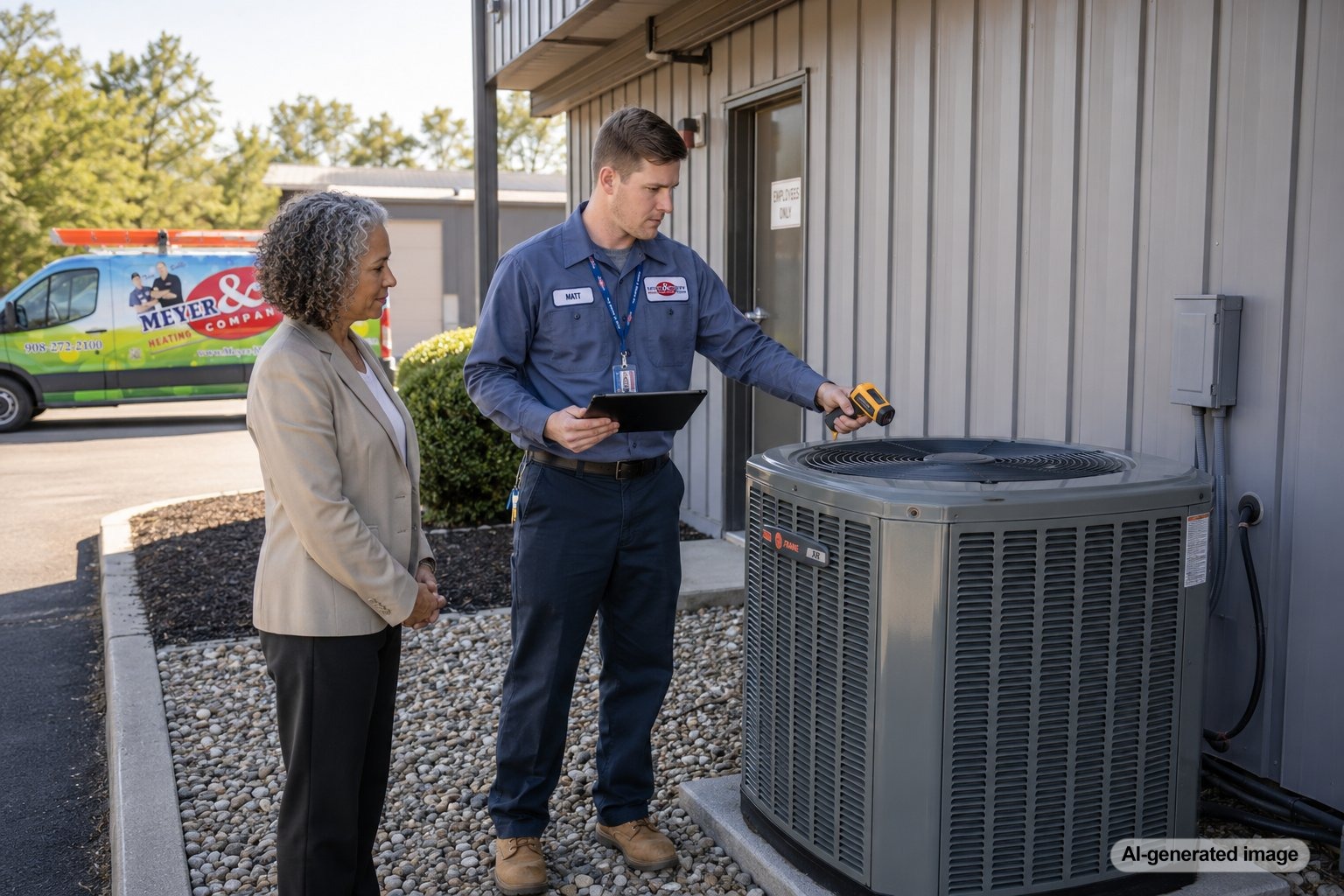
An overheating AC motor can give you several warning signs before the cooling system stops working altogether. You may notice a hot or electrical smell, unusual buzzing or humming, a fan that slows down or stops, repeated shutdowns, weak airflow, or an outdoor unit that struggles to run normally. Because AC motors operate around electrical components and moving parts, diagnosing the exact cause is a job for a qualified HVAC technician rather than a do-it-yourself repair.
During a hot New Jersey summer, an air conditioner may run for long stretches, which can expose problems that were less noticeable during milder weather. If your system seems unusually noisy, keeps shutting off, or is no longer cooling normally, Meyer & Depew’s AC service and maintenance team can evaluate the equipment and determine what is happening.
An AC motor may be overheating if you notice a burning or electrical odor, intermittent operation, unusual motor noise, weak or stopped fan movement, frequent system shutdowns, or cooling performance that suddenly declines. Turn the system off if you smell burning, see smoke or sparks, or notice another unsafe condition, and contact a qualified professional.
What Does an Overheating AC Motor Look or Sound Like?
Air conditioning systems use motors to move air and operate fans. Depending on the equipment, motors may be found in the indoor blower assembly, the outdoor condenser fan assembly, or other components. When one of these motors begins running hotter than it should, the symptoms can vary based on the motor, the equipment design, and the underlying problem.
One important distinction is that a motor can feel warm during normal operation without necessarily being defective. HVAC motors generate heat as they run, especially during long cooling cycles. The concern is when excessive heat is accompanied by abnormal operation, repeated shutdowns, odors, unusual noise, or a noticeable loss of airflow or cooling.
Common Signs an AC Motor May Be Overheating
A burning or electrical smell
A noticeable electrical or burning odor near the indoor or outdoor HVAC equipment can indicate that a motor, wiring connection, capacitor, or another electrical component is under stress. The exact cause cannot be determined from smell alone, but it should not be ignored.
If you see smoke, sparks, or evidence of an electrical fire, prioritize safety. Turn off the equipment if it is safe to do so and contact the appropriate emergency service or a qualified professional.
The fan starts and stops unexpectedly
Some motors have built-in thermal protection that may shut the motor down when temperatures become excessive. A fan that runs for a while, stops, then starts again after the equipment cools could be experiencing an overheating condition. However, controls, capacitors, wiring issues, and other problems can cause similar behavior, so professional diagnosis is important.
Unusual humming, buzzing, or grinding
New or worsening noises deserve attention. A motor that hums without starting, buzzes loudly, grinds, or sounds noticeably different from normal may be struggling mechanically or electrically. Worn bearings, a failing capacitor, damaged fan components, or other problems may place additional strain on the motor.
Weak airflow from the vents
If the indoor blower motor is not operating correctly, airflow throughout the home can decline. You may notice less air coming from supply vents, rooms taking longer to cool, or the air conditioner running for extended periods without reaching the thermostat setting. Weak airflow can also result from a dirty filter, blocked return, duct problem, or other airflow restriction.
The outdoor fan is slow or not turning
The condenser fan helps move heat away from the outdoor unit. If the fan is moving unusually slowly, stopping during operation, or not running when the system is calling for cooling, a motor or related electrical component may need attention. Do not reach into the outdoor unit or attempt to manually spin the fan.
The system repeatedly shuts down
Frequent shutdowns or short operating cycles can sometimes accompany motor overheating. Repeated interruptions can also be caused by thermostat problems, airflow restrictions, refrigerant-related issues, electrical faults, or system controls. A technician can test the system rather than assuming the motor is automatically the cause.
Why Would an AC Motor Overheat?
An overheating motor is often a symptom of another problem rather than an isolated issue. Identifying the cause matters because simply replacing a motor without addressing the condition that stressed it may leave the system vulnerable to another failure.
Restricted airflow
A heavily loaded air filter, blocked return grille, closed supply vents, dirty equipment, or another airflow restriction can force certain HVAC components to work under more difficult conditions. Depending on the type of blower motor and system design, abnormal airflow can contribute to operating problems and excess heat.
Electrical problems
Motors depend on the correct electrical conditions to operate properly. A failing capacitor, loose electrical connection, voltage problem, damaged wiring, or deteriorating motor winding can create excessive current draw or prevent the motor from starting correctly. These components should be tested and serviced by a qualified HVAC professional.
Mechanical resistance
A fan blade, blower wheel, bearing, or motor shaft that does not move normally can place added load on the motor. Debris, wear, damage, or failing bearings may increase resistance and cause the motor to work harder than intended.
Dirty outdoor equipment
Leaves, grass clippings, dirt, and other debris around the outdoor unit can interfere with normal airflow. Homeowners can safely keep the surrounding area clear of obvious debris, but internal cleaning and electrical service should be left to a qualified technician.
Long run times during extreme heat
Extended operation during a New Jersey heat wave does not automatically mean a motor is defective, but long run times can expose existing weaknesses. A worn motor, marginal capacitor, dirty system, or airflow problem may become more noticeable when the air conditioner is operating under sustained demand.
Age and normal component wear
Motors contain bearings, windings, electrical connections, and other parts that can deteriorate over time. Age alone does not prove that a motor needs replacement, but recurring noise, excessive heat, hard starting, or repeated thermal shutdowns may indicate that further evaluation is warranted.
Can a Dirty Air Filter Cause an AC Motor to Overheat?
A dirty filter can contribute to HVAC operating problems by restricting airflow, and it is one of the simplest items a homeowner can safely inspect. The effect on a particular motor depends on the type of equipment and motor design, so a dirty filter should not automatically be assumed to be the only cause of overheating.
If the filter is visibly dirty or overdue for replacement, install the correct replacement filter according to the equipment or filter manufacturer’s guidance. If abnormal noises, odors, weak airflow, or shutdowns continue after the filter is addressed, schedule professional service.
Safe Checks Homeowners Can Make
- Check the thermostat to make sure it is set to cooling and the temperature setting is reasonable.
- Inspect the air filter and replace it if it is dirty and you can do so safely.
- Make sure supply and return vents are open and not blocked by furniture, rugs, or other objects.
- Look for obvious leaves, weeds, or debris around the outside of the condenser without opening the cabinet.
- Check whether the HVAC breaker has tripped once, if it is safe to do so. If it trips again, leave it off and schedule professional service.
Do not open electrical panels, test capacitors, bypass safety switches, handle wiring, reach into fan assemblies, or attempt to repair a motor yourself. HVAC equipment can contain high-voltage components even when the system appears to be off.
Should You Keep Running an AC With an Overheating Motor?
If you have strong reason to believe a motor is overheating, continued operation may increase the chance of additional equipment damage. If there is a burning smell, smoke, sparking, repeated breaker trips, or another obvious electrical concern, stop using the system and arrange professional evaluation.
If the symptoms are less urgent, such as weak airflow or intermittent fan operation, scheduling service promptly is still sensible. A qualified technician can measure motor temperature, electrical current, capacitor performance, voltage, airflow, and other operating conditions to identify the actual problem.
What Will an HVAC Technician Check?
Professional diagnosis may involve examining the motor, fan or blower assembly, electrical connections, capacitor, controls, airflow, and system operating conditions. Technicians can compare electrical measurements and motor performance with the equipment’s specifications and determine whether the motor itself is failing or another issue is causing the motor to operate abnormally.
For example, a motor that appears to be overheating could actually be struggling because of a weakened capacitor. In another system, the motor bearings may be creating excess resistance. In another case, airflow restrictions may be contributing to poor system performance. Testing helps separate these possibilities and avoids replacing parts based on symptoms alone.
Does an Overheating AC Motor Always Need to Be Replaced?
No. Whether replacement is necessary depends on the underlying cause and the condition of the motor. Some problems may involve a related component or operating condition rather than permanent motor damage. Other motors may have damaged windings, worn bearings, or repeated thermal failures that make replacement the appropriate repair.
The overall condition and age of the air conditioning system may also matter. If a major repair is needed on an older system that has experienced recurring problems, it can be useful to compare the repair with longer-term equipment options. For systems that are reaching the point where replacement deserves consideration, Meyer & Depew also provides AC installation and replacement services.
When Should You Call an HVAC Professional?
Schedule professional service when a fan will not start, a motor repeatedly stops during operation, airflow drops significantly, the system becomes unusually noisy, cooling performance declines, or the breaker continues to trip. Electrical odors, smoke, sparks, or visible damage should be treated more urgently.
Waiting for the motor to fail completely can leave you without cooling during periods of high demand. An evaluation while the equipment is still producing symptoms may also make it easier for a technician to observe the problem under operating conditions.
Frequently Asked Questions About Overheating AC Motors
How hot is too hot for an AC motor?
There is no single surface temperature that homeowners should use to diagnose every AC motor. Acceptable operating temperatures depend on the motor design, equipment, load, ambient conditions, and manufacturer specifications. Avoid touching motors or internal equipment to judge temperature. A technician can evaluate operating temperature and electrical measurements safely.
Can an overheating AC motor cause the breaker to trip?
It can be associated with a breaker trip if the motor or another electrical component is drawing abnormal current, but many electrical problems can cause a breaker to trip. If the breaker trips again after one safe reset, leave the system off and have it inspected rather than repeatedly resetting it.
Why does my AC fan work for a few minutes and then stop?
A motor’s thermal protection may interrupt operation if the motor becomes excessively hot, but the same symptom can result from a failing capacitor, control problem, wiring issue, or another component fault. Professional testing is needed to identify the cause.
Can preventive maintenance reduce the risk of motor problems?
Routine HVAC maintenance can help identify dirty components, electrical concerns, airflow problems, worn parts, and other conditions before they become more disruptive. Maintenance cannot prevent every breakdown, but it may reduce the risk of unexpected problems and provide a clearer picture of equipment condition. Homeowners interested in ongoing care can review Meyer & Depew’s service plans.
Is an AC motor overheating an emergency?
It depends on the symptoms. Weak airflow or intermittent operation usually calls for prompt professional service. Smoke, sparks, a strong electrical burning smell, or other signs of an unsafe electrical condition require a more immediate safety response. Turn off the equipment if it is safe to do so and contact the appropriate emergency service or qualified professional.
An overheating AC motor often reveals itself through abnormal odors, noise, weak airflow, fan problems, repeated shutdowns, or declining cooling performance. Safe homeowner checks are limited to basic items such as the thermostat, filter, vents, and visible outdoor debris. Motor, capacitor, wiring, and internal electrical diagnosis should be handled by a qualified HVAC technician.
Need help with your heating, cooling, or HVAC system?
Meyer & Depew serves homeowners and businesses throughout Central and Northern New Jersey.
Get a quote or call 908.272.2100.