



Can a Filter Be Too Restrictive Even When It Fits the System? What Homeowners Should Know About Airflow and HVAC Performance
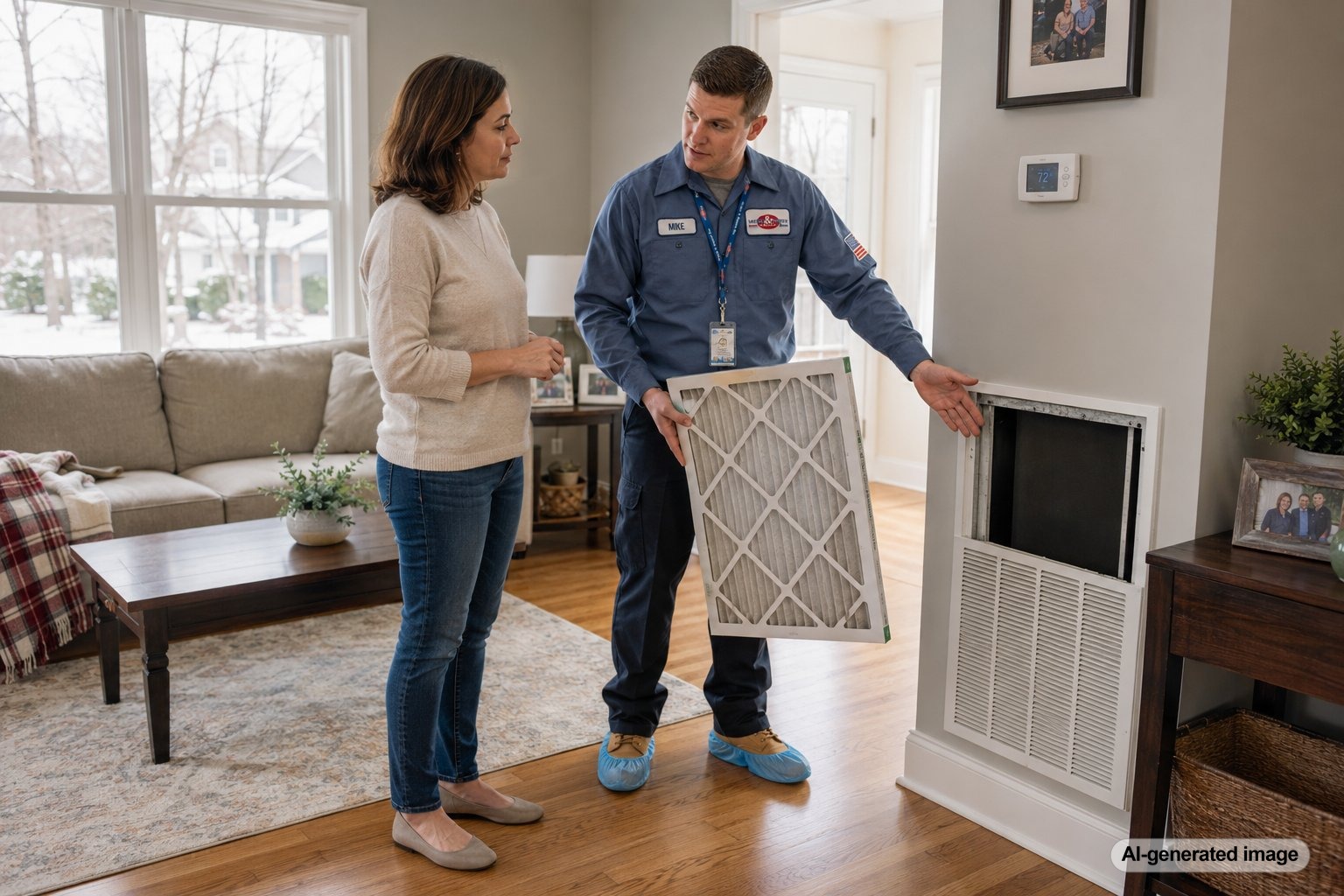
Yes. An air filter can be the correct physical size for your heating and cooling system and still be too restrictive for the amount of airflow that system needs. Fit only tells you whether the filter belongs in the slot or cabinet. It does not tell you how easily air can pass through the filter while the blower is operating. If a filter creates more resistance than the system can comfortably handle, airflow may decrease, comfort can suffer, and the equipment may have to work under less-than-ideal conditions.
This can be especially confusing for homeowners because a higher-efficiency filter can sound like an automatic upgrade. In reality, the right choice depends on the filter, the equipment, the duct system, the blower setup, and the condition of the filter over time. If you are already noticing weak airflow or inconsistent comfort, Meyer & Depew’s AC service and maintenance information can help you understand when a professional system evaluation makes sense.
A filter can be too restrictive even when its length, width, and thickness fit perfectly. The issue is airflow resistance, not physical fit alone.
- A filter that is too restrictive can reduce airflow through the HVAC system.
- Higher filtration efficiency can sometimes come with greater resistance, depending on the filter design.
- A dirty filter becomes more restrictive as it collects dust and debris.
- The right filter should balance filtration goals with the airflow requirements of the specific system.
Why physical fit does not guarantee the filter is right for the system
HVAC filters are commonly identified by dimensions, such as 16 by 25 by 1 inches. Those numbers are important because the filter needs to fit securely in the designated location. But dimensions are only one part of the decision.
When the blower runs, it has to pull or push air through the filter. Every filter creates some resistance to that airflow. HVAC professionals often evaluate this resistance as pressure drop. If the pressure drop across the filter is higher than the system was designed to accommodate, the amount of air moving through the equipment may decrease.
Two filters with identical dimensions can behave very differently. One may allow air to pass relatively easily, while another may use denser media, more layers, or a different construction that creates greater resistance. That is why replacing a basic filter with a more restrictive one is not always as simple as matching the numbers printed on the frame.
How a restrictive filter can affect HVAC airflow
Your HVAC system depends on a consistent volume of air moving through the return ducts, across the filter, through the heating or cooling equipment, and back into the building through the supply ducts. When the filter creates excessive resistance, that airflow can be reduced.
Lower airflow may show up as weaker air coming from supply vents, rooms that take longer to reach the thermostat setting, or noticeably different comfort from one part of the home to another. During cooling operation, inadequate airflow across the indoor coil can also contribute to operating conditions that are not ideal for the system. During heating operation, proper airflow is equally important for moving heat through the home and keeping equipment within its intended operating range.
These symptoms do not prove that the filter is the cause. Closed dampers, blocked returns, dirty equipment, duct problems, blower issues, and other conditions can create similar symptoms. A qualified HVAC technician can measure airflow and system pressures rather than relying on guesswork.
Does a higher MERV rating always mean more restriction?
Not necessarily. MERV, or Minimum Efficiency Reporting Value, describes how effectively a filter captures particles within defined size ranges. A higher MERV rating generally indicates stronger particle-capturing performance, but MERV alone does not tell you exactly how much resistance a specific filter will create in your particular system.
Filter construction matters. The amount of filter media, the depth of the filter, the number and shape of the pleats, and the design of the media can all influence pressure drop. For example, a deeper media filter may provide more surface area than a thin filter, which can allow strong filtration without creating the same airflow characteristics as a densely packed thin filter.
This is one reason homeowners should avoid assuming that the highest MERV number available is automatically the best choice. The goal is not simply to capture as many particles as possible. The goal is to use filtration that supports your indoor air quality priorities without interfering with the airflow the HVAC system requires.
A dirty filter can become restrictive even if it started out appropriate
A filter that works well when new can become increasingly restrictive as it loads with dust, pet hair, lint, and other airborne material. As debris fills available spaces in the filter media, air has fewer open paths through which to travel.
How quickly this happens can vary from one property to another. A home with pets, ongoing renovation dust, heavy HVAC usage, or more airborne particles may load a filter differently than a home with fewer occupants and relatively low dust levels. Filter type and size also matter.
Instead of relying only on a generic replacement schedule, inspect the filter periodically and follow the equipment and filter manufacturer’s recommendations. If the filter looks heavily loaded or airflow seems noticeably weaker, replacing the filter is a safe homeowner step. If the problem continues with a clean, appropriate filter installed, professional evaluation is the better next move.
Why one-inch filters can require extra attention
Thin filters are common in residential HVAC systems, but their limited depth means the available surface area and filter construction become especially important. Some highly efficient one-inch filters may create more resistance than a particular system can comfortably accommodate.
That does not mean all one-inch high-efficiency filters are inappropriate. It means the filter should be matched to the system rather than chosen solely by a marketing claim or filtration rating. A technician can evaluate the existing filter setup, blower performance, return duct capacity, and pressure conditions to determine whether filtration is contributing to an airflow problem.
In some systems, a properly designed deeper media cabinet may offer additional filter surface area and different airflow characteristics. Whether that type of change makes sense depends on the HVAC equipment and duct configuration, so it should be evaluated professionally rather than treated as a universal upgrade.
Signs that filter restriction may be worth investigating
No single symptom can confirm excessive filter restriction, but several observations can justify a closer look:
- Airflow from several supply vents seems weaker than it used to be.
- The system runs for long periods while certain rooms remain uncomfortable.
- Airflow improves noticeably after removing a dirty filter and installing the correct clean replacement.
- A new filter with a different design or rating seems to coincide with reduced airflow.
- The filter becomes heavily loaded much sooner than expected.
- The HVAC system has recurring airflow-related performance concerns that have not been professionally measured.
Do not operate the system without a filter as a long-term workaround. The filter helps protect HVAC components from dust and debris. If you suspect the installed filter is creating a problem, use an appropriate replacement and have the system evaluated if airflow concerns continue.
Safe checks homeowners can make before scheduling service
- Inspect the filter and replace it if it is visibly dirty.
- Confirm that the replacement filter is the correct physical size and is installed in the proper airflow direction.
- Make sure supply registers are open and not covered by furniture, rugs, or other objects.
- Make sure return grilles are not blocked.
- Check the thermostat settings to confirm the system is operating in the intended mode.
- Notice whether an airflow problem started after changing to a different type or rating of filter.
These checks can help identify simple issues without opening equipment or adjusting system components. Homeowners should not modify blower settings, bypass safety controls, open electrical compartments, or make other internal equipment adjustments in an attempt to compensate for a restrictive filter.
How an HVAC technician can determine whether the filter is too restrictive
A professional does not have to guess based on the filter label. A technician can evaluate system airflow and measure pressure at appropriate points in the HVAC system. That information can help show how much resistance exists across the filter and elsewhere in the duct system.
This matters because the filter may be only part of the story. A system with undersized return ductwork, restricted grilles, dirty components, or other airflow limitations may have less capacity to tolerate additional filter resistance. Simply switching filters without understanding the entire airflow path can miss the underlying issue.
If airflow problems are persistent, professional HVAC maintenance and service planning can also help keep routine inspection on the calendar and provide opportunities to identify developing issues before they become more disruptive.
Choosing filtration without sacrificing system performance
The best filter is not necessarily the cheapest filter, the thickest filter, or the filter with the highest efficiency rating. It is the filter that provides useful filtration while remaining appropriate for the HVAC system in which it is installed.
Homeowners who want stronger particle filtration because of dust, pets, smoke concerns, or general indoor air quality goals should consider those goals alongside the capabilities of their heating and cooling equipment. In some homes, filtration is only one part of a broader indoor air quality strategy that may also involve ventilation, humidity control, or dedicated air purification equipment.
A qualified technician can help determine whether your existing filter is appropriate, whether airflow measurements indicate excessive resistance, and whether other options should be considered. That approach is more reliable than choosing a filter based only on dimensions or assuming a higher rating must always be better.
Frequently asked questions about restrictive HVAC filters
Can a filter fit perfectly and still reduce airflow too much?
Yes. Physical dimensions determine whether a filter fits the cabinet or slot, while the filter’s construction and pressure drop influence how easily air passes through it. A correctly sized filter can still create more resistance than a particular system handles well.
Should I use the highest MERV filter I can find?
Not automatically. Higher filtration efficiency may be useful for certain indoor air quality goals, but the filter should also be appropriate for the system’s airflow requirements. Manufacturer guidance and professional airflow evaluation can help when you are unsure.
Can a dirty filter cause the same problem as an overly restrictive new filter?
Yes. As a filter collects debris, its resistance can increase. A filter that was appropriate when clean may eventually reduce airflow if it becomes heavily loaded.
Can I run my HVAC system without a filter to improve airflow?
Do not use filter removal as a long-term solution. Operating without proper filtration can allow dust and debris to reach HVAC components. If airflow improves dramatically after replacing a dirty or questionable filter, use an appropriate clean filter and schedule professional service if the concern persists.
How do I know which filter is right for my HVAC system?
Start with the equipment manufacturer’s recommendations and the correct filter dimensions. If you want to change filtration levels or you are experiencing airflow problems, an HVAC professional can evaluate filter pressure drop, duct conditions, and system airflow before recommending an alternative.
A filter does more than fit into a slot. It becomes part of the HVAC system’s airflow path. The correct choice balances particle filtration with the amount of resistance the system can handle. If comfort or airflow changed after installing a different filter, or if you are unsure whether your current filter is appropriate, measured system performance provides a better answer than the filter dimensions alone.
Need help with your heating, cooling, or HVAC system?
Meyer & Depew serves homeowners and businesses throughout Central and Northern New Jersey.
Get a quote or call 908.272.2100.